Hello everybody!
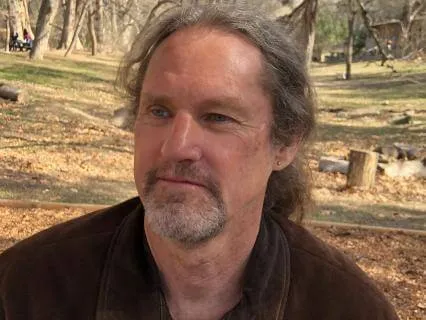
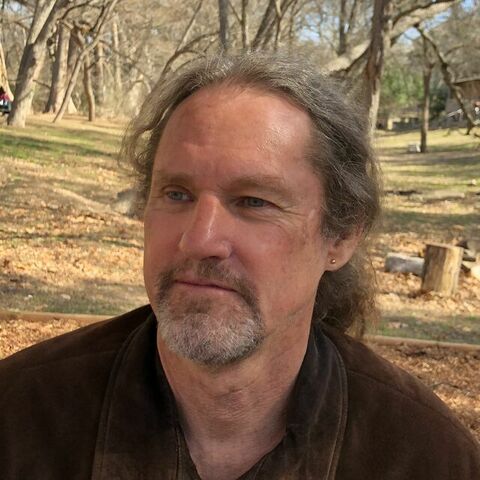
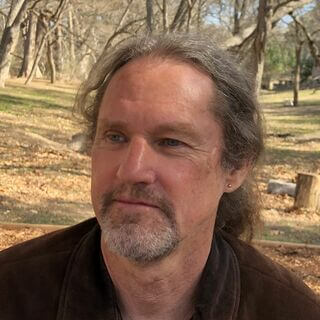
This is William Cooper.
Welcome to Awakening Together.
Relaxing into happiness.
I trust you're doing well this week.
I'd like to share with you today what I call the 60 second rule.
It's something that I discovered maybe around 40 years ago that has really helped me consistently approach difficult things such as exercise or my daily spiritual practice,
Or really anything that's repetitious and it's just difficult.
Perhaps there's something like that in your life and you've developed your own strategies.
Yet maybe at least the principle of what I found helpful for me will be helpful for you too.
What originally brought me to think about all of this was I remember about 40 years ago,
I was becoming a little overweight and I needed to exercise.
And just getting up and jogging every day before work.
It was hard to do consistently.
It didn't feel good and I didn't like it.
So I was having real difficulty until I came up with what I call the 60 second rule.
It worked for me.
It's based on what I learned in both my undergraduate psychology program and my graduate counseling program.
Before I became a psychotherapist.
One aspect of psychology is called behavioral psychology.
And in behavioral psychology,
You study stimulus response,
As well as negative and positive reinforcers on behavior.
What I learned is when you pair a negative reinforcer with any behavior,
For the most part,
You start to extinguish that behavior.
If something doesn't feel good,
You stop doing it.
That's why only around 19% of those people that have gym memberships show up regularly.
67% largely don't show up at all.
Exercise can be tedious and painful.
That's a negative reinforcer.
So when I pair it with the activity of showing up for my gym membership,
Most of us just don't do it.
We extinguish that behavior.
Some still do,
But most don't.
The same can go for meditation,
Because when I sit still,
It's hard to repress old junk that feels bad inside of me.
That's why I repressed it after all.
I don't repress happiness.
I repress those things that I can't handle that hurt.
And when they come up to be released and to dissolve.
I re-experience that hurt and old trauma until it's gone.
Releases its energy and dissolves and turns back into what it's made of,
Which is consciousness,
Love,
Peace,
And well-being.
So over the long term,
Meditation is very helpful and powerful,
But over the short term,
Sometimes it can hurt.
So often people stop doing it consistently.
Same with yoga,
Same with lots of other spiritual practices.
So taking the information that I learned with psychology.
About negative reinforcement,
I came up with a plan.
Get rid of the negative reinforcement.
Then I won't extinguish the behavior.
How do I do that?
Well?
Back 40 years ago,
When I got ready to do my daily exercise,
I thought to myself,
How much of this exercise could I do before it became painful?
What is the least amount I could do and have it feel good?
Where even I couldn't argue with myself.
By reducing the amount of exercise that I was about to do,
There wouldn't be any negative reinforcement because I wouldn't do it long enough for it to hurt.
It would only be pleasurable.
I would release old pent-up energy.
My body would feel a little bit better.
I would have accomplished my goal,
Which is to exercise,
And I would be at least doing something so I would feel better on that level as well.
So all I would have left is positive reinforcement.
So back to what amount of exercise could I do that would get rid of the negative reinforcement.
And for me,
I came up with 60 seconds.
I could exercise for 60 seconds no matter what was going on in my life,
No matter how I felt,
I could come up with 60 seconds.
After all,
It would be hard to argue with myself,
Oh,
I have 24 hours,
But I just don't have 60 seconds to do any kind of exercise.
I just can't fit it in.
Or I feel so bad I can't walk around the room for 60 seconds,
Or I can't do one or two sit-ups for 60 seconds.
I realized that if that was the argument I was making with myself,
Oh,
I don't have 60 seconds do it,
That really my problem was more of a psychological one and I just needed to get a therapist rather than wrestle with myself about exercise.
I had deeper issues.
Now,
As an aside,
I did get a therapist for other things and it was very helpful to release things and help me work through things that were impeding my progress in life on other levels.
But I didn't have to get one for exercise.
So here's the deal that I made with myself.
All I have to do is exercise 60 seconds a day.
I will exercise every day.
And actually for my exercise program to give my body a little time to rest and myself a little time off,
I agreed with myself that really all I had to do is exercise five days a week and I could have two off to rest.
Rest,
But I only have to commit to 60 seconds.
I can do more if I would like to,
But I don't have to do more.
If I did more,
Stop the moment it hurt and I didn't like it.
Easy!
And so what happened?
For the most part,
Once I got my shoes on and I got outside and I started with my 60 seconds,
Oh,
I felt like I might do a little bit more.
Maybe I'll run one block further,
Maybe one more block.
And then if I ever got tired,
I cut off the negative reinforcement there because it would hurt if I continued to exercise.
I would just walk.
I would jog.
Then I would walk as soon as I got tired.
No problem.
Then when I felt good,
I would jog a little bit more.
And when I got tired,
I would walk.
So there was no negative reinforcement.
I was in nature.
I was walking.
I was exercising.
And I was losing weight.
I was getting toned up over time.
I was accomplishing my goals.
I only retained the positive reinforcement.
And when you pair positive reinforcement with any behavior,
You tend to increase that behavior.
So my desire for exercise got stronger and stronger and stronger.
And guess what?
I exercise most every day for 30 or 40 years,
Most every day,
At least five days a week anyway.
One way or the other,
I would find a way to exercise because after all,
I could do 60 seconds.
And if I could do 60 seconds,
Well,
I felt good.
And by since I already got my shoes on,
Let's just keep it up.
I've taken that principle and I've used it in every spiritual aspect of my life as well.
I use it for meditation.
I use it for yoga.
I use it for everything.
I can do at least 60 seconds of anything.
So how did that turn out?
I've been meditating for decades.
Sometimes I've meditated as much as three hours at a sitting without even realizing it.
Because what happens over time,
If you do something a little bit,
Then you get stronger and you can do it a little bit more and a little bit more and longer and longer and longer.
And you become very good at it.
It's like with any kind of habit or behavior that you learn.
The more you do it,
The better you get.
So I've been able to approach fearlessly most any aspect of spiritual development because in the back of my mind,
I know I have this tool.
So people often ask me,
How long should I meditate?
How long should I do this or that?
And I say,
Start with amount of time that's less than you think would be easy for you.
If you think,
Oh,
I could do five minutes easily,
Start with three.
See how that goes.
And then slowly move it upwards,
But stop before it gets difficult.
How about difficult emotions when they come up?
Often people ask me.
If something very difficult comes up,
I'm feeling lots of anger or hurt or fear,
How long should I stay with it?
And I say,
Take baby steps.
Just stick with it for as long as it feels okay for you.
And then let it go.
What is left undissolved will come back another day.
Don't worry about it.
It's like an ice cube.
If you melted 10% of it.
Tomorrow there's 90% left.
It comes back and you melt another 10% and another 10%.
And eventually,
That ice cube melts.
Eventually,
That trauma melts.
But take it gently.
Because if you go too fast,
Your whole system will lock up.
It will freeze.
And you won't want to do it anymore.
It will be something that's,
Oh,
That's just too difficult for me.
I don't like it.
I don't like it.
And you don't try at all.
Much better to do a little bit every day.
Consistent daily practice is very helpful.
As Don Miguel Ruiz says in the Four Agreements,
One of the Four Agreements is do your best every day.
But no.
That every day your best is quite different.
One day,
Perhaps you feel that you can do a lot,
And you can.
On another day,
You can barely get out of bed and almost do nothing.
That's where my 60 second rule comes in real handy.
Your best is 60 seconds.
That's it.
Now you can check it off your list and you're done.
You feel good.
You did your practice.
Move on.
So for me,
It was 60 seconds and then do more if I wanted to,
Which mostly I did.
What's the number for you?
Maybe it's two minutes.
Maybe it's three minutes.
You could do easily and then do more if you want.
But make your number so low that even you can't argue with it on your worst day.
If you feel as bad as you ever have felt,
Even you can't argue with it.
Yeah,
I have 15 seconds.
I can do that.
That's my bottom line.
I can do 15 seconds,
And if I want to do more,
I will.
Oh good,
I did two minutes.
Well,
More importantly than the length of time you do your practice or whatever it is that you're working on every day is the consistency.
It's like compound interest.
It grows over time.
Long periods of time are your friends.
And because I've removed the negative reinforcement,
What happens the next day I wake up?
And all I have to remember is a fond feeling for my exercise or my daily spiritual practice that I did yesterday,
Because all that I've allowed it to be is nice.
There is no negative reinforcement.
And that motivates me to both look forward to doing it the next day.
And when the next day arrives,
That I look forward to doing it that day.
Related to that is because I've built in for me,
My 60 second rule,
I always do it.
And because I always do my practice,
It keeps a line of continuity going through every single day.
It's a thing in my life.
It doesn't just disappear somewhere one day.
Oh,
I just not doing it anymore.
No,
I'm doing it every day because really I have not left me with any reason not to do it and every reason to do it so it becomes automatic like brushing my teeth or Something that's good for me.
I wouldn't skip days of brushing my teeth same with daily spiritual practice so Consistent daily practice is more important than length.
Length is good,
Yes,
But consistent daily is most important.
Set something that works for you and do it every single day.
Do that minimum amount or more.
That's my 60 second rule.
Modify it to fit you.
I hope that helps,
And I hope you enjoy.
Thanks so much.
Looking forward to talking to you again soon.