Hey guys,
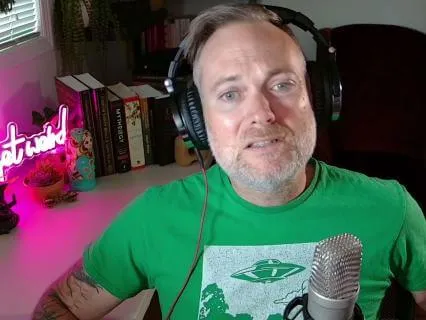
Jason here.
So in this lesson we're going to focus completely on the breath.
The breath is probably the most common object used in meditation.
And there's really a good reason for that.
The obvious one is that it's always happening,
Right?
You don't need equipment,
You don't really have to believe anything,
And you don't have to imagine anything.
As long as you're alive,
The breath,
Well,
Obviously it's there,
Right?
And the breath always,
Always happens in the present moment.
You can't breathe yesterday's breath and you can't breathe tomorrow's breath.
You can only experience the breath that is happening right now.
So I guess to begin,
Find a normal meditation posture and then let the body settle.
And before focusing on the breath,
Take a moment to notice how you actually feel.
Right?
Not how you think you should feel.
Maybe you're calm.
Maybe you're irritated.
Maybe your mind is racing.
And maybe you don't really feel like meditating at all.
And of course,
That's fine.
You don't need to change your starting point.
So just bring your attention to the breath.
Right?
One of the most common mistakes beginners make is trying to breathe absolutely perfectly.
They seem to take an enormous amount of time,
Dramatic breaths,
Because I guess they think meditation breathing is supposed to be different from normal breathing.
It's not.
But for this practice,
We're not controlling the breath at all.
We're simply observing the breath.
So,
I mean,
I guess let the body breathe naturally.
Your job is simply to feel the breath.
That's it.
You can notice the air moving around the nostrils,
If that works for you.
You may feel like a slight coolness of the breath enter and then a little bit warmer as it leaves.
You can notice the chest rising and falling.
You can feel your belly gently expanding and releasing.
Basically just choose one location and don't keep jumping between all three.
So,
Find the place where the breath feels,
I guess,
The clearest and let that become your home base.
And now follow one complete breath.
You know,
Feel the beginning of the inhale and notice the middle and notice when the inhale ends.
Now,
There may be a tiny pause,
Right?
And then feel the exhale beginning.
Notice the middle.
And then notice when it ends.
And then simply allow the next breath to arrive on its own.
Now,
We normally think that breathing is one continuous thing,
But when you actually pay attention,
You begin to notice,
I guess we'll call them these little stages,
Right?
The beginning,
The middle,
The end,
The pause,
And then the next beginning.
You may also notice that no two breaths are exactly the same.
Some are deep,
Some are shallow,
Some are smooth,
Some even feel a bit tight.
You don't really need to correct any of them.
Just simply notice what is actually happening.
And if staying with the breath is super difficult for you,
Some people quietly count,
So inhale and exhale one.
And then inhale and exhale two.
And then continue until you reach 10,
And then begin again at 1.
You're not trying to see how high you can count.
10 is enough,
Right?
And you'll probably lose your place a few times,
And you'll reach 3 and suddenly start thinking about,
Well,
Something else.
And then five minutes later,
You'll realize you have somehow been mentally arguing with someone who isn't even in the room.
Just so you know,
This is completely normal.
When you notice that you've wandered,
Just return back to 1.
Don't really treat it like punishment.
You're simply beginning again,
Right?
And you might also discover that focusing on the breath makes you extremely uncomfortable.
Some people become really openly aware of breathing and then they start to begin controlling it without really meaning to.
So,
I mean,
If that happens,
Widen your attention,
Right?
Feel your feet,
Feel the chair,
Listen to the sounds around you,
And then gently return to the breath when you feel ready.
Meditation should challenge your habits,
But you don't need to force yourself into panic,
Right?
And then there's another option.
It's used to quiet mental phrases.
So as you inhale,
Think,
Breathing in.
And as you exhale,
Say,
Breathing out.
Or simply use in and out or rise and fall.
The words themselves are not magical at all.
They're just there to help your attention remain connected to the actual experience.
And then over time,
You may no longer actually need any of that at all for a crutch per se.
So I mean for this lesson spend five minutes just following the natural breath.
Use counting if it helps.
And when the mind wanders,
Just begin again,
Right?
And remember,
You're not practicing how to breathe.
Your body already knows how to do that.
You're practicing how to stay.
Thanks for listening to this lesson guys.
Namaste.