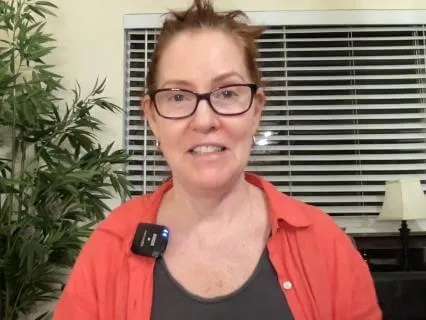
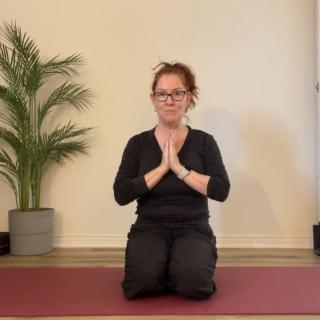
Hi and welcome friends.
My name is Debra and I'd like to talk a little bit today,
A very short time about betrayal.
I think it's an important part of relationships.
I think it's something that we as a society don't really spend a lot of time talking about.
And if you've ever experienced betrayal,
It's hard.
It's really hard to work through.
It's hard to wrap your mind around and it can be life altering and betrayal.
In some ways,
Shapes or forms,
At times,
Ends families.
It ends relationships.
It can be very significant and very painful.
Betrayal can also happen societal wise that you know people go to war or soldiers go and they fight and then they feel betrayed when they come back because they're really not sure what they were there for.
And so it can happen in families,
It can happen internally,
Self-betrayal when we're in relationships and we're really not working or answering in the best service of ourselves,
We're betraying ourselves.
Bacterial has a lot of levels,
A lot of layers.
This is not what the talk is really about.
Maybe I can do a live talk at some point in time about that.
Today I want to talk really briefly about how do you work through betrayal and working through betrayal is a process that takes time,
Takes intention,
And it takes resiliency.
It's building resiliency,
It's building self-esteem,
It's building yourself and getting yourself moving in little,
Little pieces and parts.
Daily and sometimes maybe you'll need it every day and then you'll find yourself needing it every other day.
Whatever you need,
Whatever you get from this,
I wish you well.
So.
.
.
Some of the parts of working through Pacheco are awareness,
Cognitive.
We need to be cognitively aware.
Of our space and of our time and what we're doing with it and how our thoughts are.
Leading us into a place of unhappiness and unhealthy state of being or They're aiding us so cognitively.
I think about it two ways I think about are my thoughts causing me harm and if they are I like to redirect and some of the ways that I redirect are I might think of phrases,
Not my circus,
Not my monkey.
I might think this is not helpful for me.
This stops now.
However you want to phrase that,
It's something that it just puts a cognitive stop on it,
That you know that you're cycling,
You know that it's not healthy,
And it can't continue.
And it doesn't mean that it's not going to come up again because we know our brains and the way that they function.
If we could think our way out of it,
We would have done it a long time ago.
Unfortunately,
We can't.
So here we are.
We can put a timer on it,
A damper on it,
And we can set it aside.
And we know it'll come back.
So what if the thoughts are helpful?
If the thoughts are helpful,
Such as I'm processing this and I'm asking myself,
What do I need?
Yeah,
This has happened and today I'm really sad.
Today I'm noticing emotionally I'm sad.
I'm not wanting to move.
I'm not wanting to do this.
Where is this coming from?
And so you're starting to have that inner dialogue,
That back and forth,
And it's on an intellectual level.
And that's helpful.
So awareness,
Noticing cognitively where you're at.
Not helpful moving away from that.
Helpful,
Then maybe you can process that a little bit.
And sometimes when I'm noticing that the thoughts aren't helpful and it's continuing on,
What I'd like to recommend is I'd like to recommend that then you go and do something that moves you a little bit more.
Sometimes it could be a spiritual practice.
It could be going out in nature.
It could be meditating.
Sometimes if the thoughts are just too much,
Then going and doing that mindful meditation,
That formal meditation practice,
The breathing in,
The breathing out,
The counting in 1,
2,
3,
4,
The releasing 1,
2,
3,
4.
And sometimes that's needed and necessary to downregulate,
To really put you back in sync,
To get you back in a rhythm,
Especially if you're feeling flighty,
If you're feeling anxious,
If you're feeling really,
Really heavy,
Then maybe sometimes need that breathing,
You need that meditation.
Sometimes you need the movement.
I did a little bit of I did a video on rhythmic moving if you want to check that out.
Sometimes you need some movement.
It could be yoga,
It could be exercise,
It could be Tai Chi.
One of the things from working with Ayurveda and studying Ayurveda as an Ayurvedic counselor is that sometimes,
And this goes back to societal,
We're told,
You know,
Nike,
Just do it,
Go hard,
Go fast,
Go strong,
No gain,
No pain.
That's not true for everybody.
There are times that we do need to push our bodies and max our bodies.
And maxing your body is not for everybody.
And maxing your body does not mean all the time or always,
And it doesn't mean never.
Never doesn't mean never and always doesn't mean always.
It's really checking in.
What does my body need?
Do I really need to work through that anger?
Do I need to work through that sadness?
Do I need to move rhythmically to downregulate?
And so just finding those practices and it's an exploration.
You know,
Working through betrayal is a journey.
And sometimes one thing will work,
The cognitive aspect will work,
And other times the emotional aspect of really syncing with that emotion,
Settling in,
Riding that emotion,
Feeling that emotion,
Taking that breath and riding that emotion and just letting it go and taking that breath in again,
Riding that emotion and letting it go.
And sometimes that'll help and sometimes it won't.
And I feel every day is a different day.
Every moment is a different moment.
So again,
It's repetitively asking yourself,
What do I need right now?
What do I need to do and what do I need to do to take care of myself?
And it can be sometimes,
You know what,
I can't do anything.
I need to put this aside.
I really need to focus on something else.
Very valid.
Very valid.
Just knowing that we can't shortchange it.
We can't avoid it to the facts.
That we hope it just goes away.
It's going to take the time it takes.
And for some people,
It's going to take a long time.
And for other people,
It may take a lesser amount of time.
There's really no timetable on this.
Betrayal is a work in progress,
And sometimes it can be very,
Very painful,
Very devastating.
We see families that are torn apart by it.
We see families where siblings don't talk to each other because of betrayal,
Or parents and mothers and daughters,
Because of betrayal,
Don't talk to each other.
It has really,
Really high consequences sometimes.
For some individuals.
And so if you are seeing somebody who's experiencing it,
I ask that you give them grace.
I ask that you give them time.
And that you just be there to sit with them.
There sometimes is nothing that we can say to the other person.
And sometimes there's really nothing that we can say to ourselves that's going to make us feel better.
It really is a process.
So it takes time.
It takes a little bit of distance from the happening.
For us to get back into sync,
For us to find our rhythm,
And it takes building resiliency.
Working with that self,
That hole in our soul,
That heaviness that we may feel.
It takes awareness,
It takes our spiritual practices,
It takes the physical,
The emotional.
It's really,
You know,
It's coming at it from all kinds of angles to build ourselves up,
To move ourselves forward.
And friends,
I really hope that this was helpful for you.
Reach out,
Ask some questions.
If you'd like me to talk a little bit more about something,
I'm happy to do that too.
I'm open to your suggestions.
In service and in gratitude.
Lokasamasa Sokano,
Bhavantu.
Sat Naam,
My friends.
Be well.