The world’s largest free audio library for everyday wellbeing
Movement-Integrated
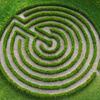
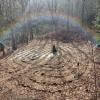
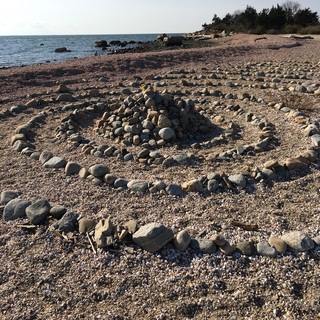
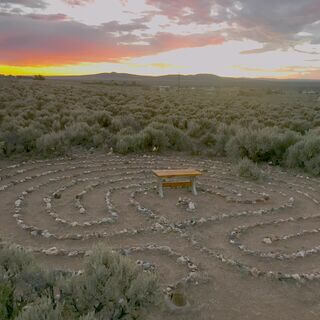
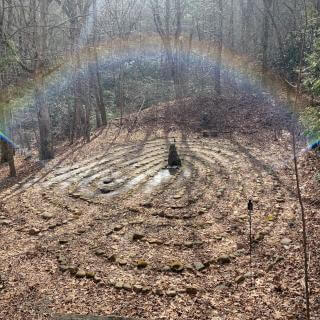
Labyrinth walking is a contemplative walking practice along a single winding path that leads to a centre and back out, done alone or as a group (McGee et al., 2023), (Lizier et al., 2018).
Last Updated
4 Jul 2026
We are still reviewing this page. Our research team checks every technique page for accuracy and evidence quality before final release. Details may change as that review completes. The evidence badge shows our current reading of the published research.
RECOMMENDED DOSE
No direct dose-response literature specifies a session length or weekly frequency for labyrinth walking. These recommendations are based on general practice conventions for slow walking-meditation and should be treated as starting points only. No direct dose evidence; editorial synthesis.
Available studies describe multi-week labyrinth-walking programs but do not report the per-session duration or weekly frequency that produced any effect. This intermediate level reflects a reasonable step up for an established practice. No direct dose evidence; editorial synthesis.
A longer, near-daily maintenance pattern for committed practitioners. No cited source establishes an upper dose or maintenance frequency for labyrinth walking, so this range is inferred from general walking-meditation practice. No direct dose evidence; editorial synthesis.
Session length
Session length: 10–20 minutes
10
MIN
How long each individual practice session should last from start to finish.
Frequency
Frequency: 2–3 days
2
DAYS
The number of days per week to fit a session into your routine.
Session length
Session length: 20–30 minutes
20
MIN
How long each individual practice session should last from start to finish.
Frequency
Frequency: 3–4 days
3
DAYS
The number of days per week to fit a session into your routine.
Session length
Session length: 30–45 minutes
30
MIN
How long each individual practice session should last from start to finish.
Frequency
Frequency: 5–7 days
5
DAYS
The number of days per week to fit a session into your routine.
About this card. No direct dose-response literature exists for labyrinth walking; these ranges are editorial estimates drawn from general walking-meditation conventions and should be treated as starting points only. These recommendations are not a substitute for personalised guidance from a qualified practitioner.
Quick answers to what people most often ask. Each card links to the deeper section below.
evidence
Early, small studies suggest labyrinth walking eases stress and supports relaxation, though no controlled trials confirm it. A pilot with academic-library users found more relaxation and small drops in blood pressure and pulse, while an international group walk of 461 adults reported a strong sense of connection. Evidence remains limited and mostly qualitative.
Read moregood for
Adults wanting to slow a restless mind, reflect, or feel more settled may find labyrinth walking helpful, since the single path gives attention somewhere simple to rest. It has been studied in library users, community groups, and forensic mental-health settings. Best as a gentle, adjunctive practice, not a treatment for any diagnosed condition.
Read moresafety
Most healthy adults can walk a labyrinth safely, and no study has reported adverse events. The main consideration is emotional: the slow, inward pace can bring grief or worry to the surface, so those working through trauma or acute distress may want support nearby. Anyone with unsteady balance should choose a flat, even surface.
Read morehow it works
Following a single, unbranching path gives attention one simple place to go, an anchoring that leaves fewer openings for the mind to race or loop on worries. The winding turns keep you tracking your body's position in space, and as step and breath fall into the loops, many feel carried by the rhythm rather than pushing each step.
Read moreA contemplative walking meditation in which you follow a single winding path to a centre and back out, often setting an intention and moving slowly through release, reflection, and return (McGee et al., 2023).
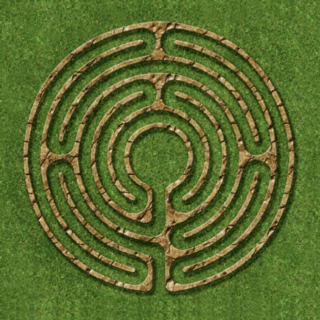
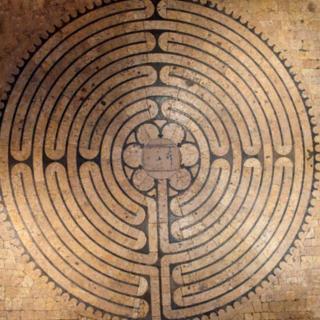
A session usually begins by setting an intention, then walking slowly inward along the single path toward the centre as a way of releasing or letting go, pausing at the centre to reflect or receive, and walking back out to integrate and return. It can be done alone or as a group walk with a shared intention, often on a Chartres-pattern design.
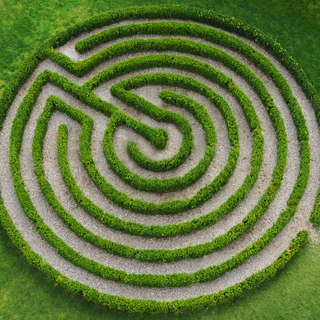
A labyrinth is not a maze: it has one winding path with no dead ends, branches, or choices to solve, so there is no risk of getting lost. This makes it a contemplative walking meditation rather than a puzzle, and it differs from seated meditation in that attention rests on slow movement and the felt sense of the body along the path.
Not to be confused with
Maze walking (puzzle mazes)
A maze is a puzzle with branching paths, choices, and dead ends designed to challenge and disorient. A labyrinth has a single winding path with no dead ends, so there is nothing to solve and no way to get lost; the practice is reflective, not a problem to work out.
Labyrinth walking appears to work mainly by giving attention a single, unbranching path to follow. This is a kind of attentional anchoring, and it leaves fewer openings for the mind to race ahead or loop on worries, which walkers describe as settling into the present (Butcher, 2023). The winding turns also keep you tracking where your body is in space, drawing on proprioception, the internal sense of position and movement that can leave you feeling steadier and more physically here (Lizier et al., 2018). As step and breath fall into the loops of the path, many people feel carried along by the rhythm rather than pushing each step, a synchronisation researchers call rhythmic entrainment. For labyrinth walking these processes are still inferred from what practitioners report rather than directly measured.
Following a single winding path gives your attention one clear thing to do, which can ease the pull to plan ahead or replay worries. Walkers often describe the mind settling into the present, and reviews of labyrinth research note this quality of calm, focused awareness (Butcher, 2023).
As you follow each curve and turn of the single path, you stay aware of where your body is in space, drawing on proprioception, the body's internal sense of position and movement, so many walkers feel steadier on their feet and more physically present. This comes from the winding design and the practice's whole-body, sensory quality (Lizier et al., 2018), not from any direct measurement of proprioception in labyrinth walkers.
Walking a labyrinth at a slow, unhurried pace lets your steps, breath, and the loops of the path fall into a shared rhythm, so it can feel like being carried along rather than having to push each step forward. This settling into rhythm, which researchers call rhythmic entrainment, fits the calm people report during labyrinth walks (Lizier et al., 2018), though it has not yet been directly measured in this practice.
Your shoulders drop and the sense of mental urgency eases as the slow, unhurried pace of a single winding path helps the body's alertness system settle, a shift researchers call arousal downregulation that pilot studies link to reports of greater relaxation and lower stress (Zucker et al., 2016).
When you walk a labyrinth, attention has something physical to rest on: the feel of each footfall, the turns of the path, and the sense of your body moving through space. People often describe labyrinth walking as a whole-body, sensory experience (Lizier et al., 2018), and this bodily focus can leave the mind feeling steadier and the body more present.
The bodily changes measured during labyrinth walking are small and inconsistent, so the settled feeling people describe shows up only partly in the instruments. One academic-library pilot recorded a small drop in systolic blood pressure, the force of blood pushing against artery walls that usually eases as the body shifts toward rest, along with a slight slowing of pulse (Zucker et al., 2016). An earlier community study found essentially no change in blood pressure and only modest shifts in mood (Sandor & Froman, 2006). Where a small decrease does appear, it tends to accompany the less-braced, slower-breathing quality people notice as their pace steadies on the path.
The settled feeling many people describe after walking a labyrinth shows up only partly in blood pressure readings, which change little and inconsistently across studies. One academic-library pilot measured a small drop in systolic pressure (Zucker et al., 2016), while an earlier community study found essentially no change (Sandor & Froman, 2006). Where a small decrease does appear, it tends to accompany the less-braced, slower-breathing quality people notice as their pace steadies on the path.
When you feel wired and unable to switch off, the body is running on sympathetic arousal, its fight-or-flight activation that speeds heart rate and keeps you on alert. Labyrinth walking hasn't been measured directly for this, so any easing is inferred from related relaxation practices; early pilot work reports feelings of calm and relaxation (Zucker et al., 2016), while studies tracking blood pressure and pulse found little clear change (Sandor & Froman, 2006).
Limited, early-stage evidence supports labyrinth walking for stress relief and relaxation, with a smaller and more variable signal for physical measures like blood pressure (Zucker et al., 2016), (Lizier et al., 2018). Group walks have also left people reporting a strong sense of connection and shared meaning (McGee et al., 2023), and care-setting studies describe support for reflection and calm (Heard et al., 2015). What is not yet supported: large or controlled trials, lasting change in quality of life, which one jail-based pilot found unchanged (Zucker et al., 2012), or any claim that labyrinth walking can replace treatment for a diagnosed condition.
A keyed-up, restless feeling can ease as you follow a single winding path with nowhere to get lost and no decisions to make. In an early pilot with people in a busy academic library, walking the labyrinth left them more relaxed and satisfied, with small downward shifts in blood pressure and pulse during the practice, early, limited evidence, so treat it as a low-effort way to slow down rather than a proven stress treatment (Zucker et al., 2016).
For some people, labyrinth walking becomes a whole-body, sensory experience: the feet feel each turn, breathing slows, and attention drifts toward reflection rather than problem-solving. Early questionnaire research describes this blend of physical relaxation and reflective engagement, though the same study found responses were mixed and the walk outward could feel longer and stir some discomfort (Lizier et al., 2018).
Most people who walk a labyrinth report feeling calmer, more present, and more connected, and the early research points the same way. A small academic-library study found less stress and more relaxation after walking (Zucker et al., 2016), an international group walk of 461 adults left participants describing a strong sense of connection (McGee et al., 2023), and studies in care settings describe support for reflection and a whole-body, sensory quality (Heard et al., 2015), (Lizier et al., 2018). The evidence is still early, drawn mostly from small and qualitative studies rather than large controlled trials, and some found little measurable change in vital signs or quality of life (Sandor & Froman, 2006), (Zucker et al., 2012). It can support rest and reflection, but it is not a replacement for clinical care.
0
Meta-analyses
0
RCTs
0
Systematic reviews
0
Observational
9
Pilot
Studied populations
A sense of connectedness, transcendent experiences, and insights for compassionate action emerge through an international collective labyrinth walk with a shared intention during the COVID-19 pandemic
n = 461
Finding: When 461 people across 19 countries walked labyrinths together with a shared intention during the COVID-19 pandemic, they described a strong sense of connection, on several levels at once: with themselves, with others, and with something larger than themselves, alongside positive emotions and moments of insight about how to act with compassion. For someone considering the practice, this suggests that walking a labyrinth in company, not just alone, can become a quietly social experience that leaves people feeling more connected and settled. Keep in mind that this was an early-stage study built on personal accounts from people who chose to take part, most of them women in middle to later life, so it points to what practitioners experience rather than proving specific outcomes.
reported narratively
Walking the Labyrinth: Considering Mental Health Consumer Experience, Meaning Making, and the Illumination of the Sacred in a Forensic Mental Health Setting
2015
Finding: In a small interview study, 12 residents of a forensic mental health facility who took part in a labyrinth walking program described it as a way to slow down, reflect, ease stress, and explore what wellness meant to them personally. For someone drawn to walking meditation, this hints that the winding path can create a quiet space for making sense of one's own experience, and the researchers even suggested weaving it into ongoing care. That said, this was a small, conversation-based study in one specialised setting with no comparison group, so it captures how these particular walkers felt rather than proving broad benefits.
Labyrinth walking traces back to labyrinth designs used in medieval Christian contemplative practice, most famously the one set into the floor of Chartres Cathedral, and the modern practice was popularised largely through Dr. Lauren Artress's work with that pattern (Lizier et al., 2018). Across Christian, interfaith, and secular settings the winding path has been walked as a kind of pilgrimage or reflective journey. These roots help explain the practice's form, the single unicursal path and the release, reflect, and return sequence, rather than proving any clinical effect.
For most healthy adults, labyrinth walking is a gentle, low-intensity practice, and no study to date has reported an adverse event (Sandor & Froman, 2006), (Zucker et al., 2012). What warrants care is emotional rather than physical. The slow, inward pace can let unexpected feelings, grief, worry, old sadness, rise to the surface; in one questionnaire study of 30 participants, most noticed some emotional distress at points along the walk (Lizier et al., 2018). This is a caution drawn from practitioner reports, not a measured harm. A milder, physiology-based caution: because the path curves and turns continuously, anyone with unsteady balance or a raised risk of falling should take extra care with the walking surface and pace.
People moving through grief, trauma, or acute emotional distress may want a trusted person or clinician nearby, since the reflective walk can bring difficult feelings to the surface, an observation grounded in questionnaire reports of emotional distress during the walk rather than in measured adverse events (Lizier et al., 2018). Older adults and anyone with a gait, balance, or mobility limitation should choose a flat, even surface and keep the pace unhurried; this is a sensible precaution from how the body moves through the turns, not a documented risk. Whatever the situation, labyrinth walking works best as a supportive, adjunctive practice alongside care, not a stand-alone treatment for any diagnosed condition.
The slow, inward pace of labyrinth walking can let unexpected feelings, grief, worry, or old sadness, rise to the surface; in a questionnaire study of 30 participants, most noticed some emotional response at points along the walk. This is a caution drawn from practitioner reports, not a measured harm. If you are working through grief, trauma, or acute distress, keep a trusted person or clinician nearby, pause or step off the path if feelings become overwhelming, and treat labyrinth walking as a complement to care rather than a replacement for it.
| Technique | Best for | Use with care | Evidence strength | Distinction |
|---|---|---|---|---|
| Walking meditation (general) | People who want a movement-based meditation they can do on any route or open path, without needing a marked labyrinth. | On an open route the mind can drift back to planning where to go; the labyrinth's set path removes that decision. | emerging EVIDENCE | Walking meditation is the broad family of moving contemplative practices, where attention rests on the sensations of stepping and breathing. Labyrinth walking is a specific form that adds a fixed winding path and a set inward-centre-outward sequence, so there are no route decisions to make and no way to get lost, which is often what people find distinctive about it. |
| Seated mindfulness meditation | People comfortable sitting still who want a portable practice that needs no space, path, or special setting. | Those who feel restless or agitated when sitting may find stillness harder to sustain than a slow, moving practice. |
No. A labyrinth is a single winding path with no branches or dead ends that leads to a centre and back, so there is nothing to solve and no way to get lost (Lizier et al., 2018). A maze is a puzzle of branching paths and dead ends built to challenge and disorient.
+
No. The difference is structural: a labyrinth follows one continuous unicursal path, a single route in and out with no choices to make, so you simply walk to the centre and back rather than solving anything (McGee et al., 2023), (Lizier et al., 2018). A maze is built as a puzzle, with forks, choices, and dead ends meant to confuse. That single-path design is what makes labyrinth walking a reflective, contemplative practice rather than a problem to work out.
You do need an actual labyrinth. By definition labyrinth walking follows a single winding path to a centre and back, so it calls for a marked labyrinth rather than any open route (McGee et al., 2023), (Lizier et al., 2018).
+
You do need an actual labyrinth. The practice is defined by its single unicursal path with no branches or dead ends, so it uses a marked labyrinth, whether outdoors, an indoor floor pattern, or a portable projected design, rather than any open walking route (McGee et al., 2023), (Lizier et al., 2018). Choose an even, well-lit path with good footing. If none is available, broader walking meditation is a related but distinct practice you can do on any route; that is a matter of logistics and fit, not evidence that any path gives the same effect.
A single, winding path that leads to a centre and back out again, with no branches or dead ends. Unlike a maze, it is not a puzzle; the point is the reflective walk itself.
A path with one continuous route in and out and no choices to make. This single-path design is the defining feature that separates a labyrinth from a maze.
The medieval eleven-circuit pattern set into the floor of Chartres Cathedral in France, widely reproduced in modern labyrinth walking after Lauren Artress's work.
Resting attention on one steady target so it stops drifting to worries or distractions. In labyrinth walking the winding path is the anchor, which can feel like fewer spiraling thoughts and a clearer sense of being present.
Focused attention and attentional selection: stabilising attention on a defined stimulus to reduce mind-wandering.
The body's internal sense of where it is in space, drawn from receptors in the muscles, joints, and tendons. It tends to feel like steadier balance and a grounded, physically present quality.
Proprioception and kinesthetic awareness: perception of body position and movement via muscle, joint, and tendon receptors.
When repetitive movement and breathing fall into step with a steady rhythm, so the body settles into the pattern with less effort. Walkers often describe it as being carried along by the rhythm.
Oscillatory synchronization of motor, respiratory, and autonomic rhythms to a repetitive external stimulus.
An activity done slowly and reflectively to quiet the mind and cultivate presence, such as the inward-centre-outward walk of a labyrinth.
Jocelyn Shealy McGee, Christine Katzenmeyer, Stephanie C. Boddie, Rebecca Meraz, Sinai Wood (2023). A sense of connectedness, transcendent experiences, and insights for compassionate action emerge through an international collective labyrinth walk with a shared intention during the COVID-19 pandemic. https://doi.org/10.3389/fpsyg.2023.1232784
Cited in: Benefits, Faq, Research, What it is
Clark Patrick Heard, Jared Scott, Rev’d Stephen Yeo (2015). Walking the Labyrinth: Considering Mental Health Consumer Experience, Meaning Making, and the Illumination of the Sacred in a Forensic Mental Health Setting. https://doi.org/10.1177/1542305015616102
Explore guided sessions to deepen your Labyrinth Walking technique.
Outcomes measured
The research is useful for setting expectations, but study methods and participant groups vary. Treat the findings as general guidance rather than a promise about any single session, and not a replacement for clinical care.
Effects of Reflective Labyrinth Walking Assessed Using a Questionnaire
n = 30
Finding: In a small questionnaire study of 30 people walking a labyrinth at a psychotherapy institute, the walk came through as a full-body, emotional, and sensory experience rather than a purely calming one. Many described physical relaxation and a shifted sense of time and space, but a striking share also reported moments of emotional discomfort, with most feeling unsettled by the sense that the outward walk stretched longer than the walk in. For someone considering the practice, this suggests labyrinth walking can quiet the body while also stirring up feelings, so it helps to expect a mix rather than guaranteed serenity. Keep in mind this was a single small group answering questionnaires with no comparison group, so it points to the range of experiences people have rather than proving any specific benefit.
reported narratively
The Effects of Labyrinth Walking in an Academic Library
2016
Finding: In a small pilot set up in an academic library, walking a labyrinth was linked to measurable drops in systolic blood pressure and pulse rate over the course of a session, and library users reported feeling more satisfied and relaxed afterward. For someone facing a stressful study or work environment, this hints that stepping away to walk a slow, winding path may help settle the body and ease tension in the moment. That said, this was an early pilot with a small group and a loosely matched comparison, so its authors treated it as a starting point for larger research rather than proof that labyrinth walking reliably lowers blood pressure.
effect size (as reported) = 0.136
Exploring the Effects of Walking the Labyrinth
n = 25
Finding: In this small pilot study, 25 community members had their vital signs and mood measured just before and after walking a labyrinth. Blood pressure barely budged, and changes in pulse and breathing were slight; the clearest shift showed up in mood, where walkers reported a moderate drop in unpleasant feelings and a smaller lift in positive ones. So if you are drawn to labyrinth walking, the honest takeaway is that it looks more likely to ease how you feel than to measurably change your heart rate or blood pressure. With only 25 participants and mixed results when walkers were compared to non-walkers, this is early, preliminary evidence rather than proof of any physical effect.
reported narratively
Correctional Nursing Interventions for Incarcerated Persons with Mental Disorders: An Integrative Review
2016
Finding: A review of the ways nurses care for people in prison settings included labyrinth walking, alongside talk therapy and yoga, as one of the calming, nurse-led activities used to help incarcerated people with mental health or substance-use challenges cope and adjust. This places labyrinth walking within a real-world care toolkit, offering a simple, structured walking practice someone can return to when they need to steady themselves. That said, it was listed as one option among several rather than tested on its own, and the review found only limited evidence for how well any of these interventions work, so this points to promise and practical use rather than proof that walking a labyrinth treats a specific condition.
See full citation in referencesLabyrinth Walking in Corrections
n = 14
Finding: In a 6-week pilot with 14 people at a Massachusetts county jail, participants walked a labyrinth across six 90-minute sessions; their quality-of-life scores were unchanged from start to finish, while blood pressure drifted in a healthier direction and satisfaction with both the program and the teacher stayed high. In practical terms, this suggests labyrinth walking can be an easy, low-cost, and welcomed activity to offer, even if this study did not show it lifting overall well-being. Keep in mind the group was tiny and had no comparison group, so the results are an early signal about feasibility rather than proof of any health benefit.
reported narratively
A Unitary Caring Theory Perspective of Labyrinth Walking Research
n = 29
Finding: This review looked across 29 studies of labyrinth walking (selected from a larger 2022 bibliography of 160 publications) and found that people's accounts kept circling back to four experiences: a sense of peaceful rest, a widening or clearing of awareness, a feeling of personal change or possibility, and a sense of connection to something larger. For someone considering the practice, that suggests labyrinth walking is often experienced as a calming, reflective activity rather than a brisk mental workout. Keep in mind that this was an interpretive review of what people described feeling, not a test of specific health outcomes, so it points to the kinds of experiences reported rather than proving measurable clinical benefits.
reported narratively
Vestibular and proprioceptive contributions to trunk stabilization differ across postural tasks and walking speeds.
2026
Finding: In this small lab study, twelve healthy adults sat, balanced on one foot, and walked at different speeds while researchers tracked how the body keeps the trunk steady. They found that the body leans on two sensing systems, one from the inner ear that registers head motion and balance, and one from the muscles and joints that senses body position, and that it shifts how much it draws on each depending on the task and walking speed. For someone drawn to walking practices like a labyrinth, this is a reminder that even simple, slow walking actively engages the balance and body-awareness systems, though the study looked only at movement mechanics in a handful of healthy adults and did not measure any effects of labyrinth walking itself on stress, mood, or wellbeing.
See full citation in referencesBecause the path curves and changes direction continuously, older adults and anyone with a balance, gait, or mobility limitation should take extra care with the walking surface and pace. Choose a flat, even, well-lit path, keep the pace unhurried, and bring a walking aid if it adds security. This is a physiology-based precaution from how the body moves through the turns, not a documented adverse event; safety has not been formally tested in balance-impaired groups.
Labyrinth walking is best approached slowly and gently, on flat, even ground where your footing feels secure and you are free to move at an unhurried pace. Because the inward, reflective quality of the walk can let unexpected feelings surface, it helps to give yourself permission to pause or step off the path at any point, and to have a trusted person or clinician nearby if you are moving through grief or distress. Think of it as a supportive practice alongside your usual care rather than something to push through.
Walk a labyrinth laid on flat, stable ground with good footing. If balance is a concern, use a well-lit indoor pattern or bring a walking aid so each turn feels secure.
Decide on a simple focus before you begin and let your steps stay slow and comfortable, so the practice settles you rather than tiring or rushing you.
Let the single winding route carry your focus, one step at a time, and return to the feel of your feet whenever your mind races ahead.
If grief, worry, or other feelings surface, notice them and keep walking at your own pace. Pause, slow down, or step off the path if anything becomes overwhelming.
After the walk outward, stand still for a few breaths before returning to activity, especially after a long or emotionally full session.
If you are working through trauma, grief, or acute distress, practise with a trusted person nearby or alongside care from a clinician, and treat labyrinth walking as a complement to that support rather than a replacement for it.
This information is educational and is not medical advice. This practice is not a substitute for professional care and should not replace prescribed medication or treatment for any medical or mental-health condition. If you are managing a health condition or taking medication, talk with a qualified health professional before changing your practice. If you are in distress or crisis, seek professional support.
| Seated mindfulness keeps the body still and turns attention inward toward breath or sensation. Labyrinth walking anchors that same present-moment attention to footsteps and the turns of a path, giving the body something to do; people who find sitting still difficult sometimes settle more easily while gently moving. |
Tentatively, yes. A small academic-library pilot found people felt less stressed and more relaxed after walking a labyrinth, though this comes from early, uncontrolled studies, so it points to promise rather than a proven effect (Zucker et al., 2016).
+
Tentatively, yes. Early pilot research in a busy academic library found walkers reported more relaxation and less stress afterward (Zucker et al., 2016), but the bodily signal is mixed: some studies recorded little measurable change in vital signs even when people felt calmer (Sandor & Froman, 2006). The research base is still early-stage, drawn from small pilot and qualitative studies without controlled comparison groups, so this fits best as a gentle support for stress relief rather than an established treatment (McGee et al., 2023), (Sandor & Froman, 2006).
Early and limited. The research rests mainly on small pilot and qualitative studies with no controlled trials, so it is best read as suggestive rather than established (Butcher, 2023). The clearest signal is gentle stress relief and self-reported calm, not proof it treats any diagnosed condition.
+
Early and limited. The clearest signal is modest, self-reported stress relief and relaxation; an academic-library pilot found people felt more relaxed after walking (Zucker et al., 2016), while measures like blood pressure and quality of life showed little or no change (Sandor & Froman, 2006), (Zucker et al., 2012). A narrative review echoes themes of calm and connection but draws on small, uncontrolled studies (Butcher, 2023). Treat the findings as suggestive rather than confirmed, and not a substitute for clinical care for any diagnosed condition.
Likely because the single, unbranching path gives your attention one simple thing to follow, leaving fewer openings for the mind to race. Early pilot and review work links this to reported relaxation, though the mechanism is inferred from what walkers describe rather than directly measured (Zucker et al., 2016), (Butcher, 2023).
+
The most likely reason is attentional anchoring: with no dead ends or route choices to solve, attention can rest on the winding path itself, which walkers say leaves less room for worry to loop. The turns also keep you tracking where your body is in space, a sense called proprioception, and step and breath tend to fall into the rhythm of the loops, a settling researchers call rhythmic entrainment. A small academic-library pilot found people felt more relaxed after walking (Zucker et al., 2016), and a narrative review of the wider literature describes similar calm and presence (Butcher, 2023). These processes are still inferred from self-report and reviews rather than measured in labyrinth walkers, so treat this as a plausible explanation for gentle calm, not a proven mechanism or a treatment for any condition.
Sometimes, but the effect is small and inconsistent. One library pilot recorded a slight drop in systolic blood pressure and pulse after walking (Zucker et al., 2016), while another study found essentially no change (Sandor & Froman, 2006). Reliable blood-pressure or heart-rate lowering is not an established outcome.
+
Sometimes, though the measured changes are small and vary between studies. A pilot in an academic library found a modest drop in systolic blood pressure, the force of blood pushing against artery walls, and a slight slowing of pulse after walking (Zucker et al., 2016), but an earlier community study found essentially no change in blood pressure and only mixed shifts in mood (Sandor & Froman, 2006). Because this evidence comes from small, uncontrolled studies, treat any physical settling as tentative rather than established, and not as a treatment for high blood pressure or a heart condition.
Yes, it can. The slow, inward pace of labyrinth walking can let feelings like grief or worry surface, and in one small questionnaire study most walkers reported some emotional response along the path (Lizier et al., 2018). This is a normal possibility, not a sign of harm; if you are working through grief, trauma, or acute distress, keep support on hand.
+
Yes, it can. Because labyrinth walking is deliberately slow and reflective, unexpected emotion can rise to the surface; in a questionnaire study of 30 participants, most noticed some emotional response at points along the walk (Lizier et al., 2018). This is an ordinary part of a contemplative practice rather than a problem: you can pause, slow down, open your eyes, or step off the path if feelings become overwhelming. Anyone moving through grief, trauma, or acute distress may want a trusted person or clinician nearby, and labyrinth walking is best held as a supportive practice alongside care, not a replacement for it.
For most healthy adults, yes; it is low-intensity and no study to date has reported adverse events. But because the path turns continually, anyone with unsteady balance, a gait or mobility limitation, or a raised fall risk should take extra care: choose a flat, even, well-lit surface, keep an unhurried pace, and use a walking aid if needed (Sandor & Froman, 2006), (Zucker et al., 2012).
+
For most healthy adults, labyrinth walking is a low-risk practice, and the small studies so far report no adverse events (Sandor & Froman, 2006), (Zucker et al., 2012). The fall-risk caution is a physiology-based precaution rather than a documented risk: the winding path curves and changes direction constantly, so older adults or anyone with a balance, gait, or mobility limitation should walk a flat, even, well-lit surface at an unhurried pace and bring a walking aid if that adds security. Safety has not been formally tested in balance-impaired groups, so treat this as sensible precaution, not proven safety.
Use care. Labyrinth walking is not a treatment for trauma and should not replace trauma-informed care, but it may be a gentle adjunct for settling and reflection. Because its slow, inward pace can surface difficult emotions, keep a trusted person or clinician on hand and step off the path if you feel overwhelmed (Lizier et al., 2018).
+
Use care. No study shows labyrinth walking treats trauma, so it is best held as a supportive, adjunctive practice rather than a stand-alone treatment or a substitute for care from a qualified professional. It is often experienced as a whole-body, reflective practice, but that same slow, inward pace can let difficult feelings rise to the surface (Lizier et al., 2018). The research base is early-stage and built mainly on small pilot and qualitative studies, so this fits best as a gentle complement to trauma-informed support, with someone you trust nearby (McGee et al., 2023), (Heard et al., 2015), (Zucker et al., 2016), (Sandor & Froman, 2006), (Zucker et al., 2012).
The difference is structural, not one of proven effectiveness. Labyrinth walking is a specific form of walking meditation that follows a fixed, single winding path to a centre and back, with a set inward-centre-outward sequence, so there are no route choices and no way to get lost (Lizier et al., 2018). General walking meditation can be done on any open route, resting attention on stepping and breath.
+
The difference is one of form and setting rather than clinical superiority. Labyrinth walking adds a fixed unicursal path, a single winding route with no branches or dead ends, along with a set release-reflect-integrate sequence, so attention can rest on the path itself without decisions about where to go (McGee et al., 2023), (Lizier et al., 2018). General walking meditation is the broader family, done on any open route with attention on the sensations of stepping and breathing. No direct head-to-head trial has compared the two, so choose the labyrinth if a marked path and symbolic journey help you settle, and open-path walking if you prefer flexibility of route.
A number describing how large a change a study found, separate from whether the result reached statistical significance. Small pilot studies of labyrinth walking report effect sizes that are mixed and hard to generalise.
The force of blood pushing against artery walls when the heart beats, which usually eases as the body shifts toward rest.
The peak arterial pressure during ventricular contraction, the upper number in a blood-pressure reading.
Daniele Tatiane Santos Lizier, Reginaldo Silva‐Filho, Juliane Umada, R. M. P. do S. Melo, Afonso Carlos Neves (2018). Effects of Reflective Labyrinth Walking Assessed Using a Questionnaire. https://doi.org/10.3390/medicines5040111
Cited in: Benefits, Faq, How it works, Research, Roots and tradition, Use with care, What it is, Who should use care
D. Zucker, Jeungok E. Choi, Matthew N. Cook, J. Croft, Donna M. Zucker, Jeungok Choi (2016). The Effects of Labyrinth Walking in an Academic Library. https://doi.org/10.1080/01930826.2016.1180873
Cited in: Benefits, Faq, How it works, Research, What happens in the body
M. Kay Sandor, Robin D. Froman (2006). Exploring the Effects of Walking the Labyrinth. https://doi.org/10.1177/0898010105282588
Cited in: Faq, How it works, Research, Use with care, What happens in the body
Annette T. Maruca, Deborah Shelton (2016). Correctional Nursing Interventions for Incarcerated Persons with Mental Disorders: An Integrative Review. https://doi.org/10.3109/01612840.2016.1145308
Cited in: Research
D. Zucker, Amy Sharma, Donna M. Zucker, Amy C. Sharma (2012). Labyrinth Walking in Corrections. https://doi.org/10.3109/10884602.2011.645253
Cited in: Benefits, Faq, Research, Use with care, What happens in the body
Howard K. Butcher (2023). A Unitary Caring Theory Perspective of Labyrinth Walking Research. https://doi.org/10.1177/08943184221150258
Cited in: Faq, How it works, Research
Li Yiyuan C, Bruijn Sjoerd M, Lemaire Koen K, Brumagne Simon, van Dieën Jaap H (2026). Vestibular and proprioceptive contributions to trunk stabilization differ across postural tasks and walking speeds.. https://doi.org/10.1242/jeb.251082
Cited in: How it works, Research
Editorially curated. Tracks are not themselves clinically studied; evidence on the page applies to Labyrinth Walking as a technique.
Beginner content for Labyrinth Walking

★ 4.9
·
Guided
·
21 min
Judith
How hard is Labyrinth Walking?
Labyrinth Walking should sit near the lighter end of walking meditation because the path itself does much of the structural work.
2
Mental Effort
2 / 4
▾Emotional Depth
1 / 4
▾Physical Intensity
2 / 4
▾Prior Knowledge
2 / 4
▾