The world’s largest free audio library for everyday wellbeing
Movement-Integrated
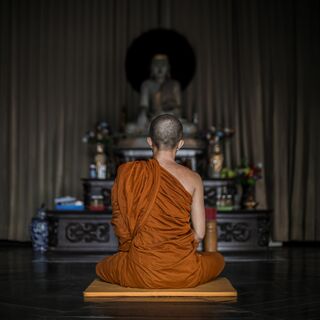
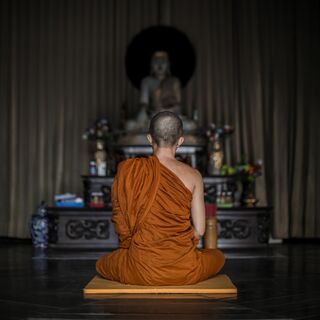
Kinhin is a slow, formal walking meditation used between sitting periods in Zen practice, with the hands held at the chest and attention placed on the sensations of each step.
Last Updated
4 Jul 2026
We are still reviewing this page. Our research team checks every technique page for accuracy and evidence quality before final release. Details may change as that review completes. The evidence badge shows our current reading of the published research.
RECOMMENDED DOSE
No direct dose-response literature exists for Kinhin. This short, gentle introductory dose is based on general practice conventions for walking meditation and should be treated as a starting point only. No direct dose evidence; editorial synthesis.
No direct dose-response literature exists for Kinhin. This represents a modest step up in duration and frequency for an established practice, drawn from general walking-meditation conventions. No direct dose evidence; editorial synthesis.
No direct dose-response literature exists for Kinhin. This maintenance-level dose reflects general conventions for a committed walking-meditation practice, often interleaved with seated meditation as in traditional Zen settings. No direct dose evidence; editorial synthesis.
Session length
Session length: 5–10 minutes
5
MIN
How long each individual practice session should last from start to finish.
Frequency
Frequency: 3–5 days
3
DAYS
The number of days per week to fit a session into your routine.
Session length
Session length: 10–20 minutes
10
MIN
How long each individual practice session should last from start to finish.
Frequency
Frequency: 4–6 days
4
DAYS
The number of days per week to fit a session into your routine.
Session length
Session length: 20–30 minutes
20
MIN
How long each individual practice session should last from start to finish.
Frequency
Frequency: 7 days
7
DAYS
The number of days per week to fit a session into your routine.
About this card. No direct dose-response literature exists for Kinhin; these recommendations are editorial synthesis based on general walking-meditation conventions and should be treated as starting points only. These recommendations are not a substitute for personalised guidance from a qualified practitioner.
Quick answers to what people most often ask. Each card links to the deeper section below.
evidence
No trial has tested Kinhin directly, so evidence is borrowed from broader meditation research. An adolescent retreat study found small gains in attention, self-regulation, and emotional functioning, and mindfulness-based cognitive therapy reduced depression relapse in people with three or more prior episodes. These make steadier focus plausible for Kinhin, not proven.
good for
Kinhin suits people who find sitting still difficult and want a gentler doorway into meditation, along with those seeking steadier focus, a calmer mind, and a more grounded, upright way of moving. It is not a substitute for care when trauma, acute distress, or a diagnosed condition is involved.
Read moresafety
Most healthy adults can practise Kinhin safely on their own. People managing trauma or acute distress should begin in a supported setting, since sustained quiet attention can let difficult emotions surface. Anyone with balance, vestibular, or mobility concerns should adapt the slow pace and lowered gaze, using a clear, uncluttered path.
Read morehow it works
Kinhin is understood to work by giving attention one clear, repeating anchor, the sensation of each step lifting, moving, and settling, so the mind wanders less. The upright, deliberate posture engages deep muscles along the spine and pelvis, while matching one step to each breath brings footfall and breathing into a shared, easy rhythm.
Read moreKinhin is a slow, formal walking meditation from Zen Buddhism, practiced between periods of seated meditation, in which you walk with hands held at the chest and attention anchored on the sensations of each step.
Practitioners walk slowly in a circle or line, hands in shashu mudra, the left fist wrapped by the right hand at the solar plexus, with the gaze lowered about two meters ahead. Pace is set by tradition, typically one step per full breath in Soto Zen and brisker in Rinzai Zen, with attention held on each step lifting, moving, and placing. It is an embodied bridge between sitting periods, carrying the concentration of seated meditation into deliberate movement.
Kinhin is not casual strolling, a fitness walk, or a guided visualization. It is a codified Zen form performed between periods of zazen, defined by the shashu hand position, the lowered gaze, and the deliberate, tradition-set pace. It differs from secular mindful-walking programs in its lineage and ritual framing, though it shares the underlying feature of holding attention on the movement of walking itself.
Not to be confused with
A rest break from zazen
Kinhin is not a pause or stretch between sitting periods. It is an active walking continuation of the same concentrated attention cultivated in seated zazen, treated as meditation in its own right rather than downtime.
Fitness or brisk walking
Kinhin is not walking for exercise, distance, or step count. Its slow, deliberate pace serves meditative attention and upright posture, not cardiovascular fitness, so pace and effort are set by the breath rather than by a workout goal.
Labyrinth walking
Labyrinth walking is a contemplative walking practice rooted mainly in Christian tradition that follows a single winding path to a center and back. Kinhin walks a simple circle within Zen Buddhist form and pairs each step with the breath and a lowered gaze.
Kinhin is thought to work by giving attention one clear, repeating anchor: the sensation of each step lifting, moving, and placing, which practitioners experience as a mind that wanders less and a steadier sense of being present. The upright, deliberate posture draws on postural integration, a rebalancing of head, spine, and pelvis so that standing tall starts to feel supported by structure rather than held up by muscular effort. Matching one step to each breath adds rhythmic entrainment, where breathing and footfall settle into a shared, easy pattern that seems to carry attention along rather than force it. These accounts come from Zen tradition and the broader meditation literature, not from measurements taken during Kinhin itself, so they describe how the practice is understood to work rather than a proven mechanism.
When the mind keeps drifting to worries, Kinhin gives it one simple, repeating job: the feel of each step lifting, moving, and settling. This is attentional anchoring, holding focus on a single clear target so attention stops jumping to distraction, and people often notice fewer spiraling thoughts and a steadier sense of being present from one footfall to the next. In Zen tradition this carries the concentration of seated practice into slow walking, though it has not been measured directly in Kinhin.
If staying upright can feel like constant muscular effort, Kinhin offers something different: walking slowly with an erect spine and the hands resting at the chest, each step becomes a chance to restack head over spine over pelvis, so being tall starts to feel supported by structure rather than held up by strain. This is how the Zen tradition describes the practice; it has not yet been confirmed by direct study of Kinhin itself.
When you match one step to each breath, breathing and footfall settle into the same slow, repeating pattern, a synchronising the body does called rhythmic entrainment. Many practitioners describe being carried by that pace, so staying present takes less effort and the mind eases into the rhythm instead of working to hold focus.
What Kinhin does to the body has not been directly measured, so the changes described here are inferred from how the practice is taught and from related walking meditation rather than recorded in Kinhin studies. Slow, upright walking is expected to draw the deep postural muscles along the spine and pelvis into steady, low-level engagement, which practitioners tend to feel as standing taller and lighter, held up by structure instead of strain. The same deliberate attention to foot placement may sharpen proprioception, the body's inner sense of where it is in space, so balance feels less effortful and each step lands more precisely. Because none of this has been observed in Kinhin directly, the direction and size of any change remain uncertain.
Walking slowly with a tall, stacked spine can leave you feeling supported by structure rather than held up by effort, a sensation that comes as the deep postural muscles along the back and pelvis settle into steady, low-level engagement. This hasn't been measured in Kinhin directly; it's inferred from the practice's emphasis on erect alignment.
Standing and walking can start to feel lighter, as if your skeleton is carrying the load while your muscles stop bracing just to stay upright. Kinhin's slow, deliberately erect walking is expected to ease postural strain, the low-level muscular effort of holding the body up when its alignment is inefficient. This is inferred from related movement-meditation practices rather than measured in Kinhin itself, so treat the lighter feeling as a plausible result rather than a proven one.
You may start to feel more clearly located in your own body, steadier on your feet and aware of moving from the ground up. Slow, attentive stepping is thought to sharpen proprioceptive accuracy, the body's internal sense of where its parts are positioned in space, though this comes from how related movement-meditation practices work rather than from direct measurement in Kinhin.
Standing and walking can start to feel less effortful during slow, upright Kinhin, as if your structure rather than constant muscular gripping is holding you up. That maps to neuromuscular efficiency, meaning how smoothly the muscles that keep you upright share the work. It has not been measured directly in Kinhin; the change is expected from the practice's deliberate attention to balanced, vertical posture, and practitioners often describe feeling lighter and more supported on their feet.
Walking can start to feel smoother and more even, as if each step lands with less effort and conscious steering. That ease points to sensorimotor coordination, how well the body senses its own position and organizes movement, which related walking-meditation practices suggest may improve as stepping, breath, and attention settle into one steady pattern, though it has not been measured in Kinhin itself.
Emerging, indirect evidence stands behind Kinhin's likely benefits, since no trial has tested this walking practice on its own and the support comes from the wider meditation and mindfulness field. Among adolescents at a residential meditation retreat, training produced small average gains across emotional functioning, self-regulation, and working memory, with an effect size of Cohen's d = 0.38 versus a control condition; this is a small effect, meaning the typical participant ended up better off than roughly two-thirds of those who did not take part (Galla, 2017). Structured mindfulness programs have also lowered the risk of depression relapse in some clinical trials of recovered recurrently depressed adults (Teasdale et al., 2000). These findings suggest steadier focus and emotional balance are plausible for Kinhin, but what is not yet supported includes any randomized trial of the practice itself, long-term follow-up, or a claim that it treats a diagnosed condition.
Most research that bears on Kinhin looks at meditation and mindfulness in general rather than this specific walking form. The same adolescent retreat study behind the benefits above found only small average gains in attention, self-regulation, and emotional functioning (Galla, 2017), and mindfulness-based cognitive therapy reduced depression relapse over 60 weeks, mainly among people with three or more prior episodes (Teasdale et al., 2000). The main limitation is directness: these studies examine the broader practice, not Kinhin, so they make its benefits plausible rather than proven, and no randomized trial or review has yet isolated the walking practice itself.
0
Meta-analyses
0
RCTs
0
Systematic reviews
0
Observational
4
Pilot
Studied populations
Outcomes measured
Specific running practices of certain regions of the East: the experience of philosophical analysis
2021
Finding: This philosophical analysis traces how movement practices among Buddhist monks in the ancient East were understood as a form of dynamic meditation and a path toward spiritual development, rather than as competition or sport. For anyone approaching Kinhin, it helps explain why walking here is treated as practice in its own right, part of a long tradition that sees movement itself as a way of cultivating attention and insight. The paper examines running practices broadly rather than Kinhin in particular, so it offers cultural and historical context, not evidence of any specific health effect.
See full citation in referencesPrevention of relapse/recurrence in major depression by mindfulness-based cognitive therapy.
2000
Finding: In a trial that followed 145 adults who had recovered from repeated bouts of depression, adding a structured mindfulness program (mindfulness-based cognitive therapy) to usual care lowered the rate of relapse over the following year, but only for those who had already lived through three or more past episodes; for people with just two prior episodes it made no measurable difference. It's worth being clear that this study looked at a full multi-week therapy course for depression, not Kinhin or walking meditation, so the results don't transfer directly to a walking practice. Still, it's a useful reminder that mindfulness training has shown real protective value for certain people at high risk of recurring depression, a benefit best pursued under professional guidance rather than as a substitute for treatment.
See full citation in referencesKinhin comes from Zen Buddhism, where it is performed between periods of seated zazen in both the Soto and Rinzai schools. In this worldview walking is not a break from meditation but an embodied continuation of it, and movement practices across Eastern Buddhist traditions have long been framed as forms of dynamic meditation aimed at spiritual development (Kannykin, 2021). These roots help explain the practice's form, the shashu hand position, the lowered gaze, and the tradition-set pace, rather than proving any clinical effect.
For most healthy adults, Kinhin is a gentle, low-intensity walking practice you can safely do on your own. Two situations call for a little more care, neither drawn from measured harm but inferred from how the practice works and from broader contemplative-practice experience. The first is emotional: the quiet, sustained attention that settles a busy mind can sometimes let difficult feelings surface, a practice-informed caution most relevant to anyone managing trauma or acute distress. The second is physical: walking slowly with a lowered gaze places modest demands on balance and footing, which is worth keeping in mind if you have vestibular or mobility concerns. Either way, Kinhin works best as a complement to professional care, not as a replacement for treatment.
Two groups may want extra support before practising. If you live with trauma or are in an acute mental-health crisis, it helps to begin in a supported setting, because the same inward, sustained attention that quiets a restless mind can also allow distressing feelings to rise. This is a practice-informed caution, moderate in significance, rather than an evidence-based one, since no study has measured harm during Kinhin. If you have balance, vestibular, or lower-limb mobility limitations, adapt the slow pace and downward gaze, which both ask for steady footing, ideally practising along a clear, uncluttered path or with support close by. That caution follows from the physical demands of the form, not from a safety trial. Neither concern rests on safety studies of Kinhin, which do not yet exist.
The quiet, sustained inward attention that settles a busy mind can also allow difficult feelings to surface. If you live with trauma or are in an acute mental-health crisis, begin in a supported setting, and know you can open your eyes, slow down, or stop at any point. Kinhin works best as a complement to professional care, not a replacement for treatment. This is a practice-informed caution rather than an evidence-based one, since no study has measured harm during Kinhin.
| Technique | Best for | Use with care | Evidence strength | Distinction |
|---|---|---|---|---|
| Zazen (seated Zen meditation) | Longer, stillness-based concentration when the body can settle comfortably without the restlessness that sitting can sometimes bring. | If sitting still tends to bring agitation, drowsiness, or leg or back pain, the movement of Kinhin may suit you better. | moderate EVIDENCE | Zazen is the seated counterpart to Kinhin within the same Zen practice. Both cultivate concentrated, present-moment attention, but zazen holds a still, cross-legged posture while Kinhin carries that focus into slow, upright walking during the transition between sitting periods. The technique is the same steadying of attention; only the posture and movement differ. |
| Secular mindful walking meditation | A non-religious everyday routine or a structured mindfulness program where the contemplative technique matters more than the tradition. | moderate EVIDENCE |
Kinhin is a slow, formal walking meditation practiced between periods of seated Zen meditation, with the hands held at the chest in shashu mudra, the gaze lowered about two meters ahead, and attention on the lifting, moving, and placing of each step.
+
Kinhin is the Zen Buddhist walking practice done between sitting periods, treated as an embodied continuation of the concentration built in zazen rather than a rest break. You walk slowly with an upright spine, the hands held in shashu mudra, the left fist lightly wrapped by the right hand at the solar plexus, and the eyes cast gently downward, placing full attention on each step. Pace is tradition-specific, very slow in Soto Zen and brisker in Rinzai Zen. This describes the practice form as taught in tradition, not a claim about clinical or therapeutic effects.
In shashu. You make a light fist with the left hand and wrap it with the right, holding both at the solar plexus, the upper belly just below the chest, so the arms stay settled and quiet as you walk slowly.
+
In shashu, the traditional hand position of Kinhin. The left hand forms a loose fist and the right hand covers it, resting against the solar plexus, the soft area just below the breastbone, with the elbows relaxed and the arms held still. This is how the form is taught in the Zen tradition to keep the hands settled and support steady, upright walking between periods of seated practice, not a position with any proven clinical effect.
The slow, formal walking meditation practiced between periods of seated meditation in Zen Buddhism, with the hands held at the chest and attention placed on the movement of each step.
Seated Zen meditation, the still, cross-legged practice that Kinhin alternates with. Kinhin is understood as the walking continuation of the concentration built during zazen.
The hand position used in Kinhin, in which the left fist is lightly wrapped by the right hand and held at the solar plexus, keeping the arms settled and quiet during walking.
A Zen school in which Kinhin is walked very slowly, often one step per full breath, emphasizing an unhurried, deliberate pace.
A Zen school in which Kinhin is walked at a brisker pace than in Soto Zen, while still holding concentrated attention on the stepping process.
Holding attention on one clear target, in Kinhin the sensations of each step, so the mind stops repeatedly jumping to worries or distractions. It tends to feel like fewer spiraling thoughts and a clearer sense of being present.
Focused-attention regulation in which a chosen sensory anchor is used to stabilize attentional selection and reduce mind-wandering.
Aligning the body's segments, head, spine, and pelvis, into more balanced relationships so structure carries more of the load and muscles work less to hold you up. It can feel like being stacked and effortlessly upright.
Biomechanical alignment of postural segments that improves postural-muscle coordination and reduces compensatory strain patterns.
The way the body's rhythms, such as breathing and footsteps, fall into step with a steady repeating pace, here the slow cadence of the walking. It often feels like being carried by the rhythm, so staying present takes less effort.
Stanislav Vladimirovich Kannykin (2021). Specific running practices of certain regions of the East: the experience of philosophical analysis. https://doi.org/10.7256/2454-0625.2021.10.34933
Cited in: Roots and tradition
John D. Teasdale, Zindel V. Segal, James Williams, Valerie Ridgeway, Judith M. Soulsby, Mark A. Lau (2000). Prevention of relapse/recurrence in major depression by mindfulness-based cognitive therapy.. https://doi.org/10.1037//0022-006x.68.4.615
Explore guided sessions to deepen your Kinhin (Zen Walking) technique.
When walking starts to feel smooth and almost automatic, as if the rhythm is carrying you rather than you driving each step, that is motor-rhythm coordination, the way stepping pace, breathing, and movement settle into one shared rhythm. It has not been measured directly in Kinhin; better coordination is inferred from related rhythmic movement practices, where people often describe the body flowing along with the pattern instead of walking effortfully.
Attention feels steadier and less scattered when each step becomes the one thing to follow. Kinhin's effect on the brain's attentional control networks, the systems that hold focus on a single target and pull it back when it drifts, hasn't been measured directly, but broader meditation research links regular practice to modest gains in focus and self-regulation (Galla, 2017).
Attention settles onto each step and the pull of stray thoughts eases, so staying present starts to feel less like effort and more like a steady, quiet holding. That felt shift points to sustained attention network activity, the brain systems that keep focus on one thing over time rather than drifting; it has not been measured during Kinhin itself and is inferred from related focused-attention meditation.
| Outcome | Effect size | 95% CI | N | Comparator | Source |
|---|---|---|---|---|---|
| pooled across emotional functioning, self-regulation, working memory | Cohen's d (average across outcomes) = 0.38 | — | 79 | control condition | Galla, 2017 |
The research is useful for setting expectations, but study methods and participant groups vary. Treat the findings as general guidance rather than a promise about any single session, and not a replacement for clinical care.
Prevention of relapse/recurrence in major depression by mindfulness-based cognitive therapy.
n = 145
Finding: In this 60-week trial of 145 adults who had recovered from repeated bouts of depression, an 8-week mindfulness-based cognitive therapy program cut the rate of relapse for those with three or more past episodes, while offering no measurable protection for people with only two prior episodes. This points to structured mindfulness training as a possible support for staying well after recurrent depression, at least for those most prone to it. Keep in mind, though, that this program is a formal multi-part therapy for depression, not Kinhin or walking meditation, so it is included here only as loosely related background rather than direct evidence for the practice.
reported narratively
“Safe in My Own Mind:” Supporting Healthy Adolescent Development Through Meditation Retreats
n = 79
Finding: When 79 teenagers (average age 17) spent a week at a residential meditation retreat, they showed small-to-moderate gains in managing their emotions, regulating their own behaviour, and holding information in working memory compared with a control group, with a growing sense of self-compassion appearing to drive part of the benefit. For someone considering Kinhin, this is a useful signal that meditation training can strengthen focus and emotional steadiness, but it is not direct evidence for walking meditation. The study looked at an intensive week-long retreat for adolescents and relied on participants' own self-reports, so the results can't be pinned specifically to Kinhin or to adults following a regular walking practice.
Cohen's d (average across outcomes) = 0.38
Walking slowly with the eyes cast down about two meters ahead places modest demands on balance and footing. If you have vestibular, balance, or lower-limb mobility concerns, practise along a level, uncluttered path or with support close by, ease into the slow one-step-per-breath pace, and lift your gaze and pause the moment you feel unsteady. Steady footing always comes before form. This follows from the physical demands of the practice, not from a safety trial.
Kinhin is best approached as a gentle, low-intensity practice you can do on your own, ideally in a level, uncluttered space where slow walking with a lowered gaze never risks an unexpected trip. As a beginner, treat it as support alongside any professional care you are receiving, and remember that steady footing and your own comfort always come before holding the form exactly right. If quiet attention brings up difficult feelings or you feel unsteady, it is always fine to lift your gaze, slow down, or stop.
Choose a level, uncluttered space where you can walk slowly in a straight line or gentle circle without obstacles underfoot, so a lowered gaze never means an unexpected trip.
Begin at a comfortable speed and lengthen only gradually toward the traditional one-step-per-breath cadence, giving your balance time to adjust rather than forcing a pace that leaves you unsteady.
Rest your eyes on the floor roughly two meters ahead, with the hands held in shashu at the solar plexus and the spine upright. If you feel light-headed or unsteady, lift the gaze and pause. Steady footing always comes before form.
If quiet attention brings up distressing thoughts or emotions, you can open your eyes, slow down, or stop. There is no requirement to stay with material that feels overwhelming, and stepping out of the practice is a valid choice.
After a longer session, return to standing or sitting gently to avoid dizziness, and treat Kinhin as support alongside any treatment you are receiving rather than a substitute for it. Check with a clinician if you live with trauma, an acute mental-health condition, or a balance or mobility concern.
This information is educational and is not medical advice. This practice is not a substitute for professional care and should not replace prescribed medication or treatment for any medical or mental-health condition. If you are managing a health condition or taking medication, talk with a qualified health professional before changing your practice. If you are in distress or crisis, seek professional support.
| Secular mindful walking teaches the same core skill as Kinhin, slow walking with attention held on the sensations of each step, but strips away the Zen ritual form. There is no shashu hand position, no circular walking between sitting periods, and no lineage framing. Kinhin keeps that religious structure, which many practitioners find gives the slow pace its sense of purpose. |
| Theravada walking meditation (cankama) | Practitioners drawn to insight-oriented noting practice within Theravada Buddhist traditions. | EVIDENCE | Theravada walking meditation also pairs slow walking with sustained attention, but it usually follows a straight, back and forth path with detailed mental noting of each phase of the step, lifting, moving, placing. Kinhin instead walks a circle in a fixed Zen form between periods of seated zazen, and its emphasis is on carrying concentration forward rather than on fine-grained noting. |
| Tai chi and qigong | People who want gentle, flowing whole-body movement for balance and embodiment rather than a single, repeated step. | EVIDENCE | Tai chi and qigong are slow, flowing movement meditations that share Kinhin's use of rhythm and embodied attention, so they can feel related. They use continuous, whole-body sequences drawn from Chinese traditions, whereas Kinhin rests on the simple repeated stepping of Zen walking and stays close to seated meditation in both form and intent. |
Not proven for Kinhin specifically. No trial has tested this walking practice on its own, so steadier focus and a calmer mind are plausible but unconfirmed, based on broader meditation research rather than direct evidence (Galla, 2017).
+
Not proven for Kinhin specifically. The supporting evidence is indirect: a meditation retreat study reported small average gains in attention, self-regulation, and emotional functioning (Cohen's d = 0.38 versus control), and mindfulness-based programs have reduced depression relapse in some clinical trials (Galla, 2017), (Teasdale et al., 2000). Because no randomized trial or review has isolated Kinhin itself, these findings make focus and calm reasonable to expect rather than established, and they are not a treatment claim.
Just meditation in general. No randomized trial or review has tested Kinhin itself, so the supporting evidence is indirect, borrowed from the broader meditation and mindfulness literature (Galla, 2017).
+
Just meditation in general. No study has isolated Kinhin as a walking practice, so the closest evidence comes from meditation research on different groups: a residential retreat study reported small average gains in attention, self-regulation, and emotional functioning among adolescents (Galla, 2017), and a mindfulness-based cognitive therapy trial reduced depression relapse in recovered recurrently depressed adults (Teasdale et al., 2000). This is a directness gap, not proof: these findings make Kinhin's benefits plausible, not established.
Likely through rhythmic entrainment: when one step falls in time with each breath, breathing and footfall settle into a shared pattern that can feel like being carried, so holding attention takes less effort. This is how Kinhin is understood to work, not a measured effect.
+
The likely reason is rhythmic entrainment, meaning the body's rhythms of breath and gait lock into a steady, repeating pattern rather than running separately. When each step is paired with a full breath, attention has one predictable rhythm to ride, which practitioners describe as being carried by the pace instead of forcing it. This account comes from Zen tradition and the broader meditation literature; it is a plausible account, but it has not been measured during Kinhin itself, so the pathway stays a hypothesis rather than a confirmed physiological effect.
Possibly, but it isn't proven. Kinhin's slow, upright walking is understood to encourage postural integration, rebalancing head, spine, and pelvis so structure carries more of the load, which may feel like standing taller with less effort. This has not been measured in Kinhin itself, so any change remains uncertain.
+
Possibly, though the effect is suggestive rather than confirmed. Kinhin emphasises a deliberately erect spine during slow walking, and the working idea is postural integration: sustained attention to vertical alignment retrains habitual posture so that being upright starts to feel supported by structure rather than held up by muscular effort. This account comes from how Kinhin is taught and from related walking meditation, not from direct measurement during the practice, and no trial has isolated Kinhin for posture outcomes, so the direction and size of any change stay uncertain.
Use care. Kinhin's slow pace and lowered gaze place modest demands on footing, so if you have balance, vestibular, or mobility concerns, walk a clear path, use support, and lift your gaze and pause if unsteady. No safety trial of Kinhin exists, so this caution is inferred from the practice, not from measured harm.
+
Use care. Because Kinhin is walked slowly with the eyes cast down about two meters ahead, it asks for steady footing that can be harder to maintain with vestibular, balance, or lower-limb mobility limitations. A practical approach is to practise along a level, uncluttered path or with support, ease into the slow one-step-per-breath pace, and raise your gaze and pause the moment you feel unsteady. This is inferred from how the form works, not an evidence-based finding, since no safety study of Kinhin has been done; if you live with a balance or mobility condition, it is worth checking with a clinician and treating Kinhin as a complement to care.
Use care. No safety trial of Kinhin exists, so this is a practice-informed caution: the same quiet, inward attention that settles a busy mind can occasionally let distressing material surface. If you're managing trauma or acute distress, begin in a supported setting, and know you can open your eyes or stop at any point.
+
Use care. Kinhin has not been tested in safety trials, so no measured harm exists to report; this caution is inferred from how sustained inward attention works and from broader contemplative-practice experience rather than from studies of the practice itself. For people living with trauma or an acute mental-health crisis, that same attention can allow difficult feelings to rise, so it is wise to start in a supported setting and to feel free to open the eyes, slow down, or stop. Kinhin works best as a complement to professional care, not a substitute for treatment.
Start with a level, uncluttered path where you can walk slowly in a straight line or gentle circle. Rest your hands at the chest in shashu, lower your gaze about two meters ahead, and place attention on each step lifting, moving, and settling, easing gradually toward one step per breath. If you feel light-headed or unsettled, pause and rise slowly.
+
Start by clearing a level, uncluttered space so a lowered gaze never means an unexpected trip. Begin at a comfortable speed and lengthen only gradually toward the traditional one-step-per-breath cadence, keeping the spine upright, the hands quietly wrapped in shashu at the solar plexus, and the eyes soft on the floor a couple of meters ahead. Let attention rest on the simple mechanics of each step, and if difficult feelings surface or you feel unsteady, open your eyes, slow down, or stop, then return to standing gently. It works best as a complement to any professional care you are receiving, not a replacement for it.
The core skill is the same, but the form differs. Both are slow walking with attention held on each step; Kinhin keeps the Zen ritual structure, while secular mindful walking drops it.
+
The core skill is the same, but the form differs. Kinhin and secular mindful walking both train slow walking with attention on the lifting, moving, and placing of each step. What sets Kinhin apart is its Zen ritual structure: the shashu hand position, with the left fist wrapped by the right hand at the solar plexus, the circular walking between periods of seated zazen, and a tradition-set pace. Secular mindful walking strips that lineage framing away. No trial has directly compared the two, so this is a difference of form and tradition rather than of proven benefit.
Synchronization of physiological rhythms, including respiration, gait cadence, and neural oscillations, to an external rhythmic stimulus.
The body's internal sense of where its limbs, joints, and posture are in space without needing to look, which can show up as feeling more clearly located in your body and steadier on your feet.
Cited in: Benefits
John D. Teasdale, Zindel V. Segal, Jane Williams, Valerie Ridgeway, Judith M. Soulsby, Mark A. Lau (2000). Prevention of relapse/recurrence in major depression by mindfulness-based cognitive therapy.. https://doi.org/10.1037/0022-006x.68.4.615
Brian M. Galla (2017). “Safe in My Own Mind:” Supporting Healthy Adolescent Development Through Meditation Retreats. https://doi.org/10.1016/j.appdev.2017.09.006
Editorially curated. Tracks are not themselves clinically studied; evidence on the page applies to Kinhin (Zen Walking) as a technique.
Beginner content for Kinhin (Zen Walking)

★ 4.8
·
Music
·
4 min
Narek Mirzaei | Music Of Wisdom
How hard is Kinhin (Zen Walking)?
Kinhin belongs in the mid tier because the body load is light but the structured attentional discipline is real.
3
Mental Effort
3 / 4
▾Emotional Depth
1 / 4
▾Physical Intensity
2 / 4
▾Prior Knowledge
2 / 4
▾