The world’s largest free audio library for everyday wellbeing
Psychological & Psychotherapy
Self-soothing is the deliberate use of the five senses to offer yourself comfort and a felt sense of safety when you are distressed (Regis & Regis, 2013).
Last Updated
4 Jul 2026
We are still reviewing this page. Our research team checks every technique page for accuracy and evidence quality before final release. Details may change as that review completes. The evidence badge shows our current reading of the published research.
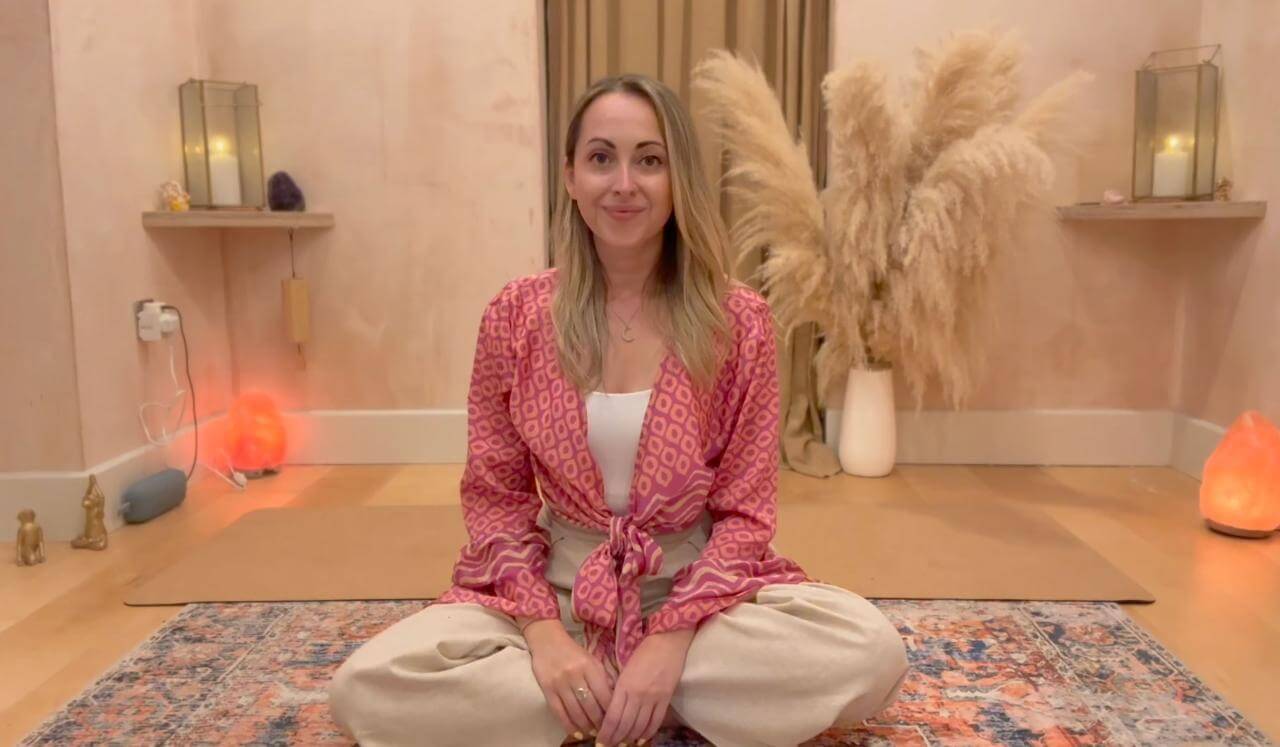
Beginner video for Self-Soothing Practice

★ 4.8
·
Guided
·
3 min
Scarlett Grace
How hard is Self-Soothing Practice?
Self-Soothing Practice stays moderate because it is regulation-oriented and usually saturates after the initial settling phase.
2
Mental Effort
2 / 4
▾Emotional Depth
2 / 4
▾Physical Intensity
1 / 4
▾Prior Knowledge
1 / 4
▾RECOMMENDED DOSE
No direct dose evidence; editorial synthesis. A short, low-commitment session a few times per week is a gentle way to build the habit without overwhelm. No direct dose-response literature exists for this technique.
No direct dose evidence; editorial synthesis. Once the practice feels familiar, a modest step up in length and near-daily frequency helps consolidate the skill. These figures reflect general practice conventions, not a tested protocol.
No direct dose evidence; editorial synthesis. A longer daily session suits established practitioners seeking a maintenance routine. This range is inferred from general emotion-regulation practice, not from dose-response studies of this technique.
Session length
Session length: 5–10 minutes
5
MIN
How long each individual practice session should last from start to finish.
Frequency
Frequency: 3–4 days
3
DAYS
The number of days per week to fit a session into your routine.
Session length
Session length: 10–20 minutes
10
MIN
How long each individual practice session should last from start to finish.
Frequency
Frequency: 5–6 days
5
DAYS
The number of days per week to fit a session into your routine.
Session length
Session length: 20–30 minutes
20
MIN
How long each individual practice session should last from start to finish.
Frequency
Frequency: 7 days
7
DAYS
The number of days per week to fit a session into your routine.
About this card. These recommendations are not a substitute for personalised guidance from a qualified practitioner. No direct dose-response literature exists for this technique, so the durations and frequencies below are conservative starting points based on general emotion-regulation practice conventions rather than tested protocols.
Quick answers to what people most often ask. Each card links to the deeper section below.
evidence
Most research on self-soothing comes from infants being comforted rather than adults practising the skill. A single-blind trial of 42 mother-infant pairs found less crying and night waking, an experiment with 69 infants measured a prompt drop in heart rate, and a survey of 5,000 families linked soothing routines to steadier sleep. No direct adult trials exist.
Read moregood for
Self-Soothing Practice suits adults facing everyday stress, pre-sleep restlessness, or moments of distress when comfort from others is not available. Drawn from Dialectical Behavior Therapy as a distress-tolerance skill, it offers short-term settling. It is not a substitute for care when anxiety, depression, trauma, or dissociation symptoms are severe.
Read moresafety
Most healthy adults can practise Self-Soothing Practice as a low-risk skill. Take extra care if you are prone to vivid escapist daydreaming or live with anxiety, depression, or dissociation, since imagery-heavy soothing can become absorbing rather than settling. If soothing turns compulsive or crowds out daily life, seek professional support and favour body-based comfort.
Read morehow it works
Self-soothing appears to work by engaging the affiliative care system, the mammalian network that responds to warmth and gentle contact, so a hand on the heart or a kind inner voice can produce feelings of safety. Contact-based soothing also draws on the body's rest-and-recovery branch, which slows the heart and eases tension.
Read moreSelf-soothing is the deliberate use of the five senses, touch, sound, imagery, warmth, and scent, to offer yourself comfort and a felt sense of safety when distressed.
A session moves deliberately through the five senses: gentle touch such as a hand on the heart or a self-hug, soothing sound such as humming or kind spoken words, calming imagery such as a recalled safe place, imagined warmth, and a remembered pleasant scent. The practitioner engages each channel on purpose, building a repertoire of comforting sensory experiences that can be returned to during moments of distress.
Self-soothing is a self-directed comfort skill, distinct from co-regulation, where another person helps calm you. It is not distraction or avoidance; the aim is to tolerate distress with comfort rather than to escape it. Imagery-based soothing should not tip into immersive, compulsive fantasy, which is a different and unhelpful pattern. It is a supportive skill, not a treatment for any diagnosed condition.
Not to be confused with
Maladaptive daydreaming
Self-soothing is meant to comfort you and then return you to your day. Maladaptive daydreaming is vivid, absorbing fantasy that turns compulsive and crowds out real life. Studies link that immersive pattern to more distress rather than relief, especially for people with anxiety, depression, or dissociation.
Co-regulation (being soothed by another person)
Co-regulation is calming that depends on someone else, a caregiver, partner, or clinician, providing warmth and steadiness. Self-soothing is the self-directed version: offering that comfort to yourself. Warm contact-based co-regulation appears to help build the very capacity to self-soothe over time.
Emotional suppression or avoidance
Suppression pushes distress away or bottles it up. Self-soothing does the opposite: it acknowledges the distress and adds comfort so the feeling becomes tolerable rather than hidden. The goal is to stay with the emotion more gently, not to shut it down.
"Self-soothing" in infant sleep research
In infant and pediatric studies, self-soothing means an infant settling back to sleep without parental help after a night waking. That is a developmental milestone measured in babies, not the deliberate five-senses comfort skill an adult practices in DBT and compassion-focused work.
Self-soothing appears to work by engaging the affiliative care system, the mammalian soothing network that responds to warmth and gentle contact, so that a hand on the heart or a kind inner voice can produce feelings of safety much as a caregiver's comfort does (Natalie et al., 2024). Contact-based soothing also seems to draw on parasympathetic activation, the body's rest-and-recovery branch, which slows the heart and eases tension. Both readings rest on the same research into how caregivers calm infants rather than on direct measurement of adults practising the skill, so these pathways are best read as plausible, not established.
A hand resting on the heart or a gentle inner voice can bring a wave of warmth and the sense of being cared for. This appears to engage the affiliative care system, the same soothing network that calms a distressed child when a caregiver comforts them, and over time it may help you steady yourself (Natalie et al., 2024).
A racing, keyed-up feeling can start to loosen when soothing is deliberate and physical, like a hand resting on your heart or a warm, steady voice. Early research on close, contact-based comforting suggests this kind of soothing may help the nervous system move from high alert toward a calmer, more settled state over time (Natalie et al., 2024).
Resting a hand on your heart or settling into a slow self-hug often lets the body soften, with muscles easing and breathing slowing. This warm, contact-based comfort appears to engage the parasympathetic nervous system, the body's rest-and-recovery branch that slows heart rate and eases physical tension (Natalie et al., 2024).
In the body, sensory soothing has been measured to lower heart rate and ease visible signs of distress (Möller et al., 2019). When infants were comforted with warmth, sound, and gentle movement, their heart rate dropped and their fussing settled, a shift adults often describe as a slowing pulse and a body that stops bracing. The same study found that effects on heart-rate variability, the beat-to-beat flexibility that tracks how readily the body recovers, were mixed rather than consistent. These measurements come from infants, not from adults practising the five-senses skill.
When comfort registers, the body can settle quickly, with the pulse easing and the muscles unbracing as the parasympathetic system, the body's rest-and-recovery branch, slows the heart. Infants soothed with warmth, sound, and movement showed a drop in heart rate and less fussing (Möller et al., 2019), though this has not yet been measured directly in adults practising the five senses.
The body's fight-or-flight gear can ease when comfort comes in through the senses. During gentle sensory soothing, signs of sympathetic arousal such as an elevated heart rate have been measured to drop (Möller et al., 2019), which can feel like the pulse slowing, the muscles loosening, and the sense of being on alert quieting into something calmer.
Limited–Emerging evidence, drawn mostly from infants being soothed rather than adults practising this skill, supports sensory soothing for calming acute distress and for more settled, consolidated sleep (Renginar & Ayla, 2019), (Sadeh et al., 2008). Structured soothing reduced crying and night waking in a small infant trial, and soothing-supportive routines were linked to steadier sleep in a large family survey. What is not yet supported: direct trials in adults, effect-size estimates, long-term follow-up, or any claim that self-soothing treats a diagnosed anxiety, mood, or trauma condition.
When a crying infant is hard to settle, a steady stream of familiar sensory signals can shorten the crying and ease both sleep and feeding. In one trial, caregivers trained in structured soothing, the 4S set of swaddling, side-holding, rhythmic shushing, and gentle swinging, saw their infants settle more easily over the first months (Renginar & Ayla, 2019).
Structured sensory soothing calms distress in the studies that exist, but almost all of that evidence comes from infants being comforted rather than adults practising the skill themselves. A single-blind trial of 42 mother-infant pairs found less crying and night waking (Renginar & Ayla, 2019), an experiment with 69 infants measured a prompt drop in heart rate (Möller et al., 2019), and a survey of about 5,000 families linked soothing routines to more settled sleep (Sadeh et al., 2008). The limits are real, chiefly that the populations are infants, that heart-rate-variability findings were mixed, and that no direct adult trials have been published, so the adult practice is supported by analogy rather than proof (Burnham et al., 2002).
0
Meta-analyses
2
RCTs
0
Systematic reviews
0
Observational
7
Pilot
Studied populations
Outcomes measured
The research is useful for setting expectations, but study methods and participant groups vary. Treat the findings as general guidance rather than a promise about any single session, and not a replacement for clinical care.
Effect of soothing techniques on infants' self-regulation behaviors (sleeping, crying, feeding): A randomized controlled study.
n = 42
Finding: In a small single-blind trial, 42 mother-infant pairs were split into two groups, and the parents in one group were taught four structured soothing moves: swaddling, holding the baby on their side or stomach, shushing or white noise, and gentle swinging. Compared with the untrained group, infants whose caregivers used these techniques woke less often at night, cried for shorter stretches, and slept longer during the day across repeated check-ins over the following months. This points to something worth knowing for anyone drawn to self-soothing: structured, physical sensory input can genuinely calm distress and settle an overstimulated nervous system. Keep in mind, though, that this study looked at babies being soothed by a caregiver, not adults using sensory tools on themselves, so it supports the underlying idea more than it proves the adult practice.
reported narratively
Nighttime sleep-wake patterns and self-soothing from birth to one year of age: a longitudinal intervention study.
n = 80
Finding: Following 80 infants who slept on their own across their first year, this study found that giving them a new soothing object did little to change how they slept or how well they settled themselves back to sleep. What actually predicted stronger self-soothing at 12 months were everyday circumstances rather than any single prop: spending less time being lifted out of the crib, sleeping quietly from birth, and having parents who waited a little longer before responding overnight. The takeaway is that the ability to self-soothe seems to grow out of many small contextual factors, not from one special aid, so it's worth being skeptical of claims that a particular object reliably builds it. Keep in mind this was research on infants, so it speaks only indirectly to adults practising deliberate self-soothing techniques.
reported narratively
From co-regulation to self-regulation: Maternal soothing strategies and self-efficacy in relation to maternal reports of infant regulation at 3 and 7 months.
2024
Finding: Following 150 mothers and their babies in Germany at three and seven months old, this observational study compared two ways of calming an infant: "close" soothing built on physical and emotional contact, and "distant" soothing that keeps more space. Babies soothed with warm, contact-based comfort settled more easily and regulated their crying and sleep better over the following months, which fits the idea that being calmed by someone else early on helps build the capacity to self-calm later. For an adult exploring self-soothing, this hints at why warm, sensory comfort may matter, but the study looked only at caregivers calming infants, not at adults soothing themselves, so it is background support rather than direct proof that the practice works for you.
See full citation in referencesHeightened Levels of Maladaptive Daydreaming Are Associated With COVID-19 Lockdown, Pre-existing Psychiatric Diagnoses, and Intensified Psychological Dysfunctions: A Multi-country Study
2020
Finding: This study looked at "maladaptive daydreaming," an absorbing, hard-to-control retreat into vivid fantasy that people often lean on to manage distress, and how it changed when the COVID-19 pandemic forced many into isolation and quarantine. It offers a window into how people reach for inner coping strategies under prolonged stress, which is part of why it sits in the background of a self-soothing practice. It does not test the sensory self-soothing techniques themselves, though, so it can't tell you how well those specific tools work. Treat it as helpful context on distress and coping rather than direct proof that this practice delivers a particular result.
See full citation in referencesTrapped in a Daydream: Daily Elevations in Maladaptive Daydreaming Are Associated With Daily Psychopathological Symptoms
2018
Finding: This study looks at maladaptive daydreaming, a pattern in which people become absorbed in vivid, hours-long fantasies that pull them away from relationships and responsibilities and leave them genuinely distressed. It helps define and take seriously the very experience that a self-soothing practice might one day help with, rather than testing the practice itself. Because the specific outcomes and effect sizes for any technique were not reported here, treat this as background on the problem, not as evidence that self-soothing resolves it.
See full citation in referencesSleep and sleep ecology in the first 3 years: a web‐based study
n = 5,006
Finding: In a large online survey of more than 5,000 parents of children from birth to age three, babies whose bedtime routines gave them room to settle themselves slept for longer, less broken stretches, while those who relied more on active parental intervention to fall asleep tended to wake more often. For a practitioner, this hints that letting the body find its own way back to calm may support more settled rest. Keep in mind, though, that this was an observational study in infants, so it points to a pattern rather than proving cause, and it does not test the adult sensory self-soothing technique itself.
reported narratively
Infant crying and the calming response: Parental versus mechanical soothing using swaddling, sound, and movement.
n = 69
Finding: When 69 young infants were soothed with a combination of swaddling, sound, and gentle movement, they calmed quickly: they fussed less and their heart rates dropped compared with a distressing period of lying flat. A measure of nervous-system flexibility (heart-rate variability) tended to rise during soothing but did not shift reliably, so the calming effect showed up more clearly in visible distress and heart rate than in that deeper autonomic marker. This is a promising hint that gentle sensory input can settle the body, but the study looked at babies being soothed by others, not adults soothing themselves, so it can only suggest, not confirm, what the practice does for grown-ups.
reported narratively
Maladaptive Daydreaming in an Adult Italian Population During the COVID-19 Lockdown
2021
Finding: This study looked at how people coped emotionally during the COVID-19 pandemic, focusing on compulsive, immersive daydreaming, a habit of retreating into vivid fantasy that tends to go hand in hand with distress rather than relief. It examined how that pattern related to depression, anxiety, and stress during a period of major upheaval, so it maps the terrain of unhelpful coping more than it tests any calming technique. Because no specific results or effect sizes are available here, it is best read as a snapshot of one stressful moment rather than proof that any particular self-soothing routine helps. If you notice yourself drifting into escapist daydreams when overwhelmed, that may be a signal to reach for a grounded, deliberate soothing practice instead.
See full citation in referencesSelf-soothing comes from Dialectical Behavior Therapy, where comforting yourself through the five senses is one of the core distress-tolerance skills, and it also draws on compassion-focused therapy and trauma-informed grounding work. These roots help explain the practice's form, its deliberate movement through touch, sound, imagery, warmth, and scent, not any clinical effect for the adult skill.
For most healthy adults, Self-Soothing Practice is low-risk: it is built to bring a wave of comfort and then hand you back to your day feeling steadier. One specific caution applies to people who lean toward immersive, escapist fantasy, where comforting yourself through vivid daydreaming can tip into something compulsive and hard to step out of. Observational and daily-diary research links that pattern with more anxiety, depression, and dissociation, a sense of feeling detached from yourself or your surroundings, rather than with relief (Somer et al., 2020), (Soffer‐Dudek & Somer, 2018), (Musetti et al., 2021). This is a practice-informed caution drawn from adjacent fantasy-regulation studies, not an adverse effect measured in trials of this technique, so treat it as a moderate signal to watch: if soothing starts to crowd out daily life or feels beyond your control, reach out for professional support.
Take extra care if you are prone to vivid escapist daydreaming or live with anxiety, depression, or dissociation, since imagery-heavy soothing can become absorbing rather than settling for these groups (Somer et al., 2020), (Soffer‐Dudek & Somer, 2018), (Musetti et al., 2021). This is a moderate, practice-informed caution based on correlational studies of maladaptive daydreaming rather than direct testing of this practice. If you are working through recent trauma, practising with a therapist can help, so that any distressing material surfacing during imagery or safe-place stages can be held safely.
If you lean toward vivid, absorbing daydreaming, comforting yourself through extended safe-place imagery can shift from soothing into compulsive fantasy that becomes hard to step out of and starts to crowd out daily life. Observational and daily-diary research links that pattern with more anxiety, depression, and dissociation rather than relief, especially in people who are already vulnerable. Favour body-based channels such as gentle touch, warmth, and calming sound over extended imagery, and reach out for professional support if soothing feels out of your control.
If you are working through recent trauma, practise the safe-place and imagery stages alongside a qualified therapist who can help you slow down or step out if unprocessed material surfaces. Lean on body-focused soothing, such as a hand on the heart, warmth, or calming sound, rather than extended visualisation. This is a practice-informed caution; direct safety trials in trauma populations have not been done, so it is not a substitute for professional care when symptoms are severe.
Self-Soothing Practice works best as a brief, gentle reset that leaves you a little calmer and ready to rejoin your day, so a short time-bound window of a few minutes is a sensible starting shape. Because comforting yourself through vivid imagery can become absorbing for some people, it helps to lean on physical anchors like gentle touch, warmth, or calming sound to keep attention in the present. If you are working through recent trauma, having a qualified therapist alongside you gives you support should any distressing material surface.
Begin with a concrete anchor you can feel right now, such as a hand resting on your heart, a warm mug held in your palms, or a slow humming sound. Leading with touch or sound keeps attention in the present and lowers the chance of drifting into absorbing fantasy.
Give yourself a defined window of a few minutes and let the practice end there. A clear finish keeps soothing a brief reset rather than something that expands and displaces the rest of your day.
Notice how you feel afterward: it should leave you a little calmer and more able to return to ordinary activity. If it instead pulls you in, feels hard to stop, or leaves you more anxious or detached, treat that as a signal to pause the imagery-based version.
When immersive daydreaming tends to take over, lean on the physical channels, gentle touch, warmth, and calming sound, rather than extended safe-place imagery, so the practice stays anchored in the body.
If you are recovering from trauma, use safe-place imagery or body-focused soothing alongside a qualified therapist who can help you slow down or step out if unprocessed material surfaces.
If self-soothing becomes compulsive, hard to exit, or starts to crowd out daily functioning, seek professional support. This is a sign to get help, not a reason to feel you have practised it wrongly.
This information is educational and is not medical advice. This practice is not a substitute for professional care and should not replace prescribed medication or treatment for any medical or mental-health condition. If you are managing a health condition or taking medication, talk with a qualified health professional before changing your practice. If you are in distress or crisis, seek professional support.
| Technique | Best for | Use with care | Evidence strength | Distinction |
|---|---|---|---|---|
| Compassion-Focused Therapy (CFT) soothing exercises | Building a broader, guided self-compassion practice that also addresses shame and harsh self-criticism. | EVIDENCE | Both draw on the same warm, care-based soothing system, the network that responds when a distressed person is comforted. CFT is a fuller therapeutic framework that combines soothing-rhythm breathing, compassionate imagery, and work on shame and self-criticism, usually with a therapist. Self-Soothing Practice is a single, portable skill: deliberately offering yourself comfort through the five senses. One is a broad program; the other is one move you can use inside it. | |
| Sensory grounding (5-4-3-2-1 and trauma-informed grounding) | Interrupting a flashback, dissociation, or panic by anchoring attention firmly in the present environment. | When the underlying need is comfort and reassurance rather than reorientation, soothing may fit better. | EVIDENCE | Both work through the senses, so they are easy to mix up. Grounding steers attention outward to orient you to the here and now, which is what helps interrupt a flashback or a dissociative slide. Self-soothing steers the senses toward comfort and warmth so the body settles. You can use grounding to feel present and self-soothing to feel cared for; the aim, not the technique, is what separates them. |
| Distraction (DBT distress-tolerance skill) | Riding out an acute crisis moment when the trigger cannot yet be addressed or changed. | EVIDENCE | Both belong to the DBT distress-tolerance module and both help you get through a crisis without making it worse, but they pull in different directions. Distraction moves attention away from the distress, through activity, tasks, or other people. Self-soothing turns gently toward the body to add comfort. Distraction buys time; self-soothing offers warmth. They are often used back to back rather than as rivals. | |
| Progressive muscle relaxation and other relaxation techniques | Systematically releasing physical tension when the main experience is a tight, braced, wound-up body. | EVIDENCE | Both aim to shift the body out of high alert and toward the rest-and-recovery branch of the nervous system, the settling response that slows heart rate and eases tension. Progressive muscle relaxation works by tensing and releasing muscle groups in sequence, a fairly mechanical route to calm. Self-soothing gets there through comfort and felt safety rather than a fixed muscular routine, so it carries a warmth and self-kindness that pure relaxation drills do not. |
Self-soothing is the skill of deliberately comforting yourself through the five senses when you feel distressed (Regis & Regis, 2013). You do it by moving on purpose through touch, sound, imagery, warmth, and scent, for example a hand on the heart, humming or kind words, and a recalled safe place.
+
Self-soothing is a distress-tolerance skill from Dialectical Behavior Therapy (DBT) and compassion-focused therapy in which you deliberately use the five senses to offer yourself comfort and a felt sense of safety (Regis & Regis, 2013). In practice you move through the sensory channels on purpose: gentle touch such as a hand on the heart or a self-hug, soothing sound like humming or kind words, a recalled safe place, imagined warmth, and a remembered pleasant scent. Start with a concrete sense you can feel right now, keep the session short and time-bound, and notice that soothing leaves you steadier and able to return to your day. This describes what the practice is and how it is done, not a claim that it treats any diagnosed condition.
More than a nice idea, but the direct evidence is still thin. Structured sensory soothing does calm acute distress and support steadier sleep in the studies that exist, yet almost all of that research is on infants being comforted rather than adults practising the skill, so adult use rests on analogy rather than proof (Renginar & Ayla, 2019).
+
It is supported, not definitive. A small randomised trial found that structured soothing reduced infant crying and night waking (Renginar & Ayla, 2019), another study measured a prompt drop in heart rate (Möller et al., 2019), and a large family survey linked soothing routines to more settled sleep (Sadeh et al., 2008). But heart-rate-variability effects were mixed (Möller et al., 2019), and no direct adult trials or long-term data exist, so the adult five-senses practice is a promising lead rather than an established treatment for diagnosed anxiety, mood, or trauma conditions (Regis & Regis, 2013).
Mostly babies. Almost all direct evidence comes from infants being soothed by caregivers, not adults practising the five-senses skill, so adult use rests on analogy rather than proof (Renginar & Ayla, 2019), (Möller et al., 2019).
+
Mostly babies. The supporting studies measured infants being comforted: a trial of soothing techniques found less crying and night waking (Renginar & Ayla, 2019), an experiment recorded a prompt drop in infant heart rate (Möller et al., 2019), and a large family survey linked soothing routines to more settled sleep (Sadeh et al., 2008). No direct trials of the adult five-senses practice have been published, so the evidence is suggestive by analogy, not confirmation that it works for adults or any diagnosed condition (Burnham et al., 2002).
It likely works two ways: gentle self-touch appears to engage the affiliative soothing system, the body's warmth-and-care network, and it seems to prompt parasympathetic rest-and-recovery activity that eases heart rate and tension (Natalie et al., 2024), (Möller et al., 2019). These pathways are hypothesised rather than proven in adults.
+
A hand on the heart is thought to signal safety much as a caregiver's comforting touch does, drawing on the affiliative soothing system, the mammalian care network that responds to warmth and gentle contact (Natalie et al., 2024). It also appears to shift the body toward parasympathetic activation, the rest-and-recovery branch of the nervous system that slows the heart and softens tension (Möller et al., 2019). Both readings come from studies of infants being soothed rather than direct measurement of adults, so treat them as plausible leads, not confirmed mechanisms.
Likely, though the direct evidence is indirect. When gentle sensory soothing reaches a distressed body, heart rate drops and signs of agitation ease (Möller et al., 2019). That measurement comes from soothed infants, so it applies to adult practice by analogy rather than proof.
+
Likely, though the strongest measurement is indirect. In a study of 69 infants, warmth, sound, and gentle movement produced a prompt drop in heart rate and less visible distress (Möller et al., 2019), a settling adults often describe as a slowing pulse and a body that stops bracing. Effects on heart-rate variability, the beat-to-beat flexibility that tracks how readily the nervous system recovers, were mixed rather than consistent (Möller et al., 2019). No direct trials in adults practising the five-senses skill have been published, so treat heart-rate slowing as suggestive rather than a proven adult effect, and not a treatment.
Use care. If you get lost in daydreams, imagery-heavy soothing like extended safe-place visualisation can tip into compulsive fantasy for some people, so lead with body-based channels, touch, warmth, and sound, and reach for support if soothing feels hard to stop (Somer et al., 2020).
+
Use care. For most people self-soothing is low-risk, but if you are prone to vivid, absorbing daydreaming, leaning on immersive safe-place imagery can shift from comfort into maladaptive daydreaming, fantasy that turns compulsive and crowds out daily life. Correlational studies link that pattern to more anxiety, depression, and dissociation, a sense of feeling detached from yourself or your surroundings, rather than to relief, especially in people who are already vulnerable (Somer et al., 2020), (Soffer‐Dudek & Somer, 2018), (Musetti et al., 2021). This is a practice-informed caution drawn from adjacent fantasy-regulation research, not an effect measured in trials of this technique, so favour touch, warmth, and calming sound over extended imagery, and seek professional support if soothing feels out of your control.
Use care, and not fully alone while trauma is active. For most healthy adults self-soothing is low-risk, but during trauma recovery it is safest to practise the safe-place and imagery stages with a qualified therapist and to favour gentle touch, warmth, and sound over immersive fantasy. This guidance is practice-informed rather than tested in trials of this technique.
+
Use care. For most healthy adults this is a low-risk skill, but working through trauma is where caution matters most. Lean on body-based soothing, such as a hand on the heart, warmth, or calming sound, rather than extended safe-place imagery, and practise the imagery stages alongside a qualified therapist who can help you slow down or stop if distressing material surfaces. One specific risk is that immersive comforting fantasy can tip into maladaptive daydreaming, vivid, compulsive fantasy that crowds out daily life, which correlational studies link to more anxiety, depression, and dissociation, the sense of feeling detached from yourself or your surroundings, rather than to relief (Somer et al., 2020), (Soffer‐Dudek & Somer, 2018), (Musetti et al., 2021). This is a practice-informed caution; direct safety trials in trauma populations have not been done (Regis & Regis, 2013), so it is not a substitute for professional care when symptoms are severe.
Start with one concrete sense, not deep imagery: rest a hand on your heart, hold a warm mug, or hum softly. Keep it short and time-bound, around a few minutes, with a clear finish so it hands you back to your day. This is practical starting guidance, not a fixed or clinically prescribed dose.
+
Begin with a grounding sense rather than immersive imagery: a hand on the heart, a warm mug in your palms, or a slow humming sound keeps attention in the present. Give yourself a defined window of a few minutes and let the practice end there, so soothing stays a brief reset rather than something that expands into your day. If immersive daydreaming tends to take over, lean on physical channels like touch, warmth, and calming sound rather than extended safe-place imagery. There is no established adult session length, so treat this as a sensible starting point you can adjust, not a validated dose.
The aim is what separates them. Grounding like 5-4-3-2-1 steers your senses outward to reorient you to the present and interrupt a flashback, dissociation, or panic. Self-soothing steers the senses toward comfort and warmth so the body settles and you feel cared for (Regis & Regis, 2013).
+
The difference is purpose, not technique, since both work through the senses. Grounding such as 5-4-3-2-1 directs attention outward to name what you can see, hear, touch, smell, and taste, anchoring you in the here and now when you feel detached or flooded. Self-soothing instead offers the senses something warm and steady, such as a hand on the heart or a recalled safe place, adding comfort so distress can loosen its grip (Regis & Regis, 2013). Use grounding to feel present, and self-soothing to feel comforted; neither is a substitute for care for a diagnosed condition, and no direct head-to-head comparison of the two exists.
A set of DBT skills for getting through intense emotional moments without making them worse, when a problem cannot yet be solved. Self-soothing through the five senses is one of these skills.
The body's warmth-and-care system, the same soothing network that settles a distressed child when comforted by a caregiver. Self-directed comfort like a hand on the heart or a kind inner voice appears to draw on it, producing feelings of safety and warmth.
The affiliative affect system, associated with oxytocin release and parasympathetic engagement via the social engagement pathways, proposed to underlie felt safety during self-compassion practice.
Increased activity in the body's rest-and-recovery branch, largely through the vagal pathways, which shifts physiology out of fight-or-flight. It tends to feel like the body settling, muscles softening, and breathing slowing.
Vagal activation and parasympathetic dominance, indexed by reduced heart rate and, less consistently, increased heart-rate variability.
Building and returning to a felt-sense of safety, calm, or strength in the body, so there is a bodily reference point to reach for during distress. It shows up as an embodied steadiness you can call on when overwhelmed.
Sensing and paying attention to the outside world through sight, sound, touch, taste, and smell. In self-soothing, deliberately engaging these outer senses anchors attention in present-moment experience.
Exteroception, the perception of environmental stimuli, distinct from interoception, which senses internal body states.
Being calmed with the help of another person's warmth and steadiness, as when a caregiver soothes a distressed child. Early contact-based co-regulation appears to help build the later capacity to soothe oneself.
The rapid settling seen when soothing signals reach a distressed body, such as a dropping heart rate and less visible agitation. Adults often feel it as a slowing pulse and a body that stops bracing.
Vivid, absorbing fantasy that becomes compulsive and starts to displace real-life relationships and responsibilities. When self-comforting leans on immersive fantasy, it can tip into this pattern, which is linked to more distress rather than relief.
The natural beat-to-beat variation in heart rhythm, often read as a marker of how flexibly the nervous system moves between alertness and calm. In soothing studies its changes have been mixed and inconsistent.
Meta Regis, M. Regis (2013). The Origins of Daydreaming: Self-Soothing Practices in Early Childhood. https://doi.org/10.1057/9781137300775_8
Cited in: Research, What it is
Öztürk Dönmez Renginar, Bayik Temel Ayla (2019). Effect of soothing techniques on infants' self-regulation behaviors (sleeping, crying, feeding): A randomized controlled study.. https://doi.org/10.1111/jjns.12250
Burnham Melissa M, Goodlin-Jones Beth L, Gaylor Erika E, Anders Thomas F, Melissa M. Burnham, Beth L. Goodlin‐Jones (2002). Nighttime sleep-wake patterns and self-soothing from birth to one year of age: a longitudinal intervention study.. https://doi.org/10.1111/1469-7610.00076
Cited in: Research
Kiel Natalie, Samdan Gizem, Wienke Annika S, Reinelt Tilman, Pauen Sabina, Mathes Birgit (2024). From co-regulation to self-regulation: Maternal soothing strategies and self-efficacy in relation to maternal reports of infant regulation at 3 and 7 months.. https://doi.org/10.1002/imhj.22098
Cited in: How it works, Research
Eli Somer, Hisham M. Abu‐Rayya, Adriano Schimmenti, Barış Metin, Reut Brenner, Erika Ferrante (2020). Heightened Levels of Maladaptive Daydreaming Are Associated With COVID-19 Lockdown, Pre-existing Psychiatric Diagnoses, and Intensified Psychological Dysfunctions: A Multi-country Study. https://doi.org/10.3389/fpsyt.2020.587455
Cited in: Research, Use with care, Who should use care
Nirit Soffer‐Dudek, Eli Somer (2018). Trapped in a Daydream: Daily Elevations in Maladaptive Daydreaming Are Associated With Daily Psychopathological Symptoms. https://doi.org/10.3389/fpsyt.2018.00194
Cited in: Use with care, Who should use care
Avi Sadeh, Jodi A. Mindell, Kathryn Luedtke, Benjamin C. Wiegand (2008). Sleep and sleep ecology in the first 3 years: a web‐based study. https://doi.org/10.1111/j.1365-2869.2008.00699.x
Möller Eline L, de Vente Wieke, Rodenburg Roos (2019). Infant crying and the calming response: Parental versus mechanical soothing using swaddling, sound, and movement.. https://doi.org/10.1371/journal.pone.0214548
Cited in: Research, What happens in the body
Alessandro Musetti, Christian Franceschini, Luca Pingani, Maria Francesca Freda, Emanuela Saita, Elena Vegni (2021). Maladaptive Daydreaming in an Adult Italian Population During the COVID-19 Lockdown. https://doi.org/10.3389/fpsyg.2021.631979
Cited in: Use with care, Who should use care
Editorially curated. Tracks are not themselves clinically studied; evidence on the page applies to Self-Soothing Practice as a technique.
Explore guided sessions to deepen your Self-Soothing Practice technique.