Hello,
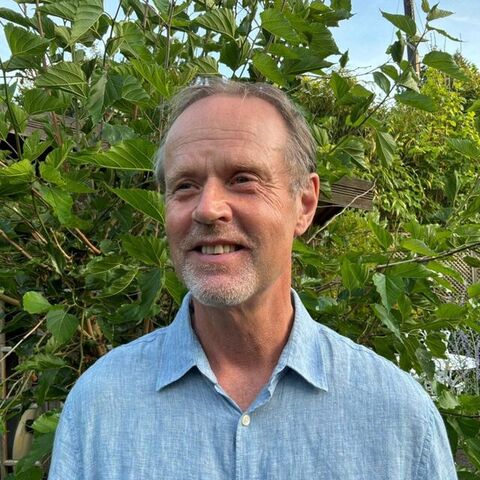
I'm Steve Banks and speaking to you from South Devon in England.
And I'd just like to share a few thoughts about the wonderful mindfulness of breathing practice and this is intended for people who are new or relatively new to the practice.
So the mindfulness of breathing has been practiced by human beings for thousands of years so it goes certainly back to the Buddha who lived around 500 BC and well before that so that's one of the things i love about it it's an ancient practice and when we sit and practice mindfulness of breathing we're participating in a tradition that goes back for generations and generations.
Mindfulness of breathing is great also because the breath is always of course with us so from the moment we take our first breath until our dying breath Every moment of our lives we are breathing.
So it's always there,
It's always available for us to use as a basis for mindfulness.
And the breath is wonderful because it is directly connected to our emotional state so most of the time we breathe unconsciously and the way our breathing is will be affected by our emotions so like when we're stressed our breath will naturally become shallow and not the opposite of deep and with mindfulness practice without actually deliberately making it deeper and slower the breath.
When we just sit in stillness,
In meditation,
The breath naturally settles into a deeper,
Slower breath.
Rhythm and that has great impacts on our physical and mental states.
And when we're practicing the mindfulness of breathing we're cultivating two really helpful capabilities.
The first one is that we're cultivating the capacity to direct our attention where we choose it to go.
So we're cultivating the capacity to have our awareness focused on our breathing.
And of course if you've practiced it at all in meditation you'll know that our minds just naturally go off into thinking and then the practice is just gently over and over again bringing the attention back.
To the breathing and we're cultivating this capacity.
It's also developing our capacity to sustain our attention.
So over time,
To begin with,
The amount of time that we can really focus on the sensations of breathing is tiny.
You know,
Maybe half a second or a second.
But over time with practice that time gets longer and that's a beautiful experience of being able to follow perhaps a whole in-breath and a whole outbreath.
And when we know that we follow the whole breath.
That means we're already in quite a settled state of mind.
And that's both of those capacities are a great antidote,
I would say,
To our modern-day society with its social media,
Quick-fire distractions,
Short attention span.
One thing after another,
It's a wonderful antidote to that.
So.
There's so much obviously that one can say about this i'm just giving some a few pointers in this little video the second thing is about posture and the main thing is to be comfortable.
And why do we want to be comfortable?
In order that we can sit.
In stillness bring the body into stillness and to sit in comfort relative comfort over a period of time 20 minutes,
30 minutes.
And it's this sitting in stillness is the key to mindfulness of breathing.
I liken it to those snow globes you know when you shake a snow globe It's like daily life,
We're constantly shaking the snow globe and the flakes are flurrying around like a kind of constant snowstorm.
Then when we sit in meditation we're holding the snow globe still and the flakes gradually settle So that's one metaphor I like for meditation practice.
So be comfortable with your posture and then the other basic principle is to have a firm base.
So you can really relax into the support that's underneath you,
Supporting your weight.
Then have your spine upright but not rigid so that we have this firm base.
Rising up to the through the spine.
A bit like a mountain.
And the idea with the posture then is to embody our intention which is to be relaxed and at the same time alerts.
So it's really good at the beginning to have clear intentions for your practice and I would say for mindfulness of breathing My advice is.
.
.
We're not trying to achieve any particular state so we're not trying to become calm we're not trying to be relaxed nor are we trying to clear thoughts from our mind.
Those are two common myths about meditation.
But rather what we're intending to do is to be with our experience as it unfolds moment to moment.
That's our intention.
And to be patient with the practice and to stick with the practice.
Also at the beginning I like to consciously invoke certain foundational attitudes which are described and talked about in secular mindfulness.
So the attitude of kindness towards ourselves.
Is a fundamental attitude.
And along with that an attitude of non-judgment so as much as possible not judging our experience not judging whether we're doing the meditation right or not and,
In fact,
Having the understanding that you can't get this meditation practice wrong.
So it's not like we're at school and there's some test.
It is a practice so you can't get it wrong.
And a third attitude that I would also recommend invoking and bringing to mind at the start of the practice is known as beginner's mind.
It's a lovely attitude of an open curiosity about our experience.
So kindness towards ourselves as much as possible non-judgment of our experience and this beginner's mind and then so we start and at the beginning it's good just to bring the awareness into the body and I always start by bringing awareness to the places in my body where the weight is supported by the chair or cushions feet on the floor the hands resting in my lap feeling that support and having a sense of letting go,
Relaxing into that support.
I don't dive straight into mindfulness of breathing,
I always have this preliminary part where I'm just being coming into the body making sure I'm comfortable,
Adjusting.
Then this feeling of settling allowing a bit of time just for a feeling of settling into the posture I bring attention awareness to my face and just let the muscles in the face relax.
So I recommend an initial period.
Of just settling into the posture,
Bringing awareness into the lower part of the body especially.
And then.
We start the practice so we're just bringing the awareness very gently to the sensations of breathing and I would recommend in the belly,
It can be in the chest or it can be at the nostrils.
But I would recommend the belly.
Bring the awareness into the center of the body there.
And we're simply following the sensations changing pattern of sensations as the breath comes in belly gently expands and we can feel that in the belly.
There's a little pause before the belly then contracts as the air goes out and more sensations.
Then there's a little pause before the next in-breath and there still are sensations in that pause that's all we're doing is we're just bringing the awareness directing the awareness towards those changing patterns of sensations in the belly as the breath comes in and the breath goes out and the pause and the next breath comes in and we're just focusing on this breath we don't have to worry about.
What we're going to be doing in five minutes or.
.
.
Just now this breath coming in this breath going out then of course if you've done meditation practice you'll know very well that our attention will wander off into thinking.
And we'll suddenly realize that we've been thinking for the last however long,
Might be 10 seconds or a minute,
We might not know.
It's like a moment of waking up out of a daydream.
And at that moment,
Not judging ourselves,
This is just the practice.
So we haven't done anything wrong.
You can't do anything wrong.
This is just the practice.
The mind wanders off.
We notice and we just gently and with kindness towards ourselves bring the awareness back to the sensations of breathing.
That's the basic practice and over and over our mind will be distracted and over and over we just gently come back.
And being with our experience and embracing our whole experience just as it is.
So I didn't mention with the breathing we're not trying to change the breathing.
Um.
.
.
Just being aware of it as it is we're not trying to change any of our experience We're being with the experience of the breath.
Just as it is being with our whole experience.
If the mind is busy,
With just being with a busy mind.
If there are emotions present,
We're just being with those.
Discomfort in the body,
Then being with that discomfort as much as possible.
If it's acute discomfort then of course don't Don't hurt your body.
If you need to move,
Posture,
That's fine.
And it can be helpful also if you're starting out with this practice certainly it's what I did when I started out with it is to use counting just to give the mind something to to do give the mind something a bit more to latch on to.
So basically what you do then is you breathe in breathe out and you just mentally to yourself count one Breathe in.
Breathe out,
Mentally note two.
And so on up to 10 and then when you get to 10 you just start again at 1.
And you will almost certainly find that you don't get to 10 before you've wandered off and you can't maybe remember where you got to.
That's fine you just start again at one so that can be a nice uh help a bit of a like a support when you're starting out with the practice.
There's just some a few pointers about mindfulness of breathing it's a much bigger topic than that and i will be posting more videos and audio with material about meditation practice so i hope that's helpful and i wish you good practice