Step into a cinematic dream ballet in tonight's Movie Magic Sleep Story.
Sleep and Sorcery is a folklore and fantasy-inspired sleep series.
My name is Laurel,
And I'll be your guide on tonight's fantastical journey.
Sleep and Sorcery is one part bedtime story,
One part guided meditation,
And one part dreamy adventure.
Follow along with my voice for as long as you like,
And whenever you're ready,
Feel free to let go of the story and relax into sleep.
If you're still awake as the story concludes,
I'll guide you through a soothing body scan.
In tonight's story,
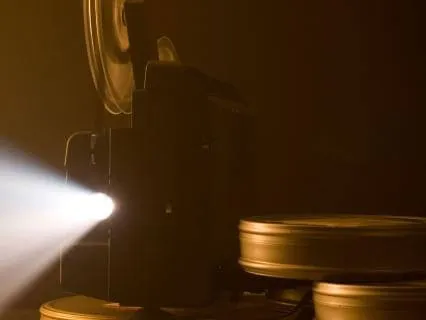
You are the projectionist at a classic movie theater,
Which is preparing to close its doors for the final time.
With bittersweet nostalgia,
You catalog the theater's vast collection of film reels and look back at a long career in the flickering light of the booth.
As you tuck away the old film stock,
However,
The images and characters of beloved classics come to life around you,
Filling the theater with technicolor,
Music,
And dance.
You dance love,
And you dance joy,
And you dance dreams,
Gene Kelly.
How well you know this dance,
The quiet shuffle between shelf and projector,
The careful threading of film through endless sprockets,
And the delicate art of the changeover.
In the early days of your employment here,
Your heart would race when the moment arose,
When the small circular marks would appear in the corner of the film screen,
Indicating that it was time to switch to the next reel.
How nervous you used to get when triggering the dowser to switch from one projector to the other.
It is a noble responsibility,
You believe,
To uphold the seamless experience of cinema,
To maintain the magic,
The spell under which audiences fall.
One missed cue,
A slip of the hand,
Or a fumble in the timing,
And the spell may be broken.
Imagine if viewers,
Captivated alongside Dorothy by the technicolor spectacle of Oz,
Were treated to the sudden sputter of film leader,
Torn out of the wonderful world they've just suspended disbelief to enter.
This will not do.
As a film projectionist,
You hold that magic in your hands.
And so,
In the years you've spent in this dusty old room,
You've worked to master the many subtleties of the process.
You've learned to keep time by the steady beat of your heart and the ticking of film stock through the reels.
You've embodied the rhythms and repetitions of the art of projection,
The manipulation of material and light.
Now,
These rhythms live so comfortably,
So at home in your body,
That they cease to be choreography.
They are muscle memory,
Intuitive movement,
The gentle sway of the heart of a dancer.
The flick of your wrist to switch the dowser,
This is the graceful flourish of a prima ballerina.
The scuff marks on the floor from your hard-soled shoes,
Etched in a pattern of shuffle and sidestep between projectors.
These are the maps of fancy footwork,
The nimble elegance of Fred Astaire and Ginger Rogers.
These are,
Of course,
The loving nicknames you've assigned to your two ancient projectors,
Fred and Ginger,
Out of a deep fondness for classic movie musicals.
The two old machines have been here longer than you have,
And with your dedicated maintenance,
They've never once broken down.
Folks can say what they will about antique technology.
You disregard words like obsolete.
But Fred and Ginger are more reliable than any new gadget on the market today.
There's the first cue mark in the upper right corner now.
Dorothy is ready to step from the sepia-toned dreariness of Kansas into a fantastic new world.
As the next mark appears,
You move with ease to activate the second projector.
There may only be a handful of people in the audience today,
But as Dorothy opens the door wide to reveal the splendor of Munchkin land in all its technicolor glory,
You can almost feel the collective intake of breath amongst them.
It doesn't matter how many times a person sees The Wizard of Oz,
You think.
Nothing quite compares to the breathtaking wonder of witnessing this moment on screen.
You realize your eyes are wet as you go to feed the third reel into Fred's sprockets.
It's a bittersweet day and a bittersweet screening.
The Wizard of Oz was,
After all,
The very first film screened here at the Nightingale Theatre when its doors first opened in 1939.
So it's fitting that it should be the last as well.
It was only a few months ago that ownership of the historic theatre changed hands.
You haven't met the new owners.
They sent lawyers and architects to survey the place and swiftly decided to repurpose the space for something more profitable.
Under the building's historic designation,
Only its façade falls under statewide protection.
What the new owners do with the insides,
So long as they preserve the beautiful architectural details of the exterior,
Is up to them.
You assume it'll be condos or apartments,
Which is all well and good.
Everybody needs a place to call home,
And here's as good as any.
But the Nightingale Theatre,
With its weekly lineup of independent features and restored classics,
Will certainly be missed by its small but dedicated circle of supporters.
There was a time when the Nightingale had lines all down the high street.
When fire marshals had to pull the plug on your projectors because there were too many people crammed into the seats.
In recent years,
Though,
It's gone the way of most theatres.
Dwindling crowds,
Financial troubles,
And a struggle to keep the doors open.
A group of locals ran a brief campaign to save the Nightingale Theatre,
And they managed to raise a decent bit of money for the cause.
But in the end,
The low profits and high maintenance costs made the effort unsustainable,
Even if the new owners had been interested in listening.
You suppose it's just time.
Time to say goodbye to the old Nightingale,
Once a mainstay of culture and creativity in this town.
A relic,
Now,
Of an age that seems to be slipping away faster and faster.
You were happy to see some folks turn out today for the final showing on the Nightingale screen.
Familiar faces of all ages.
The money from today's ticket sales is going right into the fundraising pot,
Which was eventually turned over to you in the interest of preserving the Nightingale's extensive collection of physical media.
You began the process of archiving and cataloging the theatre's stock a few weeks ago,
And you anticipate that you will be at it up until the contractors come to reshape the building's interior.
There are countless reels stacked upon reels in the basement.
Thousands of films from the last hundred years.
On top of that,
There are hundreds of movie posters,
Merchandise items,
Signed photographs of silver screen stars,
And other memorabilia from decades of premieres and special events.
It's up to you to determine what's in good enough shape to be sold to other theatres,
What needs investment and restoration,
What should be donated to museums and cultural institutions,
And what should be auctioned or recycled.
Even though,
With your years of experience in the theatre,
You are undoubtedly the most qualified person to take this on,
You also feel tremendously unfit,
Because if it really were up to you,
Everything in this building would be preserved,
Down to every square of celluloid,
Every threadbare seat.
It is all priceless.
Dorothy skips down the yellow brick road toward an emerald green horizon.
What beauty and talent there is in these old films.
You adore movies today as well,
But very little compares to the classics shot on 35mm,
Bursting with vibrant colour,
Or luminous in greyscale,
As the dance of light from the projector brings the images to life.
And those faces,
Those voices,
Ghosts of the past shimmer on screen,
The rich vocals of Judy Garland,
The otherworldly lightness of Fred Astaire on his feet,
The expressiveness of Humphrey Bogart.
It feels as though you could step into the world of the screen,
Joining Dorothy on her adventure,
Or tap dancing down the levels of a Busby Berkeley number.
You will miss your role here at the Nightingale,
Where you are the custodian of light and image and music.
You are the magician behind glass,
The steward of smoke and mirrors.
When the film at last concludes,
Music swelling behind the declaration,
There's no place like home.
The modest crowd get to their feet and applaud.
There they are,
You think,
The very last audience of the Nightingale Theatre,
In the flickering dark beyond your window,
You can almost see apparitions in the empty seats,
As if the spirits of the first Nightingale audience are here with you,
Paying their respects.
You slip out of the booth as the final reel runs toward its end.
You want to say a quick hello to some of the theatre's most loyal patrons.
You shake hands,
Give hugs,
And exchange greetings with several of the moviegoers.
Some have been coming here since before you became the projectionist.
You recognize film students from the community college in town.
This has always been more than a movie theatre,
You realize.
It's a hub for community,
A center for cultural enrichment and learning,
A multi-generational space.
Looking into the faces of some of the younger patrons,
You are filled with a sense of optimism.
The door may be closing here,
But that doesn't mean it's the end of everything the Nightingale represents.
You imagine the book clubs,
Community screenings,
And crafting circles that will spring up from the unlikely friendships forged within these walls.
As you watch the last of the patrons leave,
You see this future as more of a certainty than a supposition.
Wistfully,
You bid good evening to the box office team and concessions workers.
They,
Like you,
Volunteered their time today for this final screening.
There's so much love in town for this place.
When you are the last soul in the quiet old theatre,
You lock the doors and ready to begin another archival shift.
The sun is setting over the high street.
Normally you'd go home after the last screening of the day,
Make some dinner and eat it while watching an old Criterion favourite.
But the energy of today has you buzzing.
You doubt you'd be able to quiet your mind if you went home now.
So,
Instead,
You're set on spending the next few hours cataloguing and packaging materials in storage.
You'll work till you're ready to rest,
Getting a head start on the most delicate preservation tasks.
You begin by carefully removing the Wizard of Oz film reels from the two-projector system and tugging them safely back into their canisters.
You stack the cans in a box to bring down to the basement's cold storage room.
This print of the Wizard of Oz is quite well preserved and likely has many more years,
If thoughtfully cared for.
So you label the box for the possibility of donation to another active theatre.
Down in the basement,
You flick on the light to behold a sea of colour and texture.
Velvet stanchions line the walls,
A holdover from the days of premier parties and long lines at the box office.
Hundreds of rolled posters rest in barrels,
While framed ones are stacked and leaning carefully against the walls.
An old popcorn machine gathers dust in a corner.
You stride through the mountains of memorabilia and unlatch the door to cold storage.
You slide the box containing the Wizard of Oz reels onto an appropriate shelf,
Then rub your hands together for warmth.
Your breath is icy fog.
As you turn to go,
However,
A stack of film cans catches your eye.
Your heart softens as you read the label.
Singing in the Rain.
That unmatched movie musical from the 1950s.
Something about it makes you pause.
Perhaps you think it's because Singing in the Rain is also about the end of an era in cinema.
Though the closure of one small-town movie house is hardly comparable to the entertainment industry's seismic shift from silent films to talkies,
You are struck by the synchronicity of it all.
The stack of film canisters tug at you with a longing greater than your desire to dive into the archive.
You tuck the cans under your arm and leave cold storage.
While you allow the reels to adjust to room temperature,
You organize a stack of lobby cards from the Nightingale's early days.
Many of them are in reasonably good shape and might do well at auction.
You smile as you flick through a series of beloved film cards.
Casablanca.
It happened one night,
And some like it hot.
Time slips by quickly,
And soon the film reels have reached a comfortable temperature.
So you bring them up to the booth.
As gratifying as it was to watch today's screening from behind the window,
Observing an audience filled with bittersweet emotion,
Something compels you to do this.
The Nightingale is your second home,
And you are its longest-tenured employee.
You've spent countless hours within these walls,
Bathed in the light of this screen.
Surely,
You deserve to take in one last picture on your own,
Before the collection is packed and shipped.
Carefully,
With delicate intention,
You thread the first two reels of Singing in the Rain through the mechanics of Fred and Ginger.
Over the years,
You've developed a nose for the health of old film strips,
And with relief,
You pick up only hints of a sweet metallic scent coming off these reels.
They are in remarkably good condition,
Considering their age.
Your heart swells as you start the projector,
And see the familiar MGM lion heralding the start of one of the greatest films of all time.
From the first few frames,
It's joyous,
Colorful,
And filled with memorable songs.
You've seen it so many times,
That you can hardly resist moving your body along with Gene Kelly and Donald O'Connor,
Those masters of dance and physical comedy.
You tap your toes and sway your shoulders,
All as you perform the rhythmic dance of The Projectionist.
Spooling and unspooling,
Threading and dowsing,
You move with the lightness and grace of Fred Astaire,
The strength and athleticism of Gene Kelly,
And the buoyancy and delight of Debbie Reynolds.
When the picture reaches your favorite part,
The Broadway ballet sequence,
You cannot resist moving down from the booth and into the darkened auditorium.
The dream ballet,
Once a popular convention of the movie musical,
Has long faded from use.
This modern scarcity of it only makes your heart fonder of the sequence.
Films like An American in Paris,
The Red Shoes,
And Oklahoma contain the most famous of these dream ballets,
Wherein the characters and events of the movie are abstracted.
They are rendered in surreal,
Dreamlike environments in which the shared language is movement,
Ballet,
Against backdrops of splendidly painted neighborhoods and venues with dramatic music and casts of thousands.
These balletic interludes can be polarizing for audiences.
Rarely do they meaningfully move a film's plot forward,
Rather reframing the events thus far in a heightened,
Subconscious form.
Some viewers feel they slow the story down unnecessarily.
But you are enchanted by dream ballets in which characters dance their stories across brilliantly colorful sets.
The so-called real world of these films is the landscape of jazz and tap,
Compelling art forms in their own right.
But dreams are the realm of ballet,
Of elegant,
Flowing movement and statuesque form.
Ballet is the ethereal vocabulary of the sublime.
You take a seat in the empty theater and watch,
Enwrapped,
As Gene Kelly dances his way through a vibrant,
Exaggerated Broadway set,
Flashing lights and colorful buildings.
And despite the many times you've seen the film,
The dramatic entrance of Syd Charisse as a femme fatale clad in acid-green satin is absolutely breathtaking.
She slinks around the set,
Glittering like an emerald with a long cigarette holder in hand.
How charming it is,
You think,
That this iconic film about the transition to talking pictures should contain such an extraordinary sequence with almost no words.
This is one of the most magical things about cinema,
Its ability to take your breath away by utilizing so many creative dimensions.
It has a power to create entire worlds,
Realistic and fantastical,
That you can lose yourself in.
Toward the end of The Dream Ballet,
Syd Charisse's vamp returns,
But then she and Gene Kelly are transported to a location outside time.
Now she wears a flowing white dress,
And her hair,
Rather than a Louise Brooks-inspired bob,
Hangs in elegant dresses.
She is no longer a femme fatale,
But a graceful ingenue.
From her shoulders flows a silk scarf,
Which seems to magically elongate with her every move.
A fan somewhere off-screen acts like a breeze,
Lifting the scarf into the air.
And fanning it across the set.
She wraps it around her body and Kelly's,
Turning a piece of wardrobe into a sculptural medium.
This moment,
Romantic and dazzling,
Bathed in the pinks and purples of a summer sunrise,
Is perhaps your favorite in all of cinema.
It brings tears to your eyes to realize it will never again roll across the Nightingale screen.
If only you could freeze this moment in time.
The white silk scarf flutters before your eyes.
How textured and tangible it appears.
35mm film never ceases to amaze you with its balance of intense color and grounded resolution.
You feel as if you could reach out,
Grab an end of the scarf,
And be drawn into the dream ballet.
Something about the swell of music,
The emptiness of the theater,
And the sparkling dust particles that hover in the projector light.
You feel as if you too are outside time,
Suspended in a liminal space of dreaming,
Light,
And technicolor.
Maybe that's why you do it.
Because it already feels like a dream.
Maybe that's why you do reach out toward the screen to grasp the white scarf.
And when you feel its silky,
Gossamer texture between your fingers,
You aren't in the least bit surprised.
As the boundary between screen and theater blurs,
The world of the film seems to deepen from two dimensions to three.
You can see far down the softly lit soundstage as the dancers embrace.
You hold tight to the end of the scarf,
And you can feel the gentle tugging of the ingenue.
For a moment,
You feel you might be swept up into the winds of the movie and pulled into the screen.
But then,
Something else happens.
The ingenue turns to look away from her dance partner,
Toward you.
Her gaze penetrates through the screen,
Breaks the fourth wall,
So to speak.
And for a tender moment,
She beholds you.
Film is a one-way medium.
Unlike live performance,
It is a capture of a moment in time,
And there is no communication between audience and actor until now.
Through some strange enchantment,
The two performers on screen,
Whose routine you've witnessed countless times,
Witness you in return.
And then they step forward,
Moving together as if this very interruption were cleanly choreographed.
Any boundary between you and the screen is no more.
The dancers twirl off the dreamy set and into the aisles of the Nightingale Theatre.
They know you are there.
You held eye contact with them only moments ago,
But now they do little to acknowledge you.
They pirouette and spin through the seats as if they still dance across the soundstage.
Beneath their feet,
Splashes of color plume and vanish as if they paint fleeting technicolor with their movements.
You watch,
Enthralled,
As the dancers move effortlessly across the floor,
Weaving in and out of the aisles,
Then twirl toward the theatre doors still holding to the billowing white scarf.
You are drawn along with them into the lobby.
Even the magic of Gene Kelly and Sid Charisse dancing right out of the film screen could not prepare you for what you now behold.
No longer is this the Nightingale lobby you know.
Instead,
All is rendered in luminous grayscale.
The tinkling of piano keys is a descant over the conversation and clink of glasses.
You stand in a crowded gin joint,
One achingly familiar to any fan of classic cinema.
This is Rick's Cafe,
The meeting place of expats and freedom fighters,
The heart of Casablanca.
The dream ballet dancers are whirling still through this new setting,
And you follow their colorful forms across the cafe floor,
Toward the piano.
Here you let go of the white scarf and stand agape.
There at the piano is Sam,
Played by Dooley Wilson,
And right nearby is Ilsa Lund,
Played by Ingrid Bergman.
Her eyes sparkle as she asks her old friend to play a certain song for old time's sake.
The pianist is reluctant,
But he finally agrees,
And his fingers flutter across the keys like a dancer.
You must remember this,
Sam sings,
A kiss is just a kiss,
A sigh is just a sigh.
The fundamental things apply as time goes by.
And now as he continues to sing,
His voice tremulous and enchanting,
The theater door swings open.
A man marches sternly toward the piano.
It's Rick Blaine,
The cafe owner,
Played by the immortal Humphrey Bogart.
As he and Ingrid Bergman catch each other's eye,
You sense the fraught history between them.
Love,
Loss,
Abandonment and regret shimmer in the intervening space,
And the music ceases.
Caught as you are in the tension and sparkle of their gaze,
Your attention is drawn by another figure moving through your periphery.
Unlike the grayscale of Rick's cafe,
She is bright and colorful,
Clad in blue and white gingham.
It's Dorothy Gale,
The hero of The Wizard of Oz,
Skipping down a yellow brick road that materializes only a few inches at a time beneath her feet.
Your eyes follow her,
Searching for the emerald city on the horizon,
But again your focus is pulled away.
There in the corner is a grand staircase,
Which you're certain was not there before.
Descending the steps with heavy-lidded eyes and an ensnaring presence is Norma Desmond,
The silent picture star turned forgotten Hollywood recluse from Sunset Boulevard.
She cascades past cameramen as still as statues,
Poised to declare that she is ready for her close-up.
And now you see Audrey Hepburn seated at a cafe table,
Bright-eyed and dressed in black leggings next to none other than Fred Astaire.
Bursting with energy,
Audrey rises from her seat and begins an expressive,
Bohemian dance leaping and contorting her body in the most whimsical way.
Soon you can hardly keep up with the appearance of familiar faces throughout the nightingale.
Classic Hollywood stars like Cary Grant and Vivien Leigh sidle through the growing crowd and there are more recent faces and films coursing through the space too.
Rosie Perez dances propulsively to fight the power.
Natalie Portman pirouettes through the room in the feathers of the black swan.
Miles Caton plays a resonator guitar singing the blues with a voice as deep and sweet as molasses.
Music swells a hundred songs from throughout film history.
Jazz music,
Ballads,
And iconic scores and yet there is harmony polyphony rather than chaos.
As if every tune from Moon River to Mrs.
Robinson were orchestrated to complement each other to weave in and out of each other like film strips through projector wheels.
You wind your way through the movements and magic through the sea of beloved characters and faces.
The Bennett Girls a party of adventurers hobbits dwarves elves and men lounge singers college boys and detectives' daughters sheriffs and outlaws of the Old West.
And there are faces you do not recognize which are yet so distinctive and eye-catching you must imagine them heavyweights of some film yet to be made.
They slip in and out of focus emerging and receding into unseen passages moving with an exaggerated slowness and grace like film at 60 frames per second.
You stand at the center at the very axis of the whirling action.
No more are you the shadowy magician behind glass the manipulator of film and light nor are you the audience passively engaging with entertainment.
You are immersed in a way you never imagined was possible.
All of film history and from the looks of it the cinematic future folds in on itself in this space inhabiting this one moment revolving around you.
They are three-dimensional tangible close you hold especially dearly in your gaze the faces of those artists who have departed the mortal plane the Audrey Hepburns the Humphrey Bogarts the Fred Astaires the Chadwick Bosemans those immortal screen legends who live on in celluloid and light.
You suppose they are always here always dancing like this through places like the Nightingale where the love of cinema runs so deep it becomes an enchantment inviting the ghosts of the silver screen to dream forever within these walls.
Yes they are always here even if you never saw them till today you have always felt their presence.
For what feels like days you weave in and out of the sea of cinematic figures admiring subtle moments and dazzling spectacles alike.
You try to match the footwork of Fred and Ginger you run beside Rocky up the steps of the art museum slowly gradually and then all at once like the blinking out of stars with the oncoming sunrise the crowds diminish the layers of music peel away to a single strain the melody of as time goes by.
Soon even this fades to silence and the piano is gone the dancers the soldiers the cowboys are gone the stairways and roads of yellow brick vanish dissolving into the well-known walls concession stands and seating banks of the Nightingale.
You are alone in the lobby but there on the floor is a length of white fabric it is caught in the door to the theater the scarf you pick up the end of the silk and open the auditorium door returning to the theater and following the scarf like a line of thread through a labyrinth but the silk slips from your hands as the ingenue climbs back into the movie screen the duo dance once more on the pink and purple soundstage their costumes fluttering in the off-screen wind you behold their image for only a moment before the screen cuts to a black and white countdown and then to white it's the film leader the extra frames that run at the start and end of a reel for the first time in heaven knows how many years you've let a reel run to the very end without changing the projector you stand alone in the dark of the theater in the tranquil silence in the aftermath of an extraordinary vision and all you can do is laugh all is quiet throughout the nightingale as you make your way back up to the booth but even in the silence in the emptiness you can feel the presence of a hundred years of history maybe a hundred more years yet the past the present the future all reside in this house of art and memory and you are the keeper of the light that animates it all carefully you move the dowser to keep the film running on ginger's machinery you've almost reached the charming conclusion after all and it would be a shame to let the last movie played in the nightingale go unfinished you watch from the booth behind the window where you belong but you feel as close to the characters the songs and the story as you did moments ago amidst the stars of the silver screen you always knew there was magic in the movies it is the end of an era never more will crowds line up to see the latest pictures or gather for midnight screenings of the rocky horror picture show or linger in the lobby with their friends discussing the wonderful sets and costumes of a modern masterpiece it's tragic of course all goodbyes are but from your projector window watching Gene Kelly and Debbie Reynolds gaze up at a billboard of themselves advertising their new movie musical you realize something the nightingale special and historic as it is is only a building it's a doorway to infinite other worlds worlds of wizardry dance drama romance adventure but even if the doorway closes those worlds can still be reached they can still draw you in enfolding you in music and spectacle and wonder the magic isn't in the movie theater but in the movies themselves in the art and in your relationship to them the community around you those who love the nightingale and those who love the movies they aren't going anywhere a small but mighty core of people who connect over stories who dance together through life's dream ballet you'll all find your way back to each other back to the screen in one form or another that is the magic of it quiet your mind and tune in to the sensation of your body feel the points of contact your body makes with the surface that you're resting on feel your belly rise and fall with the constant wave of your breath deepen your breath letting yourself sink deeper and deeper with every exhale as if you're dropping down with each breath to the next level of relaxation towards sleep slowly and attuned to the rhythm of your breath begin to release tension from all areas of the body starting with the soles of your feet feel any extra strain or tension unwind relax the toes notice the spaces between the toes relax the tops of the feet and the ankles the calves and the shins the knees the hips really sending breath into the knee joints letting go of everything they've borne today relax the thighs and the hamstrings bring relaxation and ease to the point where your legs meet your hips.
Pause here to visualize any tension or stress held in the lower body,
Simply streaming out through the soles of your feet,
Like sand falling through the channels of an hourglass.
Relax your hips and hip flexors.
Relax the glutes and the lower back.
Breathe into the lower back,
Especially if you carry a lot of tension there throughout your days,
Using the breath to make that area more spacious and massage away any strain.
Move your awareness up the spine,
Relaxing vertebrae by vertebrae.
Relaxing the belly and the chest as you go.
Just sink into your surface,
Little by little,
With the breath as your guide.
Relax the shoulder blades,
Recognizing and releasing any unconscious strain in the shoulders,
Letting them fall away from the ears.
Relax your upper arms,
Elbows,
The forearms,
And the wrists.
Relax the palm and the backs of the hands,
The fingers.
Notice the space between your fingers.
Now,
Pause and imagine any strain that you've been holding in the upper body,
Arms,
Or torso,
Streaming out through the fingertips,
Like sand.
Relax the neck,
The place where the neck meets the base of your head.
Relax the jaw and the muscles of the throat.
Relax the tiny muscles around the mouth and the cheeks,
The nose,
Eyelids.
Soften your eyebrows,
Temples,
And forehead,
Letting your face fall into the most neutral of expressions,
Feeling expansive here.
Feel a deep relaxation in the scalp as you let your mind clear,
Sinking down another level,
Towards sleep.
Breathe.
Good night.