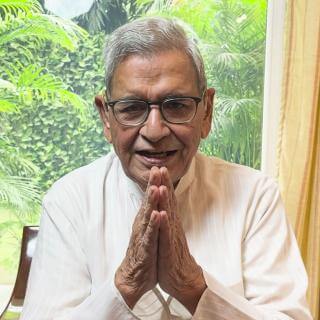
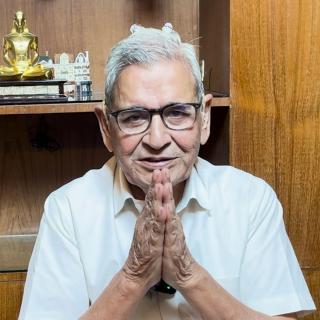
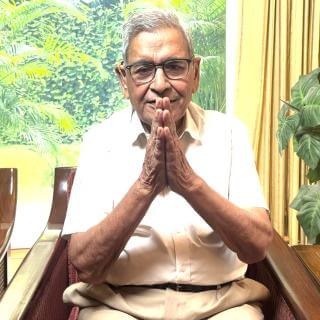
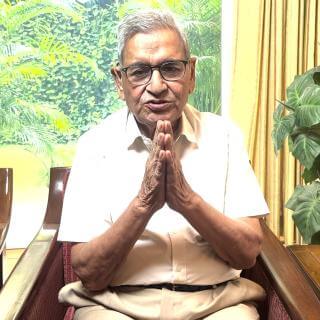
Namaskar,
Jai Jain,
Welcome.
Today we come to the 10th and final.
Spiritual truth,
Uttam Brahmacharya or Supreme Chastity Purity.
We have travelled through nine spiritual virtues during the last nine days.
We have spoken about forgiveness,
Humility,
Simplicity,
Truthfulness,
Cleanliness,
Self-restraint,
Penance,
Giving up and non-attachment.
Today we come to the culmination of all these practices.
So what is Brahmacharya?
Are loosely translated as chastity.
The word Brahmacharya literally means to live in tune with the highest or the ultimate reality.
In the Jain understanding it means turning our attention away from excessive involvement with external pleasures and gradually returning and stay in tune with our own true nature.
And what is the nature of the soul?
The soul in its pure state is described as being characterized by infinite knowledge perception,
Energy,
And bliss.
Therefore,
Brahmacharya is not simply about controlling sexual desires At a deeper level,
It is about learning not to be enslaved by our sensual pleasures.
And gradually becoming established in our own inner nature.
In its highest form Brahmacharya means complete absorption in the Self.
A state of profound purity and meditation.
This is the state towards which monks and advanced spiritual practitioners strive for.
Called Samadhi.
For householders like us,
The practice is more gradual and practical.
It begins with responsibility,
Restraint and contentment and purity in our relationship.
This is important.
For a married person,
This means being faithful and content with one's spouse.
And developing a relationship based on love,
Respect,
Trust and compassion.
And responsibility rather than allowing uncontrolled physical attraction to take over the mind.
The unethical teachings therefore emphasize restraint in relationship.
Outside marriage.
Traditionally a man is encouraged to look upon other women according to their age and relationship as mother.
Sister or daughter.
Similarly,
A woman is encouraged to look upon other men as father,
Brother or son.
The deeper message is not merely about changing the way address another person.
It is about changing the way we see another person.
Instead of seeing another human being primarily as an object of attraction,
Or sensual pleasure?
We learn to see that person as a fellow human being.
Someone with the same desire for happiness,
Peace and dignity.
That we ourselves have.
The change in vision is an important part of Brahmacharya.
Why is it difficult today?
Our modern environment constantly stimulates our senses.
We are surrounded by images,
Videos,
Songs,
Advertisements and social media that can increase our sense of attraction and desire.
We are exposed to highly stimulating foods,
Substances and entertainment.
Even the constant desire to look attractive,
Gain attention,
Or a pool from what does.
Does not help us.
The question is.
.
.
Do I control senses?
Or have my senses begun to control me?
This is the real question of brahmacharya.
When we repeatedly stimulate our senses,
Desires can become stronger.
And when desires become stronger,
Mind can become restless.
We begin to seek happiness outside ourselves.
Through Appearance Attraction.
Fool.
Entertainment,
Possessions or relationships.
But Jain philosophy reminds us,
That lasting happiness cannot come merely from satisfying our sensual urges.
Sensual pleasure is temporary.
The moment the object changes,
The pleasure changes.
And when the bind becomes dependent upon external simulations.
We can gradually lose our inner freedom.
This is why rust paint is so important.
Restraint is not repression.
The state means that I am able to experience something without becoming its slave.
I can see something attractive without becoming obsessed with it.
I can enjoy food without overeating.
I can appreciate beauty without possessing it.
I can have a loving relationship without turning love into attachment or exploitation.
And I can experience desire without allowing desire to dictate my actions.
This is the beginning of inner freedom.
Brahmacharya and the nine lectures.
If we look carefully,
We can also see how today's virtue connects with the previous line.
Forgiveness helps us release anger.
Humanity reduces our ego.
Simplicity reduces deception and crookedness.
Truthfulness brings harmony between our thoughts,
Words and actions.
Cleanliness reduces greed and excessive desire,
Acquisitiveness.
Self-restraint teaches us to govern our senses.
To be their master.
Finance strengthens our capacity to discipline ourselves.
Giving up to Jesus.
To share rather than purchase.
And non-attachment helps us.
Loosen our emotional dependence upon external things and relationships.
All these practices prepare the mind for Brahmacharya.
So Brahmacharya is not an isolated Vachu.
It is in many ways the natural culmination of the other nine virtues.
As we reduce Anger,
Ego,
Deception,
Greed,
Attachment and Uncontrolled Sensuality,
The mind becomes increasingly peaceful and pure.
And as the mind becomes peaceful,
We can begin to experience something deeper within ourselves.
Now let us talk about Brahmacharya in everyday life.
Let us not think of Brahmacharya as something meant only for the monks or sadhus.
We can all practice it in small ways.
We can become more conscious of what we watch and listen to.
We can become more mindful about what we eat and drink.
We can reduce unnecessary stimulation.
We can avoid using another person merely for our pleasure.
We can bring greater purity and respect into our relationships.
We can become faithful and content in our commitments.
And most importantly,
We can observe the wandering nature of our mind.
Whenever a desire arises,
Instead of immediately acting upon it,
We can pause and ask.
Do I really need this?
Will this bring lasting happiness?
Am I making a conscious choice?
Or am I simply responding to an impulse.
That simple pause can create a great difference in our life.
It gives us the space to choose rather than react.
And perhaps this is one of the most important lessons.
Of Brahmacharya.
True freedom is not the freedom to satisfy our every desire.
True freedom is a freedom not to be controlled.
By our desires.
Friends,
The purpose of Brahmacharya is ultimately not to make our life narrow or joyless.
It is to help us discover a deeper and more lasting source of happiness.
When we constantly seek pleasure outside ourselves.
The mind remains restless.
But when we gradually turn inverse,
Reduce unnecessary desires and establish greater purity in our relationships and actions.
We create space for peace.
Contentment.
And inner freedom.
So as we complete these 10 days of the session,
Let us remember that these 10 virtues are not merely 10 ideas to be studied.
There are 10 opportunities for transformation.
Let us practice forgiveness when we are hurt.
Humility when we have praise.
Simplicity when you are tempted to deceive.
Truthfulness when it is difficult to speak honestly.
Cleanliness when greed arises.
Self-restraint when our senses demand more.
Penance when discipline is required.
Giving up.
When we are tempted to possess.
Non-attachment when we fear losing something.
And brahmacharya when?
Desires pull us away from our inner mind.
Perhaps then we can gradually move from what can I get from life to what can I become.
And ultimately from dependence upon external pleasures to the discovery of the peace,
Freedom and bliss inherent in my true nature.
Let us therefore bring greater purity into our thoughts.
Greater respect into our relationship.
Greater awareness into our choices.
And greater discipline into our life.
May these 10 virtues not remain only words that we have heard during these last 10 days,
But become qualities that we can gradually experience and live.
Namaskar.
Yeah,
I delete.