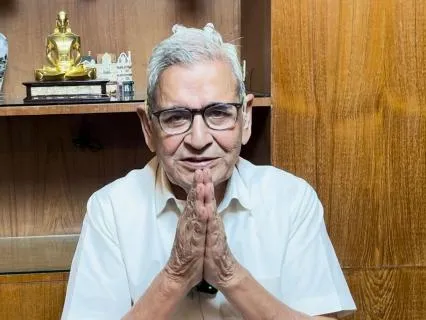
Namaskar,
Jai Javed,
Welcome Today is the second day and we talk about the second spiritual I got you.
Humility or humbleness and in Jainism we call them as winner or martyr.
What exactly do we mean by humility?
Or Margo.
In simple words,
Humility means reducing or overcoming our arrogance and ego.
So that we can remain calm.
Courteous,
Tolerant.
Grateful.
Humility also means being disciplined.
And practicing self-respect.
In the way we interact with others.
In fact,
Humidity is simply the state of being humble,
Gentle,
Soft.
Jain texts remind us that arrogance is like a deadly poison.
It creates speed.
Both for ourselves and for others.
And can be painful.
States of existence.
A person with humble disposition,
On the other hand,
Enjoys.
Greater peace and earns the respect of others.
How can we practice humility?
There are many ways.
We can be humble.
We can be modest and avoid bragging about our achievements.
V can be displayed,
We can show respect and reference to others.
And let us remember one important principle.
Patronage,
Support,
Love and blessings are earned.
They are never automatically given.
The opposite of humility is arrogance.
Arrogance often leads to disgrace.
While humility leads to respect and wisdom.
Think about it.
When we become arrogant,
We gradually isolate ourselves from others.
Our vision becomes blurred,
Clouded.
We stop listening.
And more importantly,
We stop learning.
Why?
Because we begin to think.
I know more than anyone else.
Once we think that way,
There is very little left for us to learn from others.
Humility is based on a very different understanding.
That is,
We are all equal.
But each person excels in one way or the other.
One person may have more knowledge.
Another person may have more experience.
Someone may have greater physical strength.
Creativity.
Money.
Compassion or wisdom?
Humility allows us to recognize and appreciate these differences.
Therefore,
Humility promotes inclusiveness.
Rather than exclusiveness.
Why do we become arrogant?
Arrogance can arise from a feeling of superiority.
We may feel superior because of our race.
Our position,
Our family.
I was wrong.
Our intelligence,
Our knowledge,
Our physical strength.
Our achievements.
So many other things.
But true humility means that even when we achieve something great,
We do not make ourselves greater than others.
We do not need to advertise our greatness.
We allow our actions to speak for themselves.
And this is important.
And Jan Philosophy.
Because humility is not something that someone forces on us.
It is a virtue that we consciously cultivate from within.
For example,
When we greet an elder or a guest with folded hands.
And a slight bow.
We are expressing humility and respect.
I'm glad to have lunch.
Very often even a person Who may be angry with us responds with a blessing,
A small gesture of humility.
Can therefore transform a relationship.
Let us see the prerequisites for practicing humility.
Humility and discipline are closely connected.
Indiscipline often invites consequences or punishment.
Nature gives us some beautiful examples.
When floods come the mighty trees may be uprooted because they remain rigid.
And cannot bend.
With the force of water but the tall grass bends with the flow and when the flood is over,
They rise again.
Similarly,
Think of a fruited legendary.
The more fruit it carries,
The more its branches bend.
On the other hand,
A barren tree may stand erect.
But it offers little to others.
There is a beautiful lesson here.
The stronger we become.
The more graceful we should be able to bend.
That is humility.
Second,
Humility encourages us to learn and improve.
It allows us to work harder.
When we recognize the difference,
Between ourselves and our mentor.
Teacher or guide.
We don't feel Threatened.
Instead,
We say,
There is something I can learn.
From this person.
Now,
See the difference.
Discipline also helps us remain.
Careful about our attitudes.
Responsibilities and activities.
It keeps us from drifting away from the code of conduct.
Social norms and laws that guides our lives.
It reminds us to perform our duties sincerely.
And not allow laziness or carelessness to take over.
These are the main causes of binding.
In auspicious Karmas in Jain philosophy.
We often see that even people who are very rich or powerful,
But lack humility,
Eventually become lonely and unhappy.
Why?
Because they build a wall of ego around themselves.
They may think they are protecting themselves,
But in reality,
They are keeping others.
Away from themselves.
Third,
Humility increases our emotional intelligence,
Very important.
Let me give you a simple example.
Imagine two people working in the same company organization.
Both are equally intelligent and hard-working.
Both have similar qualifications.
Here one progress is faster than the other.
Why?
One important difference may be humility.
An arrogant person may humiliate others.
Ignore their contributions.
Or fail to respect them.
A humble person on the other hand listens,
Learns,
And gets along.
With people and naturally such a person earns the goodwill and cooperation of his colleagues and superiors.
Today we speak a great deal about emotional intelligence.
E.
I.
In many situations,
Emotional intelligence can be even more important than a high I.
Q.
And humility is an essential foundation of emotional intelligence.
Fourth,
Humility opens the mind.
Connection with religious traditions.
The first sacred connection of Buddhist teachings is called Vinaya Pitaka.
Dealing with discipline and proper conduct and the Jain text Uttaradhyayam Sutra begins with the importance of Vinaya,
Discipline and humility.
We also find humidity at the beginning of prayers and spiritual practices in many religions.
For example,
When I perform my puja,
I start with the winner part.
To make myself humble.
Why?
Because before we can perceive anything new,
We have to open our minds.
If my mind is already saying,
I know everything,
How can I learn?
Humility opens the door to learning.
The first It's spiritual.
Arrogance impacts the nature of the pure soul.
It almost darkens our inner awareness as our mind becomes opaque.
Loses his power of discriminating good and bad.
The result is we start binding more and more precious karmas on our soul.
To enhance our suffering.
In fact,
This is the most dangerous act and it is a forerunner of anger,
Greed and disease.
Let us reflect.
Let us rest for a moment.
And ask our questions.
Where does arrogance appear in my own life?
Is it in the way I speak?
In the way I treat people who are less powerful than me in my relationship.
In my workplace,
In the way I react.
When someone disagrees with me.
And then ask ourselves some of the questions.
Can I replace arrogance with humility.
Can I listen a little more?
Can I respect others a little more?
Can I acknowledge that someone else may know something that I don't?
Can I accept correction without feeling incited?
This is how humility becomes.
A spiritual practice and a practical virtue.
It is not merely about bending our head or folding our hands.
True humility is a state of mind.
It allows us to see ourselves clearly.
Respect others deeply.
Learn continuously and live more peacefully.
It minimizes accrual of inauspicious karmas and makes our journey easier.
And our souls which are purer.
So friends,
Let us practice humility and discipline.
To develop deeper insight into our true self and enhance our life.
Happiness.
Namaskar.
Jai Jina.