Hey everybody,
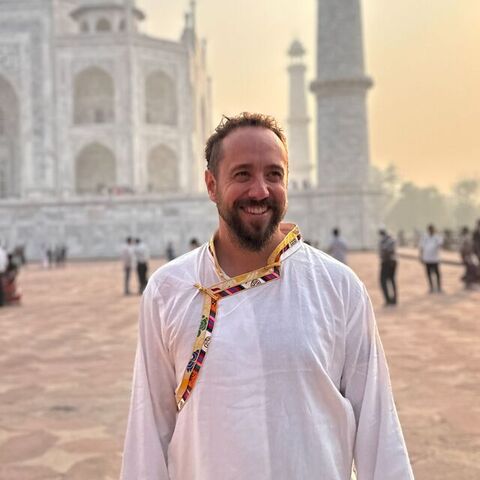
This is Seth Mung.
For those of you that don't know me,
I was a Buddhist monk for eight years,
Living in robes in the monastery.
I had the honor of practicing with many great teachers,
Great masters of different traditions.
I spent time on retreat with Acham Brahm,
With the Pa Auk Sayadaw,
With various Tibetan teachers,
Masters.
Ends.
I wanted to share a little bit about meditation,
Things that I've learned.
I would say that I was meditating incorrectly for many years.
I would sit every morning at 5 a.
M.
For an hour.
Kind of relax a little bit,
But struggle and,
You know,
Focus on my breath like the Buddha said to in the Anapanasati Sutta.
Anapana,
In-breath,
Out-breath,
Sati,
Recollection of.
And some days it would work better than others,
But.
.
.
That's kind of all it was.
It was just kind of me struggling,
Trying,
Rising,
Falling.
And one day while I was living at Plum Village,
I was invited by Thich Nhat Hanh into his hermitage for dinner.
And I went and.
.
.
Sat with him and just a couple other,
Or Dan's.
I think there was about three of us.
And after eating the meal in silence,
Thich Nhat Hanh looked up to me and said,
You know,
Practice is a lot like instant noodle soup.
And it was a strange and funny.
And quirky thing to say.
It kind of felt like I was in Kung Fu Panda.
And I just kind of quizzically looked at him and said,
Oh.
And he said,
Yeah,
You don't need to wait to enjoy.
And this sentence stayed with me for a while and kind of resonated with me and played around in my mind.
Honestly,
I didn't really understand it until I was on retreat with Ajahn Brahm.
Shared with him about my struggles in meditation.
And he said,
Well,
If you're struggling to meditate,
Why not just throw this whole thing called meditation out the window?
He said,
Why don't you stop trying to meditate?
And just relax.
And my mind immediately jumped into.
Feeling defensive of that idea,
Saying,
But if I don't meditate,
How am I going to ever get deeper?
How do I reach the jhanas if I'm not trying?
Don't I have to put effort?
How does this?
I'm not doing anything all day already anyway,
So how can not doing anything be the thing?
But I decided,
As this is one of them.
Foremost teachers of samadhi on this planet.
That I would follow his instructions and as I sat with him and just continued to just relax and let go.
I had one of the deepest meditations of my life.
In fact,
In his book,
Mindfulness,
Bliss,
And Beyond,
First sentence is meditation is the path of letting go.
It is the way of letting go.
I've actually picked that book up to read it numerous times over the last decade,
And each time I just read that same sentence and close the book and realize there's actually nothing else to read about.
As I embarked on this renewed journey of meditation.
I realized that trying to meditate,
Trying to get peaceful,
Right?
Trying to practice.
It was actually me splitting the mind into now and the future.
It was creating an attachment,
A grasping onto a future moment where I would have this thing called meditation,
This future moment where I was at peace,
This future moment.
Where everything would work out.
And by splitting the mind,
By dangling this carrot in front of me.
I was never fully in this moment.
As I released the.
.
.
Striving,
The struggling of the goal to meditate.
And just started sitting and relaxing.
I recognize that the path of meditation,
It's actually one of softening.
It's one of releasing subtler and subtler levels of consciousness.
That's just as when heat leaves a room,
Coolness fills that room,
Just as when light leaves a room,
Darkness fills that room.
As your doer,
Your willpower,
Your ego,
Yourself,
Whatever words you want to use.
As you.
Leave.
Meditation is what arises.
In its place.
This seeming paradox.
This non-doing.
Is something that Zen teachers have been talking about forever,
Although.
I'm sure a little more explanation could have been helpful.
And on top of that,
An often overlooked next part of the Anapanasati Sutta.
Besides the fact that sati doesn't mean mindfulness,
It means the remembrance of,
It means.
To remember,
To use the faculty of the mind that is the memory to just keep that remembering on the fact that you're breathing.
If you go through the Sutta,
Besides the Buddha saying to focus on the breath flowing in and the breath flowing out,
Very shortly after that.
He says to focus on the pleasure.
On the bliss of the ecstasy of the rapture of just the feelings.
Positive feelings.
That are generated.
As a necessary part.
Of meditation.
If meditation isn't feeling good and doesn't feel good,
It will never be able to work.
It'll never be sustained.
The samadhi the mind can never absorb.
Into that one-pointedness,
Into that presence.
People who mention having busy minds or fighting against their thoughts.
That is all created from.
A feeling of pain,
A lack of pleasure.
Feeling like this moment is somehow lacking,
Like it's unsafe or not enough.
Resistance to just being here.
And the more that we make that experience of being here,
The more that we allow ourselves to relax and feel good,
The more the mind naturally gravitates towards the present moment.
Just as if you were to touch a hot stove,
Instinctually you would pull your finger back because we recoil from pain.
Just as if you were to smell something good,
You would move towards it or see something beautiful.
It brings the mind forward,
Blossoms.
Our presence,
Our awareness,
Blossom naturally when something feels good.
Immediately,
Easefully,
Naturally attentive.
So the only thing to do,
Really,
Is to allow.
Ourselves to feel good.
Honestly,
I don't even bring the breath in to the meditation practice,
I smile.
And I sit and smile and relax.
And I allow that feeling of relaxation,
Of pleasure,
Of the feeling of pleasure on my lips to begin to grow,
To begin to.
.
.
Become the center of my awareness and it starts to pervade.
Maybe the breathing comes in at one point,
But even if you're a seasoned practitioner in the jhanas,
You would know that.
The breath and the pleasure eventually merge into one object,
And then the nimitta,
The light,
Comes through that.
Pleasure.
Is necessary.
It's a necessary part.
And unfortunately,
As I visit various meditation teachers around the world and hear different people talk about meditation,
Especially the practice of samadhi,
I rarely hear the necessary emphasis on pleasure.
On the good feeling.
As Achaan Brahm says,
The pleasure is the glue that holds the mind to the present moment.
That when we're in school and we're told to focus in math class,
We force.
Our concentration.
We force the mind to gather to concentrate on the subject,
Which is exhausting.
It's not sustainable.
But if you're engaged in a great conversation or eating a delicious meal or listening to your favorite song,
You're fully present the whole time because it's natural,
Because it feels good.
How to feel good when we meditate,
How to allow meditation to feel better and better,
How to even maybe Release this word,
Meditation.
Which wasn't even spoken by the Buddha ever.
How do we instead allow?
This moment.
This body.
This breath.
To be enough.
To feel good,
To feel peaceful and tranquil.
Because there's nothing else to do and nowhere else to go.
And this vacation from our lives is available right here.
Just being with ourselves is taking a vacation from the world.
As Han Shan says on Cold Mountain.
A rock for my pillow in the clouds,
For a blanket let the world go about its business.
2.
Really disconnect,
To not participate,
To just be.
Allow.
This moment.
To be peaceful,
To be restful,
To be relaxing,
To feel good,
To breathe and smile and soften.
To maybe feel the space around you.
The space within you.
To release this identification.
With all these sensations and sounds and thoughts but to Feel good.
In the breath,
In the body,
In the moment.
And to let that good feeling,
That peaceful,
That tranquil feeling Be the object of meditation.
Be the portal that pulls you in.
Be the point.
Because if it doesn't feel good,
Why are we doing it anyway?
Four Noble Truths talk about suffering,
The core tenant,
The reason.
That the Buddha ever even uttered a single word to us was to free us from suffering.
And he said,
There is suffering that leads to more suffering.
There's suffering that leads to.
Peace there is.
Pleasure that leads.
To suffering,
And there is pleasure that leads to more pleasure and to peace.
It is said that the pleasure of the minds is a pleasure that leads to peace,
That if one attaches to that pleasure,
One of four results can be expected.
Those are the four levels of enlightenment.
Stream-enterer.
The once-returner,
The non-returner,
And the full-arhat.
The pleasure of the mind is the point.
It is why we develop compassion.
Metta.
Patience.
Equanimity,
Altruistic joy.
Why are the Brahma-viharas kindness,
Compassion,
Altruistic joy,
And equanimity.
Why are these the four states that,
Once one is enlightened,
Are all that remains in the mind?
It's because all of them are conducive to peacefulness,
To happiness.
To joy,
To bliss.
To care,
To love.
Love feels good.
Joy feels good.
While Buddhism is such a path of denial in so many ways,
Of the precepts and sitting here with your eyes closed,
Cross-legged in this achy position sometimes,
There's something that feels like being a monk,
Being a practitioner.
That's supposed to hurt.
It's supposed to be a struggle and painful.
And maybe it will be in some ways,
And maybe a lot of that pain is just.
.
.
Us not giving in to old habits and tendencies that are trying to hurt us,
As the Buddha mentions.
A strong man grabbing a weak man and dragging him into a pit.
Sometimes our tendencies or habits will pull us into old forms of behavior that could be harmful.
And so sitting and smiling and practicing when everything within you wants to run to something pleasurable and familiar through the body,
Food or your phone a drink,
Or a friend.
To recognize the.
.
.
The truth of impermanence to recognize that.
None of the pleasures we chase through the sensory organs.
Through the eyes,
The ears,
The nose,
The mouth,
The body.
None of those are permanent.
They are not dependable or sustainable.
But as we begin developing the meditation practice and the pleasures of the mind,
Getting into the calm abiding.
We realize that there is something that is more.
Sustainable for us.
There is a reason why those who practice the Buddhist practice are happier,
More consistently.
As shown by their laughter and smiles and their faces and the way they walk with poignancy.
Even now,
Scientific scans of their brains.
So this is a call,
This is a reminder to.
Bring your remembrance,
Your awareness into happiness.
Into pleasure,
Into peace,
Into the feeling.
To feel our way deeper into the practice,
To sometimes let go of everything we've heard and been taught and this teacher,
That teacher,
And really just drop into our own experience of what feels really good right now in this moment.
As I smile and relax and breathe.
Through that process,
The mind will become more and more settled,
More and more present,
More focused and concentrated in a gentle,
Natural,
Relaxed way until that pleasure builds and then the mind's creates a positive feedback loop and collapses.
And that's where the magic happens.
I hope this was.
.
.
Helpful.
I hope this was useful.
I wish you well on your beautiful journey.