Hi everyone and welcome back.
Thank you so much for taking a little bit of your time to be here with me,
As always.
And welcome to this new talk.
This episode is part of the same series where we're exploring how sound,
Frequency,
And awareness influence the way we feel,
Think,
And experience life.
And honestly,
I'm really excited about today's conversation because this is one of those topics that comes up all the time.
And at the same time,
It's also one of the most misunderstood.
A lot of people have heard the term sulfhydryl frequencies before,
Maybe in meditation music,
Maybe in a track title,
Maybe somewhere inside the wellness world,
But they're not always sure what it actually means.
So today I want to slow this down a little bit and make it feel much more clear,
Much more grounded,
And much easier to understand,
Okay?
Now,
If you listened to the previous talk,
You might remember that we explore binaural beats,
How they work,
And how sound can influence the brain through rhythm and frequency.
Today we're shifting the focus a little bit because there's another term that comes up constantly in meditation music,
And that's sulfhydryl frequencies.
And if this is your first talk in the series,
You can always go back and listen to the earlier episodes on my profile because each talk builds naturally on the one before it,
Okay?
And if you're exploring this topic for the first time,
You might also enjoy browsing some of the meditation tracks on my profile here on Insight Timer because a lot of what we talk about in these talks is something you can actually experience directly through sound.
So,
Before we talk about sulfhydryl frequencies the way people use that term today,
There's one really important thing I want to clarify.
Originally,
The word sulfhydryl had nothing to do with sound frequencies measured in hertz,
Okay?
Historically,
It was a teaching system used centuries ago to help people learn how to sing.
That was it.
It was based on syllables like do,
Re,
Mi,
And it helped singers understand how notes related to each other inside a musical scale.
So just to be very clear,
Sulfhydryl in its original sense was not about exact numbers,
Okay?
Sound healing,
It wasn't about measuring vibration with modern technology,
It was none of that.
It was simply a practical musical tool.
For instance,
It helped singers and choirs stay connected to pitch and melody more easily.
And I think that's actually interesting because today people sometimes talk about sulfhydryl as if it were some hidden secret code,
When really,
In its original form,
It was just a simple and intelligent way of organizing sound.
And in a way,
That still matters now because whether we're using ancient systems or modern tools,
The deeper intention is still the same.
We're using sound to create harmony,
Understanding,
And connection.
Now,
When people talk about sulfhydryl frequencies today,
They're not really referring to that original historical system,
Okay?
What they're usually thinking about is a more modern reinterpretation.
Over time,
Certain frequencies were selected and grouped together as reference points,
Inspired by spiritual traditions and by the broader idea that sound can influence how we feel.
And I want to be very clear here because this matters.
Sulfhydryl frequencies are not a formal scientific scale,
Okay?
And they're not a strict system of music theory.
They function more like a framework or a set of reference points that many people use inside meditation music,
Sound-based practices,
And inner work.
So,
Instead of thinking about them as rigid rules,
You know,
I think it's much more helpful to see them as tools.
That's it.
Because,
Honestly,
What matters most is not just the number itself.
It's how the sound is used,
The intention behind it,
And the experience it creates in the body and the mind.
And this is something I say a lot because people often get overly focused on exact numbers.
They'll ask,
Is it exactly 528 Hz,
For example?
What if it's slightly above or slightly below?
Does it still work?
And what I always say is,
Don't let the math ruin the music.
The numbers can be useful because they give us orientation and structure,
That's it.
But your nervous system does not relax because of a calculator,
Right?
It relaxes because of the full listening experience.
If something is technically perfect but feels harsh,
Forced,
Or unpleasant,
Then it's probably not going to create the state you're looking for.
So,
Yes,
The number can matter,
But the design of the sound matters too,
And the way it feels matters even more.
And if you want to explore these frequencies for yourself,
There's a very simple way to start.
Try listening without trying to achieve anything,
Okay?
Most of us are used to multitasking all the time.
You know,
We listen while scrolling,
While working,
While,
You know,
Answering messages,
While thinking about something else.
And that,
You know,
Sometimes that's fine,
Don't get me wrong,
But even just for five minutes,
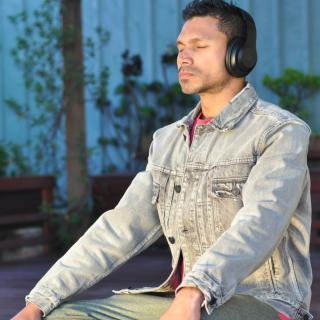
It can be powerful to listen without doing anything else.
So just notice how the sound feels in your body.
Does it feel grounding?
Does it feel light?
Does it feel calming?
Does it feel neutral?
There's no correct answer here,
Okay?
You're not supposed to force a certain sensation or have a specific reaction.
You're simply getting more familiar with your own response to sound.
Sometimes people tell me that when they try,
You know,
One of my tracks for the first time here on Insight Timer,
They suddenly notice how different intentional sound can feel compared to regular background music.
So if you're curious,
Of course,
That can be a really simple way to explore this for yourself.
And over time,
The more you notice that response,
The easier it becomes to choose sound more intentionally.
In other words,
It's like building a relationship.
The more time you spend listening carefully,
The more you start to understand what supports you.
Now,
In modern practice,
The solfeggio frequencies most commonly used are 396 hertz,
417,
528,
639,
741,
852 hertz.
And over time,
Some additional frequencies were added to that group,
Such as 174 hertz,
285 hertz,
And 963 hertz.
So today,
When people talk about solfeggio frequencies,
They're usually referring to this larger set of nine reference points.
And again,
These are best understood as points of orientation and not rigid absolutes,
Okay?
They pretty much help create structure when working with sound,
Especially inside meditation music and sound-based practices.
Now,
One important thing to understand is that solfeggio frequencies are rarely used as pure tones on their own for long periods of time.
And the reason is pretty simple.
For a lot of people,
Listening to a single tone by itself can feel a little too dry,
You know,
A little too repetitive,
Or sometimes even uncomfortable.
As we talked about in the previous talk when we were talking about binaural beats,
Remember?
That's why these frequencies are usually placed inside slow,
Spacious,
Ambient music.
You know,
The music makes the listening experience much smoother,
Much more immersive,
And much easier for the nervous system to stay with.
And this is actually a big part of intentional sound design.
When sound is created well,
It doesn't demand attention in an aggressive way.
It supports the space gently.
And that subtle difference changes a lot,
Trust me.
It changes how safe someone feels.
It changes,
You know,
It changes how long they can stay present.
And it changes how deeply they're able to relax.
And if you ever explored the different tracks on my profile here on InsideTimer,
You'll probably notice that each soundscape creates a slightly different kind of space for the mind and the nervous system.
And that's really the difference between simply playing background sound and creating something that is intentionally designed to support the nervous system.
And yeah,
In my own music,
I don't treat solfeggio frequencies like some magic formula.
But I use them as intentional tools inside a larger sound environment.
And that means the frequency is only one part of the experience.
You know,
The texture of the music matters.
The pacing matters.
The emotional tone matters.
The spaciousness matters.
And in some tracks,
I also combine solfeggio frequencies with binaural beats depending on the kind of state I want the music to support.
And just so you know,
The music I create is not random relaxation music.
I keep saying this over and over again,
But it's true.
It's intentional sound design built with specific frequencies and sound structures inspired by research in neuroscience,
Psychoacoustics,
Brainwave activity,
And nervous system regulation.
So there's a real amount of study here.
You know,
There's a real amount of listening,
Testing,
And experimentation behind the way these soundscapes are created.
And that's exactly why I always encourage people to experience the tracks for themselves.
Not just to think about the concepts,
But to actually listen and notice what they feel.
So today we explore what solfeggio originally meant,
How the term is used in a more modern context,
And why these frequencies are often placed inside meditation music rather than used as isolated tones.
And hopefully what you can see is that this doesn't need to feel mysterious or overly complicated,
Right?
At the end of the day,
This is really about learning how to listen more intentionally.
That's it.
It's about understanding how sound affects you and using it in a way that supports your own inner state.
Now,
If this talk resonated with you,
I really encourage you to explore some of my music here on InsideTimer and just experience these frequencies for yourself.
And as always,
If you'd like to go deeper into these ideas,
You can always find my course here on InsideTimer called The Power of Frequency,
Understanding How Sound Shapes Your Life,
Where I basically explain these topics in a much more complete and practical way.
Thank you so much once again for being here with me today.
I truly appreciate you taking the time to listen.