Welcome to our voice practice.
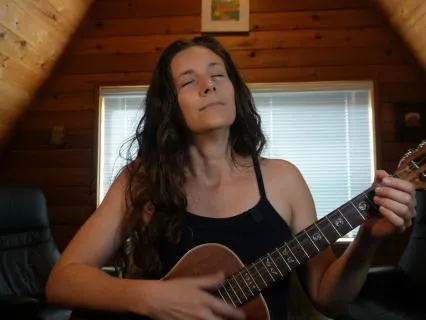
My name is Nico and I'm going to guide you through an experience today.
To help you get into your body,
To help you tune into what it is to be an instrument.
Of sound,
Of beauty,
Of harmony.
And we're going to do that through various exercises with the breath and also toning with our voices and some play at the end.
So please come to stand with me.
And if you can't stand today,
That's OK.
Just know that you can do this seated best.
Laying down,
You might not get the full benefits of the experience.
So we're going to do just some Qigong-inspired movement.
So we're going to start with some bouncing.
And I find the qigong,
Maybe you can see my other videos on here where it's a full routine or maybe you have another teacher.
Who you will go and find.
Qigong is such a wonderful gift for voice users.
It really helps on all the levels.
It helps to clear our physical body.
And prepare our physical body for singing and it also helps remind us.
Of how we are all amazing conduits of energy.
And it does this through the use of imagination,
Shaking out the feet.
The wrist.
The elbows,
The shoulders.
And this practice of visualization through Qigong is so,
So helpful for us as singers as well because A lot of the time we're singing about things that happened in the past,
Things that will happen in the future,
Feelings that aren't necessarily present in us at the moment.
And so this practice helps us to tune into that quality of reaching and pulling from our imagination realms.
Just keeping the shaking going.
Moving all the lymph here.
And then reaching your tippy toes tensing up the fingers and looking up to your third eye just balancing here inhaling And then sigh,
Release it all.
Yeah.
And do some more bouncing.
Mmm.
Lubricating our joints.
Inhaling through the nose,
Exhaling through the mouth.
We're clearing right now.
Ah you can let a sigh like that a vocal sigh out if it feels good AHHHHHHHHHHHHHHHHHHHHHHHHHHHHH Just shaking out the whole body.
I don't really like to shake my neck too much or my head,
But if that feels good for you,
Then go ahead and do it.
And then tensing up your fingertips,
Coming onto your tippy toes,
Looking through your third eye,
Inhaling.
And then exhale,
Let it go.
Awesome and then just doing some twisting so bringing the feet wider shoulder width distance or wider And just starting to twist.
And depending on where you're at today with your energy,
You might want to twist just really gently and softly.
Or you might really want to go for it and twist all the way back.
And I love the twist because what this is doing is it's stretching out our intercostal muscles,
Our breathing muscles in our ribcage.
It's allowing our nervous system to see what's behind us.
If we're twisting far enough,
It gives us a sense of this 360 view.
We feel safe.
Even if singing feels a little nerve-wracking or uncomfortable to us,
So we're just finding a way to Bring that ease.
To the nervous system.
So that we can have reduced tension in the body.
Just enjoying this twist.
Sigh.
And you want your eyes to follow,
Your head to follow the twist.
It's like you're twisting from your deep core,
Your pelvis,
And then letting the rest of your head follow.
And then coming slowly,
Slowly to a still point.
Bringing a smile to your face.
And we will pull down the heavens.
So the movement looks like this if you've never done it before.
I'm inhaling palms face down.
Drawing up to the shoulders and then flipping the palms upwards and bringing them up overhead and then drawing them down,
Not touching.
Palms not touching through the central channel of my body.
And we're drawing up earth energy.
Drawing in energy from the heavens and pulling it down through the body.
And I like to do this breathing in and out through the nose now,
But if you still would like to exhale through the mouth,
You can if that feels good for you.
And so here we're feeling into what it is to be a human.
Conduit of energy.
Imagining this earth energy,
Perhaps you imagine the color green.
And the color blue from the heavens and then mixing those,
Spiraling them together down into the body.
Breathing them into your body,
Letting it flow like water through the rivers of your body,
Just enjoying this visualization.
And one of the most important parts here with Qigong is that we're in our bodies visualizing.
So we're not escaping or.
.
.
Dissociating we're here.
In our bodies.
And we are in our imagination at the same time.
And then just bringing your hands down to your lower denture in your lower belly,
Not touching it,
Just in front of it.
And bring the feet to touch,
The toes to touch.
I'm going to teach a one part of a yellow snake today because we're in this transitory time.
Moving from summer.
Into autumn.
And so I want to give you this.
Sweet form to play with.
And we'll keep working with it throughout this session as well.
So this is taught to me by Miki,
Mimikoko Demer.
And it's part of her Five Element Qigong series.
And this is called the yellow snake.
And it's just part one of the yellow snake.
So what you do is you clasp your fingers together.
Palms facing in.
Draw the hands up and as they crest the heart.
Face the palms out.
And then bring them up overhead.
And without moving the lower body,
You're going to twist only with the upper body to one side and then bring the hands down,
Palms facing out.
And then come back into center.
And we'll do that on the other side too.
Soul.
Palms facing in,
Drawing the hands up towards the heart.
And then at the throat,
We're flipping the palms out.
Overhead as far as feels comfortable for you.
And then turning to the opposite side as the arms come down.
So just go back and forth like that here.
And what you can imagine here in your mind's eye is that you are a snake.
In an egg.
And you are feeling around your new surroundings.
You've just gained consciousness.
And now you are just feeling what is the inside of this egg,
This space I find myself in,
This new space.
Just as we are transitioning in the northern hemisphere into autumn,
We're tuning in.
How is the air quality different here?
How is the light quality different here?
How am I different here in this season?
And you're inhaling and exhaling through the nose.
And really play with your imagination here.
Imagine the quality of this egg.
Is it rough or smooth?
Is it wet?
This egg you find yourself in.
Wonderful.
Just doing that one more time,
Finishing up on the other side.
And then bringing the palms to touch the lower dent in the lower belly and massaging around nine times.
In each direction.
Sealing in this energy,
This new pattern that you've learned with your body.
And we'll learn more of that in the following sessions.
And for now,
We're going to move into our voice work.
So you can come to seat if that feels good for you.
Keeping with this snake idea.
This visualization of yourself as a snake in an egg coming into new surroundings.
I'd like you to do the cobra breath with me.
So for those who are in the course,
The vocal freedom course,
You might be familiar with this or if you've practiced with me for a while,
It looks and sounds like this.
So we're slightly activating our mouth,
Just like,
It's not a full on smile,
But it's just this activation.
The tongue is kind of touching the top teeth,
It's somewhat active,
And we're exhaling on this S-S-S-S-S like we're a snake.
What I'd like you to feel is that your ribcage on the inhale expands outwards,
Your belly expands down and out,
Your pelvic floor relaxes down.
And then you're breathing,
Exhaling from this place.
Starting from your pelvic floor and your low belly,
Kind of three or four fingers below your belly button there.
That's where you want to be drawing up and in.
Keeping the ribcage wide as long as you can.
And then letting that be the last thing that comes in on your exhale.
So I'll bring in the Shruti and we can try this together.
I'm going to do a few breaths like this,
Just taking a pause whenever it feels good.
And if you have instruments and you're wanting to play today,
We've got C sharp and G sharp.
Just inhaling when you're ready,
From the pelvic floor,
With the ribs.
And inhaling and sighing it out.
Just letting that go.
Ahhhhhhhhhhhhhhhhhhhhh Just noticing,
How am I feeling after that?
Is there more space in my body?
Do I feel a bit lightheaded?
Was it hard or easy to.
.
.
Extend the breath that long.
Could I perhaps extend it further?
Don't rush this part.
Just allowing this observation to be part of the practice.
It's not all about the doing.
It's also about the noticing.
Equally about the noticing.
The noticing is how we know if something is helpful to us.
Or perhaps making things more difficult.
It's how our brain learns and remembers.
So let's do that again.
Breathing from the pelvic floor,
The low belly,
Widening the ribs,
Breathing into the back,
Everywhere you can breathe,
Just inhaling.
Feeling full and then It's slow and steady,
Powerful.
But without tensing up the throat.
Without tensing up the shoulders.
So if you feel yourself doing those things,
You can go in and massage or touch your body.
Remind it that it does not need to use those muscles here.
You're strengthening your awareness of other muscles that are very good at helping you breathe.
And then when that breath comes to a close,
Inhaling and sighing.
FUUUUUUUUUUUUU- Yeah.
And again,
Noticing.
What's going on in your body?
How is it responding to this experience?
Hmm.
If the yawn comes,
Allowing it.
Allowing your body to make silly shapes.
Allowing your face to look weird.
Stretch it out.
Follow the flow.
And we'll do that one more time,
Inhaling fully.
Noooooooooooooooo!
And we'll do one more breath practice here.
This is the This is the rebound breath.
So for those who have practiced before,
You can get right into it.
What we're going to do is we're going to So similar to this,
But it's an SH.
All the air out completely,
Completely while keeping the throat soft and relaxed.
And then we'll allow the breath to just come back in.
So I call it the rebound breath because it actually feels like a boomerang or a rebound happens.
Are allowing our diaphragm to completely relax,
Completely go inwards,
And then it wants to just naturally exhale or inhale and come fully back out.
If you've ever practiced Kapalabhati in yoga,
This is a similar type of phenomenon that's happening.
And what it does for us is when we're able to just completely relax the thoracic diaphragm,
We're going to our edges and then we inhale,
But the inhale is happening naturally and it naturally rebounds to this much more maximal space.
And when we get to feel our edges,
Then we can expand our edges.
And when we expand the edges of the breath,
That means we don't have to breathe as often or as much.
We get to use the full range of our muscles,
And we can extend our phrases when we're singing so we don't have to pause and take a breath.
We can just keep going and going and going and going.
All right,
So you don't have to be like fully inhaled to do this rebound breath.
It's just wherever you're at and let's just do it.
Exhaling,
Exhaling all the air out,
All the air out,
Relaxing the throat.
And when you feel totally empty,
Just allowing the breath to come back in.
Ah,
And sighing it out,
Yeah.
How does that feel?
Just noticing now.
Don't do it again right away,
Just noticing.
How am I feeling?
Sigh.
Hmm.
And just doing what feels right.
You can hear for me,
Sighing out of the mouth feels really good for me.
Just makes me feel really at ease.
And so if that feels good for you,
Letting that happen.
If something else wants to happen,
Just a gentle.
.
.
Or whatever it is,
Just letting it happen.
Asking your body,
How can I feel more comfortable?
How can I enjoy this experience more?
Soon.
And then let's go again wherever you are with your breath.
Relaxing the throat.
Exhaling,
Exhaling.
You might even cough at the end,
Just get all the air out.
And then rebound.
Letting all the air come back in.
And this might make you feel a bit lightheaded,
Just taking your time,
Just normal breaths afterwards.
Hmm.
I believe part of that dizziness is when the body isn't doing its regular process,
Then the mind starts to think,
Oh my gosh,
Like fear.
We're not getting enough air.
We need more air.
And that's part of this practice as well as coaching the mind to say,
We're good.
We're in control here.
We can always get more air.
We're always in control.
We always have free will and choice here.
So mind,
Just don't worry about it.
Don't get stressed.
Sigh Don't rush this,
Just enjoying the sighs,
The yawns.
Hmm.
Wonderful that's our breath work for today and now we're going to tune into Sounding.
Toning And we're going to start our toning today with a hum.
And then we're just going to feel with our bodies where the hum comes.
So gently like you're singing a little baby to sleep.
Comforting a sweet little one and just right in your arms.
Like you're singing to a tree or.
.
.
Tiny tree frog something just so sweet such a small gentle sound And I'm just going to guide you as you keep coming here.
You don't have to hum every single breath.
Just humming where it feels good.
I just invite you to notice what's happening with your pelvic floor,
With your roots.
On the exhale,
As you're humming,
Is it drawing up and in slightly,
Sarah?
Awareness there,
A support there that's helping you to exhale.
This is what we want on the exhale.
The pelvic floor is drying up and in.
The low belly is drawing up and in.
And that power is helping propel the breath out of the body so that the throat can soften.
So that the throat muscles can trust that you've got you further down the line.
Home.
You And as you inhale,
The pelvic floor is opening and softening outwards.
The low belly opens and softens outwards.
And you become like this really slow wave.
On the ocean.
On the inhale.
The wave is.
.
.
Spreading across the shore.
Opening and releasing.
And on the exhale.
.
.
It's drawing back into the ocean and propelling the wave upwards.
Get that visual with me.
I encourage you to just find one note for this practice to stay on.
It can feel uncomfortable.
For myself included to stay on one note.
It is such good medicine for the mind.
All of our busy minds wanting to flit around here and there,
Absorbing so,
So much information.
So if we can just stay on this one note here,
We're practicing.
We're practicing this sense of stability,
Of centeredness.
And that's what the yellow snake is here to teach us as well.
Of how to stay in your center,
The calm.
Amidst the storm of life.
And notice what's happening as you exhale and you make this beautiful resonant hum sound.
Is your body curling in and down or is it staying tall and even perhaps growing taller as you exhale?
So inhale,
The pelvic floor opens and allows the body stays still.
Be free,
But upright.
And then as you exhale.
.
.
The pelvic floor comes in and you keep lifting,
Keep finding this lift in the upper body.
Almost as if a golden thread were coming out of the top of your head and helping raise you,
Or I like to imagine these hands pushing and holding up my back.
The support of someone I love.
Just right behind me,
Lifting me up.
And if this feels new to you,
Notice,
Oh,
Is that a good new?
Or am I holding more tension somewhere now?
Are your shoulders all of a sudden climbing up?
Is your throat tensing?
Is your neck tensing?
And if any of that's happening,
Just draw awareness to it and shake it out.
Yeah.
Notice if you are developing this urge to change the tone.
This longing,
I call it.
This longing to sing.
And perhaps you're not.
Perhaps you're just so enjoying this settled sensation of being in this singular note.
You both are welcome states and yet still we remain constant.
We are in the center.
You And if you find your mind wandering to other thoughts,
Things to come in the day,
Things that have already come to pass,
Just gently bringing your hand to your throat or your chest or your cheeks and just feeling the sensation of your vibration.
Bring your perception back.
To this awe and wonder that this vibration and sound is coming from your body.
That this whole system is an instrument.
Of sound.
Now.
Hello?
And if at any point you're starting to feel like your throat is getting sore or it's dry,
Take some water,
Take a break.
Listen.
Open your hearing.
And when you do this listening,
You might notice yourself lean back.
You might notice your throat softens and relaxes again.
We're trying to find this balance between presence.
Focus on softness.
We're attending to ourselves.
Without force.
With curiosity instead.
You All right,
I'd like to invite us all into two different explorations now.
The first one is going to be a harmony exploration.
So you'll hear me,
I won't be able to hear you.
And what I'd like you to do is I'm going to make a tone.
And I want you to make a different tone.
Whatever that tone is.
It doesn't matter.
And just notice how that tone,
How that quality makes you feel.
And I'm going to use the OO sound,
O-O-O.
And I recommend that you do so as well,
But if ah or another vowel,
E,
Is really calling to you today,
Then you can tap into that one as well.
And this is all about staying curious.
So there's no wrong way to do this practice.
There's no wrong note.
If you make a sound and you're like,
Ooh,
That does not sound very good.
That's information.
That's not wrong.
It's just information.
Oh,
It doesn't sound very good.
What does it sound like?
Does it sound like sorrow?
Does it sound like angst then?
Often when sounds sound bad,
That it's more of a dissonant emotion that's coming through instead of joy and happiness and ease and relaxation.
We can't feel those things all the time.
It's not natural.
It's actually not healthy.
So sound and using sound as a way to experience that discordance is a very safe way to tap into those more,
What I would say,
Challenging emotions,
The emotions that make us feel uncomfortable.
Anger,
Sadness.
Despair.
So.
.
.
Just inviting you to make the sound and then listen and notice what the harmony between those two notes.
Harmony is two notes playing at the same time.
That's all it is.
What that harmony makes for you in your body.
So we'll do.
.
.
We'll do five notes,
And you can do the same note every time,
Or you can choose to change the note.
If you do the same note every time,
You're probably going to go deep into the study of that note.
And if you do a different note,
It will be just like touching on all these different aspects.
Here we go.
Home.
You Last one.
You Just taking a breath and noticing.
How those harmonies made you feel.
And I'm going to change up the tones that we're using.
I'm just going to go up to A and D.
So for the male voices,
This might be just stretching you up into that higher range a little bit.
And it's got a different feel,
A and D.
So just.
.
.
If you're not musical at all,
Even if you are,
Just appreciating what the different tones feel like in your body.
And now we're gonna do the same practice.
But I invite you to,
Instead of just doing one note,
To just make a short little melody.
So a melody like this for example.
I am Something short and quick like that,
That you can sing in one breath.
I am And we'll play a little bit of a memory game here where I'll just sing the.
.
.
That humming tone that bass note for you and then you're gonna sing the same thing and you can say it the same time,
Same way every time.
Or every time you can change a little bit of the front or the back.
So just noticing as an example.
I am I am,
I am I am So I just changed it a little bit every time,
But tried to keep the main thread of it the same.
So it's just working that memory,
That sound memory in your body.
And we'll again just do five,
Five breaths.
Here we go.
I'm I'm you Um.
.
.
Wonderful.
Just taking a moment.
Just feeling your body.
Maybe doing a little stretching.
And we're going to move into some song play.
So here we are.
We've warmed up our voices.
We've attuned.
To our bodies,
To our breath.
We've warmed up our instrument.
Can we just enjoy for a little while?
So for like five or ten minutes,
We'll see how the flow goes.
Maybe we'll play one or two songs.
I just invite you to sing with me.
And this takes so much trust.
Because we're so used to just singing words.
And singing the songs that we love,
That we're familiar with.
And what I'm asking you to do is tune into me.
Tune into these sounds in your ears that maybe you're hearing for the first time.
And just let your voice be led.
Be led by the sound.
So it's a.
.
.
It's beginning from your root,
Not your head.
It's the opposite.
We're starting from this place.
Of inspiration.
Of trust.
And there's no rules here you can sing words you can sing sounds You can sit still,
You can just listen Listening is a very powerful thing to do.
And the only piece I'll add on that is so,
So key.
Is that imagination place.
Where does this sound take you?
What colors and images start coming in?
Oh.
Yeah,
Yeah For example,
For me,
I see lots of pinks and purples.
Wisps of Fog and smoke And I can just see myself dancing like I'm on this beautiful beach at sunset in the sky.
Is it glow with the fire of the sun as it says goodbye?
And the beautiful water is.
.
.
Reflecting these incredible,
Incredible colors of the sky.
And I'm just going to sing that into being.
With these things,
They're called Vocables.
La,
La,
La,
La,
Do,
Do,
Da,
Ba,
Do,
Be,
Do,
Be,
Da,
Ba,
Ba,
Ba,
Ba,
Da,
Da.
Usually just a really simple combination of a consonant like a B and then a vowel.
I think you get it.
So let's just tune in now.
And make a song together,
Oh La-da-da-da-da-da-da-da-da-da-da-da-da let yourself be carried away into the listening space remembering you are an instrument A beautiful instrument Asshole.
Soften into it you can't go wrong Ooh,
Ah I,
I,
I,
I.
.
.
I,
I,
I Oh,
Arirang Oh,
Oh,
Oh Da da da da Ya da da da Ya da da da da da da da da da da Ya da da da,
Ya da da da Yeah-da-da Yeah,
That I know ya-da-da ya-da-da-da-da-da ya-da-da Ya da da da da da da,
Ya da da Da da da Yeah da da da da da ya-da-da,
Ya-da-da-da-da-da ya-da-da,
Ya-da-da-da-da-da da-da-da,
Ya-da-da ya-da-da-da-da,
Ya-da-da da-da,
Ya-da-da ya-da-da-da-da-da,
Da-da-da Oh.
.
.
Ah,
Ah yeah yeah yeah yeah Yeah,
Yeah,
Yeah you I,
I,
I,
I.
.
.
I,
I,
I,
I,
I,
I La la la la.
.
.
I hear you Are you listening?
Are you soft?
Are you remembering that there's this incredible creative life force all around you all the time?
Full of inspiration.
It's just a breath away,
It's just a breath.
Take connect with it.
Hmmmm.
.
.
Just noticing here.
How are you feeling?
I,
I,
I.
.
.
I,
I,
I Maybe seeing that word,
That feeling out loud,
Or the feelings,
If there's many of them.
I feel restored Maybe singing them.
Or by the line?
Purposeful and powerful and beautiful I wish I.
.
.
With the energy of life,
Always you Hmm.
Just taking a moment to let the song settle.
Maybe rubbing your hands together.
And placing them over your face,
Over your eyes.
Pressing your face into your hands,
Letting it just drop in there.
And slowly move the hands so that they're going through the hair and maybe giving a bit of a squeeze.
All the way back.
And giving yourself a hug.
And a sigh.