This Dharma work for you today.
So the teaching today is a little bit different than our usual.
Practice.
This is a teaching that will be a Dharma teaching.
But it's a poem.
So today's teacher.
Is roomy.
And I will read this poem twice.
And then I will offer you some reflections on it.
Today.
Like every other day,
We wake up empty and frightened.
Don't open the door to the study and begin reading.
Take down a musical instrument.
Let the beauty we love Be what we do.
There are hundreds of ways to kneel.
And kiss the ground.
Out beyond ideas of wrongdoing and right doing,
There is a field.
I will meet you there.
When the soul lies down in that grass,
The world is too full to talk about.
Ideas,
Language,
Even the phrase,
Each other,
Doesn't make any sense.
The breeze at dawn has secrets to tell you.
Don't go back to sleep.
You must ask for what you really want.
Don't go back to sleep.
People are going back and forth across the door sill where the two worlds touch.
The door is round and open.
Don't go back to sleep.
Again.
Today,
Like every other day,
We wake up empty and frightened.
Don't open the door to the study and begin reading.
Take down a musical instrument.
Let the beauty we love be what we do.
There are hundreds of ways to kneel and kiss the ground.
Out beyond ideas of wrongdoing and rightdoing,
There is a field.
I will meet you there.
When the soul lies down in that grass,
The world is too full to talk about.
Ideas,
Language,
Even the phrase,
Each other,
Doesn't make any sense.
The breeze at dawn has secrets to tell you.
Don't go back to sleep.
You must ask for what you really want.
Don't go back to sleep.
People are going back and forth across the door sill where the two worlds touch and the door is round and open.
Don't go back to sleep.
So this poem is the Dharma.
It seems to be asking,
What if awakening is not somewhere else?
What if the door is already open?
What if the field,
The breeze,
The ground beneath us?
This very life.
As is.
Is constantly inviting us to wake up.
Don't go back to sleep.
And it begins,
Today like every other day,
We wake up empty and frightened.
And there's something really honest.
In this opening.
Before we become our roles,
Before we become a parent or a partner or a worker or a friend or a practitioner,
Or a person with a list of things to do.
There can be a moment of just this rawness.
We wake up and for a brief instant.
We don't know exactly who we're supposed to be.
The day hasn't fully arranged itself around us.
And then the mind begins.
What needs to be done.
What did I forget?
Did I forget to do something?
What could go wrong?
What will happen?
Rumi says that we wake empty and frightened.
And this is not a failure of practice.
It's the description of being a human being.
We may not wake up every morning consciously thinking I am empty and frightened.
But underneath all of our plans and activities.
There is a kind of uneasiness.
So Rumi invites us,
He says,
Don't open the door to this study and begin reading.
Take down a musical instrument.
In other words,
Don't immediately go looking for something.
The answer,
Don't immediately think your way out of being a human being.
Instead.
Play something.
Listen.
Create.
Practice.
Be here.
That's the invitation.
The invitation,
He says,
Is let the beauty we love.
Be what we do.
So we wake up in the morning and instead of Getting ready with the list.
We take down the musical instrument,
Or we grab a paintbrush,
Or we write a poem,
Or we sit and practice.
Often together.
Don't go find.
Something beautiful or wait until your life is beautiful.
But let the beauty that you already love Become what you do.
I think this is deeply connected to our practice.
And what is the beauty that we love?
Perhaps it's truth or kindness.
The brilliance of the natural world and the.
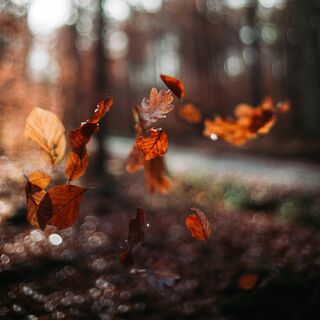
That touch of fall in the morning that we're now experiencing.
Perhaps what we love is the courage to slow down.
The Dharma becomes real when our deepest values take shape in our ordinary actions.
Rumi continues with,
There are hundreds of ways to kneel and kiss the ground.
I understand this as humility.
And gratitude.
Reverence doesn't just belong in temples or meditation spaces or in special moments.
There are hundreds of ways to bow,
Hundreds of ways.
We bow when we wash the dishes.
We bow when we pause before responding.
To something with anger.
We bow when we admit that we don't know.
We bow and we sit quietly with our own broken hearts.
And not turn away.
We bow when we feel the warmth of the sun on our face or the rain as it comes down.
Kneeling and kissing the ground doesn't mean that we become small.
It means recognizing that we belong.
That we are made of this earth.
We depend on the rain and the food and the air.
Our relationship.
To everything and the countless conditions.
That we didn't create.
We bow and we remember.
Interdependence.
With all things.
Then the poem takes us somewhere even deeper.
Rumi says,
Out beyond ideas of wrongdoing and right doing,
There is a field.
I will meet you there.
This passage has always moved people because we live so much of our lives in the ideas of right and wrong and good and bad and success and failure.
And what this line points to.
It points.
To the way the mind has these compulsive habits.
Of dividing the world.
Into fixed camps,
You know.
This is good.
This is bad.
This person is bad.
This is a good person.
This is the right side and this is the wrong side.
This is unworthy.
This is pure.
This is impure.
This is awakening.
This is helplessness.
And this field.
This field that he speaks of is not beyond responsibility.
It's a place that's beyond hatred.
It's a place where we can still tell the truth about harm.
Without reducing anyone.
To the harm that they may have done.
It's a place where we can.
Acknowledge our own mistakes.
Without constructing an identity of permanently failing.
It's a place where compassion and accountability can meet.
I will meet you there.
In the buddhist language you know the we might say that the field that he speaks of resembles non-duality.
Or emptiness,
You know,
Not blank or nothingness,
But freedom.
From our rigid and solidified views.
The field recognizes that everything arises codependently by causes and conditions.
A person suffering or Harmful behavior or generosity and fear are all shaped by causes and conditions in one's life.
And that understanding does not.
Excuse harm from happening.
But it does make compassion possible.
And when the soul lies down in that grass,
The world is too full to talk about.
I love this.
Because it speaks to the limits of language.
You know,
This field.
Is direct experience.
The mind becomes quiet enough where It's our perception just.
Lightens,
Lessens.
You know,
That when we lose a sense of language,
I think that's what the beauty of poetry is.
It simplifies language so succinctly.
You know,
Even.
.
.
Each other doesn't make sense.
You know,
We can talk about life endlessly,
And we do.
We're good at it.
We can study the Dharma,
And we can learn these teachings,
And we have.
And we've read many books on mindfulness,
And we've studied.
Meditation techniques and we've talked about awakening and we've experienced impermanence and we are learning and continue to learn about self and not self and identity and perception.
All of those things,
But eventually we have to put it all down.
We have to put it all down.
At some point.
We just have to take down the musical instrument.
We actually have to just live the practice.
To feel the grief when grief is here.
We allow for joy when joy is here.
There's something about direct experience.
That is larger than any description of it.
You can describe the taste of an orange.
But that's not the orange.
You can explain love.
But that isn't love.
I can offer a beautiful talk.
On Awakening.
But that isn't awakening.
The teachings are the finger pointing.
And at some point,
We have to look.
And perhaps that's what meditation is.
We're learning how to look.
And then Rumi goes on to say something even more radical.
Ideas,
Language,
Even the phrase,
Each other,
Doesn't make any sense.
Like the phrase each other.
Clearly assumes separation.
Here's me,
And there's you.
And of course,
In daily life,
These distinctions are practical and they're necessary.
But in deeper practice.
I think what we experience.
Is how intertwined our lives really are.
How each and every one of us has our degrees of sorrow and grief and loss.
Just like me.
You are just like me.
Aging is happening just like me.
Illness is happening just like me.
Sickness and death are happening to me also.
Just like me.
We are not separate.
And then the poem ends with a kind of an urgent invitation.
The breeze at dawn has secrets to tell you.
Don't go back to sleep.
So what is the sleep that Rumi is talking about?
Perhaps it's the sleep of habit.
The sleep of autopilot.
The sleep of believing that what we think right now is the whole truth.
The poem calls us to notice.
The threshold moments in our lives,
Waking up in the morning and pausing before speaking.
Standing at the doorway before entering our home.
Sitting down to meditate.
Feeling anger arise and not acting on it.
These are all doorways.
He writes,
People go back and forth across the door sill where the two worlds touch.
Perhaps the two worlds are.
.
.
Habit.
And awareness.
Fear and love.
Separate self and interbeing.
Grasping and letting go.
And we crossed the doorway several times throughout the day.
Many times each day.
We cross it when we notice that we're lost in thought and we return to the body and the breath.
We cross it when we enter into judgment and then cross back and come back into curiosity.
We cross it when we enter into a story and begin living it and then cross back when we see that it's a story that we've been living in.
Remy says you must ask for what you really want.
Don't go back to sleep.
I think this is such an important question for practice.
What do you really want?
Not what do I want for lunch or where I want to go travel or what I want to buy.
What do you really want?
Not what I want to accomplish today or what I really like,
But what you really want.
Do I want to spend the rest of my life defending this identity?
Not really.
Do I want to keep rehearsing the same old story of me?
Boring.
Do I want to be imprisoned by my fear?
Mm hmm.
Thank you.
Do I want freedom from those things?
And if that's what you really want to,
Then the invitation is not to create some brand,
You know,
Brand.
New spiritual belief.
Don't do that.
Or some identity.
It's much simpler,
Just don't go back to sleep.
Is what Rumi's advising us to do.
When you notice that you're caught,
Don't go back to sleep.
Don't go back to sleep in the story that this is my pain and my loss and my grief.
You're not alone.
With all of that.
Look around.
That's all of us.
Don't go back to sleep inside the belief that you're the only one that makes mistakes.
Or that when you notice that judgment has closed down your heart,
Don't go back to sleep.
When beauty appears in a very ordinary day,
Don't go back to sleep.
When someone that you love is sitting right in front of you speaking,
Don't go back to sleep.
The door is round and open.
So the path is not reserved for a particular person.
We don't have to become something special to practice.
We don't have to resolve every wound in the body.
To wake up.
We don't have to understand every teaching and all the spiritual traditions across the world.
To be free.
We don't have to earn the right to wake up.
The door is round and open and the invitation is simple.
Don't go back to sleep.
So I offered this.
As a reminder.
And I welcome your thoughts.
And I thank Rumi.
Indeed.
His brilliance is far superior.
Too much.