If you pay attention to your breath right now,
Which nostril are you breathing through more freely?
Maybe it feels like you're breathing equally through both,
But most of the time you aren't.
Usually one nostril is more open than the other.
And this changes over the course of the day.
You might have never noticed it before,
So maybe take a moment and check in now.
Close one nostril and breathe through the other,
Then change sides.
Is one side clearer.
Does the breath flow more easily?
Keep that in mind because we're going to come back to that later.
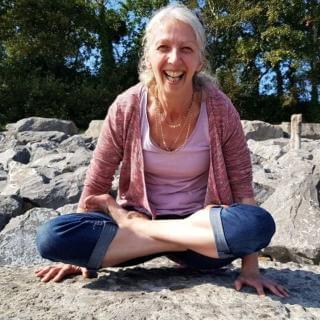
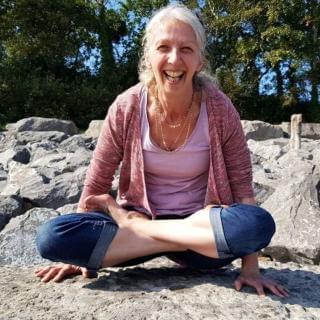
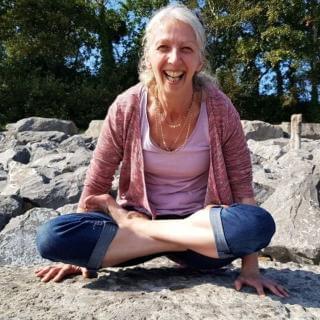
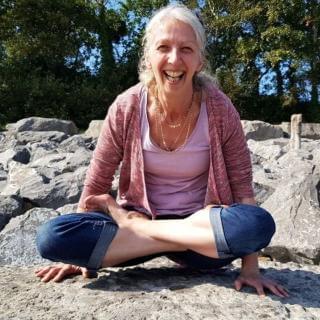
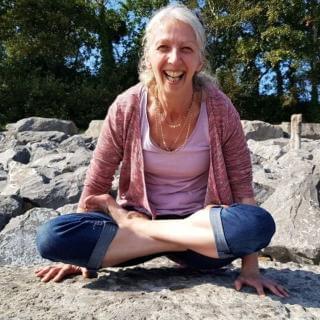
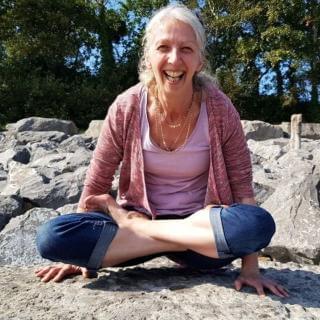
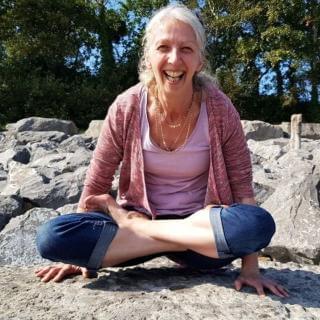
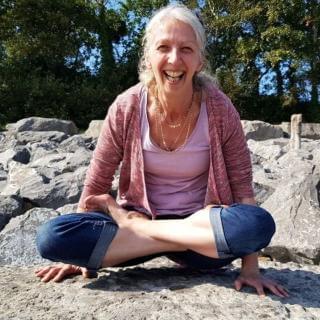
I'm Katja Patel,
Ayurvedic Diet and Lifestyle Educator,
Yoga Teacher and Teacher Mentor.
Today I want to talk about Nadi Shodhan.
Or alternate nostril breathing.
If I ask you to name one yoga breathing technique,
There's a good chance this would be the one that comes to mind.
It's probably one of the best known pranayama practices.
And on the surface it's incredibly simple.
We breathe through one nostril in and breathe out through the other.
Reverse direction and continue.
That's essentially it.
Yet?
Nadi Shodhan has a very particular place within the yoga tradition.
And when we begin to understand why.
This seemingly simple breathing technique becomes much more interesting.
Let's start with a name.
Nadi refers to the subtle channels through which prana,
Our vital life force,
Moves.
Shodhana means cleansing or purification.
So,
Showtime!
Literally means cleansing the noggin.
And that already tells us that traditionally this practice was understood.
As much more than a technique for relaxation.
The Hatha Yoga Pratypika,
One of the classical texts on Hatha Yoga.
Introduces this cleansing of the nadis early in its teachings on pranayama.
There's an order to these practices.
We begin with a body.
Through asana,
We develop the ability to sit steady,
Sit comfortably.
Where necessary,
Traditional cleansing practices prepare the physical body too.
Then we begin to work more directly with the breath and prana.
The energy.
And Nadi Shodan helps create the conditions for what comes next.
This idea of creating conditions is something I have been thinking about a lot recently.
Because.
We often want to go directly to the outcome.
We want the mind to be calm.
We want to meditate.
You want to sleep?
We want to feel less stressed.
Yoga takes us through a process.
And Naarishwotan is a lovely example of that.
But first,
Let's come back to your nostrils again.
Yoga associates the two nostrils with two of the main nadis.
Ida and Pingala Pingala is associated with the right nostril.
It represents solar energy,
Warming,
Active and outward moving.
These qualities we need.
We need to sing.
Make decisions,
Work,
Organise things and respond to what is happening around us.
Either is associated with the left nostril.
It represents lunar energy,
Cooling,
Calming.
Creative inward moving.
These qualities we talked about allow us to rest,
Reflect and settle.
And we need those too.
Throughout the day,
The balance between these different qualities changes.
There are times when we need to be active and engaged with the world.
And there are times when we need to move towards rest.
And Nadi Shodhan deliberately takes the breath from one side to the other.
Left,
Right.
Right,
Left.
Again and again.
And something interesting happens after a few rounds.
The breath begins to flow more evenly through both nostrils.
In the yoga tradition,
This more balanced flow is associated with Shushumna.
The central nod.
It represents a state where neither the active nor the calming quality dominates.
And that becomes particularly interesting when we think about the mind.
If you have ever sat down to meditate,
You may have had this experience.
You close your eyes.
You sit still.
And suddenly you discover just how busy your mind is.
Perhaps you're replaying a conversation from earlier.
Perhaps you're thinking about something you forgot to do.
Perhaps you're already organizing tomorrow.
The body may be sitting still.
But the mind hasn't arrived yet.
Sorry.
And this is one reason I like using Nadi Shaddan before meditation.
For those few minutes.
You give the mind something very clear to do.
Inhale,
Let go.
Exhale arise Inhale,
Right.
Exhale left.
Attention stays with the breath.
And then moving from side to side.
And gradually the breath becomes steadier.
And they often the mind begins to follow.
But the state we are looking for in meditation isn't simply relaxation.
We need to remain alert.
If we become too relaxed.
We might simply become sleepy.
If there's too much activity,
The mind jumps from one thought to another.
We all know too well.
So somewhere between those two is a state where we can be settled.
And away.
The same time.
Steady.
Present.
And Allah.
Nadi Shadan helps create the conditions for this middle ground.
Course,
Yoga describes Nadi Shraddhan through Prana,
Nadi,
Iddha and Pingala.
Today,
We can also look at what happens physiologically when we deliberately change our breathing.
When we practice Nadi Shodhan.
The breath usually becomes slower.
Daddy,
Yeah.
And more controlled than our normal everyday breathing.
We are working with the diaphragm and the muscles between the ribs.
There's another reason Nadi Shaddan is important.
It prepares us.
The Hatha Yoga Pradipika describes practicing alternate nostril breathing.
Regularly.
And says that after three months the nadis become purified.
It also says that we do need to do an awful lot of Nadi Shodan in those three months.
So from there then.
The text moves into other pranayama techniques.
Such as Surya Pedana,
Which is only breathing into right exhale through left.
Or Ujjayi breath.
Bhaskarika Paramhari.
Maybe you know some of them.
And again,
There is progression.
We learn to sit,
We become familiar with our breath.
We learn to direct it consciously.
We develop steadiness and awareness.
And gradually we are prepared for more advanced pranayama practices.
This same principle applies when we begin working with breathing ratios.
Or breath retention.
We don't need to stop there.
First,
The breath needs to feel comfortable and steady.
Then we gradually do more.
And this brings us back to meditation.
If we look at the wider system of yoga,
Pranayama isn't sitting there on its own.
In Patanjali's Eight Limbs of Yoga.
Asana is followed by Pranaya.
Then comes Pratyahara,
Drawing the senses inward.
Zen Dharana Concentration and then Dhyan,
Meditation.
There is a movement from the more tangible to the subtle.
Body,
Breath and heart.
Senses,
Attention,
Mind.
And this is why I think Nadi Shodhan is far more interesting than simply calling it a calming breathing technique.
It shows how yoga works.
We create the conditions for the next stage.
We don't have to sit there demanding that the mind becomes quiet.
We give the body a steady position.
We give the mind the breath to follow.
We gradually draw our attention inwards.
And then concentration has somewhere to arise from.
So let's finish with a few rounds.
If you are not able to really practice it right now,
Just listen to it.
And you can also follow it with your mind,
The movement of the breath,
The in and the out from side to side.
Also,
That alone has already a strong effect.
So before you begin,
Check your breath again.
Notice whether one nostril feels more open than the other.
Then.
.
.
Let your spine go.
Lengthen with E.
Let your shoulders relax.
Bring your hand to your face.
Fold in your index and your middle finger.
And bring your thumb to your right nostril and the ring and the little finger through your left nostril.
Because that can be quite unfamiliar.
So take a few breaths with the hand there without doing anything yet.
Let your breath flow.
Get used that the hand is there without making it more difficult to breathe.
You can close your eyes.
And then close your right nostril with your thumb.
Inhale left.
We always start there.
Close the left.
Open the right.
Exhale.
And hail right!
Close.
Open left,
Exhale.
This is one round of Nadi Shaddan.
Let's do two more.
Inhale,
Lift again.
Close.
Open right exhale Inhale,
Right.
Close,
Open left,
Exhale.
Last one.
Eid Heller Close.
Open right.
Exhale.
Eat hay.
Now what?
Open let.
Exhale.
Take another breath in and out with your hands still.
The effect is still at your nostrils.
And then slowly lower them back down.
Keep your eyes still closed.
Gays were comfortable and then Breathe in,
Feel the stream of air through the nostrils.
Notice Help us see it.
Even three rounds.
Already have an impact and you might feel that you feel now differently.
And you can continue that.
When you do this for a few more rounds.
Whatever feels comfortable.
And practice it in the morning or in the evening.
Try it out.
There is nothing particular you need to experience.
Simply notice.
And that really is where yoga begins.
We pay attention.
We begin to recognize what is happening within us.
And from there,
We can begin to understand what helps us move towards greater steadiness.