Some patterns are easy to miss until you start connecting the dots.
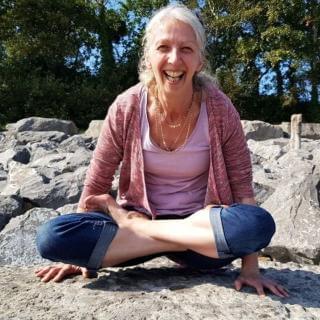
I'm Katya Patel,
Ayurvedic Diet and Lifestyle Educator,
Yoga Teacher and Teacher Mentor.
Today I want to talk about something many people experience during the summer,
But don't always connect the dots around it.
If you're listening to this in the middle of the summer,
You might recognize some of these signs.
You feel hotter than everyone else.
Your sleep becomes lighter.
Little things seem to irritate you more quickly.
You feel restless,
Maybe even a little bit fatter.
And yippee!
When we talk about summer,
We always think we're supposed to be enjoying ourselves.
And we should,
For sure.
Long evenings,
Holiday season,
Time outdoors.
So when we feel uncomfortable,
We often assume it's us.
We are the spoilers.
Sounds familiar?
I certainly can relate to that very strongly.
I love summer.
I really do.
But once the temperatures climb above 30,
I'm done.
My patience gets shorter.
My energy drops.
My concentration drops as well.
Sleep becomes less restful,
More restless.
And even small inconveniences suddenly feel much bigger than they need to.
Now here's something interesting.
Most of us think of heat as something happening outside of us.
It's hot outside.
Therefore,
I feel hot.
But from the Ayurvedic perspective,
There's another layer to this.
Ayurveda teaches that the qualities present in nature influence the qualities within us.
And summer carries the qualities of heat,
Clearly.
And over time,
That heat begins to accumulate within us,
As well as on the outside.
You might notice your body responding in subtler ways first.
For example,
For some people,
This shows up as headaches.
For others,
The skin might be irritated,
The eyes might burn,
Some inflammation is in the body.
The digestion is disturbed or you find it difficult to sleep.
For some people it feels more emotional.
They become impatient,
Frustrated,
Restless.
Maybe you've noticed that what used to roll off your shoulders suddenly feels harder to deal with and it seems to sneak up on you.
This is where things start to connect.
Rather than working against the season,
Ayurveda encourages us to make small adjustments to bring balance.
One of the simplest way to do that is through the breath.
The breath is always with you,
Wherever you go,
Right?
You don't need a yoga mat.
You don't need an hour of spare time.
You can use the breath while sitting in the garden.
Waiting for the kettle to boil,
Sitting in traffic,
Or in the tube.
So today I would like to explore three simple breathing techniques that can help bring a little more coolness and calm into your day.
What I'm going to do,
Because I want to take that also into practice,
So you might do something else where you can't join in,
So you can come back to that later.
Otherwise,
You can join in.
Each practice that I introduce,
We do three breaths or rounds of what it asks for,
And then I'll talk a little bit about what it is for.
Then you might get an idea already of what that breathing technique could bring to you.
And even when you are doing something where you can't join in,
You can still listen and you can mentally follow it.
And this will also give you a good idea of how it calms or cools.
So the first one is one,
But it can be done in two ways for a reason so one is called Shitali and the other one is called Shitkari.
The first technique called Shitali and if you have never seen it before it looks a little unusual because you roll your tongue into a tube as so and breathe through it.
Now some of us can't roll the tongues which is absolutely fine.
Then Shikari comes in,
Because then you roll your tongue up.
So the effect stays the same.
As you inhale,
The cooler air moves across the tongue,
Down the throat.
So think about you're stepping out of a swimming pool on a warm day,
And then a small breeze suddenly feels incredibly refreshing.
That's the same principle.
The breath creates a cooling sensation throughout the mouth,
The windpipe,
And eventually the entire body.
What I know it is.
For me,
The greatest benefit,
Apart from the cooling effect,
Is what happens to my mind.
Whenever I feel irritation building during a long journey,
For example,
A busy day,
Or one of these moments when everything seems to need my attention at once,
A few rounds of Shitali immediately creates some space,
The heat starts to soften,
The urgency begins to dissolve,
And I can think more clearly again.
And so let's practice three breaths together.
So you roll or fold your tongue.
And you inhale.
Close your mouth.
Swallow.
And any accessory nodes.
Roll or fold your tongue.
Inhale.
Close your mouth.
Swallow.
And exhale.
And inhale through rolled or folded tongue.
Close your mouth,
Swallow.
Exhale through your nose.
So notice how it feels in your throat.
Maybe you could feel,
Even if you're not used to it,
How at least a third time,
How it gets much cooler through the tongue,
Down through the windpipe.
And see how you felt,
How your face also felt,
Your jaws,
Your shoulders.
If something relaxes a little bit,
We'll shift it.
And if not,
Don't worry about it.
After 10 or even 20 breaths.
So the next one is Chandra Pedana,
The moon breath.
If you have practiced alternate nostril breathing before,
This will feel very familiar and easy to practice because it's one part of it.
You inhale through the left,
And you exhale through the right.
And then you repeat it in that same way,
Always like this.
Inhale left,
Exhale right.
Why is it called moon breath?
In yoga,
The left side is traditionally associated with the lunar qualities,
Cooling,
Calmness,
Receptivity,
Reflection,
Creativity,
The opposite of pushing and striving.
And perhaps that's why I find this practice particularly helpful in the evening.
You know,
Those moments when you're physically tired,
Yet your mind still seems to be running a meeting nobody asked for,
Planning tomorrow,
Replaying conversations,
Creating to-do lists,
Solving problems.
And the moon breath can be surprisingly effective at helping the mind to move from doing into being.
Just a few minutes can create a noticeable shift.
So let's practice also.
Three breaths of Chandra,
Pedana together,
The moon breaths.
So for that,
If you're unfamiliar with the alternate nostril breathing,
Nadi Shodhan,
You have the hand in front of your face,
Flex index and middle finger,
The thumb on your right nostril,
Little and ring finger on your left nostril,
Shoulders relaxed.
And take a few breaths first to get used to this position of the hands.
And then when you're ready,
You start to close your right nostril.
Inhale left.
Slow,
Full breaths.
Close left,
Open right,
Exhale equally slow.
Close right again.
Inhale left.
Close.
Open wide.
Exhale.
It can be helpful for concentration to count,
So close right,
Open left,
Inhale,
Two,
Three,
Four,
Close,
And exhale 2,
3,
4 I would like to show you one technique that might be easier for the start.
So you can use both hands.
And if you find it very difficult to have the hand in this mudra,
You can use both.
So you close with your index finger or index and middle finger,
Your right nostril,
Inhale left,
Close left,
Open right.
You continue like that,
And that can be easier at the beginning.
So after these three breaths.
Again,
Notice how you feel.
And maybe it feels different after the Shitali breathing.
Each practice evokes a different energy.
So you can use what's needed right now.
The final practice is one of my absolute favorites,
Brahmari,
The deep breath.
For this practice,
You take a full inhale,
And then you hum as you exhale.
That's all there is to it.
Simple,
But remarkably effective,
As you will notice,
Or you know it already if you have practiced it before.
Like the moon breath.
This can also be done in the evening before bed.
So whatever suits best,
Whatever feels like more natural to you,
Especially if you are climbing into bed and your mind is still traveling through the entire day.
A few rounds can help create a transition between the activity and the rest.
So a quick note here for the primary breathing.
If you're experiencing depression,
Brahmari is generally not recommended because of the way it draws the awareness inwards.
In that situation,
It's always best to seek individual guidance from a qualified teacher.
So let's practice Bahrami together.
So you might not hear me so well,
So listen to your sound.
So take a natural breath in.
And then start with your primary breathing.
Take a deep breath in.
Aw,
Not deep.
Don't want to force it.
Take a full breath in.
It's better.
And then hum on the out-breath.
Maybe you can feel the vibrations in your head that I talked about earlier.
Take a full breath in.
But.
And one last time,
Full breath in.
And hum on the out-breath.
Allah Allah Allah Allah Allah Allah Allah Allah How do you feel now?
For me,
This has the strongest effect immediately.
It simmers everything down.
Down.
See?
Mind is gone.
Down.
As most of us,
We've spent a lot of time trying to change our circumstances.
We wait for things around us to become cooler,
Quieter,
Less demanding,
Less busy.
That happens.
But often,
Life continues exactly as it is.
The gift of these practices is that they help us to change our relationship with what is happening.
The temperature outside might stay the same.
The school holidays might still be chaotic.
The inbox may still be full.
But our internal experience can be very different.
And that's what matters.
Because how we experience our day often determines how much energy we have left by the evening.
A question for you.
As you move through the week,
Notice this.
When do you feel heat building?
Not only the physical heat,
But also mental heat,
Emotional heat.
The moments when patience starts to disappear.
The moments when your nervous system feels stretched.
And experiment with one of these breathing practices before things reach a boiling point.
See what changes.
So let's bring it down to the Ascensions.
Summer doesn't have to mean feeling hot,
Irritable,
Restless,
And fed up.
A few conscious breaths can create a surprising amount of space.
Siddhali,
Siddhakari,
The Moon Breath,
The Bee Breath.
Simple practices,
A few minutes,
And often a very noticeable shift.
Small,
Steady changes matter.