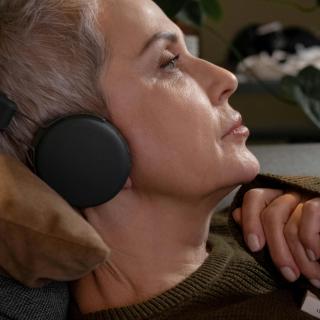
My name is Joanna Lin,
And I spent over 20 years sitting with couples and with individuals in some of their hardest moments inside relationships.
It seems that they come to me when the same fight is on repeat,
Or one person shuts down and the other chases for connection,
The building of resentment over time.
Seemingly no matter how many times they talk through it.
And what I've noticed over and over again is that these particular patterns that replay,
It's really a trigger at that surface that is rarely the real story.
Something much older is usually behind what's going on.
And we're going to talk about that a little bit today.
I've got a guided body-based experience and some reflection questions that we're going to move through because my greatest hope is that you take something back with you that you can use in your relationship right after our class together.
For me,
I'm most interested in taking what has once felt really complicated and breaking it down so it can be applied and actually used.
The kind of insight that really lands in your body before the mind tries to process it and figure it out.
And so today we are going to walk through something most of us are pretty familiar with.
I think when we use the word,
I was so triggered,
We all know that feeling.
Maybe we all know how often it can happen.
But maybe we don't quite understand that there are invitations inside of our triggers.
I like to talk about them like a neon arrow sort of lit up and pointing us in a direction to really explore,
To really understand ourselves that much deeper.
And what if we started together to look at them as a messenger?
Instead of something to be suppressed or blamed or just annoyed by.
You know,
Life is too short to feel pulled under in that way.
And so here's sort of what I wanna flush out with you to start to look at a trigger differently.
It's not some sort of flaw.
It's not some sort of thing that trips you up over and over again.
It's not even letting you know,
Oh,
You're too sensitive or you're overreacting.
It's important information.
We want to think about the trigger carrying this packet of energy and information,
And it's how you decode it.
So it's as if your body is flagging something before your mind is even caught up to it to make sense of what it's really about.
And so today with our time together,
We're just going to slow that moment down.
We're going to create a little bit of space between trigger and reactivity so that we can get curious together and shift the way it shows up.
And so I'm going to give you a few of the most common examples I've heard in my 20 years of working with couples.
One of the most common ones is feeling dismissed.
Maybe you're trying to express something really important,
Really meaningful,
And your partner goes quiet.
Your partner leaves the room.
You get shut out somehow during conflict.
It could be something as simple as an eye roll to feel like what you're saying doesn't matter.
Or it can be words that shut you down.
Because sometimes I think we go into that trigger or that reactivity,
Or our partner does.
And we don't even get the chance to share what's really tender and what's really important to move our relationship forward.
Um,
And so sometimes I noticed this with a,
With a family member,
Actually,
They'll just change the subject.
You know,
I'm,
I'm sort of carefully walking into something that felt important to share and the subject gets changed.
And so there's this feeling of being unheard.
Often,
This can be what lives in people who grew up needing to fight to be noticed.
So maybe you're one of eight siblings or something,
Or you were always shut down.
Oh,
I'll give you something to cry about.
Or you're just told you're too sensitive.
Do you feel really sensitive around criticism or perceived judgment?
So even if it's something like mild feedback might land in your system as some sort of critical voice,
Often because you grew up walking on eggshells around a critical parent.
Even art you might bring home with somehow like,
Oh,
Why did he use blue here?
That's not very realistic.
And you're thinking,
Gosh,
It's just art.
So it might have been a really small experience,
But the body remembers.
I'm not even getting that right.
And so to notice that.
That criticism piece,
Or even a perceived judgment,
We might shut our ears down.
We might go back in defense.
And so this is where one trigger starts another trigger,
And we wonder why we start feeling further and further and further apart from our spouse.
The next is tone of voice.
Now this one is super interesting to me because I hope,
I don't think I'll get the percentages right,
But just bear with me.
The,
The sense of it is I think almost 80% of how someone hears what we're expressing is through the tone of our voice.
7% is like what we're actually saying,
And the rest is body language.
So the majority of our delivery and how the other hears us is tone of voice.
I was shocked.
And so if you're trying to set a boundary,
And you're already super triggered,
You're already really charged,
You're going to come forward with that raised voice.
It's not going to be received or maybe even understood.
So that tone of voice matters so much as the delivery mechanism.
So even if we're saying it with a flatness,
Almost like.
You know,
The sigh leads it,
The hopelessness in the tone.
We want to remember that tone bypasses logic completely.
And it gets delivered straight to your partner's old alarm system.
Oh,
I'm in trouble.
Oh,
I've messed up again.
And they go straight into defense.
And meanwhile,
Their ears are completely turned off.
And so sometimes couples can kind of go to opposite ends of their living environment.
And this can go on for hours,
Days,
And weeks.
Trust me,
I've seen months.
And so the capacity to recognize I've been triggered,
How am I going to repair?
And what is that going to look like?
Because if one person's always reaching out to repair,
That's a whole other piece.
But that point where,
Oh my gosh,
My trigger took me under.
Oh my gosh,
That piece took me off track.
And I've made it personal.
So we're going to talk a little bit about that.
The next trigger,
I got to admit,
This one's a big one for me too,
Feeling controlled or micromanaged.
You know,
I've got this real thing,
Like I'll do it in the way that works for me.
Don't tell me what to do.
Or even your partner might question your choice.
Hey,
Why did you do it that way?
Or help me understand.
And then the back can get right up.
So that sensing or expectation with no room to say,
Hey,
This is why I did it because this is how it makes sense to me.
And so this is really,
Really common if you look back.
When you think about how you grew up,
Did you have to earn autonomy,
Earn your own choices the hard way?
Did you have to push because you had controlling parents,
Push for your own way?
And now you're really on guard about it.
Another one is being forgotten or feeling like you're not a priority.
And so if it's the partner that's always late or breaks plans because,
Well,
Hey,
The golf game is happening and I'm going to go over here.
Or you somehow feel like an afterthought in your own relationship.
And so,
Yes,
That part hurts in the moment.
But I'm gonna promise you it's often also connected to like old wiring and old imprint.
That says,
I don't matter.
As a child or I don't matter is somehow a part of how you felt inside of your family.
And I think another trigger can really feel like comparison.
So even if it's lighthearted or it's,
Oh,
I'm just joking.
It's like,
Well,
Are you?
So if there's the risk of what comes up as risky of being compared to an ex,
Or maybe,
Oh my gosh,
My sister,
She just listens,
And you get reactive,
And you disappear on me.
Oh,
So you feel closer to your sister than our relationship.
So any kind of comparison can trigger old wounds about Am I enough as I am?
Am I bringing enough into this relationship?
And so sometimes that can be an important point to really just share.
You and I are in relationship with our own capacities and deficits,
With our own good and bad,
And I don't want to bring in other people.
It's great that your sister is a great listener,
And that can be someone you turn to.
And so that it's your work at that moment not to make it about comparison or even jealousy,
But just to recognize you hold a different role inside of your partner's life.
I think this can be another one that is tough to be negotiated as the relationship deepens,
The trigger of physical closeness,
Someone wanting to be closer and someone wanting more distance.
And so there's that balance of too much and too little.
And this can certainly include intimacy.
And so how you might feel triggered around,
Does my partner's need for affection,
Or reassurance sometimes it comes across like that.
Does that feel like it's smothering me?
Or if my partner doesn't feel like I'm giving enough affection,
Are they feeling shut out of a deeper connection?
And again,
This goes right back to how closeness was handled in our first loves,
Which is the love with our mom,
The love with our dad,
What we saw modeled between the love between them.
And so this is a huge shaping factor of why we're triggered about something in the first place.
Feeling triggered or responsible for someone else's mood,
Specifically your partner.
A partner's stress or their sadness or when they go silent,
It can really trigger this sense of like,
I've got to do something to make this better.
And I'm going to tell you,
I'm going to say every single time,
But let's say 99% of the time,
Because we're human beings and we're,
We're more complicated than that.
But if you feel,
Oh my gosh,
I need to make it better for my partner who's struggling,
You likely grew up managing a parent's emotional state.
You grew up with an addicted parent,
A depressed parent,
A controlling parent,
That I better not say that because it's going to upset them,
And then it's my responsibility to make them feel better.
Yeah,
Great question.
I think people pleasing and emotional appeasing are synonyms.
I think they're one in the same.
It's just a different expression of how I had to survive my mom's or dad's moods in childhood.
How I didn't want to rock the boat.
Let's just make it to dinner with everything.
Okay.
Kind of a thing in childhood.
And now there's a sense of what you need to do in order to make everything keep going inside of your relationships.
And so whatever your triggers might be,
And you might even say,
Oh,
Joanna forgot to mention these other ones that come up for me.
These are just some of the top things that I've noticed in all my years of working with couples.
But what we want to explore is how the triggers connect to something tender.
And probably historical inside of your body.
Often from our childhood.
And then even something that's further back that is found inside of our family of origin.
So an example of that might be grandma was very sensitive to criticism,
And mom was very sensitive to that too,
And so am I.
I've just sort of picked it up.
And those sort of emotional traits live in family systems as well.
So let's dive into a new way of understanding what triggers reveal.
I think most of us were taught that a trigger is something we need to manage,
Or that there's something wrong with us,
Or we've got to kind of put it underground,
Like stuff it back into the body as soon as possible.
And I think all of those beliefs really miss the point.
All of those beliefs pull us away from being curious and investigating,
What is this trigger trying to tell me?
If this trigger was a messenger,
How can I listen as clearly as possible so that it doesn't have the power to take me under?
In such a way.
So we just think about it,
Right?
Someone says something small.
And suddenly,
We are in a questioning of Um.
.
.
Either reflection,
Like we go quiet and we think,
Oh,
That feels like a burning stake in my chest.
Or we can be completely furious.
Or maybe we go into this piece where we're just explaining ourselves,
Explaining ourselves before anybody even asked.
And so here's what I want us to just explore together.
That trigger is rarely,
I'm going to say if ever,
About the present moment.
It's much more about what it's connected to.
So something in the present has sort of reached back and within a second has found that old wire and pulled it.
And so that wire was laid down long time ago.
In the home where you learned what happens.
If you react with anger.
If you need something that the parent isn't able to give.
If you begin to notice,
Oh my gosh,
This is something that I need to express,
How I need to speak up,
And I'm going to be completely squashed.
Was there a time that you were trying to express something honestly and you were made wrong for it?
So when your partner forgets to,
I don't know,
Something simple like text you back.
And you feel that hot flash of hurt.
It's not really about the text.
So the text is like the door to something older.
And maybe a time that you learned.
Well,
I don't matter.
And so it's a forgotten text in the moment that triggers to,
I don't matter.
It's a huge,
Big emotion.
And so the trigger,
How you're feeling,
Is not the problem.
The trigger is the map.
And we want to begin to sort of unfold that map.
And look at how we start to integrate that stored pain.
So that it doesn't have the power to pull us under every time.
And so this isn't about.
Blame or who was wrong.
It's much more about that map.
It's much more about exploring why you need what you do.
So it's about exploring that map.
It's about tracking it through before your mind goes ahead and builds the story.
Because once we start to understand where that map is leading.
We're in much more.
In a state of understanding about it.
And then we can begin to give the body what it needs.
In the moment because the body has a very visceral reaction,
Doesn't it?
So that first clue is from the body and it lands faster than any of us thought.
So it's kind of like taking us and now we want to imagine we could press pause and practice catching it there.
Before the reaction takes the wheel,
Before that thing has come out of our mouth that we wish we could take back.
So let's do a practice together right now,
Because this might all sound good in theory,
And let's slow it down to give the body a practice of how you might be able to show up just a little bit differently.
And so if you're driving.
Just listen along,
But,
And if you're not driving and you have the ability to close your eyes and go inward.
And just get your body nice and comfortable.
Perhaps you feel your feet on the floor.
Perhaps you're laying back with your back body supported.
And I want you to bring to mind a recent time where you felt triggered.
Now I'm not asking you to relive the whole scene.
It's almost like you're just close enough to the memory that you can feel the sense of it in your body.
And we're just going to bring in a slow scan.
To notice does that elicit tightness in the body?
As that is the jaw holding it?
How about the chest?
Or is it deep in the belly?
Sometimes when we might think back to the memory of a trigger,
Our hands get tight.
We cross our arms.
Sometimes we can be flushed with heat.
Or it feels like the stomach kind of drops,
You know,
That feeling,
Kind of like nervousness.
This is your time to just slow down enough to notice what's in the body.
And now we want to ask that sensation a question.
Not why this is happening.
But much more about what does this remind you of.
What might this response be connected to?
If this sensation could talk.
What would it want you to know?
What is it trying to keep you safe from?
And just stay with whatever comes up.
It might be a word.
And maybe it's an image.
Maybe it's a feeling.
And don't be frustrated if it's not there yet.
That's okay too.
The body doesn't always rise up when we first inquire.
So let's just take one more breath.
Thanking the body and reassuring the body that you want to be an ally.
That you want to listen inside first,
That you're very curious to make these connections.
And that as you take one more breath here,
Feeling grounded,
Centered,
And connected to your body,
So that whenever you're ready,
You can very gently.
.
.
Open your eyes and come back into the here and now.
And so no rush and certainly no pressure,
Only if you're willing.
Drop a word or a sentence in the chat.
With what you might have found in your body.
Was it a feeling or an image or a sense of being connected?
To the most important parts of you,
Your heart,
Your tenderness.
Just beginning to notice that the more often in that moment where the trigger happens that we could imagine pressing pause.
Going into the body,
And my favorite question is,
What's familiar here?
I have this incredible teacher and she speaks like a poet.
She's a writer.
And so when she shares this work,
It sounds like poetry.
And she said once,
Where am I in time with you?
And so if I'm in a space with my spouse,
And I'm digging my heels in,
And I am so frustrated,
And I think,
Where am I in time with you?
I'm like,
Oh my gosh,
My body feels like I'm a teenager,
And that I have to hold my ground,
And I have to dig my heels in,
And I have to kind of fight to be heard.
And there's this update that happens within a couple seconds,
Which is like,
OK,
Wow,
I am not a teenager.
I don't actually need to fight to be heard.
Let me just back that up a little bit and to give myself some more of that support in the moment so that I can show up with a bit more clarity.
Because I think what we really want to.
.
.
Consider,
Is the here and now,
Is deeply connected to the there and then.
And how quickly those two things collide is really the cluster of what a trigger is.
And so our role to be healthy in our adult relationships is to separate out the back there and back then and all those hurts.
That might still get activated with the trigger,
But that's the messenger.
Not the person in front of you.
And we can save ourselves so much heartache with the people that are important to us,
Our dear friends,
Our spouses,
Our family members,
By being able to tease those two things apart.
I think the other interesting consideration is that even if we started to look at our triggers,
That's why I wanted to mention a few of,
Let's say,
The greatest hits of triggers as we began.
That.
We tend to have the same triggers that come through.
This is the kind of curious part.
So you may have your top three or your top five.
That's gold.
We really want to understand what is the connection,
What is the common thread of my primary triggers.
Do need that pause and to take time to feel our feelings.
And it is so hard to do in the moment.
And that's,
I think,
The make or break.
Of how a tiny little misunderstanding could turn into a huge blowout argument because we pile trigger on top of trigger.
And now we're not even talking about what we were,
We know the main thing.
And so that's a part of how we emotionally mature.
Is how we really grow our emotional intelligence is be able to Tease apart the back there and back then.
What is the messenger in my trigger?
And how do I want to respond in the here and now?
And that's why many of the couples I work with,
I'll say to them,
Let's imagine we could bring a pause in to real life.
That that pause button is respected on both sides.
And it's like,
You matter to me,
And I want to rise to the occasion.
And right now,
I am so triggered,
I could pull my hair out.
I'm going to need to back up a bit.
Let me circle back to this.
And the more and more times you give your nervous system a chance to reflect,
Get curious,
Get curious instead of furious.
Understand what's going on in my body?
What am I making this mean?
That's another powerful question.
Where am I in time with you?
What's familiar about this moment?
What am I making this mean?
So that you're separating it out from the couple as a problem.
To What is this telling me about me?
Triggers are like the fertilizer for our growth,
For our self-inquiry,
For our self-development.
Especially those darn triggers that keep coming up.
Those emotions that you feel are on repeat.
And this can be the cornerstone or the roots of why we might have hardened resentment with certain people.
That it really connects to recurring emotions that feel stuck.
So feeling dismissed,
Even when the other person would say,
Oh no,
I'm listening.
But there's something inside of you that feels dismissed.
Like maybe they took a moment and they broke eye contact,
Or the phone dinged and they looked at who the text is from.
It doesn't mean they're not still with you.
And in your sensitivity of,
I'm always dismissed,
That trigger and it's flown away.
Instead of,
Hey,
Hey,
Sweetheart,
I'm really sensitive about your,
I'm really sensitive about feeling dismissed.
And when you looked away there,
It felt like I lost your connection.
And then your partner could say,
Oh,
You're right,
I did have another thought.
Or,
Oh,
No,
No,
I'm still here with you.
And so notice we're clarifying in the here and now,
Instead of getting run away with the there and now.
And so whenever an emotion becomes,
We'll use the word chronic,
Like,
Like chronic pain,
Whenever you're like,
Ooh,
This again,
It stops being a reaction to the one moment.
And start signaling a larger pattern.
And so if we start to look at,
Well,
We'll go back to resentment,
Because it feels like it's such a meaningful piece in long-term relationship.
Let's say plans got canceled and now you're feeling resentful about that.
Now we want to look at that resentment.
It often means you've,
You've given too many times.
Oh,
That's okay.
We can rebook.
And now you've done that past your capacity.
For too long.
And it's built up.
You could think about it like bricks in a wall.
And now the wall is so high,
You can hardly see your partner over it.
And so the next time there's a missed text,
Or they're late,
Or something gets rearranged on the calendar,
You're going to feel triggered.
Because we've gone past our own capacity.
And so a part of where the triggers come up,
It might be showing you that.
That might be the clear message of,
I need to be a little bit more clear that,
Hey,
I've set this time aside.
And I was really looking forward to spending this time with you.
And I want to be easygoing about it.
But it feels like I've been easygoing too many times.
And now I'm actually feeling like I don't matter to you.
The other part about speaking honestly about what triggers us is utilizing vulnerability even when it feels so uncomfortable.
Because our partner,
Our friends,
Our family members can usually hear us through that.
It's almost the opposite end of the spectrum,
Isn't it,
Than defensiveness,
Vulnerability,
And keeping our heart open even when it's hard.
And so here's what I'd love for you to bring into your life after our workshop today.
That these emotions,
These reoccurring triggers,
It's not evidence that you're needy or that you're sensitive or anything that's wrong with you being honest about what's going on for you in the relationship.
I think some people shut it down there.
Oh,
This is a me problem.
Here I am getting triggered again.
And we make ourselves wrong for our natural needs inside of the relationship.
Instead of getting curious.
So we want to kind of open that up.
And remembering that these triggers They're more of a map.
And so we want to start to track,
Ah,
Here's where they're pointing again and again towards that unmet need.
Towards that loved one or the parents never asking,
How are you?
You seem like,
Did you have a hard day today?
You're just expected to come and take care of the younger kids or help mom or whatever there is where there was this missed need for you,
For your needs to be noticed.
And so just taking a moment here to reflect before we move on.
Is there an emotion?
Is there a reaction that shows up on repeat in your relationship?
Not once,
Not twice,
But as a pattern.
And so these feelings of being unseen or feeling dismissed or feeling responsible for your spouse or everyone inside of your family.
Shining some light for a minute on the resentment that's built up.
And I realize so much of what we've talked about,
You could probably take to your journal and write for ages.
And so I encourage you after our workshop,
If you feel,
You know,
If you feel inspired to do that.
It's amazing what kind of things can be revealed.
Because the truth is,
Whether we know where the trigger comes from or we don't,
We can't stop these triggers from happening.
I think it's a part of,
Well,
Being in relationship.
Maybe it's a part of being human.
Because let's be honest,
It doesn't just happen in intimate relationship.
I've had triggers with friendships.
I've had triggers with siblings.
I've had triggers with people that I work with.
It's across the board,
Isn't it?
It's like a human,
Exchange.
And so really the goal when we get triggered for the next time it happens for you is to stay connected to yourself while they're happening instead of disappearing into an old reaction.
And these old reactions are sometimes so automatic that we have to catch those too.
I feel triggered,
So I put up the wall with you,
I defend,
I deflect,
I make it about you,
I cry.
And so we just wanna be able to say,
Okay,
Those things might happen in the beginning.
But can I stay connected to myself instead of making it all about my partner?
When I went through my divorce,
Gosh,
20 some years ago now,
I had this very wise therapist,
And I'll never forget it.
That the message was blame is the cheapest hit of power going.
And so if I'm blaming,
He triggered me,
She said X and triggered me,
I miss the whole.
Possibility for healing.
I've missed the message.
The trigger has come in and I've shot the messenger,
The other person.
The other person is like the delivery method for me to understand why am I triggered?
Why am I so upset about this?
If I'm staying in this place of it's all about you.
I'm missing a deeper doorway towards the greatest healing possible.
Triggers are the doorway.
And now I need to get curious about what it's guiding me to know,
Especially those reoccurring ones.
That's where the gold is.
And so here's some of the ways we want to practice that.
I want to try to make this as tangible as possible.
The first is naming the sensation out loud,
Even just to yourself.
My chest is so tight right now.
Wow,
My partner said this,
Or my friend gave me this feedback,
And whoa,
My jaw is clenched.
It just happened like that.
Here's what I'm making what is happening right now mean.
We press that magic pause button.
Wow.
What did I just make that mean?
Because the mind is off and running with it.
Naming it,
Placing it in the body,
Both of those practices,
It interrupts this,
We'll call it like an automatic story or a loop that wants to just run away with the trigger.
And it gives you a moment to just consider a response outside of the patterned way.
What am I making this mean?
So that now I'm responding with that context.
So it could even sound like this,
Your partner says something that feels critical,
And you're very sensitive to criticism because of your childhood.
And you might just say,
Ouch.
Oh,
Sweetie,
Hold on a sec.
My whole heart,
My whole body just ran back to when I was seven.
And it felt like nothing I could do was right.
And so just in that moment,
I know you were just giving me feedback,
But that's where I am.
And so I just need a minute to kind of come back to the present moment,
Because I know you wouldn't mean to.
Crush my spirit like that.
I know you wouldn't mean to hurt my heart that way.
So we're giving the benefit of the doubt.
We're letting our partner know,
This is where I am in time and space.
This is what's happening for me.
And so in some relationships,
We can do that.
We can explore that.
In some relationships,
They're going to look at you like you have four heads.
And you might need to take a pause and go to the washroom and process it for yourself.
And only you'll know which of those two applies to your current relationship.
And so the other thing that's a little more everyday language is you could say to the other person,
Hmm,
I really want to answer you,
And I just need a minute.
You know,
You matter so much to me.
This matters to me.
And I don't want to answer from a place of reaction.
So just let me sit with it.
And then when you sit with it.
The role or the inquiry is checking in with your body.
Not your thoughts.
The thoughts are just going to go back to the loop,
Go back to the back there,
And then back to where you've been hurt before.
No,
No,
No,
No.
The wisdom of the body.
The body never lies.
What does my body need right now to feel safe again?
And so sometimes I think.
We can feel maybe tricked.
So let's let's say a trigger is my partner shuts down.
And so what do I need right now,
Body?
The body might say,
I need things to be OK with my partner.
I need to feel that I'm loved and I'm accepted.
And notice that rests in the other person's hands.
And if they're in a defense shutdown space,
That might not be accessible to you right away,
Maybe for days.
And so we've got to be able to bring in more self-regulation.
Which is I've got you,
Little one.
That little Joanna inside that felt unheard or unimportant or unloved or whatever.
I've got you.
And so there's that dialogue inside of the body that feels tender,
That feels dismissed,
That feels shut out.
I love you.
I'm not going to leave you alone inside wherever these feelings start.
Because a big part of stepping out of needing another person to regulate your system,
Which can put a lot of weight on the relationship,
Is really going into your own heart,
Your own self.
And I think that.
.
.
By asking the body what it needs.
You know,
Sometimes it might be something really simple like,
I'd love a cup of tea.
I'd love to get out into nature.
Let's just go sit even in the window that has lots of sun that's coming in.
Sometimes I just need a breath.
Or that sense of,
It's just good to feel you're listening,
You know,
Adult Joanna,
Little Joanna.
You slow down enough to be with me,
The pain,
Instead of reacting out.
Outward.
Let's practice the pause together,
Because this is such a key practice.
And so let's bring back into mind.
That example we did earlier in the guided visualization.
Not that you're stepping into the full trigger,
But you're just having sort of that loose memory.
Of what caught you,
Of what bothered you,
Of what risked pulling you under.
Just picture that moment that you worked with earlier.
And the trigger has happened.
And there's this sort of expectation that you'll respond.
And there's all of this cascade of emotion and sensation and reaction happening in your body.
And imagine silently saying to yourself,
I want to respond from a grounded,
Centered place,
And it's okay that I need a minute.
Notice what changes in your body when you just give yourself permission to slow down,
To pause.
Instead of React.
That.
What if we really understood that the triggers weren't ever really the problem?
And that they've been trying to hand you something the whole time.
This map that you just haven't explored yet.
And the moment that you can build some more awareness around it.
That's when you change your relationship to it.
That's exactly the kind of work I've been doing with my clients over the last 20 years,
Tracing that pattern underneath the reaction,
Using the triggers as guides,
Even using language as a way to decode what we might be holding,
However deep and however subconsciously inside.
So that we can really co-create a way of relating to yourself and to the people that you love.
And so I'm just so,
I just have such a big heart around all of you showing up today.
You know,
Bringing yourself and bringing the questions and a willingness to explore how you're showing up in healthier ways in your most important relationships.