Mindfulness of Breathing Meditation.
When focusing on the mindfulness of breathing,
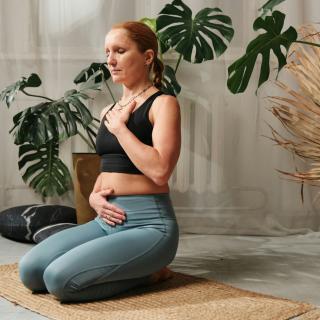
We typically meditate in a sitting posture to maintain alertness,
With our back upright yet relaxed.
But please choose whatever posture is most comfortable for you.
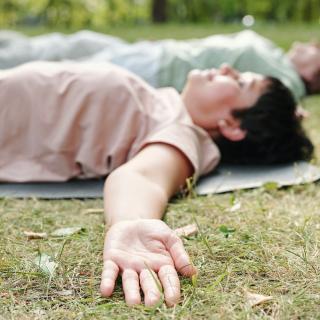
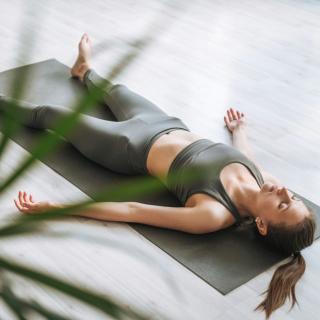
You could also be lying down or standing.
And of course,
It's fine to move during the practice if you need to.
I'll guide this meditation as if you're sitting,
So if you've chosen another posture,
Simply adapt my guidance as needed.
So,
Taking a moment to settle into your chosen posture.
Letting the weight of your body sink into gravity.
Feeling the contact between your body and the surface beneath you.
Perhaps feeling the contact of your shoulders,
Your back and your buttocks with the chair.
Noticing your feet grounded on the floor.
And gently closing your eyes if that's comfortable for you.
And I invite you to take your attention to your whole body.
Noticing any sensations.
Not trying to change them,
Simply noticing.
And it's fine if you don't notice anything.
And now taking your attention to your breath.
Noticing the sensations of the breath in your body.
Where do you feel the sensations most strongly?
Feeling the breath,
Not thinking about it.
Exploring the actual felt sensations of the breath in the body.
Noticing the rhythm of the breath.
Being curious about what you find without judgment.
Letting go of what you think should be happening.
Simply noticing what is here.
And I invite you to take your attention to your torso.
Being aware of the breath in the whole torso.
Perhaps noticing the belly swelling and subsiding with the in-breath and the out-breath.
Maybe you feel the chest rising and falling.
Maybe you notice the ribcage expanding and contracting with your inhale and exhale.
Or you might feel your shoulders rising and falling with the breath.
And now taking attention to the subtle movements of the breath in the back of the body.
Perhaps noticing movement in the upper back,
The middle back.
Or the lower back.
Simply noticing the sensations of breathing.
Coming more deeply into your body.
And bringing an attitude of kindly curiosity towards it.
Accepting what is happening here,
Now.
Noticing the sensations in each moment.
This breath.
And this breath.
If your mind wanders,
That's normal.
That's what minds are made for.
Simply notice that your mind has wandered.
And gently bring your attention back to your breath.
We can use our awareness of the movement and sensations of the breath in the body as an anchor for our minds.
Taking our awareness to the whole breath.
All the way in and out.
Being utterly receptive of the movements of your natural breath.
No need to change or control it.
Simply noticing the sensations of breathing wherever you feel it.
Allowing your body to be saturated with kindliness and tenderness as the breath rocks and cradles your body.
Soothing any pain,
Stress or discomfort.
Every time your mind wanders,
Simply notice this and return to your breathing anchor.
Be kind and patient.
Even if you have to start over a hundred times,
It's okay.
Meditation is a training,
A practice.
So if your mind has drifted,
Come back again to your breath.
In this moment.
And this breath.
Focusing on the sensations.
Gently resting your attention on the breath.
This inhalation.
On this exhalation.
What's happening now?
What are you thinking?
Just notice this and guide your awareness back to the sensation of the breath and the body over and over again.
And now I invite you to take attention.
To your nose and mouth.
Noticing the passage of air as it enters your body on the inhale and leaves on the exhale.
What sensations do you notice?
Perhaps you feel coolness on the inhale and warmth on the exhale.
If you're breathing through your nose,
How does it feel as the air enters and exits your nostrils?
Or if you're breathing through your mouth.
How does the air feel passing over your tongue and lips?
Simply noticing the sensations of breathing.
And if your mind wanders,
Gently come back to the breath.
Every time you're aware you've wandered is a magic moment of awareness,
A moment of waking up from distraction,
A moment of choice.
It means you're succeeding in practice,
Not failing because you've got distracted.
You're also succeeding when you stay with the breath.
Gently bringing your attention back to your breath.
Noticing the sensations as you're breathing in I'm breathing out.
Noticing the inhale and the exhale.
Focusing on the sensations of breathing.
Taking your attention to wherever you feel these sensations most strongly.
Continually returning to the breath.
Feeling the breath in the whole of the body.
Simply noticing the sensations as they are in this moment.
And as we begin to bring this practice to a close,
Taking a moment to notice how it feels to pay attention to the breath.
And now expanding your attention.
Feeling your whole body.
Perhaps noticing the contact of your skin with the fabric of the clothes that you're wearing.
Noticing the temperature of the air around you.
Noticing any signs.
Any smells.
Perhaps noticing the light on your eyelids if they're closed.
And when you feel ready,
You can gently blink your eyelids open and return to the space you're in.
You might like to move gently,
Perhaps wiggle your fingers and your toes.
Move a little,
Have a bit of a stretch.
Maybe a bit of a jiggle as you transition back into the space that you're in.
Bringing an attitude of gentle,
Kindly awareness to the rest of your day as we bring this practice to a close.
Thank you for practicing.