Hello,
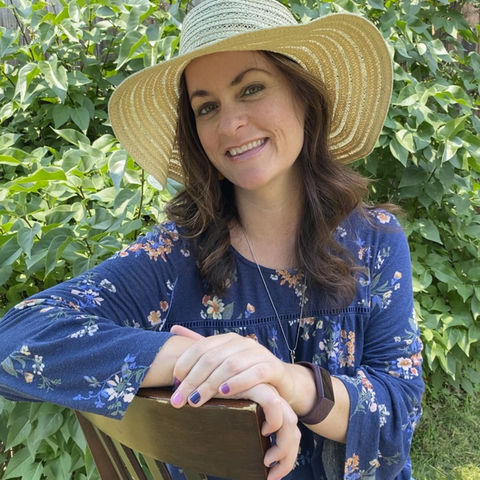
My name is Hilary LaFawn and I'm so grateful that you've joined me today to explore Chapter 15 and 16 of How to Stop Worrying and Start Living by Dale Carnegie.
This is the continuation of Part 4,
7 Ways to Cultivate a Mental Attitude that will bring you peace and happiness.
Enjoy this sleep story to help relax your mind and body for a great night's rest.
Before we begin,
Settle yourself in your bed and find your most comfortable position.
Take a few deep,
Long breaths and feel the gentle,
Soothing support of your pillows,
Sheets and blankets.
Let them cradle your body as you relax and settle in.
Chapter 15,
Would you take a million dollars for what you have?
Followed by Chapter 16,
Find yourself and be yourself.
Remember there is no one else on earth like you.
Let's begin.
Chapter 15,
Would you take a million dollars for what you have?
I have known Harold Abbott for years.
He lived in Webb City,
Missouri.
He used to be my lecture manager.
One day he and I met in Kansas City and he drove me down to my farm at Belton,
Missouri.
During that drive I asked him how he kept from worrying and he told me an inspiring story that I shall never forget.
I used to worry a lot,
He said,
But one spring day in 1934 I was walking down West Doherty Street in Webb City when I saw a sight that bandaged all my worries.
It all happened in ten seconds,
But during those ten seconds I learned more about how to live than I had learned in the previous ten years.
For two years I had been running a grocery store in Webb City.
Harold Abbott said as he told me the story,
I had not only lost all my savings,
But I had incurred debts that took me seven years to pay back.
My grocery store had been closed the previous Saturday and now I was going to the merchants and miners' bank to borrow money so I could go to Kansas City to look for a job.
I walked like a beaten man.
I had lost all my fight and faith.
Then suddenly I saw coming down the street a man who had no legs.
He was sitting in a little wooden platform equipped with wheels from roller skates.
He propelled himself along the street with a block of wood in each hand.
I met him just after he had crossed the street and was starting to lift himself up a few inches over the curb of the sidewalk.
As he tilted his little wooden platform to an angle,
His eyes met mine.
He greeted me with a grand smile.
Good morning,
Sir.
It is a fine morning,
Isn't it?
He said with spirit.
As I stood looking at him,
I realized how rich I was.
I had two legs.
I could walk.
I felt ashamed of my self-pity.
I said to myself if he can be happy,
Cheerful,
And confident without legs,
I certainly can with legs.
I could already feel my chest lifting.
I had intended to ask the merchants and the miners' bank for only $100,
But now I had courage to ask for $200.
I had intended to say that I wanted to go to Kansas City to try and get a job,
But now I announced confidently that I wanted to go to Kansas City to get a job.
I got the loan and I got the job.
I now have the following words pasted on my bathroom mirror,
And I read them every morning as I shave.
I had the blues because I had no shoes.
Until upon the street,
I met a man who had no feet.
I once asked Eddie Rickenbacker what was the biggest lesson he had learned from drifting about with his companions in life for 21 years.
Hopelessly lost in the Pacific,
He was in life rafts.
The biggest lesson I learned from the experience,
He said,
Was that if you have all the fresh water you want to drink and all the food you want to eat,
You ought never to complain about anything.
Time ran an article about a sergeant who had been wounded in the Guadalcanal.
Hit in the throat by a shell fragment,
The sergeant had seven blood transfusions.
Writing a note to his doctor,
He asked,
Will I live?
The doctor replied,
Yes.
He wrote another note asking,
Will I be able to talk?
Again,
The answer was yes.
He then wrote another note saying,
Then what in the hell am I worrying about?
Why don't you stop yourself right now and ask yourself,
What in the hell am I worrying about?
You will probably find that it is comparatively unimportant and insignificant.
About 90% of all things in our lives are right and about 10% are wrong.
If we want to be happy,
All we have to do is concentrate on the 90% that are right and ignore the 10% that are wrong.
If we want to be worried and bitter and have stomach ulcers,
All we have to do is concentrate on the 10% that are wrong and ignore the 90% that are glorious.
The words think and thank are inscribed in many of the Caramwellian churches of England.
These words ought to be inscribed on our hearts too.
Think and thank.
Think of all we have to be grateful for and thank God for all the boons and bounties.
Jonathan Swift,
Author of Gulliver's Travels,
Was the most devastating pessimist in English literature.
He was so sorry that he had been born,
That he wore black and fasted on his birthdays.
Yet in his despair,
The supreme pessimist of English literature praised the great health-giving powers of cheerfulness and happiness.
The best doctors in the world,
He declared,
Are Dr.
Diet,
Dr.
Quiet,
And Dr.
Merryman.
You and I may have the services of Dr.
Merryman free every hour of the day by keeping our attention fixed on all the incredible riches we possess.
Riches exceeding by far the fabled treasures of Alibaba.
Would you sell both your eyes for a billion dollars?
What would you take for your two legs?
Your hands?
Your hearing?
Your children?
Your family?
Add up your assets and you will find that you won't sell what you have for all the gold ever amassed by the Rockefellers,
The Fords,
And the Morgans combined.
But do we appreciate all this?
Ah,
No.
As Schopenhauer said,
We seldom think of what we have,
But always of what we lack.
Yes,
The tendency to seldom think of what we have,
But always of what we lack,
Is the greatest tragedy on earth.
It has probably caused more misery than all the wars and diseases in history.
It caused John Palmer to turn from a regular guy into an old grouch and almost wrecked his home.
I know because he told me so.
Mr.
Palmer lives in Patterson,
New Jersey.
Apparently after I returned from the army,
He said,
I started a business for myself.
I worked hard day and night.
Things were going nicely.
Then trouble started.
I couldn't get parts and materials.
I was afraid I was going to have to give up my business.
I was afraid that I wouldn't be able to survive.
I worried so much that I changed from a regular guy into an old grouch.
I became so sour and cross that,
Well,
I didn't even know it then,
But I now realize that I came very near to losing my happy home.
Then one day a young,
Disabled veteran who works for me said,
Johnny,
You ought to be ashamed of yourself.
You take on as if you were the only person in the world with troubles.
Suppose you do have to shut up shop for a while.
So what?
You can start up again when things get normal.
You've got a lot to be thankful for.
Yet you are always growling.
Boy,
How I wish I was in your shoes.
Look at me.
I've got only one arm and half of my face is shot away.
And yet I'm not complaining.
If you don't stop your growling and grumbling,
You will lose not only your business,
But also your health,
Your home,
And your friends.
Those remarks stopped me dead in my tracks.
They made me realize how well off I was.
I resolved then and there that I would change and be my old self again.
And I did.
A friend of mine,
Lucille Blake,
Had to tremble on the edge of tragedy before she learned to be happy about what she had instead of worrying over what she lacked.
I met Lucille years ago when we were both studying short story writing in Columbia University School of Journalism.
Some years ago,
She got the shock of her life.
She was living then in Tucson,
Arizona.
She had,
Well,
Here is the story as she told it to me.
I'd been living in a world,
Studying the Oregon at the University of Arizona,
Conducting a speech clinic in town,
And teaching a class in musical appreciation at the Desert Willow Ranch,
Where I was staying.
I was going in for parties,
Dances,
Horseback rides under the stars.
One morning I collapsed.
My heart.
You will have to lie in bed for a year of complete rest,
The doctor said.
He didn't encourage me to believe I would ever be strong again.
In bed for a year?
To be an invalid?
Perhaps to die?
I was terror stricken.
Why did all this have to happen to me?
What had I done to deserve it?
I wept and wailed.
I was bitter and rebellious,
But I did go to bed as the doctor advised.
A neighbor of mine,
Mr.
Rudolph,
An artist,
Said to me,
You think now that spending a year in bed will be a tragedy,
But it won't be.
You'll have time to think and get acquainted with yourself.
You will make more spiritual growth in these next few months than you could have made during all your previous life.
I became calmer and tried to develop a new sense of values.
I read books of inspiration.
One day I heard a radio commentator say,
You can express only what is in your own consciousness.
I had heard words like this many times before,
But now they reached down inside me and took root.
I resolved to think only the thoughts I wanted to live by,
Thoughts of joy,
Happiness,
Health.
I forced myself each morning as soon as I awoke to go over all the things I'd be grateful for.
No pain.
A lovely young daughter.
My eyesight.
My hearing.
Lovely music on the radio.
Time to read.
Good food.
Good friends.
I was so cheerful and had so many visitors that the doctor put a sign saying that only one visitor at a time would be allowed in my cabin and only for certain hours.
Many years have passed since then and I now lead a full active life.
I'm deeply grateful now for that year I spent in bed.
It was the most valuable and the happiest year I spent in Arizona.
The habit I formed then of counting my blessings each morning still remains with me.
It is one of my most precious possessions.
I am ashamed to realize that I never really learned to live until I feared I was going to die.
My dear Lucille Blake,
You may not realize it,
But you learned the same lesson that Dr.
Samuel Johnson learned 200 years ago.
The habit of looking on the best side of every event,
Said Dr.
Johnson,
Is worth more than a thousand pounds a year.
Those words were uttered,
Mind you,
Not by a professional optimist,
But by a man who had known anxiety,
Rags,
And hunger for 20 years and finally became one of the most eminent writers of his generation and the most celebrated conversationalist of all time.
Logan Purcell Smith packed a lot of wisdom into a few words when he said,
There are two things to aim at in life.
First to get what you want and after that to enjoy it.
Only the wisest of mankind achieve the second.
Would you like to know how to make even dishwashing at the sink a thrilling experience?
If so,
Read an inspiring book of incredible courage by Borgil Dahl.
It was called I Wanted to See.
This book was written by a woman who was practically blind for half a century.
I had only one eye,
She writes,
And it was so covered with dense scars that I had to do all my seeing through one small opening in the left of the eye.
I could see a book only by holding it close to my face and by straining my one eye as hard as I could to the left.
But she refused to be pitied,
Refused to be considered different.
As a child she wanted to play hopscotch with other children,
But she couldn't see the markings.
So after the other children had gone home,
She got down on the ground and crawled along her eyes near the marks.
She memorized every bit of the ground where she and her friends played and soon became an expert at running games.
She did her reading at home,
Holding a book of large prints so close to her eyes that her eyelashes brushed the pages.
She earned two college degrees,
An A.
B.
From the University of Minnesota and a Masters of Arts from Columbia University.
She started teaching in the tiny village of Twin Valley,
Minnesota and rose until she became professor of journalism and literature at Augustana College in Sioux Falls,
South Dakota.
She taught there for 13 years,
Lecturing before women's clubs and giving radio talks about books and authors.
In the back of my mind she writes,
There had always lurked a fear of total blindness.
In order to overcome this,
I had adopted a cheerful,
Almost hilarious attitude towards life.
Then in 1943,
When she was 52 years old,
A miracle happened,
An operation at the famous Mayo Clinic.
She could now see 40 times as well as she'd ever been able to see before.
A new and exciting world of loveliness opened before her.
She now found it thrilling even to wash dishes in the kitchen sink.
I began to play with the white fluffy suds in the dish pan,
She writes.
I dip my hands into them and I pick up a ball of tiny soap bubbles.
I hold them up against the light and each of them I can see the brilliant colors of a miniature rainbow.
As she looked through the window above the kitchen sink,
She saw the flapping gray-black wings of the sparrows flying through the thick,
Falling snow.
She found such ecstasy looking at the soap bubbles and sparrows that she closed her book with the words,
Dear Lord,
I whisper our Father in heaven,
I thank thee,
I thank thee.
Imagine thanking God because you can wash dishes and see rainbows and bubbles and sparrows flying over the snow.
You and I ought to be ashamed of ourselves.
All the days of our years we've been living in a fairyland of beauty and we've been too blind to see,
Too satiated to enjoy.
If we want to stop worrying and start living,
Rule number four is count your blessings,
Not your troubles.
Chapter 16.
Find yourself and be yourself.
Remember,
There is no one else on earth like you.
I have a letter from Miss Edith Allred of Mount Airy,
North Carolina.
As a child I was extremely sensitive and shy,
She said in her letter.
I was always overweight and my cheeks made me look even fatter than I was.
I had an old fashioned mother who thought it was foolish to make clothes look pretty.
She always said,
Wide will wear while narrow will tear and she dressed me accordingly.
I never went to parties,
Never had any fun and when I went to school I never joined the other children in outside activities,
Not even athletics.
I was morbidly shy,
I felt I was different from everybody else and entirely undesirable.
When I grew up,
I married a man who was several years my senior but I didn't change.
My in-laws were poised and self-confident family.
They were everything I should have been but simply was not.
I tried my best to be like them but I couldn't.
Every attempt they made to draw me out of myself only drove me further into my shell.
I became nervous and irritable.
I avoided all friends.
I got so bad I even dreaded the sound of the doorbell ringing.
I was a failure.
I knew it and I was afraid my husband would find it out.
So whenever we were in public I tried to be gay and overacted my part.
I knew I overacted and I could be miserable for days afterwards.
At last I became so unhappy that I could see no point in prolonging my existence.
I began to think of suicide.
What happened to change this unhappy woman's life?
Just a chance remark.
A chance remark,
Ms.
Allred continued,
Transferred my whole life.
My mother-in-law was talking one day of how she brought her children up and she said,
No matter what happened I always insisted on their being themselves.
On being themselves.
That remark is what did it.
In a flash I realized I had brought on all this misery on myself by trying to fit myself into a pattern to which I did not conform.
I changed overnight.
I started being myself.
I tried to make a study of my own personality.
Tried to find out what I was.
I studied my strongest points.
I learned all I could about colors and styles and dress in a way that I felt was becoming to me.
I reached out to make friends.
I joined an organization,
A small one at first,
And was petrified with fright when they put me on a program.
But each time I spoke,
I gained a little courage.
It took a long while,
But today I have more happiness than I ever dreamed possible.
In rearing my own children,
I have always taught them the lesson I had to learn from such bitter experience.
No matter what happens,
Always be yourself.
This problem of being willing to be yourself is as old as history,
Says Dr.
James Gordon Gilkey,
And as universal as human life.
This problem of being unwilling to be yourself is the hidden spring behind many neuroses and psychosis and complexes.
Angelo Patry has written 13 books and thousands of syndicated newspaper articles on the subject of child training,
And he says,
Nobody is so miserable as he who longs to be somebody in something other than the person he is body and mind.
This craving to be something you are not is especially rampant in Hollywood.
Sam Wood,
One of Hollywood's best known directors,
Said the greatest headache he has with aspiring young actors is exactly this problem.
To make them be themselves,
They all want to be the second rate Lana Turner's or third rate Clark Gable's.
The public has already had that flavor,
Sam Wood keeps telling them.
Now it wants something else.
Before he started directing such pictures as Goodbye Mr.
Chips and For Whom the Bell Tolls,
Sam Wood spent years in the real estate business,
Developing sales personalities.
He declares that the same principles apply to the business world as the world of the moving pictures.
You won't get anywhere playing the ape.
You can't be a parrot.
Business has taught me,
Says Sam Wood,
That is the safest to drop,
As quickly as possible,
People who pretend to be what they aren't.
I asked Paul Boynton,
Then employment director for a major oil company,
What is the best mistake people make in applying for jobs?
He ought to know he has interviewed more than 60,
000 job seekers,
And he's written a book entitled Six Ways to Get a Job.
He replied,
The biggest mistake people make in applying for jobs is in not being themselves.
Instead of taking their hair down and being completely frank,
They often try to give you the answers they think you want.
But it doesn't work,
Because nobody wants a phony,
Nobody ever wants a counterfeit coin.
A certain daughter of a streetcar conductor had to learn the lesson the hard way.
She longed to be a singer,
But her face was her misfortune.
She had a large mouth and protruding buck teeth.
When she first sang in public in a New Jersey nightclub,
She tried to pull her upper lip to cover her teeth.
She tried to act glamorous.
The results?
She made herself look ridiculous.
She was heading for failure.
However,
There was a man in this nightclub who heard the girl sing and thought she had talent.
See here,
He said bluntly,
I've been watching your performance,
And I know what it is you're trying to hide.
You're ashamed of your teeth.
The girl was embarrassed,
But the man continued,
What of it?
Is there any particular crime in having buck teeth?
Don't try to hide them.
Open your mouth,
And the audience will love you when they see you're not ashamed.
Besides,
He said shrewdly,
Those teeth you're trying to hide may make you your fortune.
Cass Daly took his advice and forgot about her teeth.
From that time on,
She thought only about her audience.
She opened her mouth wide and sang with such gusto and enjoyment that she became a top star in movies and radio.
Other comedians tried to copy her.
The renowned William James was speaking of people who had never found themselves when he declared that the average person develops only 10% of his or her latent mental abilities compared to what we ought to be.
He wrote,
We are only half awake.
We are making use of only a small part of our physical and mental resources.
Stating the thing broadly,
Human individuals thus live far within their limits.
They possess powers of various sorts,
Which they habitually fail to use.
You and I have such abilities,
So let's not waste a second worrying because we're not like other people.
You are something new in this world.
Never before since the beginning of time has there ever been anybody exactly like you.
And never again throughout all of the ages to come will there ever be anybody exactly like you again.
The science of genetics informs us that you are what you are largely as a result of 24 chromosomes contributed by your father and 24 chromosomes contributed by your mother.
These 48 chromosomes comprise everything that determines what you inherit.
In each chromosome there may be,
Says Omran Sheinfeld,
Anywhere from scores to hundreds of genes with a single gene in some cases able to change the whole life of an individual.
Obviously we are fearfully and wonderfully made.
Even after your mother and father met and made it,
There was only one chance and 300,
000 billion that the person who was specifically you would be born.
In other words,
If you had 300,
000 billion brothers and sisters,
They might all have been different from you.
Is all this guesswork?
No.
It's a scientific fact.
If you would like to read more about it,
Consult You and Heredity by Omran Sheinfeld.
I can talk with conviction about this subject of being yourself because I feel deeply about it.
I know what I'm talking about.
I know from bitter and costly experience.
To illustrate,
When I first came to New York from the cornfields of Missouri,
I enrolled in the American Academy of Dramatic Arts.
I aspired to be an actor.
I had what I thought was a brilliant idea,
A shortcut to success,
An idea so simple,
So foolproof that I couldn't understand why thousands of ambitious people hadn't already discovered it.
It was this.
I would study how the famous actors of the day,
John Drew,
Walter Hampton,
And Otis Skinner got their effects.
And I would imitate the best points of each one of them and make myself into a shining,
Triumphant combination of all of them.
How silly.
How absurd.
I had to waste years of my life imitating other people before it penetrated through my thick Missouri skull that I had to be myself and that I couldn't possibly be anyone else.
That distressing experience ought to have taught me a lasting lesson,
But it didn't.
Not me.
I was too dumb.
I had to learn it all over again.
Several years later,
I set out to write what I'd hoped would be the best book on public speaking for businessmen that had ever been written.
I had the same foolish idea about writing this book that I had formerly had about acting.
I was going to borrow the ideas of a lot of other writers and put them all in one book,
A book that would have been everything.
So I got scores of books on public speaking and spent a year incorporating their ideas into my manuscript.
But it finally dawned on me once again that I was playing the fool.
This hodgepodge of other men's ideas that I'd written was so synthetic,
So dull,
That no businessman would ever plod through it.
So I tossed a year's work into the wastebasket and started all over again.
This time I said to myself,
You've got to be Dale Carnegie with all his faults and limitations.
You can't possibly be anyone else.
So I quit trying to be a combination of other men and rolled up my sleeves and did what I should have done in the first place.
I wrote a textbook on public speaking out of my own experiences,
Observations,
And convictions as a speaker and a teacher of speaking.
I learned,
For all time I hope,
The lesson that Sir Walter Raleigh learned.
I'm not talking about the Sir Walter who threw his coat in the mud for the Queen to step on.
I'm talking about the Sir Walter Raleigh who was professor of English literature at Oxford back in 1904.
I can't write a book commensurate with Shakespeare,
He said,
But I can write a book by me.
Be yourself.
Act on the sage advice that Irving Berlin gave the late George Gershwin.
When Berlin and Gershwin first met,
Berlin was famous,
But Gershwin was a struggling young composer working for $35 a week in Tin Pan Alley.
Berlin,
Impressed by Gershwin's ability,
Offered Gershwin a job as his musical secretary at almost three times the salary he was then getting.
But I don't take the job Berlin advised.
If you do,
You may develop into a second rate Berlin.
But if you insist on being yourself,
Someday you'll become a first rate Gershwin.
Gershwin heeded the warning and slowly transformed himself into one of the most significant American composers of his generation.
Charlie Chaplin,
Will Rogers,
Mary Margaret McBride,
Gene Autry,
And millions of others had to learn the lesson I'm trying to hammer home in this chapter.
They had to learn the hard way,
Just as I did.
When Charlie Chaplin first started making films,
The director of the pictures insisted on Chaplin's imitating a popular German comedian of the day.
Charlie Chaplin got nowhere until he acted himself.
Bob Hope had a similar experience,
Spent years in a singing and dancing act,
And got nowhere until he began to be a wisecrack and be himself.
Will Rogers twirled a rope in vaudeville for years without saying a word.
He got nowhere until he discovered his unique gift for humor and began to talk as he twirled his rope.
When Mary Margaret McBride first went on the air,
She tried to be an Irish comedian and failed.
When she tried to be just what she was,
A plain country girl from Missouri,
She became one of the most popular radio stars in New York.
When Gene Autry tried to get rid of his Texas accent and dressed like city boys and claimed he was from New York,
People merely laughed behind his back.
But when he started twanging his banjo and singing cowboy ballads,
Gene Autry started out on a career that made him the world's most popular cowboy,
Both in pictures and on the radio.
You are something new in this world.
Be glad of it.
Make the most of what nature gave you.
In the last analysis,
All art is autobiographical.
You can sing only what you are.
You can paint only what you are.
You must be what your experiences,
Your environment,
And your heredity have made you.
For better or for worse,
You must cultivate your own little garden.
For better or for worse,
You must play your own little instrument in the orchestra of life.
As Emerson said in his essay on self-reliance,
There is a time in every man's education when he arrives at the conviction that envy is ignorance,
That imitation is suicide,
That he must take himself for better or for worse as his portion,
That though the wide universe is full of good,
No kernel of nourishing corn can come to him but through his toil bestowed on that plot of ground which has given him to till.
The power which resides in him is new in nature,
And none but he knows what that is what he can do.
Nor does he know until he has tried.
That is the way Emerson said it.
But here is the way a poet,
The late Douglas Malick said,
If you can't be a pine on the top of a hill,
Be a scrub in the valley,
But be.
But be the best little scrub by the side of the rill.
Be a bush if you can't be a tree.
If you can't be a bush,
Be a bit of the grass,
And some highway happier make.
If you can't be a muskie,
Then just be a bass,
But the liveliest bass in the lake.
We can't all be captains,
We've got to be crew.
There's something for all of us here.
There's big work to do,
And there's lesser to do,
And the task we must do is the near.
If you can't be a highway,
Then just be a trail.
If you can't be the sun,
Be a star.
It isn't by size that you win or you fail.
Be the best of whatever you are.
To cultivate a mental attitude that will bring us peace and freedom from worry,
Here is rule number five.
Let's not imitate others.
Let's find ourselves and be ourselves.
That is the end of our story today.
Thank you for allowing me the precious gift of your time.
Until next time,
Sweet dreams.