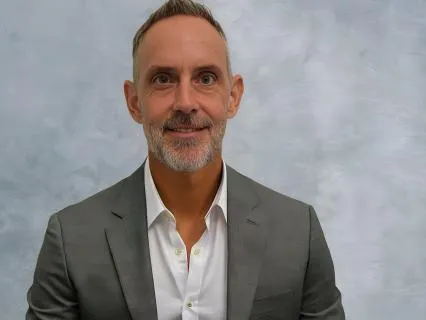
Welcome to Life,
Lessons & Laughter with your host,
Glenn Ambrose.
Hey,
Everybody.
Welcome.
Welcome to the show.
So today.
We'll see how this goes.
We'll see if I even air it.
What I'm going to try to do is I'm going to try to.
.
.
Basically have a conversation and I'm going to use.
I'm going to use AI to give feedback.
Now,
The reason I'm doing this is.
Well,
There's several reasons why I'm doing this.
One of them is,
You know,
A lot of times I've said this a lot that we don't think deeply enough about things,
You know,
And.
This is where a lot of our problems are.
They're just on the surface.
Dive into them and think a little bit deeper.
Come to some new conclusions and understand things better and make better choices and all this stuff.
And,
You know.
Staying completely inside your head,
It doesn't work.
It doesn't.
When I was working with a life coach years ago,
A lot of our sessions were me using my Life Coach as a sounding board.
And for confirmation and things like this because when.
I would try to figure out things in my head and I couldn't.
You know,
Some things I figured out didn't make sense once I said them out loud,
Um,
Or sometimes I just get stuck and I wasn't able to make sense of anything.
So I would say them out loud and as I'm speaking it,
I would,
I would kind of see it differently.
I would see it from an outside perspective because I was hearing what I was saying.
Not trapped in my head.
So there's something that happens when your words meet reality,
External reality.
It's like they kind of become real and you can.
You can understand them in a different way.
So saying things out loud is helpful.
Getting feedback is helpful.
And the reason I'm using AI is because.
Well,
Let's be honest,
It's easy.
It's right here on my phone.
But the other reason is,
Is because AI doesn't get defensive.
Okay.
I'm not a huge fan of AI.
I think there's big problems with AI.
I think it's going to cause gigantic problems.
Um,
Just because you know,
That's what we do as human beings.
We don't ask,
Should I build something?
We ask,
Can I,
And then we just go build it and release it and then deal with all the problems after.
So that's,
What's going to happen.
And AI has some pretty powerful capabilities.
So we're probably going to be dealing with some pretty powerful problems.
Um,
That being said.
I don't think anything is good or bad.
It just is.
And it's how we use it.
You know,
A gun isn't good or bad.
It's how it's used.
So and same with everything else.
So I don't think AI is bad.
I just I think we have to be careful with how we use it.
But AI doesn't get defensive.
It stays open.
And part of the reason it probably doesn't get defensive is it's kind of trained to tell you what you want to hear to some degree.
So we have to keep that in mind,
Too.
But it also has access.
To a lot of information out there.
Sometimes it just completely screws up and sometimes it doesn't.
The way I've caught AI screwing up is by paying attention logically.
And as a general rule.
I catch it screwing up.
Regularly.
Um.
.
.
So I guess I'm not fearful of it.
Giving me false information because I know that it can.
So I don't trust it,
Right?
I follow the logic,
And when it goes off logic and starts not making any sense,
I question it.
I back it into a corner.
And then,
Well,
Why do you say this?
What do you mean by this?
And then I can.
.
.
Usually it tells me once I back it into a corner,
Like,
Yeah,
You're right.
Like I completely screwed up,
You know.
So.
I want to show you this logic.
The other thing that I want,
The other reason I'm doing this is,
You know,
I have an ability to see things.
That other people don't see.
And I understand that it's the way that my mind works and I understand that it's a gift,
But I also don't think it's that ethereal that other people can't do it,
Especially if they understand it and try implementing it themselves.
I think you guys can basically do the same thing that I'm doing.
Maybe I've been doing it longer.
Maybe I can do it better than some.
I'm sure some people can do it better than me.
But I think that we can all do this if practice a little bit.
And I think critical thinking is paramount as we move forward through our lives.
We need to practice our critical thinking,
Our independent thinking,
Our looking at both sides of things.
We don't do that.
We just pick our side.
I'm going to,
I'm going to have a conversation like this and you know,
Those on video bear with me because I'm probably going to be looking at my phone a lot.
But I'm going to try to give you the back and forth and how I follow things down deeper to understand them better.
And to come to conclusions.
And once I do come to a conclusion,
I hold it loosely.
I don't latch onto it.
I don't attach to it.
I go,
Well,
This is probably the truth,
But I make sure I stay open that I might get more information somewhere.
Maybe at a later date that changes my mind or my opinion on this particular thing.
So I don't latch onto it as this is true and anybody that doesn't think like me should be shot because they're morons.
It's like,
No,
No.
This is just what makes sense to me at this time.
It might shift as time moves forward.
We'll see.
So.
And who knows,
If this works well and if you guys like it,
I might do it with more topics.
So the one I'm going to start with is,
You know,
Many paths to one destination.
I mean,
I,
You know,
I believe that there is one God,
One entity,
One energy,
One thing.
Out there.
And,
You know,
A lot of arguments come from different religions,
Particularly,
And different New Age spiritual philosophies,
Saying,
You know,
No,
My way is the right way.
So,
You know,
I don't believe that there's one right way.
I believe we're all teaching the same things.
So.
The first question I asked is,
Are all major religions believing in one God or energy?
And it says,
If you look beneath the different language and symbols,
Many of the world's major religions point toward a single ultimate reality.
But they describe that reality very differently.
So Christianity,
One personal God.
Islam,
One personal God,
Judaism,
One personal God,
Sikhism,
One God,
Hinduism,
Many traditions,
But many teach one ultimate reality.
Um.
.
.
Buddhism points to one ultimate truth.
And the one true nature of reality.
The Dow.
Is the ultimate reality or the way from which everything arises.
So they're kind of saying it's more like a an energy or a presence than what people might have in their head as a god.
I kind of combine those two things personally.
But it says there are two broad perspectives.
Theistic traditions,
Christianity,
Islam,
Judaism,
Sikhism,
There is one supreme personal God.
Non-dual or philosophical traditions,
Which it says many forms of Hinduism,
Daoism,
Some Buddhist schools,
One ultimate reality,
Consciousness or truth,
Though it may not be described as a personal God.
Uh.
.
.
This is why modern spiritual teachers say things like different religions are different paths up the same mountain.
However,
It's important to note that not every religion agrees with that statement.
Christianity and Islam generally maintain that God has revealed himself in specific ways that are not interchangeable with other religions.
Buddhism generally wouldn't describe ultimate reality as God at all.
So if your question is,
Do they all point toward one ultimate source or reality?
Then many scholars of comparative religion would say there are significant similarities.
Do they all believe the exact same thing?
The answer is no.
Of course we know that.
You know.
So,
So this this kind of two ways I can branch off on this,
Like I kind of like the.
Idea,
Uh,
Well.
I find it interesting,
The idea of a trilogy just underneath the concept of God.
Um,
So I can go there or I can just keep harping on this.
Um,
I think,
I think I'm going to dive into the trilogy again and who knows,
Maybe we'll come back,
You know,
Where this is all a trial thing.
So,
So.
I'll ask.
Do.
Most major religions believe in a trilogy underneath the concept of God.
In its foundational principles.
Whereas these three aspects of God represent creation,
Destruction,
And action.
Would that be fair to say?
So let's see what it says to that.
Let's see.
There are two different ideas that are easy to blend together.
Many religions recognize three fundamental aspects of reality.
And two,
Most religions believe God is a trinity or trilogy.
So.
In Hinduism,
They have the Trimurti Brahma is the creator.
Vishnu is the preserver or sustainer,
Sustainer.
Yeah.
And Shiva is the destroyer slash transformer.
Notice that it's usually creation,
Preservation,
And transformation,
Not creation,
Destruction,
And action.
OK,
So let's see that.
It's usually creation.
Preservation.
Would be.
What I call,
What I initially said as action.
That's kind of interesting that they use that word preservation.
So you can see the similarities,
But this is actually a good point because.
They're saying that preservation is an accurate,
More accurate way to describe what I described as action.
So that's like the Holy Spirit in Christianity.
And transformation.
Is the word they choose instead of destruction.
Which,
You know,
I get it.
Like,
Like that is.
It's not necessarily destruction,
It's transformation.
Like when a tree dies and it's decomposing,
We can look at that as destruction,
But actually it's feeding the soil to create a new life,
So it's actually transformation,
Not destruction.
And of course we can see this in Christianity also,
Because Jesus is generally the representation of what we might call destruction,
Because of his death,
But he rose again.
So now all of a sudden you can see how in that story it's transformation.
Right?
So actually,
I kind of like that.
Um.
.
.
So Christianity has the Trinity father,
Son,
Holy Spirit.
Buddhism has important threes.
I'm not sure if I'll dive into that or not.
Taoism has the triadic concepts.
Judaism and Islam strongly emphasize the absolute oneness of God and reject the idea that God consists of three persons or three aspects.
Okay,
So this is kind of where it gets interesting to me in Judaism and Islam.
Let me just read the rest though.
One reason you notice recurring threes is that many traditions describe reality through three complementary functions or principles.
Across cultures,
You often see themes like beginning,
Continuation,
Ending,
Or transformation,
Or birth,
Life,
Death,
Or creation,
Preservation,
Transformation.
These are patterns in nature that many religions recognize,
But they don't all identify those functions with God in the same way.
So a more accurate statement would be many religions and philosophical traditions describe reality using three fundamental principles or functions.
Often involving creation,
Sustaining,
And transformation,
But they do not generally teach the same threefold concept of God.
That's a distinction that scholars of comparative religion would generally consider important.
OK,
So now I see two more ways of going at this,
Like I can dive into.
The fact that these religions and philosophical traditions describe reality using three fundamental principles or I can.
Dive into.
.
.
The idea that Judaism and Islam strongly emphasize the absolute oneness of God and reject the idea that God consists of three persons or aspects.
And I'm going to touch on that at least at least for a moment here.
Let me see.
I'm just gonna.
.
.
I'm gonna copy that last part so I don't have to go searching for it.
So I can come back to it.
Okay,
So.
I'm sitting here and I'm going,
Okay,
Judaism and Islam strongly emphasize the absolute oneness of God and reject the idea that God consists of three persons or aspects.
And I'm going,
Is that true?
Like,
Is that true?
What they're saying earlier is that.
Basically all these major religions do believe in a creation,
Preservation and transformation aspect in nature.
They recognize it and they have this part of their philosophy,
But they don't,
You know,
They might look at it differently,
You know?
So I want to know is,
Is that what's happening here?
Is it kind of semantics?
Or do they just don't,
Or do they not believe that?
That these religions,
These other two religions just don't believe that there's any aspect of this whatsoever.
And I kind of have,
To be honest,
I have an inkling of the answer,
But we'll see what it says here.
So does Judaism and Islam believe?
Those three aspects play out in nature,
In our reality.
And they are.
Qualities of God.
The God they believe in.
See what I'm doing is just asking it in a different way.
And the first word is yes.
Okay,
So here we go.
Now we can get some clarity on this.
Yes,
With an important distinction.
Both Judy is an Judaism and Islam affirm that God is the source of everything that happens in creation,
Including what we might call creating,
Sustaining,
And ending life.
However,
They generally do not divide God into three aspects or persons.
Instead,
They teach that one indivisible God performs all these functions.
If you say creation,
Sustaining,
And ending,
Or transformation are ways that God operates in the world,
Then both Judaism and Islam would agree with that.
If you say God consists of three aspects,
Creator,
Sustainer,
And destroyer,
They would generally reject that because it suggests that God is composed of distinct parts or persons.
Okay.
So,
So now we got a little bit more clarity.
So,
So the,
The two that said that they didn't,
Um,
Believe in a trilogy per se.
Believes that the God they believe in Believe,
Believe,
Believe.
Is responsible for these main parts.
So they're just saying that it's not broken up into three parts,
Which to me,
Logically means the same thing.
Like,
Because if you take If you take the other way of looking at it and say,
Okay,
God is a trilogy.
Like,
So,
You know,
You got to me visually,
If you picture it as one,
They say one God,
Right?
Like Christianity and,
And these,
These religions that believe in a trilogy,
They still say this one God.
They do,
Right?
So if there's one God that has to be at the top of the pyramid of understanding,
Of the structure of what they believe God is,
Right?
One God,
You can't get less than one.
You can't simplify more.
There's one God.
That one God is responsible for everything.
And then in their way of understanding that one God,
They say,
Well,
What we've seen in nature is that everything has these three aspects.
So we've labeled these three aspects,
And we've given them a name,
Father,
Son,
And the Holy Spirit,
And you can look at them kind of like they're three aspects of God or responsible for three different things,
You know,
Okay.
However,
There's only one God.
Like so that would be kind of like me saying.
Am I capable of of talking and listening.
Yes.
Okay.
So talking and listening are two aspects of me.
And some people can be like,
Well,
You know,
That that's,
That's two separate aspects of you.
There's Glen,
And then underneath that.
You know,
Of course,
This isn't true.
I'm just trying to come up with an example.
The two main things he does is talk and listen.
And then everything underneath that.
Is portions of those two.
I'm just trying to lay out a structure for you guys to follow.
Of course,
This doesn't completely make sense,
But it doesn't have to for this example.
So it's just Glenn is.
The one that I am.
And then underneath that,
We've broken it off into two main categories of talking and listening.
And it's like,
Okay,
Some people might say,
Well,
Talking and listening are just aspects of the one.
And so there is like talking and listening aren't two separate things.
They're part of the one.
And then somebody else's.
Well.
.
.
Yeah,
It is part of the one.
Buh.
We think it's important that you understand that there's two main aspects.
Before we go any lower in our understanding.
So it like to me.
It's the same thing.
Like,
I don't really see a difference,
You know?
Like,
What's the difference?
Like,
If you have one at the top,
And then it breaks off into three,
And then one person says,
Those are three aspects of God,
And then the other person says,
No,
There's no such things as aspects of God,
But those are the three main qualities of the one God.
It's like,
Okay,
Well,
That's kind of the same thing when it comes down to how that plays out into reality.
See,
This is how I follow the logic.
If things play out the same way in reality,
Then they're the same thing for all intents and purposes.
It's just semantics differing them.
If they play out differently in reality,
Then they are different things,
And it's more than just semantics.
You see what I'm saying?
So to me,
The important thing is,
Does it play out the same way?
When it births into this world,
When we're interacting with it,
When the universe is interacting with this law,
Do they produce the same results?
Yes.
Okay,
Then it's the same thing.
You're just using different words and a slightly different mentality perspective to perceive it.
And different perspectives are going to resonate with different people.
Like,
You know,
I teach this stuff all the time and some people don't resonate with the way that I say things.
Like I'll say something and it's like nails on a chalkboard,
Even if I'm right.
Because it's just not their line of logic.
It's not coming from a perspective that they're familiar with or like.
They come from a different perspective and there's 8 billion of us and we're all individuals.
We're supposed to have different perspectives.
So like,
How can we have one God that everybody believes is one God?
Then we don't understand.
That there's one God.
We go,
No,
No,
No,
No,
No.
But the way that I phrase it,
That feels comfortable in my heart when I say it this way,
That's slightly different than the way you feel comfortable phrasing it.
It makes you warm and fuzzy to phrase it a slightly different way.
And it makes more sense to you when you phrase it in a different way than I phrase it.
It's like,
Yeah,
But does it produce the same results?
Well,
Technically,
Yeah.
Okay,
Then who cares?
You get to say it your way,
And you get to say it your way,
And it's all the same.
Why?
Because technically it literally is the same.
It produces the same result.
It functions the same way.
It does the same thing.
So it's the same.
You,
A different way of saying it resonates with you,
Who cares?
It's semantics.
You know,
This is what semantics is.
I say that because some of you may have heard me tell this story before.
I'll just.
.
.
Try to tell it quick.
When I first got sober,
I.
.
.
I was talking to a lot of people.
About moving to Rhode Island to be with my son,
Because,
You know,
You're not supposed to make any major changes in the first year.
And I understood why,
Because that first year is crucial in stabilizing your sobriety and yourself and stuff like that.
But the time seemed to be right for me to move up to Rhode Island from Florida to be with my son.
So I went to a bunch of people that I respected their sobriety and talk to them about it.
And this one gentleman.
Honestly,
I don't even remember his name,
But I love this guy.
I'm going to have to try to find out if he's still around.
I asked him out to lunch and we sat down and,
And,
And my,
Something,
He asked me like,
Okay,
What do you,
You know,
Give me an overview or something.
And I said,
Well,
I'm thinking about moving up to Rhode Island,
You know,
I'm working my program really well.
And he goes,
Whoa,
What?
You're working your program really well.
And I knew from AA what I had said wrong.
I said my program,
Not the program.
And it's a it's a important distinction because alcoholics and addicts tend to control things and want to do it their way and manipulate situations.
So you don't want to do it your way.
You need to do it the way the way it's laid out.
So as soon as you know,
As soon as I said it,
I was like,
Whoops,
I misspoke.
And I said,
And he kept harping on it.
And I was like,
Yeah,
Yeah,
I got it.
It's semantics.
I was like,
I understand.
It's just semantics saying goes,
No,
It's not semantics.
And that pissed him off,
Like.
.
.
He's like,
You said exactly what you meant.
And,
You know,
I was like,
Okay,
Okay.
And we had our conversation at home.
Then I went home and I thought about it and I,
And I was like,
And I was honest with myself and I was like,
You know what?
He's right.
I was getting a little bit cocky and I was looking at it.
I was I was doing so well that I was starting to look at it as my program,
Not the program.
And if I continued on that,
I probably would have started manipulating.
What I believe the program entailed and starting making my own sense of it instead of following it the way it's laid out.
Um,
So whenever I say semantics,
I think about that.
So we have to,
You know,
A lot of times we say what we mean and I've seen.
That scenario I just described,
I see it with clients and people all the time.
They say something and I call them on it and they're like,
Well,
No,
I didn't mean that.
It's like,
No,
That's exactly what you meant.
That's why you said it.
And oftentimes,
This is how I do my work.
I pay attention to what people say in the way that they're saying it.
And there's either congruency or an incongruency.
And when there's an incongruency,
I can feel it.
And what it is is that they're saying this,
You know,
They'll like describe something to me.
They'll be like,
Oh,
I'm a victim of this situation because of this,
Because of this,
Because of this,
Because of this.
And I go,
OK,
Well,
You're in the victim mentality.
So.
First thing you got to do is reframe this.
So you're not a victim of the situation.
And they're like,
Well,
No,
I don't really consider myself a victim because I mean,
Really,
I look at it like this and this and this and this.
And I'm like,
Well,
No,
You don't.
Because if you if you actually did see it in a healthy way,
You're just correcting it because you know what I want to hear.
You told me how you really felt the first time you opened your mouth.
Because how,
And this is how we all work.
I didn't know I was gonna go here,
But I am.
This is important.
How we all work.
Is as human beings and a big part of my job is that.
There's a truth down deep inside of us.
And that drives what happens on the surface level.
It determines our emotional reaction.
It determines the words we choose to describe it.
It controls everything.
And up on the intellectual surface,
We play the game sometimes.
We're just like,
Oh no,
That's not what I meant.
It's like,
Yeah,
That's exactly what you meant.
How do I know that?
Because why would you possibly have said it?
Like,
If I'm not a victim of something,
Right,
In this scenario,
And you can use it in just about every life scenario,
If I'm not a victim of something,
Why would I choose words that explain how I'm a victim of something?
I wouldn't.
If I don't somewhere inside me feel that I'm a victim,
Then I will not use victim verbiage to describe what I'm experiencing.
Why would I what like,
You know,
That's like,
You know,
Oh,
I had the best day of my life.
You know,
I,
I.
I went to Disney World and we had this great time,
You know,
And and and like.
And I'm sitting there and I explain it like,
So,
So that's my experience,
Right?
I go to Disney world and I have a great time.
Then somebody comes up to me and says,
Hey,
How was Disney?
And I go,
Well,
The lines were really long and I didn't get on the rides that I wanted.
And there was kids screaming everywhere and it was really loud and it was just so busy.
And I felt overwhelmed a lot.
Would I say those things if I had a great time?
No,
Why would I?
It doesn't make any sense.
It doesn't make any sense.
Why?
Why would I say a bunch of negative things if I experienced the positive thing,
Right?
So why would I say negative things if I don't actually believe it?
There would be nothing driving those words to come out of my mouth.
This is a lot of how I work.
I just pay attention to congruency and healthy ways of thinking and looking at things.
And people tell on themselves,
You can't hide what's on a deep level.
It comes out.
All right,
How are we doing on time?
Okay.
Well,
Yeah,
I stumbled across that.
So whatever you guys know,
My podcast,
Sometimes I go off on tangents.
Um,
And I think that that's an important distinction that might be a,
Another whole podcast.
Um,
But let's try to get back into this.
So.
So yeah,
We're talking about basic semantics here with this.
It works the same way as a trilogy.
So basically all the main religions agree.
So I think this is a good time to kind of shift over to that other aspect.
Let's see.
So the thing I was going to touch on before is that many religious and philosophical traditions describe reality using three fundamental principles or functions,
Often involving creation,
Sustaining,
And transformation,
But they do not generally teach the same threefold concept of God.
Yeah,
Many.
And it's just rephrasing it so I can get back onto the train of thought.
Bear with me.
Many religious and philosophical traditions describe reality in terms of three fundamental functions or processes,
Often creation,
Sustaining,
And transformation.
While these patterns appear across many traditions,
They do not generally teach the same understanding of God or the ultimate reality.
This wording distinguishes the two claims.
There is a recurring pattern.
Religions do not necessarily agree.
Blah blah blah.
So,
It's reasonable to say,
Across many of the world's religious and philosophical traditions,
Reality is understood through recurring patterns of emergence,
Continuity.
And transformation.
Where the traditions differ is how they interpret the source and meanings of those patterns.
Okay,
So this is how we come to an overarching conclusion.
Reasonable thing to say.
So the major religions believe in one God.
Then they believe that there is three main aspects.
Of how reality is understood.
Through this.
I'm going to see.
I'm going to see.
I'm kind of hitting the stop.
Care,
Which is a little bit surprising.
I might have to stop.
We'll see.
I'm just going to push a little bit more and see if I can drop onto a train of thought or if I'm being told to stop.
When I'm unsure,
I just kind of.
.
.
Play with it a little bit and see which gets stronger.
Is the stop getting stronger or was I just.
.
.
Did I just need to lock back onto a stream of thought?
Or stream of information,
It's not really thought.
So I yeah,
I'm going to branch off the the trilogy thing because we dove into that already.
So it's there is.
All the major religions believe in one god.
What that God consists of and what it does.
Is basically the same.
So a lot of these lines of thinking.
You know what?
I'm getting a stop.
I'm getting a stop here.
Yeah,
Unless there's anything I can expand on that really moves me.
About this specifically.
I think I'm going to stop so.
So I guess I'm gonna just close with.
What I'm attempting to do here.
I'm attempting to understand things deeper.
And one of the ways that I'm doing that is I'm looking for the similarities.
And this was another possible.
Um.
.
.
Topic idea to do with AI is dive into the.
The idea of looking for similarities when I'm looking for understanding and compassion.
So understanding does not mean agreeing.
And I think that that is a big thing that we're dealing with right now in our society is we don't try to understand one another.
We try to.
Prove our side.
We're not trying to understand why somebody else thinks the way they think.
So this is why literally half the country or all of the country in the United States thinks the other half of it has literally gone crazy.
Which is so profound to me.
Like I just,
That's one of the things that I,
That I like bounces around inside of my head all the time.
We're so hell bent on being right and feeling safe and locking onto a side.
You know,
And I'm talking politically,
But in all areas of our lives,
This society is completely divided.
Well,
Hang on one second.
Faith.
So the reason that we're divided is where we're trying to prove our sides.
We're just,
We've locked onto a side.
We're right.
The other side's wrong.
And we never get anywhere doing that.
So.
We've gone so far that we actually think it's feasible.
And it makes sense that half the country has gone insane.
Like that,
Slow down and think about that.
What are the chances that about 50% of the population of the United States of America,
Country has gone clinically insane.
They're mad.
They don't even understand what reality is.
Like what are the chances of that?
Well,
Let's see if.
What are the chances?
That half of an entire country.
And has no basis in reality.
Let's see what it says.
If you mean clinically insane in the psychiatric sense,
The chances are extraordinarily close to zero.
So if you're asking literally,
Could 50% of a country be clinically insane?
The answer is essentially no.
Here we go.
If you're asking,
Could 50% of a country hold beliefs that the other 50% sees as completely disconnected from reality?
Then the answer is yes.
It is possible and it has happened.
Various times in history.
Okay,
So it is possible that it seems that way.
It's impossible that it is that way.
This is what this is saying.
Why?
Because there's things like motivated reasoning.
People tend to interpret information in ways that support their existing beliefs and identities.
Confirmation bias.
We naturally seek and remember evidence that confirms what we already think.
Different information environments.
People consume different news sources,
Social media and communities leading to different understandings of events.
Group identity.
Beliefs can become tied to belonging.
Changing one's mind may feel like betraying one's community.
Polarization.
Over time,
Groups can move further apart in their views,
Making each side see the other as irrational.
So do you see?
It can seem like that.
But it's not.
Right.
And what freaks me out.
Well,
It doesn't freak me out.
It amazes me.
It amazes me that people have decided that something that basically has zero chance of happening.
This,
This,
This,
You know,
This is what it says.
Basically there's basically zero chance.
Bah.
Half of a country could go clinically insane.
And yeah.
Most of the country.
Has decided to use that as their foundation of reality,
Something that has zero chance of happening.
So instead of looking at things and going,
Huh.
I wonder if.
Of the country.
Is looking at things through motivated reasoning,
Confirmation bias,
Different information environments,
Group identity and polarization,
And that's why they see things differently.
They go,
No,
Just crazy.
They're insane.
People.
You're smarter than that.
Use your brain.
It's impossible.
Half the country didn't suddenly go insane.
There's psychological components making this seem like this is happening,
But that's not what's happening.
You've latched onto something that's literally impossible.
To explain the reality in which you're living.
And people call me woo-woo.
Glenn,
You know,
You're into that spirituality stuff.
It's kind of out there.
Really?
And your reality is based in reality?
It's your foundational perspective of society makes zero sense.
It can't be.
That's your basis for all the beliefs that come off of it.
They're crazy.
They're insane.
They just don't understand.
They're lunatics.
They've lost their mind.
That's your solution.
That's the basis that that that's what if.
If you get into an argument with somebody trying to prove their point,
That's your go-to.
Do you know how absurd that is?
Do you know how ridiculous that is?
This is why we need to think deeper.
Say,
Is that true?
Is that possible?
We have to ask ourselves these questions.
I think that that's what I'm going to.
I'm going to change the topic of this podcast.
It was going to be many past one destination because I got to put something up there before I start talking,
But this is turned into.
A conversation about how to come to logical conclusions.
Just take a belief that you're thinking.
Everybody's insane.
Is that possible?
No.
There are things that can happen in a society that make it look like that.
In fact,
It's happened multiple times throughout history.
Really?
Oh my goodness,
Maybe there's some logical reasons that it looks like half the country's gone insane.
What could they be?
I think I'll learn more about them.
Instead,
Like,
Doesn't it makes more sense to do something like that than just to lock on to an insane belief system?
A belief system that foundationally doesn't make any sense.
But people don't even understand that it doesn't make sense because they don't question anything.
They don't question anything that they think they come to conclusions.
And if there's a bunch of other people that that they can latch on to that that says,
Yes,
You're right.
They go,
OK,
Well,
I'll see I'm with them.
That's not critical thinking.
We live in a society.
That is basically 75% unhappy.
Statistically,
Globally.
Why do we not question?
The thought processes there within.
If a bunch of people in society.
Say it or believe it.
Or come together.
And have a group about it.
Then we're like,
Well,
That's all the proof I need.
Bunch of people think like this.
Yeah,
A bunch of people that have created societies globally that are 75% unhappy,
Where we haven't solved the societal problem in hundreds of years.
We're not becoming better versions of ourselves.
We're becoming worse versions of ourselves.
I mean,
You know,
The people working on themselves,
Of course,
Are ushering in the new paradigm and all that stuff.
But I'm talking about the unconscious.
You know,
I'm talking about the negative.
When the negative just doesn't make sense.
This is my point.
Like,
And people are accepting it.
Well,
No,
Just.
Everybody's crazy.
Like that's the conclusion you came to.
And that sounds realistic.
Or does it just sound simple?
And easy to remember.
Let's go a little deeper,
Peeps.
Ask questions and,
You know,
Have conversations.
Have conversations with people that won't get defensive.
I understand it's hard to find them sometimes.
This is why I do it with AI.
Because it's not getting defensive.
It's just answering the questions that I'm asking.
Right,
And I can see things differently.
Or I can get clarity on why I do believe things and I can be like,
Okay,
Well.
This seems to be true.
And this is why.
Oh,
Well,
What's the other side?
Well,
This is why,
You know,
Like always look at both sides when you're researching.
You know,
This is why I like this answer.
Like,
And if you think back,
Some of the other answers that AI gave me today,
It does give me two different options.
Like,
This is why it's good exploring things.
Because if your mind is open,
And your mind has to be open to not just the person that you're talking to,
You can't be defensive either,
Right?
So like,
If If this is.
.
.
You know,
It gives me this wording distinguishes two different claims.
Right?
And then the other one was,
Well,
You know,
If you're asking me this,
If you mean clinically insane in a psychiatric sense,
The chances are extraordinarily close to zero.
Okay.
However,
If you're asking more broadly,
See,
It gives me two options.
So I can look at both those options and say,
Okay,
So,
You know,
Are these two separate things?
Which one resonates with me more?
Or is this two different ways of looking at the same thing?
Are they two separate things?
You know,
Like,
That's why I like the two things.
Is it either gives me both sides of the argument or it gives me two different ways to look at it and I can see which way I resonate with better or,
You know,
Like this,
This,
This is critical thinking.
This is what we need to do more of.
Write things down.
Go deeper.
Is that true?
Why?
Why do people believe this?
Like whenever I hear something.
Politically.
That captures my attention,
Which is not very often.
Because I understand what's going on.
It's both sides that are the problem and the whole structure of the system.
But if somebody says,
Well,
I saw something the other day,
It said,
Well,
One political party is doing this,
And it was saying how horrible it was,
Right?
So the first thing I do is I grab my phone and I say,
What does the other political party say about this?
Why do they say it's the right thing?
Because this political party says they're doing it,
And it's to destroy the world.
I'm sure.
That's not what they think.
So why are they saying they should be doing it?
And then I read it and I go,
Oh,
OK,
So they're saying it's bad for the world because of this.
But they're saying that the other party is trying to destroy the world,
Which doesn't make sense.
Why would somebody destroy the world in which they live in?
They probably think they're doing good things.
Whether they're right or not is the question.
Secondarily,
You know,
Second,
Secondary.
And that's opinionated.
And I can decide whether I think they're right or whether I think they're wrong.
But I want to hear why they think this is a good thing.
Because they're not sitting over there.
Oh,
Yeah,
To just the word wall just for this.
This should destroy it really done good.
Like,
That's not what they're saying.
They think it's good for the world for some reason.
So I go out and I find out what they're saying.
Why are they saying that it's good for the world?
Oh,
That's why they're saying it's good for the world.
And this side saying it's bad for the world because of these reasons.
Okay.
Well,
The truth is probably somewhere in the middle.
It's probably a little bit bad for the world.
And it's probably a little bit good for the world.
There's two different ways of looking at it and big shock.
They're at odds.
Of course,
That's all they do is argue.
So that's why they're never going to solve a problem because they're not trying to solve problems.
They're trying to overpower each other and argue,
And they're not interested in understanding each other.
And that's where solution lies.
Solution lies in understanding the other.
And coming together on commonalities like,
Oh,
We all want to feel safe.
And we.
In this world.
Oh,
Okay.
How do we achieve that?
Well,
We could do this or we could do that.
And if we have a common goal,
Two sides can work towards a common goal.
We're really actually very good at it as human beings,
Because this is why we're all individuals,
Because together we can do more than we can do separate.
So if we actually came together and worked towards a solution,
We'd solve all of society's problems.
It's just that we haven't solved societal problems in hundreds of years because we're not trying to.
We're trying to gain power and we're trying to argue with one another and we're trying to pick sides and we're trying to be right.
It's all ego based.
We're just dog chasing its tail.
We never get anywhere.
So yeah,
This turned into more about.
.
.
Critical thinking,
I guess.
So,
All right,
Peeps,
That's gonna do it.
Hope you enjoyed it.
Let me know what you thought about this format and me kind of playing with the AI stuff and everything.
Did you like it?
Not so much.
And who knows,
If I keep doing it,
I might get better at it because I know I went all over the place today with it.
What can you do?
We'll see.
All right.
Take care,
Peeps.