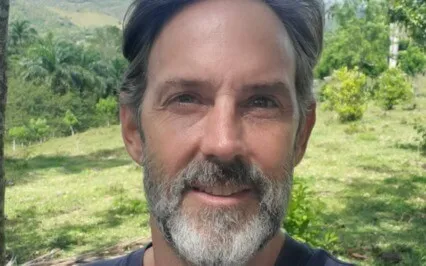
Welcome to Life Lessons and Laughter with your host,
Glenn Ambrose.
Hello,
Everybody.
Welcome to the live show.
We're live.
Holy crap.
I used to do it live all the time,
But I haven't been and now we're live.
And I was just laughing at myself because every time I must like that song that we use for the intro because every time it's I'm back,
You know,
I'm waiting 30 seconds for this to start and I'm going down and then then and then this is what I do most often.
But that's enough being a goofball.
I'm going to bring the other goofball on.
Hey,
Hello.
Hello.
I also really enjoy the jingle.
I like that song.
And it's funny because I had like two other ones previously to that and they just weren't right,
Man.
I don't know what it was.
But you know,
People worked really hard on them.
And like one or both of them were like special projects that people had really worked hard and and and they were good and everything.
But they I don't know,
This one's just that and that's.
I do it every time.
Yeah.
So.
So.
So happy new year,
Everybody.
Happy new year.
2023.
2023,
Which is I was just over at my neighbor's house,
New Year's Eve.
And one of my neighbors,
Like we're all Vedic astrology sevens.
So yeah,
I've been smoking.
So they like one one of my neighbors was born on the same day,
Different year,
But the same day we're both born on August 7th.
So we're sevens.
And then my other friend,
I think it's October 7th.
So she's a seven.
So there's three.
And then we have another friend that was in the States for a while that just came back and she's a seven.
So there's four four of us starting off.
And it's a seven year 2023 if you add it together,
It comes up to seven.
So two plus two plus three.
I'm not saying anything,
But my birthday is November 23rd.
So so you're a five.
Yeah,
But I want to include the 11 too.
I want to be part of the seven.
Okay,
For this for the for today,
You at least for the next hour,
You are part of the thank you club.
Thank you.
Appreciate that.
So yeah,
So so it's a seven year here we are,
You know,
It's and then and then I noticed like I advertised my book was on sale on Amazon.
I didn't put it on sale.
Amazon put it on sale.
And they put it on sale for $16 and 16 cents.
So one and six and one and six,
Seven.
I'm into numbers.
I'm into all of this.
Oh,
Yeah.
Check out the Vedic astrology can be interesting.
I see.
Like,
I haven't studied it,
But they have.
So especially one of my friends,
My neighbor to her.
So like,
We'll be talking and stuff.
And it's like,
Yeah,
That's seven stuff.
I'm like,
Really?
She's like,
Yeah,
It's this this that I'm like,
Oh,
Yeah,
Okay.
Numbers don't lie.
Yeah,
That's interesting.
So here we are in a new year.
We're going live and we are talking about patterns,
Finding the root cause of our behavioral patterns.
You pro and I assume we're talking about negative ones because we like the positive.
Yes,
Yes.
Today we're talking about anything that you recognize coming up in your life that's unwanted,
But yet persists those moments where you find yourself just like,
I can't believe I'm here again kind of thing.
And you don't know where it's coming from.
And you just see it.
It's kind of like different scenarios,
Different people,
All those variables,
They change,
But the pattern stays the same.
And we're not born with it.
Right.
So where does it start?
And it's just getting to the root to the root of that issue.
Yeah,
Into the root.
Yeah.
And that was actually an interesting point right at the end there.
We're not born with it.
Or,
Or are we?
I don't know.
You know,
Maybe maybe it's just continued soul learning.
Yeah.
Stuff we haven't learned in previous lifetimes or you know,
So maybe we do come in with it.
You know,
I don't know.
A lot of our behavior,
Especially our negative patterns or negative behaviors in general,
Though.
Yeah,
We we we hear the Earth is dysfunctional,
You know,
So like,
Where,
You know,
And I went,
You know,
I went to the States and for the holidays,
And whenever there's a change,
You can see contrast,
You know,
So whenever I go there,
Now there is different than,
You know,
Here,
Here is my normal.
And then I go there.
So like before,
When I came here,
I saw all the differences.
Now I'm kind of settled in here.
And when I go there,
I see the differences even more,
You know,
So because that's where the contrast is.
So it's,
It like,
It's so inundated with I was actually just thinking about it like an hour ago,
Because there was,
There was a special Bruins hockey game being played at Fenway Park this afternoon.
So I had it on a TV,
I caught the end of it.
And after it was over,
I was in the other room,
And the TV was still on and it was commercials.
And I don't usually watch TV for many,
You know,
For years,
And the commercials I'm not used to.
And I was noticing I was like,
It's so interesting that without TV,
You don't realize how you're used to being talked to.
Like if you know,
Like if somebody like,
Like,
You know,
I'll just use the commercials for the example.
It's like the commercials,
They'll,
They'll basically tell you you're going to be happy or a good person if you use their product in some way,
Right.
And it which sounds absurd when you say it out loud,
Because everybody knows that's not true.
But yet these are,
This is how they introduce you to their project product,
You know,
And it's,
And it's so common that you don't even pick up that the root of it is dysfunctional.
You know,
Like,
Because you're so used to being talked to that way.
It's like,
Yeah,
So when you're not exposed to it,
And then all of a sudden,
You hear somebody on TV implying that you're going to be a better person.
You can't like I can't even think I can't even look at the product and say,
Do I want this product or not?
I'm going,
What,
Why would you be telling me?
Going to be a good person?
Yeah,
Like,
Because of a product,
Like,
Why?
Because I'm not conditioned to it anymore,
You know?
So this is,
You know,
So this is kind of where the root of our negative behaviors come in and our conditioned ways of thinking and us doing things over and over,
Even though they don't work is because we're they're built into society.
This is why it's so important to question everything is because we're just inundated with it and people talking to us in a foundationally wrong way,
And over and over and over all the time,
All the time,
All the time,
And then all of a sudden,
It doesn't even trigger anything when we hear it.
It's like,
Oh,
Do you know,
Oh,
Do I want that product?
And we don't really,
You know,
Hopefully,
We don't really think it's gonna make us a better person.
But,
You know,
But it's pushing us in that direction.
We don't even realize that it's doing it.
So So yeah,
You know,
Our behavior patterns are very much unconscious,
And a lot of them are upheld by societal norms.
You know,
It's so that's,
Yeah,
That that's one of the things we have to break away from and a lot of it like you can see on social media,
Like,
You know,
Whenever somebody,
Whenever something bad happens to somebody,
Not always,
But you still you see this a lot on social media,
It's,
You know,
They'll,
They'll complain about other people's behavior,
And everybody will support them in that,
Which is something that I don't do.
I don't,
You know,
I don't support people in,
You know,
Like somebody,
Somebody treats them poorly.
And then they say,
I can't believe people treat people poorly.
And everybody goes,
Oh,
My God,
I know that's so horrible.
You don't put that you're a good person.
They're a bad person,
Screw them,
You're wonderful.
And then they get the ego stroke,
And then they move on with their life,
Because they're like,
Okay,
I didn't do anything wrong.
I'm a good person.
They're bad people,
And I'm not them.
So therefore,
I'm higher.
And that's their ego stroke,
And we move on with our lives.
And social conditioning supports that type of mentality.
And a lot of times,
I will comment on stuff like that,
Because I don't like it.
It's just because if you look at the dynamics of it,
It's disempowering.
You're by by me,
I understand the intention is to make the other person feel better.
But what they're doing is they're putting a temporary bandaid on a problem that they actually could be fixing.
You know,
Talk about repeating patterns.
Yeah,
You go out in life,
You're just plunging further into victim mentality,
And then you're getting validated an ego stroke for that.
So then you feel like victim mentality is the right thing.
Right?
So exactly.
That's exactly it.
So it's,
It's like,
No,
Don't,
You know,
I understand that it's a bitter pill to swallow in the beginning.
But it's it's a really good pill to swallow overall,
You know,
Taking responsibility for your life and going,
Okay,
Wait a minute,
There's assholes in the world,
There always will be.
And if I'm waiting for all of them to magically disappear,
So I can be happy,
Probably not a good model for happiness.
So you know,
I need to,
You know,
What,
How can I gain control over my own experiences?
Well,
Learn to set boundaries.
If somebody is treating you inappropriately,
Don't allow it.
Don't talk to me like that.
Walk away,
Whatever.
Yeah.
And yes,
This includes your boss.
That's always the one goes,
You don't understand.
It's my boss.
Like,
Yes,
I do understand.
I've walked away from every one of my bosses.
Every one I've walked away from at least once,
Usually several times because I have a problem with authority.
So I've Yes,
I've and I've never gotten fired.
I have I've gotten fired in my life.
And I've gotten in lots of trouble in many different situations.
I have never gotten in trouble for standing up for myself,
Ever saying no,
I won't be treated poorly.
I've never gotten in trouble for that.
Yeah.
Aspect and upholding.
Right.
So,
You know,
This is the type of thing that we have to start disconnecting from the victim mentality and empowering ourselves because like,
You don't deserve to be treated like crap.
You don't deserve it.
You deserve to be treated with love and respect.
But I'm not going to pat you on the back and tell you it's not your fault because it is your fault.
It's your fault.
Because there's only one reason why people don't treat me poorly.
One,
That's because I don't allow it.
There's no other reason.
It's not because I'm magic.
It's not because I I'm on a spiritual path.
It's not because my name's Glenn Ambrose.
It's not because I grew up outside of Boston.
It's not,
You know,
There's zero other reasons except I won't allow it.
Now,
Do you think that the lack of ability to uphold boundaries or the lack of willpower,
Whatever that is,
That people allow their boundaries to be crossed?
What is that?
How do you address that?
I think that's a lack of clarity,
Honestly.
I think so,
I think it's a lack of understanding of the dynamics of life,
Which is understandable because we've been conditioned to believe lies about how life works and then it doesn't work.
And then we wonder why.
And this is why everybody's in a victim mentality,
Because we're going out into life,
We're behaving in inappropriate ways that don't work.
And then we come back and everybody goes,
No,
You did it right.
You're fine.
You're good.
You're fine.
Everything's wonderful.
And then you go back out and you get kicked in the teeth again and you go,
Yeah,
But it hurts and they go,
No,
You're fine.
Everything's right.
It's okay.
You didn't do anything wrong.
And then you go out and you get kicked in the teeth again.
It's frustrating,
You know?
And it's the support and the stroke that we really have to get rid of,
I think,
Because we might actually be able to absorb different information if people weren't telling us we're right all the time for doing the wrong thing.
We literally do what doesn't work and then people say,
You're right.
And it's kind of wild because they're doing that.
They're saying you're right to comfort and help the person that's feeling pain or feeling,
You know,
Whatever the case is,
Feeling those negative feelings.
It's to help them by saying that,
But you're really just hurting them because you're pushing them further in a victim mentality mode.
It's just going to spiral.
Right.
It's not your fault.
You know,
You don't have to do any,
You can't do anything to change the situation.
You are a victim of your reality.
So put that under your pillow and feel comforted.
What do you do with that?
It's so disempowering.
It is if you understand the dynamic of it.
If you pay attention to dynamic of it,
It's disempowering.
And this is why sometimes people think I'm harsh because like I,
I try to empower them.
And if you don't look at it for what it is and you just take the surface of it and,
And I go,
You know,
Somebody goes,
Oh,
Somebody treated me poorly.
And somebody else goes,
Oh,
It's okay.
It's not your fault.
Yeah.
That makes them feel warm and fuzzy for a moment.
So,
So they like that.
And then I come along and I go,
No,
No.
That's yeah.
This is the only way this is going to stop is if you stop it,
You are giving your power away to other people to be in control of how they treat you and how you feel inside.
And you have to stop doing that.
And everybody's like,
You're a jerk.
You don't let them honor their feelings.
You it's like,
No,
I,
I'm trying to give them an actual solution to the actual problem.
Yeah.
And it doesn't actually work if you slow down,
Disconnect from this brainwashing we've had our entire lives and just look at it logically.
It makes perfect sense.
You know,
If you set boundaries,
People stop treating you.
If you don't allow people to treat you like crap,
They stop treating you like crap or they just aren't in your life anymore.
Either way,
It's a win-win.
Yeah.
Yeah.
It's a big thing that I kind of realized was there's a difference between because people will be defensive if you try to call them out on their shit,
They don't want to look at right.
That's just what happens.
I don't want to look at it.
Stop making me look at it.
Like I'm guilty of it.
I do it.
I,
You know,
I try to catch myself and I,
You know,
Don't let it go too far,
But yeah,
No,
I don't want to look at that.
I'm not ready.
And you try and show them and they don't want to see it.
And there's a difference between showing someone like you do,
You know,
Where you're trying to show them to help get them out of that hole that they're in.
Right.
That victim mentality hole.
And there's a difference between that and wielding the truth like a weapon.
You know,
It's not,
It's not,
Um,
Uh,
You're wrong.
You know,
You did something wrong.
You have to admit it's,
It's like,
You got to get through this to get through to the other side.
Yeah.
Let me just see.
Look,
Like if you do this,
Do you see how this happens?
You know,
Like,
Yeah.
And I mean,
I,
This is why sometimes,
Honestly,
I've noticed that I can,
You know,
I still have things to work on and one of the things I have to work on is my blending between friendship and work.
It's because it's like,
If it's clearly friendship only I'm good.
If it's clearly work,
I'm good.
When it starts blending and then all of a sudden I'm friends and everything's cool.
And then all of a sudden somebody starts talking about something like,
You know,
Asking me for my input as a life coach.
Like I know one way to life coach and that's with the truth right between the eyes.
So they're going to get it.
And then sometimes if they're my friend,
They don't like that,
You know,
And then all of a sudden,
So,
So it stings.
So what they do out of that sting is attack me.
They'll come back and they'll be like,
Well,
You're not perfect either.
Like this isn't about me.
You asked me for my input about what you were doing wrong.
I understand that it's bothering you,
That it stings a little,
But that's the reality of what's happening.
This isn't about me.
You know,
Like we're not friends right now.
There's a very specific dynamic between life coaching client.
And it's the same with like a lot of other careers,
You know,
Like personal training and client.
I had it then.
It's like,
I'm not going to try to convince you my way is right.
It's not my job.
Like I get paid because people think that I know what I'm talking about and would like my input.
So I will give my input and that's what I get paid for.
If you disagree with my input,
Don't implement it.
I don't really give a crap.
It's not going to affect my life one way or another,
You know,
But I'm not going to argue with you over it,
You know,
And sometimes my clients don't usually do that,
You know,
And even in personal training,
They didn't.
I mean,
Every once in a while you'll have one and I don't mind being questioned because question means you're trying to understand.
So that's cool.
Question all you want.
I,
You know,
I will dive into all the questions and all that stuff,
But don't challenge me on it.
Don't,
Don't,
You know,
Stop arguing with me about it and telling me I'm wrong.
It's like,
That's,
That's not the,
Then save your money.
Why are you paying me?
Not ready.
Yeah.
You got to be receptive to that too.
I'll put the defenses down.
I think that's the big thing.
Yeah.
You got to put the,
So,
You know,
Since that's where,
You know,
Like if I'm friends,
I can,
I can shut my mouth and,
And not offer unsolicited advice for the most part.
Yeah.
I'm probably about 90% of the way there.
But then if the,
If the other person comes in and blurs that line and says,
Hey,
Could you be a life coach for a little while?
And then I go into life coach mode,
I'm in life coach mode.
And then all of a sudden,
You know,
If they start attacking me,
I'm like,
Screw you,
You know,
Then I get offended.
So I was like,
Oh,
Okay.
There must be some work for me to do there.
But even that,
But that's an example.
Like when I get irritated,
You know,
Maybe not right in the moment,
But afterwards when I look at it,
If I'm irritated,
I see that as me having work to do.
I don't look at it and go,
They,
It's their fault.
They irritated me.
They shouldn't have challenged me because they asked my advice.
No,
I understand that sometimes that's going to happen.
I have no control over what external things happen to me and what other people do.
I have control of my reaction to it.
So if I'm getting all frustrated and flustered,
Then there's work for me to do.
Not going to wait for them to do it.
Yep.
I can tell by how reactive I am too,
You know,
With that kind of thing.
If I'm cursing in traffic,
It's not because someone cut me off.
Usually.
Right.
It's because you got that fear button got pushed and it was like,
Yeah,
No,
And we're not sure how to handle it.
So we,
You know,
And it's,
Again,
It's societally recommended almost that you get upset.
Like if you,
You know,
Try this as an experiment,
You want to find out what society teaches,
You know,
Go into work one day and go,
Man,
I get cut off.
This freaking guy was a jerk and do that at the water cooler,
You know,
With your coworkers one day and they will all chime in and,
Oh,
I hate that.
Oh my God.
Like it's socially acceptable and you are the righteous victim.
This shouldn't have happened to you and screw them.
And everybody will be all hands on chiming in there to sense that happened to me.
Oh my God.
And then,
You know,
Wait a few weeks and then go in and be like,
Yeah,
I got cut off in traffic,
But I realized that,
You know,
My reaction is under my control.
So I just calm myself down.
I let,
I let myself experience the fear that I had of almost getting into an accident and then it passed right through in about 20 or 30 seconds.
And then I went about my day and I had a pleasant ride in that,
That water cooler conversation is going to last about 15 seconds.
They're going to be like,
Someone cut me off and I calmed myself down and had a great day.
So yeah.
So how was your drive?
Like somebody is going to change the freaking topic because they don't know how to handle that.
Yeah.
You know,
It's like,
Don't you understand what the water cooler is for?
We're supposed to ditch and complain.
This nobody taught this person the social rules.
Somebody maybe put her in life class for a little while,
Teach her how to complain and then bring her back.
People used to do that to me,
You know,
When I worked before I started my business,
I worked in public,
You know,
With other humans.
So they,
They'd come in and they'd be like,
Oh my God,
Glenn is freaking out.
And I'd just be sitting there all peaceful.
And they'd be like,
Oh yeah,
Wait,
You don't talk about this.
All right.
Nevermind.
Nevermind.
Hey Bob.
So I was in traffic.
They just go find somebody else to feed off of because that's what it's doing.
It's feeding the ego,
You know?
So it's funny,
But so that,
So,
You know,
I guess bring me back to the patterns.
So back to the root causes of issues.
I'll give it,
I'm going to give an example so we can,
I'm going to give an example.
So I say that,
Say someone,
I'm just going to,
You know,
I'm going to use myself.
Is that cool?
I'm going to use myself.
Sure.
So I,
And I've worked through this,
So it's like,
It's cool,
But just so for example's sake.
So when I was a child,
I felt that I was promised a lot of things that didn't happen.
Right.
And I,
And for a while I would,
I would believe it like fully wholeheartedly believe things were going to happen.
Whether it was from my parents or like my grandpa or whoever at the time,
You know,
Life's going to be this way.
Oh,
Okay,
Cool.
We're going to do this.
Right.
And I would fully believe it.
And then the next time it would happen,
It would just be a little less.
I'd be like,
And then eventually I just stopped believing entirely.
Right.
And in my head I made,
I made this story that was kind of like,
Well,
When people promise things it's bullshit.
Right.
And so,
So that happened at a very young age.
And then as I moved through like my teenage years and my adult years,
I saw that pattern coming up in every relationship,
Whether it was romantic,
Whether it was a friendship,
Family,
Whatever.
When people promise me things,
It's bullshit.
That's it.
So this is my example because,
And I've worked through this because I couldn't figure out why it was so hard for me to not like promise,
But it was,
It's a trust issue,
Right?
It's tough to trust people,
Take things at face value or assume they're not going to do that.
Cause it almost,
Cause what happens is the problem there is that I assume that you telling me you're going to do something,
I assume,
Okay,
He's actually,
You're not going to do it.
So I start treating you through the lens of you're not going to do it.
And you feel that energy and that impacts the way that we interact with each other.
It's going to impact our relationship.
And become a self fulfilling prophecy a lot of times.
Exactly.
Exactly.
And then you're,
You,
You,
You almost create that reality.
Now,
No one can get close enough to you,
You know,
To fulfill anything and they already lost cause you already think that they,
They're,
They're failing.
Right.
Yeah.
Um,
That is getting to the root of the issue.
Like I did a,
I,
I did a lot of like spiritual kind of like when I became a yoga instructor and I really went through and dug through some of the things that kept occurring in my life at the time.
There was those patterns that are unwanted,
But yet persist.
And I just trailed kind of back and uncovered that part of like,
You know,
What I made that mean as a child,
It's just what I made it mean.
It doesn't mean that everyone,
You know,
When they say they're going to do things,
They're not going to do it.
That's just what five year old me decided.
And then it made sense at the time,
Which is,
You know,
I think part of the healing process that sometimes we skip over is,
Is right there where,
Where you,
Where you go,
You know,
The five year old me just agreed to this at some point because of some of the evidence that was building up in that favor and understanding that like that,
That was,
You know,
That was a pretty intelligent conclusion to come to for a five year old.
And,
And,
You know,
At that,
At a young age,
That probably prevented you from experiencing some emotional pain for a number of years to come because of that defense mechanism you put in.
So like,
You know,
It's one it's because a lot of we judge everything.
So it's important not to judge because then we think there's something wrong with us.
So to,
To,
With that little piece,
When you come to that understanding,
It's going that little extra step and going,
Oh,
Okay.
So it actually made sense for a five year old to come to that conclusion.
And it actually served me in a positive way in certain situations previously.
Okay.
And you can even give you a little inner child,
A little thank you.
Thanks for that.
Well done.
Nicely done.
I'm an adult now,
Not working anymore.
No,
Actually causing more problems than it than,
Than previously,
You know,
But see,
This is what we do.
The dynamic that a lot of people don't understand.
And it's with an addiction too,
Is people think we have problems.
We think we have problems because of our problems.
We have problems because we have crappy solutions.
That's why we have problems.
It's because we all,
We,
It's our solutions that are off,
Not the problems.
There are problems in life all over the place.
And there always will be.
It's just that at some point earlier in life,
We adopted some solution that had holes in it that didn't work really that well,
Only work some of the time.
You know,
That's what alcohol is.
That's what it was for me.
It was a solution.
You know,
It wasn't my problem.
My problem was that I was maladjusted to life.
My solution was to drink alcohol.
So I felt better and I didn't feel the suffering that I was causing from my maladjustment to life,
You know?
So,
So my solution was flawed.
My solution was alcohol.
It was the same with fighting for me as a young age.
You know,
Fighting was my solution.
Fighting saved my ass when I was younger.
In many,
Many,
Many situations,
Fighting saved me.
Now when you get older,
Especially,
And now don't get me wrong,
There's flaws as fighting as a solution when you're a kid too.
It's just simply not a good solution.
I don't care.
I don't care if you're five or if you're 50.
Fighting is not the proper solution.
There's holes in it.
There's problems with it,
You know?
But it just becomes more obvious when you get older because you start going to jail and stuff,
You know?
So it gets pretty obvious fairly quickly.
But it was still the solution.
So what we're doing with this work is we're going back,
We're finding the solution that we chose,
And then we're revamping it and choosing a different one.
How do you revamp?
What does that entail?
I'm not telling.
Hey,
I'm part of the Seven Club.
This is live and I'm just going to try to be a jerk on a lot.
So revamping it really,
It's about gaining clarity like you did when you did your work,
You know,
Gaining clarity on the belief system or the solution that you chose.
And that was,
I won't believe anybody ever again because it's always a lie.
And then looking at that,
And the first question is,
Is that true?
And understanding that,
So there's a little separation that's helpful here.
You go into your inner child,
Right?
You go back,
You remember,
And you go,
Okay,
I'm five years old and I decided this.
Okay,
Got it.
Now I have clarity.
Now you have to disconnect from that five-year-old.
You can do it in half a second,
But you have to do it.
It's helpful to do it.
So you just go,
Okay,
And then you remind yourself,
All right,
Now I'm thinking as I am now,
I'm an adult.
I've had lots more life experiences.
And up until this point,
I've started seeing how this is no longer working for me.
Okay.
Okay.
That's right.
Now I'm the adult.
Okay.
So what was that child reasoning?
Everybody lies all the time and you can't trust anyone.
Okay.
Is that true?
No.
No.
No.
Right.
And you can see that pretty clearly usually.
Yeah.
And,
You know,
So you're like,
No,
That's not true.
It's just something I believe.
Okay.
Why isn't that true?
You know,
This is when it's helpful to center yourself and,
You know,
Talking to yourself is very important.
I agree.
You know,
In life and in work.
I should admit,
But you know,
It's fine.
A lot of people will tell me,
Like when they tell me they talk to themselves like this,
They're like,
I know it's weird.
Like they apologize for it.
And I'm like,
No,
No,
No,
No.
This is like,
You're supposed to be doing this.
This is a good thing.
And just going in and being like,
You know,
Is that true?
Okay.
No.
Well,
Why?
Because of this situation and this situation.
See,
It's a,
It's an intellectual exercise.
And what you're doing is you're going into an agreement that a five-year-old made that again,
It was good at the time,
But now with an adult's life experiences,
And obviously you're experiencing some negativity as a result of this.
Otherwise you wouldn't be going in to do the work right as we're discussing.
So you go in knowing that it's flawed.
So you start going in and you start doing it logically,
Like,
You know,
Is this true?
Why is it,
Why isn't it true?
And stuff like that.
And honestly,
This is usually a pretty easy conversation to have because even though your five-year-old did something somewhat logically,
They were five and you already know this problem.
So it shouldn't be real difficult to identify what the problems are with this belief system because that's why you're doing the work,
You know,
But you can uncover more.
This is why it's important to talk to yourself and be honest with yourself and practice doing that because you want to clear away all the things that make that believable,
Make the old way of thinking believable.
Everybody always lies.
So if there's like,
Well,
It just seemed that way.
Okay.
Yes.
But is it?
Is it true?
Well,
Sometimes people tell the truth.
Yes,
They do.
Okay.
That's gone.
And then if you don't just take your time and do this work,
You might leave like,
I'm not coming up with an example,
But there might be a little piece of the reasoning,
Like that five-year-old might've had three reasons to come to that conclusion.
And you just dealt with two of them.
If there's a third one,
You're going to have,
I'm not saying that you can't do it,
But you're going to have more difficulty changing your belief system because something unconsciously doesn't agree with what you're consciously trying to do.
And your unconscious belief systems will override your conscious belief systems.
They're more powerful.
So you have to get all the objections to what the younger person thought was why this was right.
You have to show all of those,
No,
They're not right.
So how do you uncover the unconscious then,
If it's unconscious?
Well,
You're already there.
As soon as you go in to do the work,
You're there.
Exactly,
Because that's a good question because it does sound hard verbally.
But if you think of what's transpiring when you're actually doing it,
Like if you envision and give yourself a visual of you as an adult dropping down into your unconscious,
Going into a five-year-old self,
Like their bedroom,
Where the five-year-old is inside,
Opening up the childhood bedroom door and you're standing in the doorway and you're kind of having a conversation with this five-year-old or at least tapped into the way they were thinking.
Once you do that,
Which really isn't that difficult because like when we were talking about it a minute ago,
This is where this belief system came to.
That's all you're doing.
It's not rocket science.
So to give a visual to it,
You're already in the bedroom with the kid.
Just ask him another question.
You're already into your unconscious.
You're already playing around with the information in your unconscious.
So you don't have to like figure out how to get there.
You're already there.
So it's just a matter of asking questions and being patient and taking your time and just seeing if anything else comes up.
You can ask your child or yourself,
Depending on how you're performing this exercise.
You can ask,
Is there any other reasons why you believe this belief system that you came to this conclusion?
And then just wait.
Oh,
Yeah,
There's one.
You know,
And that's how it happens.
So it's an intellectual.
And like I said,
It's fairly easy because one,
You're dealing with a five-year-old mentality.
So your logic should be better as an adult than a five-year-old.
You have much more information to go off of.
And also like when some of these some of the reasons why you came to a conclusion at five stop popping up.
Sometimes they're so ridiculous when they hit air.
I can't even believe I thought that that was a good reason.
And it's not because the five-year-old was foolish.
Believe it or not,
That's what most people think.
It's not because the five-year-old was foolish.
It's because it was unconscious.
Every shit makes sense on an unconscious level.
This is one of the reasons why we need community.
We're supposed to be talking to one another.
Something happens when something inside of your head comes out your mouth and hits air.
You can think about something for three weeks and think you have it all mapped out.
And then you go to talk to somebody about it.
And you're like,
Okay,
So I've been doing a lot of thinking.
And this is definitely what we're going to do.
We're going to do this and we're going to do this.
And we're going,
Wow,
That sounds stupid.
Why did that make sense in my head?
Most people have experienced that before.
This is why people go crazy when they're left on a deserted island for years.
Because they're trapped in their head.
And the shift between reality and non-reality starts getting blurred.
So stuff that shouldn't make sense starts making sense.
And it's like,
Huh?
So this is a gift that being in community with one another gives us that we're lacking in today's society.
We're so independent and separate from one another.
So we don't talk things out as much as past communities did.
But this is why some non-logical things and nonsensical things actually make sense deep inside of us.
Because we're not supposed to be functioning and interacting with life as an island all alone.
We're supposed to be working through it with others.
Now is there a limit to how much you should.
.
.
If there's enough to share to get out and hear it and make it sound right versus sharing too much and then being a victim because you're sharing too much information and you get the release over and over again.
Do you know what I mean?
Do you have to find a middle ground between the two?
Yeah.
Yeah.
That makes sense.
Yeah,
No,
I like at first I was like,
Huh?
But then when you finished saying it,
I was like,
Oh,
Yeah,
Okay.
Yeah.
And I mean,
People do do that.
I mean,
Yeah,
Just real talk it out once.
That to me is kind of,
It's almost like a separate lesson.
And that separate lesson is,
We should.
.
.
I did a podcast on a long time ago.
It's something like,
Be careful who you share what with.
We run around just sharing everything irresponsibly and giving people who really shouldn't have a say.
When there's somebody really good to get just tore up at a club with,
Often that's not the best person to go to for life advice.
I'm not saying never,
Sometimes it's very deep people.
But sometimes,
It's like,
Well,
Yeah,
But we hang out every weekend.
That doesn't mean they're emotionally available.
That means they're really good at getting shit faced on Saturday.
Or I've known them for 30 years.
Doesn't mean they're emotionally available.
Or their family doesn't mean they're emotionally available.
Oftentimes family has some,
They love you so much,
They have so much fear.
They're the worst ones to go talk things out with.
Because they're just going to try to protect you.
Absolutely.
So,
Yeah,
We have to be careful about who we're sharing with and why we're sharing it with them.
Yeah.
Yeah.
So,
Do you have any tips on how to get to the root cause of an issue that someone sees and they're just struggling and it's just tough to figure out where it's coming from or anything like that?
Yeah,
Slow down.
You know,
Really a lot of this stuff,
If you're already on your path doing your work,
A lot of it is just a matter of slowing down.
Kind of like what I was talking about with the inner child work.
It's just slow down.
Like as soon as we,
As soon as our brain is usually in control.
So as soon as we give our brain a problem,
A question,
It wants to give us the solution as fast as humanly possible.
So I want to give it the solution.
I want to give it the solution.
And it's like,
Whoa,
Whoa,
Slow down.
Like just ruminate over things.
Learn to contemplate and ruminate and ask yourself questions.
You know,
It's slow down because I mean,
Really when you,
Most times you can kind of figure it out.
Sometimes you can't,
That's why they make life coaches and stuff.
But I mean,
You know,
A lot of times you can because if you know,
We're talking about patterns.
So if there's a pattern and you've picked up that there's a pattern,
That's the biggest thing.
Figuring out where it came from is easier than recognizing that you even have one.
Once you recognize you have one,
That's the big awareness.
It's like,
Oh,
Okay.
Then you just take a step back from it and look at it.
It's like,
Okay,
What's this pattern?
You know,
I always date people with alcohol issues or I always date people with this issue or you know,
I never allow myself to get close to somebody or I never believe what they say,
Whatever.
Once you identify that,
If you go back to your,
Usually it's childhood,
You know,
Sometimes this big impactful stuff,
Like I forgot what my belief system was,
But I know that I had put,
Oh,
I think I had something to do with money.
And I knew that I had put it in place at a young age because of what was taught.
I was taught that like people with tons of money were greedy and selfish and stuff.
That was like common,
That's how people talked where I grew up.
You know,
I mean,
It was just,
I didn't think anything of it.
And I sure as heck didn't think I actually believed it.
Really?
Yeah.
That's what you think.
So I started,
When I did get money,
I'd sabotage myself and I'd get rid of it in a short period of time.
And then later on,
I'm like,
Oh my God,
I see a pattern here.
You know,
Why?
Oh,
Okay,
Go back to my childhood beliefs.
What did people,
You know,
This is a way,
Maybe this will answer the question.
You know,
I went back and I was like,
Okay,
There's obviously a problem with money.
What are my belief systems around money?
Think back to childhood.
Oh,
Well,
The people who,
You know,
Lived in this area of town were snobby.
And you know,
People that had lots of money stepped on other people to get there and they're greedy and they're selfish.
And we got a pool put in,
In my backyard in like third grade and in ground pool.
Well,
That was now with a rich family in the neighborhood.
So I got in fights because kids call me rich and they meant it as an insult,
You know?
So it was the general opinion of the area.
No wonder why I took it on,
You know?
So I worked through that,
But then I was still having money issues.
So I went back again and to try to clear out,
Did I miss something?
And I was like,
No,
I'm kind of,
I think I got my childhood beliefs.
And then all of a sudden I flashed until I was like around 18 or 19.
And this,
You know,
Because I was patient and sitting there and going,
I was just literally going,
Geez,
Yeah,
I don't know.
Is it,
There must be something else.
Is there something else?
Not pushing real hard,
Not trying to remember.
You can't try to remember.
Just asking the question and then sitting there patiently.
And then all of a sudden,
18.
I was rushing in,
You know?
And a thought of,
I don't remember what it was,
But this thought of me reinforcing that I wasn't going to be like my father.
And me like drawing a line in the sand and going,
Yes,
I'm definitely living like this for the rest of my life because I'm not going to be like that.
And he was financially successful.
So really creating that separation between me and my father,
That was the missing piece with the financial aspect.
But it was an impact that came in at a later age that really,
I was emotionally struggling trying to separate from my father at the time to try to find out who I was.
And I use that as part of my separation technique.
So was the root of the issue that you resented your dad because of money?
This one had two roots.
I had my childhood root that I already discussed.
And then yes,
There was a second root that I found out later on that had to come out.
And it was like,
Oh,
Okay.
I resented him and I was trying to create separation.
So I use that as,
I'm a blue collar steel worker at the time.
That's cool.
Struggling with money is better than buying into the BS game and being somebody that I'm not.
The pride.
Playing society's game,
All this BS.
So I just used it.
So yeah,
Once I get that root out,
It was like,
Oh,
Okay.
Yeah.
Now,
Do you feel that when you got to the root of the issue,
It relieved anything?
It felt like a weight was lifted off of you,
That energy was clear?
For me,
That's how it,
Anytime I get to the root and I deal with something head on and I'm not avoiding it and I just take responsibility,
I feel like a weight has been lifted.
And then I just have this extra energy,
This extra real estate energy.
Yeah.
And that's,
Well,
It's funny because it's like we talk about this energy and all this stuff like it's so ethereal and non-tangible,
But it actually,
When we understand it,
It actually is like we're carrying around energetic baggage and it's heavy.
It's dense energy because it's not light and lovey.
So it's dense and it's heavy.
And when we release that,
Yes,
The shoulders come back.
All of a sudden we're up and we feel lighter.
And yeah,
So it's an energetic,
It's literally an energetic release.
You can feel that doing purges.
I just saw a picture of,
In my memories on Facebook,
Like I don't know how many years ago,
Several years back when all the court,
Family court stuff was finally over.
It was like,
I didn't even know.
It was like 14,
15 years of family court finally over.
And I just got all the paperwork and in a big pile,
All old bills,
All court paperwork,
Everything.
I had a mountain in my living room of just old paperwork.
And I don't,
I think,
I don't know if I was planning on burning it.
I don't remember.
It was on top of- That's going to be my first question.
Oh yeah,
Ceremony,
Man.
I love doing ceremonies and stuff like that.
And you burn it.
And it's just,
Your intention is to release,
Release,
Release.
And I felt so much lighter after that because we carry this stuff around.
And my brain wanted to go,
Oh,
I'll keep this one because you never know.
And I'm like,
No,
Trust,
It's over.
It's done.
Let it go.
Let it go.
Yeah.
Yeah.
So,
Yeah.
So energetically,
It literally is a release.
That's why we do actually feel lighter.
It's not an illusion.
It's actually tangibly happening.
So I think I'm going to try to kind of wrap it up with this.
But I think we can go over an hour because this one's live.
So we don't have to be too,
But we'll try to stay close to an hour.
I remember when I saw my egoic pattern years ago,
And it was a general one,
Which what I learned with this was that your ego,
Once you start gaining traction over your ego,
Once you start regaining control over your life and not getting rid of your ego,
Your ego is a defense mechanism.
It's there to protect you.
So once it starts working for you,
Instead of you working for it,
And it gets back into its role a little bit,
You don't have to do it on every single little thing because you're gaining control.
But your ego is kind of fighting for its life.
So it will start generalizing on you.
So instead of controlling you in every little situation,
It sits back and waits and then comes back with a big generalization.
And usually that's very difficult for people to get through.
But one of the reasons is because they don't understand what's happening.
I didn't understand what was happening at first.
So I would see this pattern,
I think it was like three years,
And it was right around December or January where the impact would hit me.
And I'd get really depressed.
And it was because I wasn't where I wanted to be.
I hadn't started my business yet.
I wasn't financially where I wanted to be.
I still got triggered from my ex.
So I wasn't spiritually where I wanted to be.
And I would hit this around December,
January.
And about the third time,
I'm like,
I'm questioning everything.
Because here I am wanting to.
.
.
I had done a lot of spiritual work by then,
Man.
And for the ego to tell me that it was all a lie,
And I wasn't really as spiritual as I thought,
And who was I to think that I could be a spiritual teacher or a life coach and help other people when I can't even help myself?
That's those big generalizations.
That's when your ego is losing ground.
It's actually a good sign because it's losing ground and it can't control you over every little thing.
So now it's more patient and it waits and it tries to control the whole game.
And it's kind of like a last ditch effort.
You're a complete fraud.
Everything you think you are is a lie,
That type of stuff.
And it's freaking hard if you don't know what's happening.
Got me to my knees more than once.
But then once I gained clarity on what was happening,
And it was like,
Oh,
You son of a.
.
.
You're just generalizing.
You can't control me anymore.
So you're just trying to pull the rug out from underneath my feet,
The whole rug.
Wow.
Hell no,
Man.
That's a lie.
And then I can go,
Is that true?
Then I go back like,
Okay,
When did I help another?
Here,
Here,
Here,
Here,
Here,
Here.
When did I handle a situation spiritually?
Here,
Here,
Here,
Here,
Here,
Here,
Here.
List your wins.
Okay.
So when those things would creep up where you would feel like you weren't good enough,
Right?
That's what I'm hearing.
That's pretty much like,
I'm not good enough.
I'm not where I want to be.
When those thoughts would creep up,
You would have your list ready of the accomplishments that you are doing that prove you are a good person to yourself.
Yeah,
Basically.
But I mean,
What I would do is,
It would be close to paralyzing when it hit.
It was really dramatic.
So right then,
I would just go through my mental list.
I think creating a physical list and keeping that is a wonderful idea.
The way I did it is I just,
Right then,
I was like,
I'm not going to allow this to take me over.
This isn't me.
I'm not going to buy into this belief system that my ego is telling me.
So what evidence do I have to the contrary?
So I would go back,
Again,
It's a logical exercise.
You go back and is that true?
No,
It's not true.
I can help others.
I have helped others.
I've done it many times.
And here is my proof,
My own experience.
And I am a spiritual person and I do handle most situations spiritually,
Even if I get sucked off every once in a while,
Sucked in.
So it's like,
That is my evidence that I am who I want to be and I am living the right way.
And am I perfect?
No,
I'm not perfect.
But I do handle situations consistently in a spiritual and love-based manner.
And I am not a fraud and I am not what my ego is trying to tell me.
I refuse to believe that.
I'm drawing that line in the sand and saying,
No,
I'm not.
No,
I am not that.
I am this and locking onto that.
And then,
Yeah,
It's a very dramatic big thing at once.
And then now will it come tap on your shoulder and be like,
You really are a fraud.
Sure,
It'll do that.
And then you remind yourself of this exercise.
But for me,
It was a big moment in my kitchen.
It lasted probably a half an hour and then went into the living room for a while.
And it was a big moment.
Yeah,
No,
You let it have its moment.
The only way out is through,
Right?
Yeah.
Right.
I can't.
I can't.
And that's a good point,
Because when you're facing like this tons of emotional pain around that and fear and because you are facing one of the biggest things that we all I'm not good enough.
But we all have a version of that.
Yeah.
So that's a big thing to face.
So when you see that,
We've been trained to recoil from uncomfortable feelings,
Stuff,
Turn away,
Make excuses,
Run,
Whatever.
So that's the counterintuitive aspect of spirituality is we have to not do what we've been trained to do when we feel that immense pain.
I mean,
I know it ain't easy.
I've done it.
So I get that we might have to take a second and gather ourselves and go,
Please give me the strength.
And but we got to lean in.
We got to go in.
We can't go back.
We can't close off and go,
I'm not going to deal with that.
I'll we can't we can't recoil from uncomfortability.
We have to go through it.
Like you said,
The only way out is through.
And it's so worth it.
You know,
It's the squeezing through that knot hole of pain.
That's like tiny,
Tiny,
You know,
The size of a quarter and you're squeezing your whole body through it.
And it's excruciating.
But man,
When you pop out that other side,
You know,
That's what it felt like to me the first time my first awakening.
You know,
When I when I blew out the other side,
I was like,
I ran around looking for not holes for five years.
Yeah.
I was like,
Bring me another one.
I hear you.
After about five years,
I was like,
I take a different approach.
Just hurts.
I hear you.
When I when I realized the power of just like owning your shit,
Right.
And just like,
Like being real with people.
I did a program and it was like kind of it was kind of similar to in recovery where they do the ninth step.
I think it is where you your harms list,
Right.
You go and you apologize to people.
And so like I kind of just I did this thing where there where there was any like heavy or negative energy in my life.
Like I just went to those people and I made it right.
And I just shared my experience and whatever.
And honestly,
There's something so addicting about not that work.
And I swear I was calling people just like to apologize.
Like I called my boss.
I was like,
Listen,
Like,
I'm not doing my best.
I could do better.
Like there was like,
Okay,
Like,
Go back to work.
I was like,
All right.
Like,
And I just was chasing that,
Like release,
Because it really is.
It's a lot more freeing and a lot lighter than dealing with all the guilt and the like the baggage that comes with holding on to those patterns.
Yeah.
And that's,
You know,
It's interesting because that that that is like,
You know,
I took a lot of people through the steps.
And that's one of the most addictive aspects of the steps.
And it's one of the most common things that I had to pull people back on.
Because it was just like,
Whoa,
Whoa,
Whoa.
And a lot of times what the biggest mistake people do is things like that they they end up going out.
Not that you did this,
But people go out and hurt other people in the name of clearing their own conscience.
Oh,
Wow.
You know,
They'll know.
Yeah,
Yeah,
Because they want that release and they're harboring it.
And like you've got to slow down and you've got to pay attention to how it's going to affect the other person.
You know,
Like like affairs is an example that they use in recovery.
Like if you you know,
And they say that just if you had an affair,
The answer is not always to go tell your spouse.
Sometimes that's appropriate.
Sometimes it's not.
Because who are you trying to help here?
You know,
It's supposed to be altruistic.
This is supposed to be trying to help others.
It's not about you.
It's about them.
You know,
When you're including others,
When you're making amends for something,
It's about them.
And yes,
Your conscience gets cleared in the process,
But it's about apologizing to them.
If you're just going to go in there,
Punch them in the face and say,
I'm sorry.
Like that.
Yeah,
They don't know.
They might not need to know.
It's knowing versus harm versus good.
What's going to exactly harm or good in this situation?
And is it as long as you're not,
You know,
It's I don't know.
I don't know the rules.
There's no rules,
But really,
No.
And that's,
You know,
There's more harm than good.
And you just got to shoot yourself in the back.
Well,
There's other ways to clear your conscience,
You know,
Without hurting somebody else.
Yeah,
That's all.
And,
And it's to me,
That's a case by case basis.
That's why I was kind of careful to say,
Like,
You know,
This is not sometimes.
Yeah,
You should admit it.
And but not every time.
Sometimes if you're just going to hurt somebody,
Just to clear your conscience,
You know,
That's that's not cool either.
Yeah,
Yeah.
Yeah.
We went all over the place.
Really?
I know.
I know.
Yeah,
So but I think,
You know,
I think it was kind of cool,
Because I think a lot of people listening are going to most people understand patterns at this point,
You know,
And if you're not sure what it is,
Then go talk to somebody and try to figure out,
You know what it is,
Of course.
But once you gain that clarity,
It's practice talking to yourself practice going within.
And again,
At any stage,
If you're having difficulty,
This is what life coaches or really good,
Emotionally available,
Emotionally responsible friends are for,
You know,
That there are professionals in this field,
And there are emotionally responsible friends that can help.
And so,
You know,
It's okay to talk it out,
But at least try to figure it out yourself.
Try to go within,
Try to have these inner dialogues,
Try to clear it out,
You know,
Because it's good practice,
We're gonna be probably gonna be doing it for the rest of your life.
So well,
You know,
I shouldn't have said that,
As soon as I said it,
It felt wrong.
So you know,
This is,
And I guess we'll probably close off with this,
The,
You know,
Right now,
The inner work is going to be going a lot faster.
And is it is going to be a lot less need for it moving forward,
I think.
Not that not that we don't ever have to do the most in our work anymore.
It's just like the spiritual shift is picking up speed so much where we're creating a new paradigm in the physical realm now.
Like we're actually living,
We're actually creating communities and businesses and jobs and hobbies and all and ways of interacting with each other that are actually love based now,
It's actually we're starting to create a new paradigm.
So we can't sit around for another 15 years working on ourselves,
We got shit to do,
You know,
Like,
So like,
The inner work is going to,
It's going to come a lot easier.
And this type of inner work and inner dialogue is going to become second nature,
Where people are going to be doing it all the time.
And it's just,
And you'll just work,
Oh,
Some pattern,
Look,
Oh,
There it is.
Yeah.
Okay,
Where'd that come from?
Came from here.
Okay.
And then later,
You're out living your life again.
Yeah.
You know,
It's going to be take it,
It's going to be happening a lot quicker,
Just simply because we,
We,
We can't piss away another 15 years working on ourselves.
There's a whole world to create,
We got stuff to do.
Yeah.
So,
So it is,
You know,
I think,
And it's,
It's a lot easier when we relax and just lean into it,
Then,
You know,
A lot of times the mistake is we try to understand it too much.
And we think when we really get it,
And we understand every nook and cranny of it,
Then we'll go do it.
That's not how spirituality works.
And quite frankly,
It's not how most things work.
You're not,
You're not fully prepared to do any job when you graduate college,
But yet you go get one and you try and then you learn some more there.
It's the same thing with spirituality.
Like you can kind of get a vague idea of what you're supposed to be doing,
But you're not going to fully comprehend it.
You're not going to feel comfortable with it.
You're not going to feel prepared when you lean in and start trying to do it the first time you,
You just got to get a vague idea and then just try.
And then all of a sudden,
What's cool is this is our natural way of being.
So we don't have to understand it all.
If we just lean in and attempt,
All of a sudden something,
Like we align and then all of a sudden,
Like six minutes later,
We're doing something and energy's purging.
And we're like,
I think I'm doing it.
Am I doing it?
And we're not quite sure how we got there.
Yeah.
I think,
Oh my God.
Oh yeah.
You know,
And then a half an hour later,
We're calling our friend going,
Oh my God,
I got to get a new crystal.
I think I burned this one out.
I'm not saying anything,
But I'm saying something.
Yeah.
Yeah.
Yeah.
It's,
It's exciting.
It's exciting when we drop into that alignment and that's what it is.
It's not linear,
You know,
It's not learning and linear.
It's just alignment.
Yeah.
And,
And the best thing for alignment is openness and willingness and honesty.
So when we open,
We are willing and we're honest with ourselves.
All of a sudden that alignment falls into place and we're capable of doing things we didn't even know we were,
You know,
This is why people like,
You know,
Michael Singer.
I remember when he was on Oprah years ago,
He was like,
You know,
Oprah was like,
I researched you because that's what I do.
And you know,
You've,
You've been around some of the biggest spiritual teachers in the world for many years.
So you've done all kinds of stuff.
So,
You know,
So how do you become enlightened?
And he said,
Yes,
I,
You know,
I've been around all these people and,
And I'm here to report very happily that you don't need to do any of it.
You don't need to go study with the best teachers.
You don't need to travel the world.
You don't need to do any of that stuff.
What you're seeking is right here and you have access to it,
You know,
And that's the end result.
And so we've ensured that life coaches and spiritual teachers point towards things and,
You know,
But at the end of the day,
This is our natural state of being.
We all have it within us.
You know,
Other people can just kind of help us a little bit here and there,
But speed up the process sometimes.
But ultimately,
It's all within us.
All right.
You got anything else?
No,
I think we covered a lot of ground.
That was great.
Yeah,
I enjoyed that.
Yeah,
Me too.
I hope everyone else enjoyed it too.
Live.
Yeah,
I hope so.
Live.
Yeah,
I didn't,
I saw,
I saw like some,
I saw a laughter,
Like a reaction,
But I don't know.
Someone was laughing at us.
It's okay,
Guys.
No,
I think it was in a good way.
It was probably one of our hilarious jokes,
Obviously.
Yeah,
I saw,
Like I see,
Janice was,
My friend Janice that I grew up with was one of the people that I was watching,
But like I didn't see comments,
But I'm guessing the comments used to get disconnected every once in a while when I used to do lives.
I bet you disconnected.
So sorry,
We didn't see your comments,
People.
We would have responded.
Right.
So,
All right,
Cool.
Well,
That's going to do it.
Thank you,
Aubrey.
Thank you,
Everybody.
And happy new year.
Happy new year.
And we will,
I'm going to get my brain back onto what I need to do technologically.
I'll be here.
Okay.
Bye,
Everybody.
Bye.
Looking for more?
Check out over 200 episodes of Life Lessons and Laughter,
Or click the link in the description of this episode to connect with Glenn directly.