
The world’s largest free audio library for everyday wellbeing
Real people. Real life. Real time.
Retreat categories
All RetreatsYoga RetreatsWellness RetreatsMeditation RetreatsYoga Teacher TrainingWomen's RetreatsYoga Retreats in BaliYoga Retreats in United KingdomYoga Retreats in AustraliaYoga Retreats in ItalyFind Your Perfect Retreat
Discover transformative Retreats led by Insight Timer's best teachers.Reconnect, recharge, and return renewed.
The world’s largest free audio library for everyday wellbeing
Blog categories
Mental Health and WellbeingTips and GuidesScience and ResearchTraditionSpiritualityAt WorkTop Articles
How to Meditate
Meditation is something everyone can do. Practicing can help improve your health and wellbeing.
Explore MeditationMeditation Timer
Free meditation timer with customizable intervals, bells, and ambient sounds.
Meditation Timer Online
COURSE
Healing Trauma: The Stillpoint Method 10-Day Course
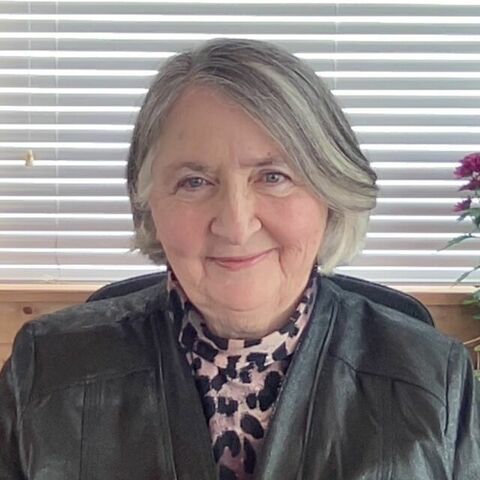
With Lynn Fraser
Throughout this clear simple course, you will see how childhood experiences affect the development of the brain and nervous system, and the lasting effects throughout our adult life. Each of the ten sections covers a specific area, like troubling thoughts, relationships, kindness, and compassion. You will learn simple, powerful practices to build long-term strength and resilience and to emotionally self-regulate when you are stressed. “Trauma is not what happens to us. Trauma is what happens inside of us as a result of what happens to us. The effect of trauma is that we disconnect from ourselves, our sense of value, and the present moment.” Gabor Maté, MD
Meet your Teacher
read more
10 Days
9.9k students
4.9 stars
15 min / day
Healing
English
Ask your teacher
This course includes 95 community questions and 7 audio replies from Lynn Fraser. The community classroom and teacher audio replies are only available via the app.
4.9 (276)
Recent Reviews
Margaret

March 26, 2026
Can’t speak highly enough of the course- such a summary has rarely been so successful in making the most important points. This helped to clarify the journey I’ve been on for a long time. It explained in genuine human form what trauma is and the natural response we, as both powerless children, and/or as adults who’ve experienced dysfunctional families, work places and anywhere these responses come up during stressful times. This, sometimes disabling, trauma response is caused by our neural perception, wired by being trained to look out for us; but it can be changed by becoming more true to ourselves though practices that we do to give to ourselves. So old traumas don’t effect us now.
Linda
March 23, 2026
Thank you for this kind, calm, and informative course. I would like it to have been a little slower with longer practices within each lesson. Or perhaps a separate meditation practice to accompany each lesson. I suppose I’ll find that when I continue to look for your other meditation. Thank you again!
Katya
November 21, 2025
Very helpful and informative, thank you
Amy
September 24, 2025
Hi Lynn, I just finished the last day of the course. Your recent reply was so incredibly soothing, reaffirming, validating and (also just on a pragmatic level) helpful. I used the framing and tapping technique today. I've been getting flooded with emotional flashbacks pretty much around the clock since returing from a 7 month stay with my sister and her family. My God... I do not know how I thought that could ever have turned out any differently. I wake up many days with my phone by my bedside and listen to your 'emotional flashbacks' audio before I am able to put my feet on the ground. I didn't even know that was a 'thing.' It's been so helpful in being able to face the day. It's been a guide for me as well in communicating with my fiance about on what's going on and why I can't cognitively put things in perspective and move on with my day. Also, your information on trauma has been a lighthouse in our relationship. My default mechanism is to go into fight or flight - his is shut down or freeze. We NEVER knew this is what was happening. I am incredibly blessed to be with him. It's been almost 11 years now and we are constantly growing. The love was never in question. If anything it's only deepended over the years. I'm sure, knowing a bit of my history and what I've been going through, it has been full of challenges. The difficulties we have faced throughout my illness and into recovery were monumental and still are. Where your work comes in is this: I have no question that the root cause and perpetuation of the debilitating symptoms have their roots in trauma and nervous system dysregulation. After almost of decade of taking a deep dive into eastern and western medicine in all of its modalities, the real work was and still is in the types of practices you teach (many more as well, but the main concepts all align). Leaving the medical model and shifting the paradigm dramatically is what brought me from wheelchair and slurred speech to walking and hiking and being out in the world again. Now the symptoms have shifted and in some ways are equally debilitating, but I know the root cause. Your work has kept me focused and on track. This knowledge and all of the practices give me a kind of ladder or structure to keep going. It actually feels more like a tightrope than a ladder most days, but still, the instruction you offer (and honestly your work out in the world) helps me 'buy in' to the legitamacy of what you teach. Anyway, this is a long drawn out way of saying thank you for all that you do. The compassion, empathy and support has been a sort of lifeline for me, especially on the very difficult days. Thank you for all that you do. Amy
Gretchen
April 30, 2025
This was concise and relatable with solid practices. I recommend completing a lesson a week to allow for practice and integration. Thank you for taking the time to create it.
Adrian
March 16, 2025
Wonderfully presented and concise
Annemiek
March 1, 2025
So much valuable information ❤️ Thank you 🙏🙏🙏 it’s much appreciated
Lori
December 11, 2024
This was very informative & validating. I appreciate your guidance & tips toward healing trauma. Thank you. 🙏🏻
Alisha
November 27, 2024
I really enjoyed exploring this course and continuing on my journey of trying to move past/heal my trauma!
Imre
November 23, 2024
By explaining what happens in the body - how a mechanism takes over and how distorted core beliefs have beeñ 'created', I can look at myself with more understanding and softness. That softness offers space to participate in the exercises. I wish I had delved into this psycho-education earlier, but I have always 'avoided' it. A word that often came up in this course. It is sad. But there is 'hope' and 'a way'! Those are the most important words to focus on. Thank you for sharing your wisdom.
Paul
November 20, 2024
This was so helpful.
Bradlee
November 18, 2024
This course has been so illuminating for me. At 44 years old, I am understanding so much more about myself thanks to Lynn's teachings. I feel so fortunate to have come across this course and will definitely listen to it again to help myself.
Sheila
October 25, 2024
Informed, compassionate and really helpful.
Peter
September 22, 2024
A very eye opening series on one’s reactions to trauma . I am grateful to have found this…..
Alison
September 15, 2024
This is a fabulous course. Thoughtfully organized, beautifully presented, rich in both theoretical information and practical guidance. Lynn combines expertise, intelligence, and a deep substantive understanding with clarity, compassion, warmth, genuine encouragement, a beautiful prosodic speaking voice, a soothing measured pace, and an obviously regulated nervous system. What a find! And what remarkable generosity to offer this caliber of teaching for free. I envision returning often — for the wealth of information I’d still like to absorb, the many helpful practices I canely. 🙏
Amy
August 29, 2024
These were nice lessons, but what I really need is to learn how to be self-aware when I am switching to fight-flight-freeze, so I can use the tools and be present. So far that’s been hard to figure out.
Krysia
August 2, 2024
Wonderful. I’m going to go through the course again. Thank you so much, Lynn, for your generosity.
Helene
June 28, 2024
Wow, I didn’t want this course to end! I loved your methods, words, rationale adding to my constant thirst for more understanding and knowledge into my trauma. Resilient and calm equips me daily as I walk further into my life, myself and be brave as I be game to explore my talents in unknown areas and never look back on the traumatic hold over me, inside and out! I’m at this stage and so excited to venture into the untapped me, beginning with expressive art workshops.. preparing and paving my entrance into becoming an Art Theapist. I will listen to your course many times, reassuring any doubts and soldiering forward into this beautifully healing platform that I relish in as it excites and comforts art. I am a mature woman, 66, embarking in a Diploma in Art Therapy and loving every module scoring 100% after 30 years of abuse and telling you your dumb! I’m an artist and have never realised I’ve painted my way through these years, healing and comforting me, whilst building resilience by losing everything and rebuilding myself, my world. This course gave me a tool kit to further repair and equip myself to steer forward! Thankyou Thankyou!☺️
Jen
June 18, 2024
Excellent way of getting to know oneself. Thank you for helping me with my awareness
Char
June 12, 2024
Thank you! I think I will need to do the couree a few more times as I found I had alot of resistance.
More from Lynn Fraser

Trusted by 36 million people. It's free.

Get the app


