Hi,
Beautiful people.
So glad to be back with you again today.
Today I'm going to introduce the first in my series of somatic breathing techniques.
The breath lies at the intersection of our conscious and our subconscious.
So it's one of the few processes in the body that happens autonomically from the bottom up.
We don't have to think about it,
But that we can also bring conscious awareness to and conscious control over and change the breathing rhythm.
When we do sabbatic breathing practices.
We are using a top-down approach,
Using the brain to tell the body to do something.
And then when the body does that,
When the body responds and takes a deeper breath or breathes with a different rhythm,
It changes the physiology in the body.
It changes the respiration rate.
Ratio.
It changes other things on a molecular level in your nervous system,
In your cells.
So with breathing practices,
We can often feel a very powerful and often a very immediate effect on the nervous system.
Who want to offer a disclaimer for breathing practices.
For anyone who has experienced trauma,
Especially around anything having to do with your breathing.
As well as anyone who has a cold,
A cough,
Bronchitis,
Asthma.
You just want to be cautious and curious when you are exploring breathing exercises because they can have such a powerful effect.
Sometimes they can actually make us feel a little less well.
If we are dealing with trauma or illness in the body as opposed to supporting regulation.
So I really invite you to just explore gently these breathing practices.
See if they feel okay in your system.
See if they work for you.
If you notice things are starting to feel overwhelming or going the wrong direction in your nervous system,
Just stop doing the breathing practice.
Let go of that control of your breath.
Let your body breathe itself naturally again.
So the first exercise I'm so excited to introduce today is one of my personal favorites,
And it is called Sitkari Breathing.
It is.
Yogic breathing practice dating back probably about 5,
000 or more years.
And sitkuti is a Sanskrit word.
That translates into English as kissing or sipping breath.
And one of the main effects of this breathing practice is that it helps to release heat from the body.
It helps our bodies actually cool down.
It helps us tune in to areas that are cooler and calmer internally,
And in that way can bring a deeper sense of settling into the nervous system.
So many of us in the summertime deal with very hot temperatures or heat waves.
And then also,
For many people,
Especially women who are in perimenopause or menopause,
Of course we know hot flashes are some of the most unpleasant,
Overwhelming experiences ever.
And people with anxiety and stress often experience it.
Hot flashes as well.
So this cooling breath practice is going to support you no matter what the reason is,
If you're feeling overheated or that there's just too much heat in your body.
This can help you cool down fast.
The way to do this breathing exercise,
I'm going to talk you through it first,
Then demonstrate it,
And we'll do eight to 10 rounds together.
So the first step is to gently bring your teeth together.
So we're not going to clench the teeth,
We're just going to bring the teeth together,
Almost like you're doing a slight smile or a snarl.
Just lightly touching this up in the bottom teeth together.
And with those teeth together,
You're going to inhale breath through the teeth,
Nice and slow,
Filling up through your teeth.
And you'll feel how breathing in through the teeth cools the air down.
So as the air flows over your tongue down,
Throughout through the breathing structures,
You'll probably notice there's a cooler temperature to that air.
And that's what we're bringing our awareness to.
After we inhale through the teeth,
There's two options.
For those who are comfortable breathing through your nose,
You'll close your mouth and gently exhale through the nose,
All the air out,
A nice,
Long,
Full exhale.
If it's uncomfortable for you to breathe through your nose or impossible for any reason,
You can just exhale through your mouth.
Again,
Nice,
Long,
And slow,
Almost as if you're breathing out through a straw.
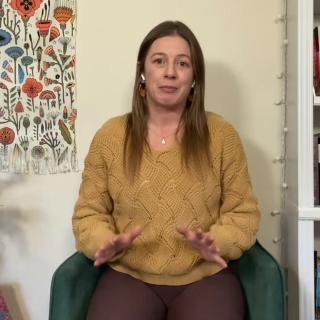
So here is what it looks like for the test.
Version where you breathe out through the nose.
And then here is the version where you can exhale through the mouth.
So play with one round of that,
Feel what feels best in your system,
Breathing out through the nose,
The mouth,
Feel free to mix it up as you're practicing.
And now I'm going to just begin demonstrating about eight to 10 rounds of this breath.
So you can join in,
We can do it together.
You can mirror me if you'd like,
Or if my breath is matching a different pace or rhythm than yours,
Just find your own rhythm and we'll just breathe together.
And again,
I'll be doing some with the mouth open for the exhale and some exhaling through the nose,
Just so you know you have those options.
All right,
Let's dive in.
Keep going as you inhale,
Really feel that cool air.
And as you exhale,
Breathe all the air out.
So we're really lengthening that exhale,
Not taking short breaths here.
We're letting it be as full as possible.
Thank you.
You might finish the round that you're on and then give yourself a moment to pause so you can check in and see how your body is responding to this exercise.
That's very important when we do breathing practices is to take a moment to notice what is it doing to the body,
The nervous system,
The mental space?
So that we can continue to support our bodies in their healing and regulation and not inadvertently send ourselves into a greater state of overwhelm.
So you might take a moment to notice how you feel.
And I'll share just what I'm noticing as well in case any of that's familiar for you.
Or similar.
So I notice that I feel a bit cooler and I am more aware of the cool areas of my body.
For example,
There's some airflow in the room that I'm in,
And now I'm all of a sudden noticing that the air is moving on my shoulders,
Across my arms,
Blowing my hair a little bit from the fan.
I wasn't really tuned into that before,
So now I'm feeling more of the coolness and the airflow.
I also notice that my breath feels a lot more settled in my body than when I first started talking on this video.
I can be a little bit anxious when I first start to film myself.
After doing the breathing practice along with you,
I notice my own body settles in so much more.
And it feels easier for me to connect with.
Even the image of myself on the camera here.
And with all of you.
So I hope you enjoyed this brief breathing practice for cooling down.
And hope you enjoy the rest of your day.
Thanks for watching.
Bye.