What if aging well was less about luck and more about what you know,
And more importantly,
What you do?
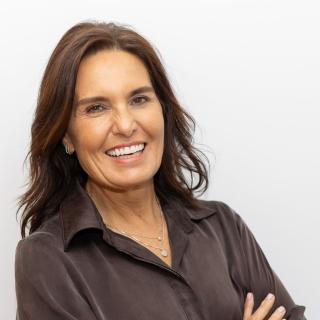
I'm Dr.
Linda Friedland,
And this is the Longevity Blueprint.
Did you eat before you got here?
It's the first thing Brooke asks me every time I walk into my strength training session with her.
A banana,
I reply.
She smiles.
That's not enough.
The following week,
I arrived feeling rather pleased with myself.
Yes,
Brooke,
I say,
Before she asks me.
I had breakfast before my swim this morning.
She looks at me.
That was hours ago.
You need more fuel.
Now,
I have to admit,
I found that quite frustrating.
Because like many women of my generation,
I've spent years believing that eating less was somehow better.
I skipped breakfast,
Wasn't my favorite.
I did try intermittent fasting.
I almost wore it as a badge of honor that I could get through the day or at least the morning on very little food.
But the more I've studied longevity,
The more I've realized something surprising.
After 50,
Particularly,
Eating less is not healthier.
It's worse.
It's the opposite.
For years,
We were given a very simple message,
Particularly if you were trying to maintain your weight or lose weight.
Eat less,
Move more.
That is totally untrue.
After menopause,
We naturally lose muscle.
Our metabolism changes and our muscles simply don't respond to food as efficiently as they once did.
That means we have to become much more intentional about how we nourish ourselves.
One of the biggest mistakes I see and one that I made myself is under fueling.
Many women eat pretty well,
Lots of vegetables,
Healthy fats,
Whole foods,
Very little processed foods,
But they're simply not eating enough to support the body they're asking to perform.
And that's a problem because muscle needs fuel,
Our bodies need fuel.
If you've listened to my previous episode,
You'll know that our muscle is one of our most important longevity organs.
Without enough nourishment,
It's much harder for our body to maintain it.
And when we consistently under-eat,
The body adapts.
Our energy drops.
Our metabolism slows.
This happened with me.
Recovery takes much longer.
And over time,
Most importantly,
We lose the very muscle we're trying so hard to preserve.
So what does eating more actually mean?
It doesn't mean overeating,
Doesn't mean eating everything you feel like eating,
Doesn't mean abandoning healthy habits.
It means giving your body enough nourishment to do the job you're asking it to do.
That may mean eating a proper breakfast or a small breakfast before exercise instead of just coffee.
It might mean adding some Greek yogurt,
Some egg,
Some tofu or fish to a meal that previously contained very little protein.
Or simply recognizing that a salad on its own is not enough.
You need some protein,
A sweet potato,
A grainy roll,
Some cottage cheese.
There's one group of people I worry about in particular,
Those taking medications,
The GLP-1 medications like Ozempic or Menjara.
These medications,
These medicines can be incredibly helpful.
Watch the video on the series on the GLP-1s for more information.
But because they reduce your appetite so effectively,
It's easy to eat far too little,
Particularly of the right foods.
Losing weight may be in conflict with aging well.
Protecting your muscles while you're losing weight is just as important as watching the number on the scales.
Brooke taught me something I wish I'd understood years ago,
Even in the health industry.
Food isn't the enemy.
Food is information.
Every meal sends a message to your body.
Repair,
Recover,
Stay strong.
As I've gotten older,
I ask myself,
Am I giving my body what it needs to thrive?
Because healthy aging is about remaining strong.
This is the Longevity Blueprint with Dr.
Linda.
Until next time,
Age boldly and live well.