What if aging well was less about your luck and more about what you know and what you do?
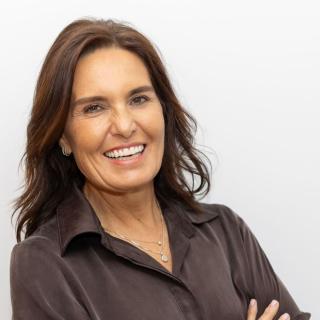
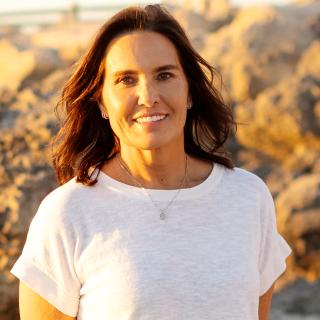
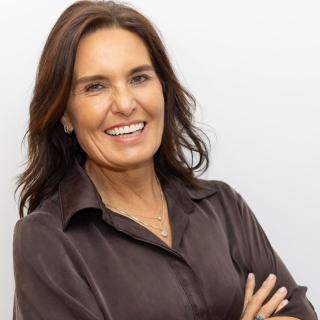
I'm Dr.
Linda Friedland,
And this is the Longevity Blueprint.
I'm going to share something personal with you.
I seriously fear cognitive decline.
I watch myself for memory lapses.
Misplacing my keys,
Losing a word mid-sentence.
These things happen to me.
And every time they do,
There's a quiet voice that asks,
Is this normal?
Overload?
Busy?
Or is this something more?
My preoccupation with brain health began with watching my parent navigate the ravages of Alzheimer's dementia.
That experience stays with you.
It shapes how you think about your own future.
So today I want to share what the science actually says,
What drives cognitive decline and what genuinely may protect against it.
Because the good news is more powerful than most people realize.
Firstly,
Some reassurance.
Occasional memory lapses,
Word retrieval difficulties,
Moments of forgetfulness.
These are common,
Normal things and not necessarily a sign of anything serious.
They happen to younger people too.
We just worry more as we get older.
And here is the most important thing I can tell you.
Genetic cause plays a very small role in dementia.
The great majority of cognitive decline risk is influenced by lifestyle,
Not destiny,
By chronic diseases.
That means what you do consistently over time matters enormously.
I'm going to share with you a few things.
Number one,
Do something genuinely difficult.
Crosswords,
Sudoku,
These are wonderful,
But it's not enough.
Do something truly new and complex.
Learn a new language,
A musical instrument,
New technology,
A physically demanding skill,
A new sport,
New dance steps.
When we engage with complexity and novelty,
We activate brain pathways,
Neuroplastic mechanisms,
And the brain has an ability to grow new cells and strengthen strengthen connections between them.
This kind of effortful learning is one of the most powerful tools we have for brain resilience.
The brain,
It turns out,
Responds really well to being challenged.
The second strategy,
Build stronger muscles.
Yes,
Physical exercise is the single most evidence-backed intervention for brain health.
And strength training specifically deserves more attention than it gets in this context.
Weight training increases the production of a substance called BDNF,
Brain derived neurotrophic factor.
It's a protein that promotes new brain cell growth and strengthens these neural connections.
A review in a journal called the Archives of Gerontology covering 11 randomized controlled trials demonstrated a significant increase in BDNF and improved cognition following resistance training.
Your muscles and your brain are in constant conversation.
Building one protects the other.
Number three,
Check your hearing.
This one surprises people,
But the evidence is striking.
50% of adults over 70 have some degree of hearing loss.
More than a quarter of people over 50.
And a commission by the Lancet in 2020,
One of the most respected voices in global medicine,
Identified hearing loss as the single leading modifiable midlife risk factor for later dementia.
When we can't hear well,
What happens is the brain works harder to process sound at the expense of memory and cognition.
So get your hearing tested,
Monitor it over the years.
Don't dismiss it as a minor inconvenience.
Number four,
Reduce inflammation.
We explored inflammation in a previous episode.
This is chronic low-grade inflammation that quietly drives our biological aging.
It's also deeply damaging to brain cells,
Contributing directly to decline in our cognition.
The same strategies apply movement,
Anti-inflammatory nutrition,
Gut health,
Stress management,
Good sleep and meditation.
Every one of these protects the brain as much as the body.
And number five,
Omega-3 fatty acid.
There's no one pill that prevents dementia,
But there's strong scientific evidence for omega-3 supplementation,
Specifically DHA and EPA,
Which strengthen your brain cell membranes and support the smooth transfer of information between brain cells and neurons.
These are found in fatty fish,
Salmon,
Mackerel,
Sardines,
Anchovies,
Herring.
If you're not eating these foods regularly,
A good quality fish oil,
If your vegetarian and algae oil supplement is worth taking.
Avoid mixed omega supplements containing high doses of 6 and 9.
Too much of those may be counterproductive.
So what I want you to take away,
The brain is not fixed.
It is not simply declining on a predetermined schedule because you are aging.
It is responsive.
It is adaptable.
And the choices we make to move,
To learn,
To eat well,
To manage our stress,
To meditate,
To protect our hearing,
To sleep well,
All of it shapes how our brain ages.
Dementia is not inevitable.
Cognitive decline is not something we simply wait for.
Part,
Something we can start acting on now.
This is the Longevity Blueprint.
Until next time,
Age boldly,
Live well and make good choices.