You didn't lose yourself,
You abandoned yourself to survive.
And that difference changes everything about how you find your way back.
I'm going to say that one more time because this is so important about the language around this.
You did not lose yourself.
You abandoned yourself.
Slowly,
Quietly,
In ways that made complete sense at the time.
You learn to say yes before you even checked in with yourself.
You learn to shrink your truth so nobody felt uncomfortable.
You learn to fix other people's feelings before you even acknowledge your own.
You learned that keeping the peace was safer than telling the truth.
And the thing is,
It worked.
It worked for a long time.
It kept you connected.
It kept things running smoothly.
It kept you feeling like you belong.
But somewhere in the middle of all that surviving,
You stop being able to hear yourself.
And now you're here,
Wondering where you went.
And I want to talk to you about that today,
Because I think the way that most people frame this is this.
As something that you lost.
And that actually makes complete sense.
But it also makes it harder to find your way back.
And you deserve more of an honest map than that.
If we haven't met before,
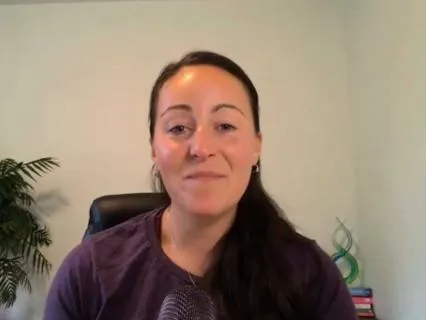
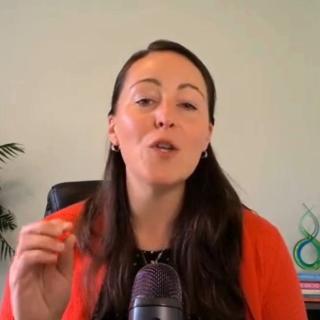
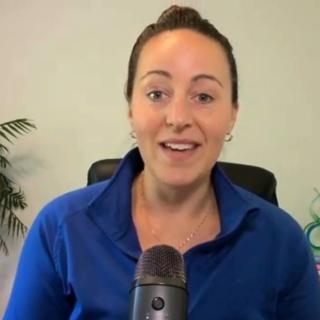
I'm Dr.
Kelly Kessler.
I'm a doctor of physical therapy,
Nervous system educator,
And the host of the podcast,
Rewiring Health,
As well as the founder of the Self Loyalty Mentorship.
And my work lives at the intersection of nervous system science and real lived experience,
Experience that I've been through.
And I help women understand why they keep leaving themselves behind in the moments that matter most.
And how to stop that.
I didn't come to this work from the outside.
I came to it from the inside.
I know this terrain personally.
And everything I teach is built from both my clinical training as well as lived experience.
In my body and in my own life.
And I know that choosing myself hasn't always felt safe.
But now it does.
And if you're new here,
Welcome.
And if you've been here for a while,
I'm so glad you're back.
Now let's start with the words that we use,
Because I think that matters more than we realize.
Most of us say that we've lost ourselves.
I know I've said that plenty of times.
And it feels like that when you're looking at your life and you're seeing everything that you've sacrificed and you see that.
You have spent so many years of your life trying to do the thing that you thought you should be doing,
Trying to meet all the expectations.
Of course it feels like you've lost yourself.
And I totally understand that.
And then one day you wake up and don't even recognize yourself.
As the woman that you are looking back at.
And you can't even remember the last time you made a decision that was purely yours.
Because it seems that everything gets filtered out.
On other people's expectations for you and what you think you should be doing.
And what would make somebody else happiest.
You feel like something essential just slipped away somewhere and you're off looking for it or looking for yourself.
But here's what I want you to sit with.
You can't accidentally lose yourself.
Not really.
What actually happens is more specific than that.
And more important.
You made thousands of small decisions over years.
To put yourself last.
To override what you felt.
To dismiss what you needed,
To silence what was true for you in order to maintain the connection.
And keep the peace.
Or stay safe in relationships that felt like the love was conditional.
And that is not losing yourself.
That's leaving yourself.
Over and over and over and over again.
In the small moments.
In the big moment.
And in the ones that don't even feel like they're worth remembering.
But yet your body remembers.
And here's why that distinction matters so much.
If you lost yourself,
The path back is a search.
You feel like you're aimlessly trying to find the essence of you.
You're looking for something that.
You feel like went missing,
But it really hasn't.
And often you don't even know where it is or where to start.
You just hope that one day it'll turn up,
That someday you'll finally feel like yourself again.
But the thing is,
If you realize that you've abandoned yourself,
If you've left yourself behind through a pattern of learned behavior,
Then the path back is completely different.
It's not a search for out there.
It's a return.
It's a remembering.
And it's a direction.
In words.
It has specific steps.
It has a clear starting point.
You know where you are.
And you know that it's always within you.
It's just coming back home to yourself.
You start to remember where you've left yourself behind.
You remember the moments where you said yes and your body was screaming no.
You remember the moments you softened your truth to manage somebody else's reaction.
And you remember the days you spent replaying conversations,
Convincing yourself that you were the problem.
And you remember that you left yourself.
Feeling smaller so somebody else could feel bigger.
Those are not mysteries.
Those are not things you have to search for.
Those are patterns.
And they're patterns that can be understood when they're understood within you.
And the thing is,
When they're understood,
That's when they can shift.
And that's when you realize that you have the power always.
It's not a search for something that happened.
It's an inward understanding.
Of where you've been leaving yourself behind.
So let's get more specific because I think this is where a lot of the content around self-abandonment stays way too vague.
And it doesn't get anchored into those specific moments that you live day in and day out.
And the thing is,
It's easy to nod along to a concept and say,
Yes,
I abandoned myself.
But the place where this work lives is in those specific moments,
Because that's when you can see that you were actually participating in those patterns.
These are the ones that happen on that Tuesday afternoon,
The ones that nobody talks about,
The ones that you live.
They're the ones that you start to recognize.
And here's what self-abandonment looks like in the real moments,
In the real life.
It looks like someone asking you for something and feeling your stomach drop,
Your body giving you that no.
And then you have this reactive yes and you just go along with it.
And it's not because you wanted to,
It's because you felt unsafe to say no.
You worried about the repercussions of saying no to that person.
What could change?
What would impact that dynamic with that person?
And it felt like an easier decision just to go along with it.
And suck it up for a moment,
Then to say no and listen to your body.
It also looks like sending that text message and then checking your phone every four minutes waiting for the response.
Because their silence feels like there's evidence that something is wrong,
That you did something wrong,
That there's this unsettled feeling or energy that you have to fix.
It also comes in having a clear opinion in a conversation and then softening it.
Reading the other person's emotions,
Reading the other person's energy,
And then pulling yourself back so that you fit into the mold of them,
So that you don't cause a rift or conflict in them,
That you start to pull yourself back from the conversation rather than living in your truth.
And self-abandonment also comes when you get that feeling of being genuinely hurt by something someone said.
And then spending your energy convincing yourself that you're the one overreacting and that you are making a bigger deal of it than you need to or that.
You don't feel validated in feeling the way you do.
So instead of just trusting how you felt and trusting your experience,
It's going back into.
Self-blame and feeling like you're too sensitive.
And not actually realizing that this was hurtful and this was not okay for something to say to you.
Self-abandonment also looks like someone being visibly upset and immediately treating their discomfort as your responsibility to fix.
That because someone had a bad day or someone's mood shifted,
That now you have to take this on to make sure everything is fixed and that they feel okay.
And you do this before you even check in with yourself.
You have that reactionary response that you have to fix it,
You have to smooth it over,
And somehow it has something to do with you.
And here's the thing about every single one of those moments.
In each one of them,
There was a version of you that knew.
That deep down you knew.
But you overwrite it anyway.
And the thing is,
Your body knew.
Your body is so intelligent,
But yet our mind can override what our body's telling us.
There was probably a sensation.
There was probably a tightening,
A drop.
An internal flinch,
Something just felt off.
Your gut had that whisper of like,
No,
It's a no,
It's a no.
And then your mind started playing all the roles that you thought you had to play to make it a yes.
That was your body giving you real information.
And it was in that moment that you overrode it.
And it's not because you were weak.
That's not why you override it.
It's because you were conditioned to.
Your sense of safety,
Belonging,
Harmony,
Peace,
Everything was outsourced.
So you thought you had to be what you needed to be,
Do what you need to do and say what you need to do in order for you to feel that,
To feel that sense of safety.
You were trained through years of experience that your feelings were secondary to somebody else's.
That your needs were negotiable,
That your belonging required a version of you that didn't take up too much space.
And your nervous system learns that lesson so thoroughly.
That now it happens automatically.
You don't think about it.
It's not conscious.
It's just what you live.
It's what you do.
It's all that you know.
And the thing is,
Before you even realize it,
You've already left yourself behind.
That's what makes this so incredibly challenging.
And this is the part I really want you to hear.
Because I think it's why so many women feel stuck even after they've done significant work.
When you understand that self abandonment is a nervous system pattern,
Not a character flaw,
Not a lack of willpower,
Not something that you just decide your way out of.
It changes what healing actually requires.
The things I thought I could white knuckle my way through being different through making different choices,
But.
Time and time again,
I found myself in the same reactionary patterns of doing all those things and then feeling almost shameful about it because I kept seeing I was going into these patterns.
And it wasn't until I understood that it was in my nervous system that I felt liberated to choose differently and to feel a sense of safety and know how to go about it differently.
You can't white-knuckle your way into self-loyalty.
That's what I've learned and that's my experience.
And believe me,
I've tried.
I think most of us have.
I think most of us have really tried to.
Do the work and really push harder so we can feel differently and we get to that point where we realize this is not the way.
And it's in those moments that you say,
This is the time it'll hold the boundary.
This time I'm not going to over explain.
This time I'm going to say exactly what I feel and what I think.
And my truth matters.
And you probably know that moment,
The moment that it arrives,
Those situations,
And you go right back into over explaining yourself.
You go right back into softening your boundary.
And your nervous system fires that old pattern before your conscious mind even had a chance to catch up or intervene.
And the thing is,
You're right back into it.
And you feel like you failed.
Again.
But that's not a failure.
That's a nervous system doing exactly what it was conditioned to do.
The work isn't about trying harder.
It's about understanding specifically where the pattern is still running.
The exact moments,
The exact triggers,
The exact relationships,
You're still leaving yourself behind in.
So that you can bring real attention and real support into those places.
Because you can't change what you can't see.
And most women are working so hard that they haven't stopped long enough to get honest about what they're experiencing,
To pause and really look inward and see what's happening.
Truthfully.
And I want to share something briefly from my own experience because I think this matters really a lot for this conversation.
There was a time when I thought I had done all the work.
I understood the patterns intellectually.
I knew what self abandonment looked like.
And yet I was still doing it in very specific places with very specific people without fully seeing it.
There were situations where I could stay with myself,
But then there are certain people that I would go right back into these patterns.
And I got so frustrated with myself because I kept finding myself in these patterns with the same people.
And what changed things for me wasn't more knowledge.
It was getting really honest about exactly where I was leaving myself behind.
The specific moments,
The specific dynamics,
The places where the old pattern was still running quietly underneath everything I thought I had healed.
And once I could see those places clearly with honesty and curiosity.
And stop shaming myself for being in that same place again and again.
That's when everything shifted.
And this isn't overnight,
This isn't in a day,
It's not in a week even,
But it happens in those small shifts.
Where you return back to your body.
You understand your choices.
You choose more consciously.
And you recognize those times where you get to stay with yourself.
And then you get to celebrate those times because you're no longer leaving yourself behind.
So I want to leave something with you that you can use today.
If this has been hitting and resonating with you,
I want you to move through this practice in a way so that you can start to savor yourself and have those little shifts.
So the next time that you feel that pull back into those old patterns,
Maybe it's with those the same people or same situations,
The automatic yes or the urge to fix someone else's discomfort or shrink your truth.
I want you to try one thing.
Before you respond to anything,
I want you to come back to your body.
Feel your feet on the floor.
You're going to take one slow,
Deep breath through your nose.
And then you're gonna ask yourself these words.
What do I feel?
And you're gonna be as honest with yourself as you possibly can.
You're not going to answer it with the same thing that you used to of,
What should I do?
It's not going to be,
What does this person need?
It's not gonna be what would be the right response in this time.
It's just,
What do I feel?
Listen to your body.
What is your body telling you in this moment?
And listen without judgment.
Just quietly take a pause,
Interrupt the pattern,
And allow yourself to sit with yourself for a moment.
The thing is,
You don't have to act on the answer immediately.
You don't have to say it out loud.
But let yourself hear it.
Give yourself space to just listen.
Because the practice of checking in with yourself,
Even if it's for 10 seconds,
And even if it's imperfect,
That moment before you respond to the outside world and the demands that inevitably will always be there.
Is how you start to rebuild a relationship with yourself.
And a relationship that does not rely on you abandoning yourself.
There's so much power in that pause.
And there's so much power in checking in with yourself before you do what everybody else needs you to do.
Every time you do that,
Every time you pause and come back to yourself before you leave yourself behind.
You're building something real.
And that's a nervous system that knows you're listening.
It's a nervous system that feels safe enough to speak up.
That's how patterns shift.
It's not through trying harder.
It's through paying attention to those right places.
And here's the rewire moment.
So if you take one thing from this episode,
Let this be it.
You did not lose yourself.
You abandoned yourself to survive.
And that means the path back is not a search.
It's a return.
It has direction.
It starts with getting specific about where you're still leaving yourself behind.
That's not something to be ashamed of.
That's something to get honest about.
Because the moment you can see it clearly,
It starts to lose its grip on you.
I share many more tools for you to reclaim your own inner peace,
Your own inner safety,
And start moving yourself from self-abandonment to self-loyalty.
Thank you so much for joining me and I will see you in the next one.