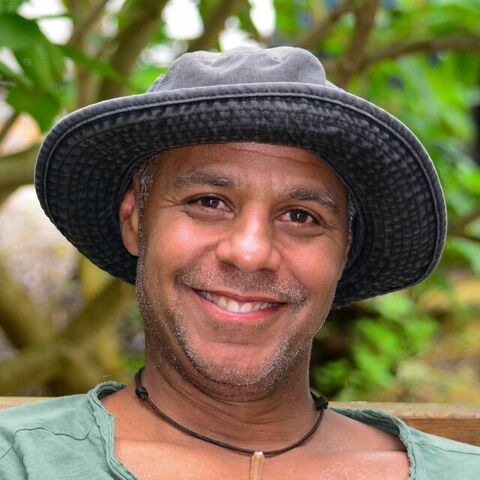
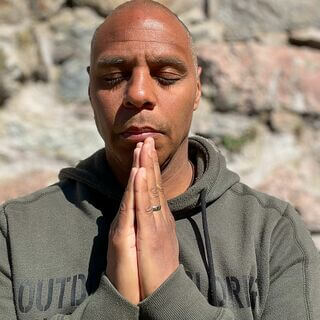
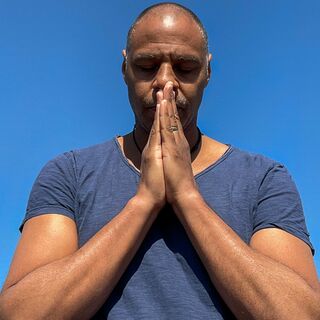
Blessings and welcome to the Path to Freedom.
My name is Daniel Rochaio and as always I'm deeply grateful that you're choosing to tune in,
That you're choosing to participate in the growth and the unfoldment and the expansion of who and what you are of your soul.
The Path to Freedom is all about that.
It is all about us allowing for greater and greater expressions of who and what we are to emerge.
It is all about us waking up to who and what we are.
And so I'm deeply grateful and privileged that you are choosing to join me here in a moment of doing just that,
Expanding our consciousness,
Raising our vibration.
This session will be the first in a series of three sessions dealing with forgiveness.
Forgiveness is one of the most powerful tools that we have at our disposal to set ourselves free.
Free from past experiences,
Free from negative and low vibrations such as fear and worry and doubt and hatred and anger and resentment and blame,
Animosity,
Rancor.
Because forgiveness,
Contrary to popular belief,
Because many people believe that forgiveness is about condoning the actions of another individual,
That it is about saying that what you did is okay,
Alright,
Let's be friends again,
Let's hang out again.
And something to that effect.
But forgiveness in truth,
From the spiritual perspective and from the mature perspective,
Forgiveness has nothing to do with another individual or another external condition or circumstance.
But it is all to do with us.
It is all about us setting ourselves free.
It's a pure act of self-love.
Releasing and letting go of the blame stories and the victim stories and the notion that they,
Whoever they are,
But they are to blame for me not being happy,
For me not being in joy,
For me not being free,
For me not being prosperous or successful or abundant or whatever the case may be.
Forgiveness is all about releasing and letting go of these stories,
These perceptions,
These judgments that we hold onto.
And so this,
The first part,
Will be a more theoretical view of forgiveness.
We will be discussing a little bit about what forgiveness is to gain an understanding of what it is.
And then the second part will be a process.
I'll facilitate a forgiveness process where you will have the chance to move into the practice of forgiveness.
And then the third part will be a guided meditation going even deeper into the forgiveness.
And so I welcome you here and once again I'm deeply grateful that you're choosing to join me because it takes courage,
All right?
It takes courage to want to forgive.
It takes courage to release and let go of being a victim.
It takes courage to own up to oneself and take full responsibility for our lives and for our well-being.
That's not a small thing,
But it's a huge thing.
It's the only way.
I mean,
There are no other ways to go about awakening.
At some point sooner or later we all need to begin to take full responsibility for ourselves along this path of freedom,
Along the path of awakening.
If we want to change,
If we want to allow for the peace and love and the joy and the harmony and all of that that you perhaps have heard me say before,
To well up,
To emerge,
We and we alone need to take responsibility for it.
There is no pointing fingers.
There is,
I mean,
We can still engage in it,
But as long as we believe and as long as we behave and as long as we act as though something in the world owes us something or anything,
And if they don't give it to us or if they don't act or do or behave in the way we want them to act,
Do and behave,
That we cannot be in joy and peace and love and harmony.
As long as we move from that perception,
There's always going to be someone,
There's always going to be something that quote unquote robs us of our peace,
That takes our peace away,
That takes our harmony away,
That takes our joy away.
So forgiveness is taking all of that back.
It's taking our power back.
And I want to share a text with you.
This is a text from a book called Life Visioning Process written by Reverend Michael Bernard Beckwith,
And this text,
This passage is taken from the chapter about victim consciousness.
And so I want to read,
Because I think that he describes and explains this so beautifully,
So I want to read this to you.
So in this moment I invite you to just relax,
To sit back,
To enjoy yourself,
And listen to what this man has to say.
Now that you've taken the first steps to grow out of victim consciousness,
There is another obstacle that you must overcome.
Your tendency to blame.
All victims have a blame story.
As victims,
We create these stories to explain how someone or something else is responsible for our present circumstances.
We use them to justify why we cannot move forward.
And we expertly argue,
Down to the finest detail,
How these stories prove that our point of view is correct.
In short,
It is not our fault,
But they are to blame.
This attitude is a far cry from self-responsibility,
From having dominion over your attention.
It is a far cry from living from inspiration and hearing the still small voice of intuition,
The voice that illuminates the way.
In victimhood,
That voice is drowned out by the incessant chatter of blame.
To fully move beyond victim consciousness,
You need to release that blame.
You need to stop blaming any person or circumstance for your life as it is today.
The best way to do this is to understand that ignorance is at the core of any offensive situation.
If someone has hurt you,
They did so from a state of ignorance.
If you offended someone,
You did so out of ignorance.
If you believe that a painful event is responsible for your current unhappiness,
You continue to live in ignorance.
Give up all your blame stories and you will have increasing dominion over your life.
Once you release blame in your life,
You can begin to cultivate forgiveness.
The practice of forgiveness,
When offered unconditionally,
Will heal you.
Highly valued by spiritual adepts for thousands of years,
Forgiveness is largely misunderstood.
Forgiveness is not rooted in sentimentality or emotionality.
All forgiveness is self-forgiveness.
What does that mean?
The word forgive means to give up a claim,
To requital.
It means to relieve someone adept to you.
In spiritual terms,
When you forgive,
You release someone or something of their responsibility for your happiness.
You forgive not to heal someone else,
But you forgive to heal yourself.
A thought is a unit of mental energy that has the tendency to transmute itself into speech,
Behavior,
Perception and experience.
By holding on to thought forms of animosity,
Resentment,
Blame,
Hate,
Revenge,
Avarice,
In other words,
Unforgiveness,
You allow those thought forms to run amuck in your mental,
Emotional and physical bodies.
Such thoughts prevent you from accessing the creativity that seeks to express itself through you.
So by releasing blame and offering forgiveness,
You release the toxicity of unforgiving thought forms from your being.
Here is your forgiveness practice.
Identify each individual to whom you attach a blame story.
Visualize them in your mind's eye and silently or aloud release blame through affirmative statements.
Finally,
Offer forgiveness.
For example,
You might hold a person in your mind and say,
What you have done or not done cannot determine my happiness or my destiny.
I set you free from blame and I set myself free through the power of forgiveness.
Remember,
You're not forgiving the person or circumstance related to the issue,
But releasing your own unforgiving thoughts in order to free yourself.
This work is not easy.
It takes courage.
It's a labor of the spirit that will set you free.
And at this point,
You may be asking,
What if I don't feel authentic while doing the forgiveness work?
I don't like the person who hurt me and I don't like what the person did.
Here are a few things to keep in mind as you engage in this practice.
First,
You're not doing this work to make up with a person or to condone their actions.
To forgive doesn't necessarily mean that you'll hang out with that person or that you'll ever be friends again.
You're not doing this work for them,
But you're doing this work to free yourself from the toxicity that is running through your spiritual veins.
You're saying others cannot determine your destiny by their actions.
If you bring a person or situation into mind and experience a strong emotional charge like animosity or fear,
You may be tempted to avoid doing this work because of the pain that it brings up.
In such cases,
Use the emotion in an emotionally charged affirmation.
That is,
If you're feeling fear or hate or other strong emotion,
Let yourself feel that emotion fully and affirm aloud to the person or circumstance,
You have no power over me.
I stand in my own authority.
I set myself free.
In other words,
You don't forgive in a sweet,
Syrupy way.
You step straight into the emotion with the intention to first acknowledge it and then release it.
You're not denying your feelings.
For instance,
If you're working with an emotionally charged situation around a family member,
Then angrily you might say,
You have no power over me.
My destiny is in my own hands.
I set myself free and I set you free.
You don't discount or discard the emotion that has arisen.
You use it to free yourself.
In your process of forgiveness,
You may have to find a place where no one can hear you and shout your affirmation until your strong emotions begin to dissipate.
Then you can bring the person or circumstance into your mind's eye,
Forgiving them again and again with the awareness that all forgiveness is self-forgiveness.
By doing so,
You're consciously choosing to evolve out of victim consciousness.
You're deciding not to give your power away to anyone or to any circumstance incorrectly believing that they determine your success,
Your health,
Your happiness,
Or your wholeness.
You're stepping into a greater sense of empowerment by taking responsibility for your life.
So that's what he had to say.
And as I said before,
This text was taken from the book Life Visioning Process by Rev.
Michael Bernard Beckwith,
If you want to indulge yourself in it even more.
So this concludes the first session out of these three dealing with forgiveness.
In the next session,
I will facilitate a forgiveness practice.
That's when we put into practice what we've gone through in this session.
So the next session will be a forgiveness practice and then the third and last session will be a guided meditation to move you into an even deeper state of forgiveness.
And as these are available at any time,
Whenever you feel the need or the desire to come back and do this over and over again,
Because forgiveness is not a one and done thing.
Oftentimes,
It's a gradual process of incrementally step-by-step releasing and letting go of this negativity.
So you may very well find that you need to come back to forgive a particular individual or a particular condition or circumstance or even yourself,
If that's what you're working on,
Forgiving yourself for something that you did or did not do.
So you may very well find that you need to come back and do it over and over and over again,
Sort of peeling off the layers of an onion until you come to the core of the onion.
So you're welcome to come back.
But for now,
I'll see you in the next session.
So until then,
I bless,
Bless,
Bless your day and I bless,
Bless,
Bless your way.
Namaste.