Welcome to Sleep Stories with Steph,
Your go-to podcast that offers you a calm and relaxing transition into a great night's sleep.
It is time to relax and fully let go.
There is nothing you need to be doing now and nowhere you need to go.
Close your eyes and feel yourself sink into the support beneath you and let all the worries of the day drift away.
This is your time and your space.
Take a deep breath in through your nose and let it out with a long sigh.
There is nothing you need to be doing now and nowhere you need to go.
Happy listening.
Black Beauty by Anna Sewell read by Stephanie Poppins.
Part One.
My Early Home.
The first place that I can well remember was a large pleasant meadow with a pond of clear water in it.
Some shady trees leaned over it and rushes and water lilies grew at the deep end.
Over the hedge on one side we looked into a ploughed field and on the other we looked over a gate at our master's house which stood by the roadside.
At the top of the meadow was a grove of fir trees and at the bottom a running brook overhung by a steep bank.
While I was young I lived upon my mother's milk and I could not eat grass.
In the daytime I ran by her side and at night I lay down close by her.
When it was hot we used to stand by the pond in the shade of the trees and when it was cold we had a nice warm shed near the grove.
As soon as I was old enough to eat my grass mother used to go around to work in the daytime and come back in the evening.
There were six young colts in the meadow besides me.
They were older than I was.
Some were nearly as large as grown-up horses.
I used to run with them and we had great fun together.
We used to gallop all together round and round the field as hard as we could go and sometimes we had rather rough play for they would frequently bite and kick as well as gallop.
One day when there was a good deal of kicking my mother whinnied to me to come to her and she said,
I wish you to pay attention to what I'm going to say to you.
The colts who live here are very good colts but they are cart horse colts and of course they have not learned manners.
You have been well bred and well born.
Your father has a name in these parts and your grandfather won the cup two years ago at new market races.
Your grandmother had the sweetest temper of any horse I ever knew and I think you have never seen me kick or bite.
I hope you will grow up gentle and good and never learn bad ways.
Do your work with a good will.
Lift your feet up well when you trot and never bite or kick even in play.
I have never forgotten my mother's advice.
I knew she was a wise old horse and our master thought a great deal of her.
Her name was Duchess but our master often called her Pet.
Our master was a good kind man.
He gave us good food,
Good lodging and kind words.
He spoke as kindly to us as he did to his little children and we were all very fond of him and my mother loved him very much.
When she saw him at the gate she would neigh with joy and trot right up to him and he would pat and stroke and say,
Well old pet and how is your little darky?
I was a dull black so he called me darky.
Then he would give me a piece of bread which was very good and sometimes he bought a carrot for my mother.
All the horses would come to him but I think we were his favourites.
My mother always took him to the town on market day in a light gig.
There was a plough boy Dick who sometimes came into our field to pluck blackberries from the hedge.
When he had eaten all he wanted he would have what he called fun with the colts,
Throwing stones and sticks at them to make them gallop.
But we did not much mind him for me and my mother could gallop off but sometimes a stone would hit and hurt us.
One day he was at this game and he did not know the master was in the next field but he was there watching what was going on and over the hedge he jumped in a snap and caught Dick by the arm.
He gave him such a box on the ears as made him roar with a pain and surprise.
And as soon as we saw the master we trotted up nearer to see what was going on.
Bad boy he said,
Bad boy to chase the colts.
This is not the first time you've done this is it?
Nor the second but I'm telling you now it shall be the last.
There young lad take your money and go home I shall not want you on my farm again.
After that day we never saw Dick anymore.
A new man came his name was old Daniel and he looked after the horses just as gently as our master.
So from that day on we were very well off.
Chapter Two The Hunt Before I was two years old a circumstance happened which I have never forgotten.
It was early in the spring there had been a little frost in the night and a light mist still hung over the woods and meadows.
I and the other colts were feeding at the lower part of the field when we heard quite in the distance what sounded like the cry of dogs.
The oldest of the colts raised his head pricked his ears and said there are the hounds and immediately cantered off followed by the rest of us to the upper part of the field where we could look over the hedge and see several fields beyond.
My mother and an old riding horse of our masters were also standing near and seemed to know all about it.
They found a hare said my mother and if they come this way we shall see the hunt.
Soon the dogs were all tearing down the field of young wheat next to ours.
I have never heard such a noise as they made.
They did not bark nor howl nor whine but kept on a yowl yowl yowl yowl at the top of their voices.
After them came a number of men on horseback some of them in green coats all galloping as fast as they could.
The old horse snorted and looked eagerly after them.
We young colts wanted to be galloping with them but they were soon away into the fields lower down.
Here it seemed as if they'd come to a stand.
The dogs then left off barking and ran about every way with their noses to the ground.
They've lost the scent said the old horse.
Perhaps the hare will get off after all.
What hare?
Said I.
Oh I don't know what hare.
Likely enough it may be one of our own hares out of the woods.
Any hare they can find will do for the dogs and to run after.
And he was right.
Before long the dogs began their yowl yowl yowl again and back they came all together at full speed making straight for our meadow.
That's the part where the high bank and hedge overhang the brook.
Now we shall see the hare said my mother and just then a hare wild with fright rushed by and made for the woods.
On came the dogs after him.
They burst over the bank leaped the stream and came dashing across the field followed by the huntsman.
Six or eight men leaped their horses clean over close upon the dogs.
The poor hare tried to get through the fence but it was too thick and she turned sharp brown to make the road but it was too late.
The dogs were upon her with their wild cries.
We heard one shriek and that was the end.
One of the huntsmen rode up and whipped off the dogs who would have soon had their way.
But he picked her up by the leg and all the gentlemen seemed very well pleased.
As for me I was so astonished I did not at first see what was going on by the brook but when I did look there was a sad sight.
Two of the fine horses were down one was struggling in the stream and the other was groaning on the grass.
One of the riders was getting out of the water covered with mud and the other lay quite still.
The man's neck is broken said my mother and serve him right too said one of the colts.
I thought the same but my mother did not join with us in those comments.
Instead she said you must not say that but though I am an old horse I have seen and heard a great deal.
I could never yet make out why men are so fond of this sport.
They often hurt themselves.
They often spoil good horses and tear up the fields and all for a hair or a fox or a stag that they could get much more easily some other way.
But we are only horses my son and we don't know.
While my mother was saying this we stood and looked on.
Many of the riders had gone to the young man but my master who'd been watching what was going on was the first to raise him.
As he was lifted his head fell back and his arms hung down and everyone looked very serious.
There was no noise now even the dogs were quiet and seemed to know that something was wrong.
They carried him to our master's house.
I heard afterwards it was young George Gordon the Squire's only son.
A fine tall young man and the pride of his family.
There was now riding off in all directions to the doctors to the farriers and no doubt to Squire Gordon's to let him know about his son.
When Mr.
Bond the farrier came to look at the black horse that's late groaning on the grass he felt him all over and shook his head.
One of his legs was broken.
Then someone ran to our master's house and came back with a gun.
Presently there was a loud bang and a dreadful shriek and always still the black horse was in pain no more.
My mother seemed very much troubled at this.
She said she had known that horse for years and that his name was Rob Roy.
He was a good horse she said and there was no vice in him.
She would never go to that part of the field after that day.
Not many days after this we heard the church bell tolling for a long time and looking over the gate we saw a long strange black coach that was covered with black cloth and drawn by black horses.
After that came another and another and another and all were black while the bell kept tolling and tolling on.
They were carrying young Gordon to the churchyard to bury him.
He would never ride again.
Quite what they did with Rob Roy I never knew but I thought it quite ridiculous that all of this was but for one little hare.
Chapter Three.
My Breaking In.
I was now beginning to grow handsome.
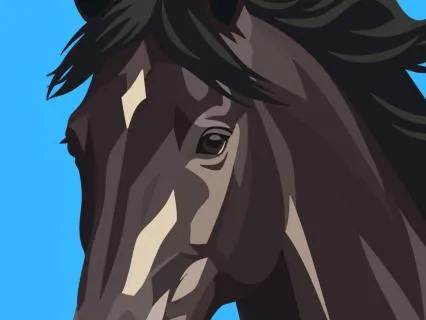
My coat had grown fine and soft and I was bright black.
I had one white foot and a pretty white star on my forehead.
I was thought very handsome.
My master would not sell me until I was four years old.
He said lads ought not to work like men and colts ought not to work like horses until they were quite grown up.
When I was four years old Squire Gordon came to look at me.
He examined my eyes,
My mouth and my legs.
He felt them all down and then I had to walk and trot and gallop before him.
He seemed to like me and said when he has been well broken in he will do very well.
My master said he would break me in himself as he should not like me to be frightened or hurt and he lost no time about it for the next day he began.
Everyone may not know what Breaking In is therefore I will describe it.
It means to teach a horse to wear a saddle and bridle and to carry on his back a man,
Woman or child.
To go just the way they wish and to go quietly.
Beside this he has to wear a collar,
A cropper and a breaching and to stand still while they are put on.
Then to have a cart or chaise fitted behind so he cannot walk or trot without dragging it after him and he must go fast or slow just as his driver wishes.
He must never start at what he sees nor speak to other horses nor bite nor kick nor have any will of his own but always do his master's will even though he may be very tired or hungry.
But the worst of all is when his harness is once on he may neither jump for joy nor lie down for weariness.
So you see this Breaking In is a great thing.
I had of course long been used to a halter and a headstall and to be led about in the fields and lanes quietly but now I was to have a bit in a bridle.
My master gave me some oats as usual and after a good deal of coaxing he got the bit into my mouth and the bridle fixed but it was a nasty thing.
Those who have never had a bit in their mouths cannot think how bad it feels.
A great piece of cold hard steel as thick as a man's finger to be pushed into one's mouth between one's teeth and over one's tongue until the ends coming out at the corner of your mouth are held fast there by straps over your head under your throat round your nose and under your chin so that no way in the world can you get rid of the nasty hard thing.
It is very bad yes very bad at least I thought so but I knew my mother always wore one when she went out and all horses did when they were grown up and so what with a nice oats and what with my master's pats,
Kind words and gentle ways I got to wear my bit and bridle.
Next came the saddle but that was not half so bad.
My master put it on my back very gently while old Daniel held my head.
He then made the girth fast under my body patting and talking to me all the time and I had a few oats and a little eating about and this he did every day until I began to look round for the oats in the saddle.
At length one morning my master got on my back and rode me round the meadow on the soft grass.
It certainly did feel queer but I must say I felt rather proud to carry my master and as he continued to ride me a little every day I soon became a custom to it.
The next unpleasant business was putting on the iron shoes.
That too was very hard at first.
My master went with me to the Smiths Forge to see I was not hurt or got any fright.
The blacksmith took my feet in his hand one after the other and cut away some of the hoof.
That did not pain me so I stood on three legs until he had done them all.
Then he took a piece of iron the shape of my foot and clapped it on and drove some nails through the shoe quite into my hoof so that the shoe was firmly on.
My feet felt very stiff and heavy but in time I got used to it and now having got so far my fast went on to break me to harness.
There were more new things to wear.
First a stiff heavy collar just on my neck and a bridle with great side pieces against my eyes called blinkers and blinkers indeed they were for I could not see on either side but only straight in front of me.
Next there was a small saddle with a nasty stiff strap that went under my tail that was the cropper.
I hated the cropper.
To have my long tail doubled up and poke through that strap was almost as bad as the bit.
I never felt more like kicking but of course I could not kick such a good master and so in time I got used to everything and could do my work as well as my mother.
I must not forget to mention one part of my training which I have always considered a very great advantage.
My master sent me for a fortnight to a neighbouring farmers who had a meadow which was skirted on one side by the railway.
Here was some sheep and cows and I was turned in among them.
I shall never forget the first train that ran by.
I was feeding quietly near the pails which separated the meadow from the railway when I heard a strange sound at a distance and before I knew whence it came with a rush and a clatter and a puffing out of smoke a long black train of something flew by and was almost gone before I could draw my breath.
I turned and galloped to the further side of the meadow as fast as I could go and there I stood snorting with astonishment and fear.
In the course of the day many other trains went by,
Some more slowly.
These drew up at the station and some made an awful shriek and groan before they stopped.
I thought it very dreadful but the cows went on eating and hardly raised their heads as the black frightful thing came puffing and grinding past.
For the first few days I could not feed in peace but as I found this terrible creature never came into the field or did me any harm I began to disregard it and very soon I cared as little about the passing of a train as the cows and sheep did.
My master often drove me in double harness with my mother because she was steady and could teach me how to go better than a strange horse.
She told me the better I behaved the better I should be treated and that it was wisest always to do my best to please my master.
But,
Said she,
There are great many kinds of men.
There are good thoughtful men like our master that any horse might be proud to serve and there are bad cruel men who never ought to have a horse or dog to call their own.
Besides there are a great many foolish men who never trouble themselves to think and these spoil more horses than just for want of sense.
They don't mean it but they do it for all that.
I hope you will fall into good hands but a horse never knows who may buy him or who may drive him.
It is a chance for all of us but still I say do your best wherever you go and keep up your good name.
Chapter 4.
Birtwick Park.
At this time I used to stand in the stable and my coat was brushed every day till it shone like a rook's wing.
It was early in May when there came a man from Squire Gordon's who took me away to the hall.
My master said goodbye Darkie,
Be a good horse and always do your best.
I could not say goodbye so I put my nose into his hand and he patted me kindly and then I left my first home.
As I lived some years with Squire Gordon I may as well tell something about his place.
Squire Gordon's park skirted the village of Birtwick.
It was entered by a large iron gate at which stood the first lodge and then you trotted along on a smooth road between clumps of large old trees then another lodge and another gate which brought you to the house and the gardens.
Beyond this lay the home paddock,
The old orchard and the stables.
There was accommodation for many horses and carriages but I need only describe the stable into which I was taken.
This was very roomy with four good stalls,
A large swinging window opened into the yard that made it pleasant and airy.
The first stall was a large square one shutting behind with a wooden gate.
The others were common stalls,
Good stalls but not nearly so large.
It had a low rack for hay and a low manger for the corn and it was called a loose box because the horse that was put into it was not tied up but left loose to do as he liked.
It is a great thing to have a loose box.
Into this fine box the groom put me.
It was clean,
Sweet and airy.
I never was in a better box than that and the sides were not so high but that I could see all that went on through the iron rails at the top.
He gave me some very nice oats,
He patted me,
He spoke kindly and then he went away.
When I had eaten my corn I looked around.
In the stall next to mine stood a great fat little pony with a thick mane and a tail and a very pretty head and a perked little nose.
I put my head up to the iron rails at the top of my box and said,
How do you do?
What's your name?
He turned around as fast as his halter would allow,
Held up his head and said,
My name's Merrylegs.
I am very handsome.
I carry the young ladies on my back and sometimes I take our mistress out in the low chair.
They think a great deal of me and so does James.
Are you going to live next door to me in the box then?
Yes,
I said.
Well then,
He said,
I hope you're good tempered.
I don't like anyone next door who bites.
Just then a horse's head looked over from the stall beyond.
Its ears were laid back and its eye looked rather ill-tempered.
This was a tall chestnut mare with a long handsome neck.
She looked across to me and said,
So it's you that's turned me out of my box,
Is it?
It's a very strange thing for a colt like you to come in and turn a lady out of her own home.
I beg your pardon,
I said.
I've turned no one out.
The man who brought me here and I had nothing to do with it.
And as to my being a colt,
I'm turned four years old and I'm a grown-up horse.
I never had words yet with horse or mare and it's my wish to live in peace.
Well,
She said,
We shall see.
Of course,
I do not wish to have words with a young thing like you.
I said no more.
And in the afternoon when she went out,
Mary Leggs told me all about it.
The thing is,
He said,
Ginger has a bad habit of biting and snapping.
That's why they called her Ginger.
When she was in the loose box,
She used to snap very much.
One day she bit James in the arm and made it bleed.
So Miss Flora and Miss Jessie,
Who were very fond of me,
Were afraid.
They didn't want to come into the stable.
They used to bring me nice things to eat,
An apple or a carrot or a piece of bread.
But after Ginger stood in that box,
They dared not come and I missed them so much.
I hope they will come again now,
If you do not bite or snap.
I told Mary Leggs I never bit anything but grass,
Hay and corn and could not think what pleasure Ginger found it.
I don't think she does find pleasure,
Said Mary Leggs.
It's just a bad habit.
She said no one was ever kind to her and why should she not bite?
Of course it is a very bad habit.
I'm sure if all she says was true,
She must have been very ill used before she came here.
John does all he can to please her and James does all he can to.
Our master never uses a whip if a horse acts right,
So I think she might be good tempered here.
You see,
Said Mary Leggs with a wise look,
I'm 12 years old and I know a great deal and I can tell you there's not a better place for a horse all around the country than here.
John is the best groom that ever was.
He's been here 14 years and you never saw such a kind boy as James is so that it must be all Ginger's own fault that she did not stay in that box.
Chapter 5.
A Fair Start The name of the coachman was John Manley.
He had a wife and one little child and they lived in the coachman's cottage very near the stables.
The next morning he took me into the yard and gave me a good grooming and just as I was going into my box with my coat soft and bright,
The squire came in to look at me and seemed pleased.
John,
He said,
I meant to have tried the new horse this morning but I've other business.
You may as well take him around after breakfast.
Go by the common in the highwood and back by the watermill in the river.
That will show his paces.
I will sir,
Said John.
After breakfast,
He came and fitted me with a bridle.
He was very particular in letting out and taking in the straps to fit my head comfortably.
Then he brought a saddle but it was not broad enough for my back.
He saw it in a minute and went for another one which fitted nicely.
He rode me first slowly,
Then a trot,
Then a canter and when we were on the common,
He gave me a light touch with his whip and we had a splendid gallop.
Ho ho,
My boy,
He said as he pulled me up.
You'd like to follow the hounds,
I think.
As we came back through the park,
We met the squire and Mrs.
Gordon walking.
They stopped and John jumped off.
Well,
John,
How does he go?
First rate,
Sir,
Answered John.
He's as fleet as a deer and he's a fine spirit too,
But the lightest touch of the rain will guide him.
Down at the end of the common,
We met one of those travelling carts hung all over with baskets,
Rugs and such like.
You know sir,
Many horses don't pass those carts quietly.
He just took a good look at it and went on and quiet as pleasant as could be.
They were shooting rabbits near the eyewood and a gun went off close.
He pulled up a little and looked,
But he didn't stir or step to the right or the left.
I just held the reins steady and I didn't hurry him and it's my opinion he's not been frightened or ill-used when he was young.
That's well,
Said the squire.
I'll try him myself tomorrow.
The next day,
I was brought up for my master.
I remembered my mother's counsel and my good old masters and I tried to do exactly what he wanted me to do.
I found he was a very good rider and thoughtful for his horse too.
When he came home,
The lady was at the hall door as he rode up.
Well my dear,
She said,
How do you like him?
He's exactly what John said,
He replied,
A pleasanter creature I never wished him out.
What shall we call him?
Would you like Ebony,
Said she.
He's as black as Ebony.
No,
Not Ebony.
Will you call him Blackbird,
Like your uncle's old horse?
No,
He's far handsomer than old Blackbird ever was.
Yes,
She said,
He really is quite a beauty.
He has such a sweet good-tempered face and such a fine intelligent eye.
What about calling him Black Beauty?
Black Beauty.
Yes,
I think that's a very good name.
If you like it,
It shall be his name.
And so it was.
When John went into the stable,
He told James that master and mistress had chosen a good sensible name and that meant something.
An English name,
Not like Marengo or Pegasus or Abdullah.
They both laughed and James said,
If it was not for bringing back the past,
I should have named him Rob Roy,
For I never saw two horses more alike.
That's no wonder,
Said John.
Did you know Farmer Grey's old duchess was the mother of En Blouffe?
I had never heard that before.
So poor old Rob Roy was killed at the hunt and that was my brother.
I did not wonder that my mother was so troubled.
It seems that horses have no relations.
At least they never know each other after they're sold.
John seemed very proud of me.
He'd make my mane and tail seem very soft and clean.
When he cleaned me,
He knew the tender places and the ticklish places and when he brushed my head,
He went as carefully over my eyes as if they were his own.
He never stirred up any ill temper.
James Howard,
The stable boy,
Was just as gentle and pleasant in his way,
So I thought myself well off.
There was another man who helped in the yard,
But he had very little to do with Ginger and me.
After a few days,
I had to go out with Ginger in the carriage.
I wonder how we should get on together,
But except laying her ears back when I was led up to her,
She behaved very well.
She did her work honestly and did her full share,
And I never wished to have a better partner in double harness.
When we came to a hill,
Instead of slackening her pace,
She would throw her weight right into the collar and pull away straight up.
We both had the same sort of courage at our work,
And John had oftener to hold us in than to urge us forward.
He never had to use the whip with either of us.
Then our paces were much the same,
And I found it easy to keep step with her when trotting,
Which made it pleasant.
After we'd been out two or three times together,
We grew friendly and sociable,
Which made me feel very much at home.
As for Merrylegs,
He and I soon became great friends.
He was such a cheerful,
Plucky,
Good tempered little fellow.
He was a favourite with everyone,
Especially with Miss Jessie and Flora,
Who used to ride him about in the orchard and have fine games with him and their little dog Frisky.
Our master had two other horses that stood in another stable.
One was called Justice,
A Roan Cob,
And he was used for riding or for the luggage cart.
And the other was an old brown hunter named Sir Oliver.
He was past work now,
But he was a great favourite with the master,
Who gave him the run of the park.
He sometimes did a little bit of horseback riding,
Liked carting on the estate,
Or carried one of the young ladies when they went out with their father.
He was very gentle and could be trusted with a child as well as Merrylegs.
The Cob was a strong,
Well-made,
Good tempered horse,
And we sometimes had a little chat in the paddock.
But of course,
I could not be so intimate with him as I was with Ginger,
Who stood in the same stable.
Chapter Six Liberty I was quite happy in my new place,
And if there was one thing that I missed,
It must not be thought I was discontented.
All who had to do with me were good,
And I had a light,
Airy stable and the best of food.
What more could I want?
Why,
Liberty!
For three years and a half of my life,
I had had all the liberty I could wish for.
But now,
Week after week,
Month after month,
And no doubt year after year,
I must stand up in a stable night and day,
Except when I am wanted.
And then I must be just as steady and quiet as any old horse who has worked twenty years.
Straps here,
And straps there,
A bit in my mouth and blinkers over my eyes.
Now I am not complaining,
For I know it must be so.
I only mean to say that for a young horse full of strength and spirits,
Who has been used to some large field or plain where he can fling up his head and toss his tail and gallop away at full speed,
Then round and back again with a snort to his companions,
I say it is hard never to have a bit more liberty to do as you like.
Sometimes,
When I have had less exercise than usual,
I felt so full of life and spring.
When John's taken me out to exercise,
I really could not keep quiet.
Do what I would,
It seemed as if I must jump or dance or prance,
And many a good shake I know I must have given him,
Especially at the first.
But he was always good and patient.
Steady,
Steady,
My boy,
He would say,
Wait a bit,
We'll have a good swing and soon get the tickle out of your feet.
Then as soon as we were out of the village,
He would give me a few miles and a spanking trot,
And then bring me back as fresh as before,
Only clear of the fidgets,
As he called them.
Sprinted horses,
When not enough exercised,
Are often called skittish,
When it is only play.
Some grooms will punish them,
But our John did not,
He knew it was only high spirits.
Still he had his own ways of making me understand by the tone of his voice,
Or the touch of the rein.
If he was very serious and determined,
I always knew it by his voice,
And that had more power with me than anything else,
For I was very fond of him.
I ought to say that sometimes we had our liberty for a few hours.
This used to be on fine Sundays in the summertime.
The carriage never went out on Sundays,
Because the church was not far off.
It was a great treat to us to be turned out into the home paddock,
Or the old orchard.
The grass was so cool and soft to our feet,
The air was so sweet,
And the freedom to do as we liked was so pleasant,
To gallop,
Lie down and roll over on our backs,
Or to nibble the sweet grass.
Then it was a very good time for talking,
As we stood together under the shade of the large chestnut tree.
Chapter 7 Ginger One day,
When Ginger and I were standing alone in the shade,
We had a great deal of talk.
She wanted to know all about my bringing up and breaking in,
So I told her.
"'Well,
' said she,
"'if I had had your bringing up,
I might have had as good a temper as you,
But now I don't believe I ever shall.
' "'Why not?
' I said.
"'Because it's been so different with me,
' she replied.
"'I never had anyone,
Horse or man,
That was kind to me,
Or that I cared to please,
For in the first place I was taken from my mother as soon as I was weaned,
And put with a lot of other young colts.
None of them cared for me,
And I cared for none of them.
There was no kind master like yours to look after me,
And talk to me,
And bring me nice things to eat.
The man that had the care of us never gave me a kind word in my life.
I do not mean that he ill use me,
But he did not care for us one bit further than to see we had plenty to eat and shelter in the winter.
A footpath ran through our field.
Very often the great boys passing would fling stones to make us gallop.
I was never hit,
But one fine young colt was badly cut in the face.
I should think it would be a scar for life.
We did not care for those boys,
But of course it made us more wild,
And we settled it in our minds that they were our enemies.
We had very good fun in the free meadows,
Galloping up and down,
And chasing each other round and round the field,
Then standing still under the shade of the trees.
But when it came to breaking in,
That was a bad time.
Several men came to catch me,
And when at last they closed me in one corner of the field,
One caught me by the forelock,
Another caught me by the nose,
And held it so tight I could hardly draw my breath.
Then another took my under jaw in his hard hand and wrenched my mouth open,
And by force they got on the halter and the bar.
Then one dragged me along by the halter,
Flogging behind another one,
And this was the first experience I had of men's kindness.
It was all false.
They did not give me a chance to know what they wanted.
I was high bred,
And had a great deal of spirit,
And was very wild,
They said.
I gave them,
I dare say,
Plenty of trouble,
But it was dreadful to be set up in a stall all day instead of having my liberty,
And I fretted and pined and wanted to get loose.
You know yourself it's bad enough when you have a kind master and plenty of coaxing,
But there was nothing of that sort for me.
There was one,
She went on,
The old master Mr.
Ryder.
I think he could soon have brought me round and could have done anything with me,
But had he given up all the hard part of the trade to his son and another experienced man,
That he only came at times to oversee.
His son was a strong,
Tall,
Bold man,
And they called him Samson.
He used to boast he'd never found a horse that could throw him.
There was no gentleness in him as there was in his father,
But only hardness.
A hard voice and a hard eye and a hard hand.
I felt from the first all that he wanted was to wear all the spirit out of me and make me into quite humble,
Obedient piece of horse flesh.
Yes,
That is all that he thought about.
Then Ginger stamped her foot as if the very thought of him made her angry.
If I did not do exactly what he wanted,
She continued,
He would get put out and make me run around with the long reign in the training field till he tired me out.
One afternoon after a terrible struggle,
I threw him off backward after a flogging.
I heard him fall heavily on the turf,
And without looking behind me I galloped off to the other end of the field,
And there I turned round and saw my persecutor slowly rising from the ground and going into the stable.
I stood under an oak tree and watched,
But no one came to catch me.
The time went on and the sun was very hot.
The fly swarmed round me and settled on my flanks where the spurs had dug in,
And I felt very hungry for I'd not eaten since the morning.
Then the sun got low and I saw the other colts led in and knew they were having a good feed.
But at last,
Just as the sun went down,
I saw my old master come out.
Come along lassie,
He called me,
Come along,
And I stood still and let him come up and he held out some oats to me and I began to eat without fear.
His voice always took all my fear away.
He growled something about the young man being a vicious brute and said he hadn't learned his trade yet.
Then he led me into my box,
Took off my saddle and bridle with his own hands,
Tied me up and called for a pail of water and a sponge,
And while the stable man held the pail,
He sponged my sides a good while,
So tenderly I knew he knew how sore and bruised they were.
After that,
He often came to see me,
And when my mouth at last was healed,
The other break a job,
They called him,
He went on training me instead.
He was far more steady and very thoughtful and I soon learned exactly what to do.
Chapter Eight Ginger's story continued.
The next time that Ginger and I were together in the paddock,
She told me about her first place.
After my breaking in,
She said,
I was brought by a dealer to match another chestnut horse.
For some weeks he drove us together,
Then we were sold to a fashionable gentleman and were sent up to London.
I had been driven with a check rein by the dealer and I hated it worse than anything else,
But in this place we were reined far tighter.
The coachman is master thinking we look more stylish like that.
We were often driven about in the park and other fashionable places.
You who never had a check rein on don't know what it is,
But I can tell you it's dreadful.
I like to toss my head about and hold it as high as any horse,
But fancy now yourself if you tossed your head up high and were obliged to hold it there,
And that for hours together not able to move it at all except with the jerk still higher,
Your neck aching till you did not know how to bear it.
Besides that to have two bits instead of one,
And mine was a sharp one,
It hurt my tongue and my jaw,
And the blood from my tongue coloured the froth that kept flying from my lips as I chafed and fretted at the bits of rain.
It was worse when we had to stand by the hour waiting for our mistress at some grand party or entertainment.
If I fretted or stamped with impatience,
The whip was laid on,
It was enough to drive one mad.
Did not your master take any thought for you?
I asked.
No,
Said she,
He only cared to have a stylish turnout as they called it.
I think he knew very little about horses.
He left that to his coachman who told him I had an irritable temper,
That I'd not been well broken into the check rein but I'll soon get used to it,
He said.
He was not the man to do it of course,
But when I was in the stable miserable and angry,
Instead of being smoothed and quieted by kindness,
I got only a surly word.
If he'd have been civil I would have tried to bear it.
I was willing to work and ready to work hard too,
But to be tormented for nothing but his fancy angered me.
What right has he made to make me suffer like that?
Besides the soreness in my mouth and the pain in my neck,
I didn't know if I'd stopped there long enough it would have spoiled my breathing.
I grew more and more restless and irritable then,
I couldn't help it.
I began to snap and kick when anyone came to harness me.
One day,
Just as they buckled us into the carriage and were straining my head up with that rain,
I began to plunge and kick with all my might.
I soon broke a lot of harness and kicked myself clear,
So that was the end of that place.
After this,
I was sent to Tattersall to be sold.
Of course,
I couldn't be warranted free from vice,
So nothing was said about that.
My handsome appearance and good paces soon brought me to a gentleman.
He bid for me and then I was bought by another dealer.
He tried me in all sorts of ways and with different bits.
He soon found out what I couldn't bear.
At last,
He drove me quite without a check rain and sold me as a perfectly quiet horse to a gentleman in the country.
He was such a good master and I was getting on very well.
But then his old room left and a new one came.
That man was as hard-tempered and hard-headed as Samson.
He always spoke in a rough,
Impatient voice and if I didn't move in the stall the moment he wanted me to,
He'd hit me above the cocks with his table broom or the fork.
Everything he did was rough.
I began to hate him.
He wanted to make me afraid of him,
But I was too high-mettled for that.
One day when he'd have grated me more than usual,
I bit him.
That of course put him in a great rage and after that he never dared to come into my stall again.
Either my heels or my teeth were ready for him of course and he knew it.
I was quite quiet with my master,
But of course he listened to what this man said and because of that I was sold again.
It just so happened that same dealer from before had heard of me and said he thought he knew another place I'd do well.
It was a pity,
He said,
Such a fine horse should go to the bad for want of a real good chance.
So the end of it was that I came here not long before you did.
Of course then I'd made up my mind men were my natural enemies and I must defend myself.
It is very different here,
But who knows how long it will last.
I wish I could think about things as you do,
But I can't,
After all I've gone through.
I thought carefully about what Ginger said,
Then I replied,
I think it would be a real shame if you were to bite or kick John or James.
I don't mean to,
Said Ginger,
Well they're good to me.
I did bite James once pretty sharp,
But John said try her with kindness and then instead of punishing me as I expected he would,
James came to me with his arm bound up and brought me brand mash and he actually stroked me.
I've never snapped at him since and I won't either.
I was sorry for Ginger,
But of course I knew very little then and I thought most likely she had made the worst of it.
However,
As the weeks went on I found she grew much more gentle and cheerful and had lost the watchful defiant look that she used to turn on any strange person who came near her.
One day James said,
I do believe that mare's getting fond of me.
She quite whinnied after me this morning when I'd been rubbing her forehead.
Aye,
Aye,
Jim,
John replied,
Tis the Birkwick Bulls,
She'll be as good as back beauty by and by,
Kindness is all the physics she wants,
Poor thing.
Master noticed the change too and one day when he got out of the carriage and came to speak to us as he often did,
He stroked Ginger's beautiful neck.
Well,
My pretty one,
Well,
How do things go with you now?
He said,
You're a good bit happier than when you came to us first,
I think.
Ginger put her nose up to him in a friendly,
Trustful way and he rubbed it gently and smoothly.
We shall make a cure of her,
John,
He said,
And I felt very pleased about that.
Yes,
Sir,
She's wonderfully improved,
Said John laughing,
She's not the same creature as she was,
It's the Birkwick Bulls,
Sir,
Then he laughed out loud.
This was a little joke of John's.
He used to say that a regular course of the Birkwick Horse Bulls would cure almost any vicious horse.
These golden bulls,
He said,
Were made up of patience and gentleness,
Firmness and petting,
One pound of each to be mixed up with half a pint of common sense and given to the horse once every day.