Hello.
Welcome to Sleep Stories with Steph,
Your go-to romantic podcast that guarantees you a calm and entertaining transition into a great night's sleep.
Come with me as we immerse ourselves in a romantic journey to a time long since forgotten.
But before we begin,
Let's take a moment to focus on where we are now.
Take a deep breath in through your nose and let it out with a long sigh.
That's it.
Now close your eyes and feel yourself sink deeper into the support beneath you.
It is time to relax and fully let go.
There is nothing you need to be doing now and nowhere you need to go.
Happy listening.
Persuasion by Jane Austen Chapter 10 Continued At the end of the long walk,
Charles and Henrietta returned,
Bringing as may be conjectured bringing as may be conjectured Charles Hayter with them.
Anne could not be attempted to understand.
Even Captain Wentworth did not seem admitted to perfect confidence here,
But that there had been a withdrawing on the gentleman's side and a relenting on the lady's and that they were now very glad to be together again did not admit a doubt.
Henrietta looked a little ashamed but very well pleased.
Charles Hayter exceedingly happy and they were devoted to each other almost from the first instant of their all setting forward for Upper Cross.
Everything now marked out Louisa for Captain Wentworth.
Nothing could be plainer and where many divisions were necessary or even where they were not,
They walked side by side nearly as much as the other two.
In a long strip of meadow land where there was ample space for all,
They were thus divided,
Forming three distinct parties and to that party of the three which boasted least animation and least complacence,
Anne necessarily belonged.
She joined Charles and Mary and was tired enough to be very glad of Charles's other arm,
But Charles,
Though in very good humour with her,
Was out of temper with his wife.
Mary had shown her disobliging to him and was to now reap the consequence,
Which consequence was his dropping her arm almost every moment to cut off the heads of some nettles in the hedge with his switch and when Mary began to complain of it and lament her being ill-used according to custom in being on the hedge side,
While Anne was never incommoded on the other,
He dropped the arms of both to hunt after a weasel which he had a momentary glance of and they could hardly get him along at all.
This long meadow bordered a lane which their footpath at the end of it was to cross and when the party had all reached the gate of exit,
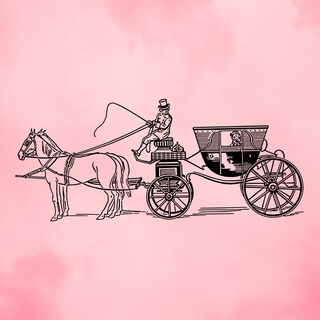
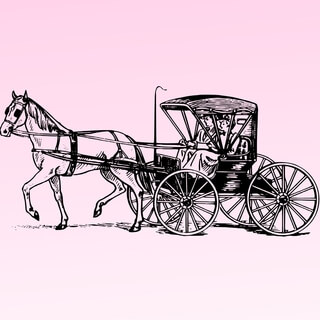
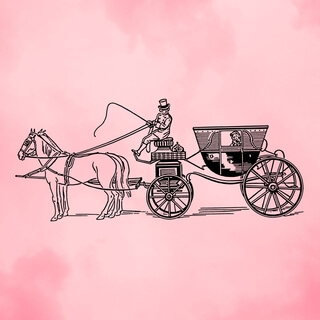
The carriage advancing in the same direction which had been some time heard,
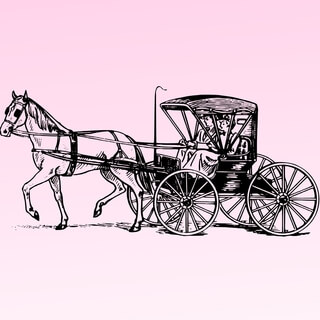
Was just coming up and proved to be Admiral Croft's gig.
He and his wife had taken their intended drive and were returning home.
Upon hearing how long a walk the young people had engaged in,
They kindly offered a seat to any lady who might be particularly tired.
It would save her a full mile and they were going through Uppercross.
The invitation was general and generally declined.
The Miss Musgroves were not at all tired and Mary was either offended by not being asked before any of the others or what Louisa called the Elliot pride could not endure to make a third in a one-horse chaise.
The walking party had crossed the lane and were surmounting an opposite style and the Admiral was putting his horse in motion again when Captain Wentworth cleared the hedge in a moment to say something to his sister.
There's something might be guessed by its effects.
Miss Elliot,
I'm sure you're tired,
Cried Mrs Croft.
Do let us have the pleasure of taking you home.
Here is excellent room for three,
I assure you.
If we were all like you,
I believe we might sit four.
You must,
Indeed you must.
Anne was still in the lane and though instinctively beginning to decline,
She was not allowed to proceed.
The Admiral's kind urgency came in support of his wife's.
They would not be refused.
They compressed themselves into the smallest possible space to leave her a corner and Captain Wentworth,
Without saying a word,
Turned to her and quietly obliged her to be assisted into the carriage.
Yes,
He had done it.
She was in the carriage and felt that he had placed her there,
That his will and his hands had done it,
That she owed it to his perception of her fatigue and his resolution to give her rest.
She was very much affected by the view of his disposition towards her,
Which all these things made apparent.
This little circumstance seen the completion of all that had gone before.
She understood him.
He could not forgive her,
But he could not be unfeeling.
Though condemning her for the past and considering it with high and unjust resentment,
Though perfectly careless of her and though becoming attached to another,
Still he could not see her suffer without the desire of giving her relief.
It was a remainder of former sentiment.
It was an impulsive,
A pure,
Though unacknowledged friendship.
It was a proof of his own warm and amiable heart,
Which she could not contemplate without emotion so compounded of pleasure and pain that she knew not which prevailed.
Her answers to the kindness and the remarks of her companions were at first unconsciously given.
They had travelled half their way along the rough lane before she was quite awake to what they said.
She then found them talking of Frederick.
He certainly means to have one or other of those two girls,
Sophie,
Said the Admiral,
But there's no saying which.
He's been running after them too long enough,
One would think,
To make up his mind.
Ay,
This comes of the peace.
If it were war now,
He would have settled it long ago.
We sailors,
Miss Elliot,
Cannot afford to make long courtships in time of war.
How many days was it,
My dear,
Between the first time of my seeing you and our sitting together in our lodgings at North Yarmouth?
We had better not talk about it,
My dear,
Replied Mrs Croft pleasantly,
For if Miss Elliot were to hear how soon we'd come to an understanding,
She would never be persuaded we could be happy together.
I had known you by character,
However,
Long before.
Well,
And I had heard of you as a very pretty girl,
And what were we to wait for besides?
I do not like having such things so long in hand.
I wish Frederick would spread a little more canvas and bring us home one of those young ladies to Kellynch.
Then there would always be company for them,
And very nice young ladies they both are,
I hardly know one from the other.
Very good-humoured,
Unaffected girls indeed,
Said Mrs Croft,
In a tone of calmer praise,
Such as made Anne suspect her keener powers might not consider either of them as quite worthy of her brother.
And a very respectable family,
One could not be connected with better people.
My dear Admiral,
That post,
We shall certainly take that post.
But by coolly giving the reins a better direction herself,
They passed the danger,
And once more,
Judiciously putting out her hand,
They neither fell into a rut nor ran foul of a dung-cart.
And Anne,
With some amusement at their style of driving,
Which she imagined no bad representation of the general guidance of their affairs,
Found herself safely deposited by then at the cottage.
Chapter 11 The time now approached for Lady Russell's return.
The day was even fixed,
And Anne,
Being engaged to join her as soon as she was resettled,
Was looking forward to an early removal to Kellynch,
And beginning to think how her own comfort was likely to be affected by it.
It would place her in the same village with Captain Wentworth.
Within half a mile of him,
They would have to frequent the same church,
And there must be intercourse between the two families.
This was against her,
But on the other hand he spent so much of his time at Uppercross,
That in removing fence,
She might be considered rather as leaving him behind than as going towards him,
And upon the whole she believed she must,
On this interesting question,
Be the gainer,
Almost as certainly as in her change of domestic society in leaving poor Mary for Lady Russell.
She wished it might be possible for her to avoid ever seeing Captain Wentworth at the hall.
Those rooms had witnessed former meetings which would be brought too painfully before her,
But she was yet more anxious for the possibility of Lady Russell and Captain Wentworth never meeting anywhere.
They did not like each other,
And no renewal of acquaintance now could do any good,
And were Lady Russell to see them together,
She might think that he had too much self-possession,
And she too little.
These points formed her chief solicitude in anticipating her removal from Uppercross,
Where she felt she had been sanctioned quite long enough.
Her usefulness to little Charles would always give some sweetness to the memory of her two months visit there,
But he was gaining strength apace,
And she had nothing else to stay for.
The conclusion of her visit,
However,
Was diversified in such a way which she had not at all imagined.
Captain Wentworth,
After being unseen and unheard of at Uppercross for two whole days,
Appeared again among them to justify himself by a relation of what had kept him away.
A letter from his friend Captain Harville,
Having found him out at last,
Had brought intelligence of Captain Harville's being settled with his family at Lyme for the winter,
Of their being,
Therefore,
Quite unknowingly within twenty miles of each other.
Captain Harville had never been in good health since a severe wound which he had received two years before,
And Captain Wentworth's anxiety to see him had determined him to go immediately.
He had been there for four and twenty hours.
His acquittal was complete,
His friendship warmly honoured,
A lively interest excited for his friend,
And his description of the fine country about Lyme so feelingly attended to by the party that an earnest desire to see Lyme themselves,
And a project for going thither,
Was the consequence.
The young people were all wild to see Lyme.
Captain Wentworth talked of going there again himself.
It was only seventeen miles from Uppercross,
Though November the weather was by no means bad,
And in short Louisa,
Who was the most eager of the eager,
Having formed the resolution to go,
And besides the pleasure of doing as she liked,
Being now armed with the idea of merit in maintaining her own way,
Bore down all the wishes of her father and mother for putting it off till summer,
And to Lyme they were to go,
Charles,
Mary,
Anne,
Henrietta,
Louisa,
And Captain Wentworth.
The first heedless scheme had been to go in the morning and return at night,
But to this Mr.
Musgrove,
For the sake of his horses,
Would not consent,
And when it came to be rationally considered,
A day in the middle of November would not leave much time for seeing a new place after deducting seven hours,
As the nature of the country required for going and returning.
They were consequently to stay the night there,
And not to be expected back till the next day's dinner.
This was felt to be a considerable amendment,
And though they all met at the Great House at rather an early breakfast hour,
And set off very punctually,
It was so much past noon before the two carriages,
Mr.
Musgrove's coach containing the four ladies,
And Charles's caracal in which he drove,
Captain Wentworth,
Were descending the long hill into Lyme,
And entering upon the still steeper street of the town itself,
That it was very evident they would not have more than time for looking about them,
Before the light and warmth of the day were gone.
After securing accommodations and ordering a dinner at one of the inns,
The next thing to be done was unquestionably to walk directly down to the sea.
They would come too late in the year for any amusement or variety which Lyme as a public place might offer.
The rooms were shut up,
The lodges almost all gone,
Scarcely any family but of the residents left,
And as there is nothing to admire in the buildings themselves,
The remarkable situation of the town,
The principal straight amongst hurrying into the water,
The walk to the cob,
Scurrying round the pleasant little bay,
Which in the season is animated with bathing machines and company,
The cob itself,
Its old wonders and new improvements,
With a very beautiful line of cliffs stretching out to the east of the town,
Are what the strangers eye will seek.
And a very strange stranger it must be,
Who does not see charms in the immediate environs of Lyme,
To make him wish to know it better.
The scenes in its neighbourhood,
Chalmouth,
With its high grounds and extensive sweeps of country,
Are still more its sweet retired bay backed by dark cliffs,
Where fragments of low rock among the sands make it the happiest spot for watching the flow of the tide,
For sitting in unwearied contemplation,
The woody varieties of the cheerful village of up Lyme,
And above all pinny with its great chasms between romantic rocks,
Where the scattered forest trees and orchards of luxuriant growth declare that many a generation must have passed away since the first partial falling of the cliff prepared the ground for such a state,
Where a scene so wonderful and so lovely is exhibited as may more than equal any of the resembling scenes of the far-famed Isle of Wight.
These places must be visited,
And visited again,
To make the worth of Lyme understood.
The party from Uppercross passing down by the now deserted and melancholy looking rooms,
And still descending,
Soon found themselves on the sea shore,
And lingering only,
As all must linger and gaze on the first return to the sea,
Whoever deserved to look on it at all,
Proceeded towards the cob,
Equally their object in itself and on Captain Wentworth's account,
For in a small house near the foot of an old pier of unknown date,
Were the Harvilles settled.
Captain Wentworth turned in to call on his friend,
And the others walked on.
He would join them on the cob.
They were by no means tired of wandering and admiring,
And not even Louisa seemed to feel they had parted with Captain Wentworth long,
When they saw him coming after them with three companions,
All well known already by description,
To be Captain and Mrs.
Harville,
And a Captain Benwick,
Who was staying with them.
Captain Benwick had some time ago been the first lieutenant of the Laconia,
And the account which Captain Wentworth had given of him on his return from Lyme before,
His warm praise of him as an excellent young man and officer,
Whom he had always valued highly,
Must have stamped him well in the esteem of every listener,
Had been followed by a little history of his private life,
Which rendered him perfectly interesting in the eyes of all the ladies.
He had been engaged to Captain Harville's sister,
And was now mourning her loss.
They had been a year or two waiting for fortune and promotion.
Fortune came,
His prize money as lieutenant being great.
Promotion too came at last,
But Fanny Harville did not live to know it.
She had died the preceding summer while he was at sea.
Captain Wentworth believed it impossible for man to be more attached to woman than poor Benwick had been to Fanny Harville,
Or to be more deeply afflicted under the dreadful change.
He considered his disposition as of the sort which must suffer heavily,
Uniting very strong feelings with quiet,
Serious and retiring manners,
And a decided taste for reading and sedentary pursuits.
To finish the interest of the story,
The friendship between him and the Harvilles seemed,
If possible,
Augmented by the event which closed all their views of alliance,
And Captain Benwick was now living with them entirely.
Captain Harville had taken his present house for half a year,
His taste and his health and his fortune,
All directing him to a residence inexpensive and by the sea.
And the grandeur of the country and the retirement of Lyme in the winter appeared exactly adapted to Captain Benwick's state of mind.
The sympathy and goodwill excited towards Captain Benwick was very great.
And yet,
Said Anne to herself,
As they now moved forward to meet the party,
He has not perhaps a more sorrowing heart than I have.
I cannot believe his prospects so blighted forever.
He is younger than I am,
Younger in feeling,
If not in fact younger as a man.
He will rally again and be happy with another.
They all met and were introduced.
Captain Harville was a tall,
Dark man with a sensible,
Benevolent countenance,
A little lame and from strong features and want of health,
Looking much older than Captain Wentworth.
Captain Benwick looked and was the youngest of the three and compared with either of them a little man.
He had a pleasing face and a melancholy air,
Just as he ought to have and drew back from conversation.
Captain Harville,
Though not equaling Captain Wentworth in manners,
Was a perfect gentleman,
Unaffected,
Warm and obliging.
Mrs Harville,
A degree less polished than her husband,
Seemed,
However,
To have the same good feelings and nothing could be more pleasant than their desire of considering the whole party as friends of their own,
Because the friends of Captain Wentworth were more kindly hospitable than their entreaties for all their promising to dine with them.
The dinner,
Already ordered at the inn,
Was at last,
Though unwillingly,
Accepted as an excuse,
But they seemed almost hurt that Captain Wentworth should have brought any party to line without considering it as a thing of course they should dine with them.
There was so much attachment to Captain Wentworth in all this and such a bewitching charm in a degree of hospitality so uncommon,
So unlike the usual style of give and take,
That Anne felt her spirits not likely to be benefited by an increasing acquaintance among his brother officers.
These would have been all my friends,
Was her thought,
And she had to struggle against a great tendency to loneliness.