Hi there,
This is Stephen.
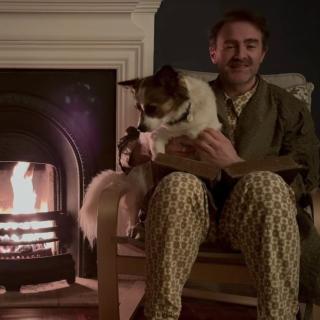
These days I like to tell my listeners that I'm a real human being.
Every single word you hear tonight was recorded by me,
Sitting in my studio,
With my dogs asleep at my feet.
This is my work and my art.
And with that,
Hello my friend,
Welcome to your sleep story.
My name is Stephen Dalton,
I'm an Irish storyteller,
And it's my great privilege to be the voice that you listen to as you go to sleep tonight.
Tonight's story is a story of redemption and kindness.
That's the story of a simple man.
Who thinks that his best days are behind him?
Until one day,
A mother and daughter walk into his duvet shop.
And his whole life.
Won't tell you anymore.
I'll let you enjoy it.
But first,
Let's do the relaxation session,
Which will take a few minutes,
Before tonight's sleep story.
I'm going to count down from ten to one,
And as I do,
Allow yourself to let go more and more.
Feel the support.
Of the bed beneath you.
Or is it fluid?
Or whatever you lie upon tonight.
And beneath what you lie upon.
Feel a deeper support.
The support of the earth.
Our home.
Our constant support.
As you become aware of that support.
See if you can.
Sink into this moment a little more now.
Just.
Let go.
A little more now.
You are safe.
Allow my voice.
To be an anchor of safety tonight.
To be a friend.
To be a gentle guide.
A guide that only ever brings you.
To safe places,
To warm and cozy places.
To places that enable and support your sleep.
Trust.
At my voice.
Is a friend tonight.
Feel into your body now.
Notice where you might still be holding tonight.
Notice.
Where you may have pain.
Or tingling.
Or tension.
Notice anything.
Maybe you feel something in your feet.
Or in your lower legs?
Resize.
Or your belly.
Your chest.
Shoulders.
Arms.
Hands.
Or maybe you're like me.
You hold tension in your face.
Just see if you can soften a little now.
This is a time bomb.
Deeper kindness to yourself.
And to your body.
Seven.
The day is.
Whatever has been.
Has been.
Whatever will be.
Will be.
But right now.
All you have.
Is this moment.
Your thoughts can't change what has gone before.
Your thoughts can't change.
What will come tomorrow.
Your brain.
Needs rest now.
So,
As thoughts come and go now Don't fight them.
Don't chase them away.
See them for what they are.
So much.
Then just.
.
.
Watch them go.
Like leaves.
Floating away.
On a moonlit river.
Or clouds passing through a starlit sky.
Six.
This is your moment.
This.
Is your time.
You have earned this moment of kindness to yourself.
You deserve.
To have peace in your life.
We all do.
So,
As you become aware of that fact,
As you come to the understanding.
That we all deserve peace.
See if you can settle into this moment.
A little more now.
Letting your body know.
That it's really time for rest.
Five.
Peace.
Lives within you.
It is a constant friend.
Waiting to be found.
Waiting to be felt.
Where does it live within you?
Maybe it's in your heart.
Maybe it's in your head.
It's up to you to find it.
But I promise you it's there.
Perhaps,
Allow a little gratitude now.
Gratitude.
For the simple things.
For your body.
The shelter you have tonight.
With the ones you love.
And who love you.
For the beauty and wonder of this world.
Of this planet.
That you can find.
When you look for it.
Three.
Begin to engage with your imagination now.
Begin to see.
The beautiful little village.
A cozy place.
Where every house has their fire lit.
And all the windows of a cozy glow behind them.
All except one.
The house of Mr.
Featherstone.
Checking in with your body one more time now.
Finding the places you are holding still.
And allowing yourself to give in.
To allow the tension to ease away.
Your body has worked hard for you today.
It's time.
To give it rest.
And one.
Completely letting go now.
As I tell you.
Tonight's sleep story.
It was raining in Musbury.
It had been raining in Musbury.
For as long as anyone could remember.
Which is why the roofs were steep.
And the gutters were white.
And every house had a fire going.
By seven in the morning.
Every house but one.
At number 9,
Lantern Hill.
Mr.
Horace Featherstone.
Stood in his kitchen.
And is over good.
And looked at the stove.
He looked at it for a long time.
Then he opened the course gutter.
Took out four pieces of coal.
Counted them again to be sure.
And put them in.
Four pieces was enough to boil a kettle.
5.
Would have been showing off.
He made one cup of tea.
With one spoon of leaves.
And drank it standing up.
So that he would not be tempted to get comfortable.
Mr.
Featherstone was 64 years old.
US tool.
And narrow.
This grey hair.
That lay flat on his head.
As if it had been told to.
And a long grey coat.
That had been a good code.
In 1998.
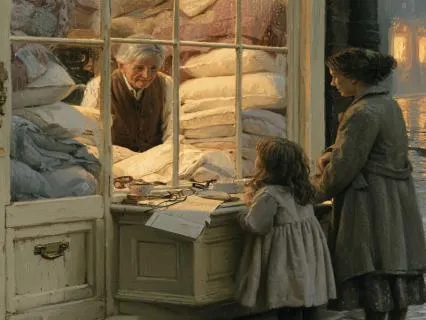
He owned a shop in the middle of town that sold duvets.
Which is a thing i will explain properly in a moment and he had earned it.
For 31 years.
There is a strange thing.
Mr.
Featherstone sold the warmest things in Musbury.
And he slept under the zenith.
His own duvet.
Was an old grey one he had taken off the display bed.
When it got a mark on it in 2009 Has it gone flash in the middle years ago?
He slept with his socks on.
And his coat.
Over the top of it.
And he told himself This was Thrift.
The good stock is for selling.
He said.
To nobody.
Most nights.
You don't eat the shop.
On the kitchen table there was an envelope.
It was addressed to Mr.
Gabriel Hook.
Who owned the building on Poppin Street,
Where the shop was.
And inside it was a letter.
That Mr Featherstone had written four times.
And torn up three.
The fourth one said.
In his small neat hand.
That he would be giving up the lease at the end of the month.
He put the envelope in the inside pocket of his coat.
Where it's at.
Flat and heavy.
He rinsed his cup.
He put the fire guard in front of the four pieces of coal.
Which were already going grey.
He took his umbrella from the hook.
Which was black.
And his keys from the dish which were cold.
And he went out into the rain the walk from Lantern Hill to Poppin Street.
It took 11 minutes if you did not stop.
And Mr.
Featherstone did not stop.
He went down Lantern Hill.
Past the houses with their windows lit yellow.
And their chimneys going.
He went past Mrs.
Bunting's bakery on the corner of Fuller Street.
Where the window was steamed from the ovens.
And a tray of round,
Brown loaves.
Was coming out just as he passed Mrs Bunting looked up And raised a flowery hand.
But Mr Featherstone looked at the couples.
He went past the teapot cafe.
Where Mr Sidney Murrow,
At the fire going.
And the first customers of the day.
We're already sitting close to it.
With their hands around their cups.
Mr Featherstone had not been inside the teapot since 2011.
When the price of a pot of tea had gone up for the third time.
He went past the bus shelter.
Where a poster was pasted up.
For Bedwell's discount warehouse.
Out on the edge of town.
Where the big stories were.
The poster showed a duvet in a plastic bag.
With a price on it.
That Mr.
Featherstone could not match.
If he gave the stuffing away.
Underneath it,
Said.
Everything for the bedroom under one roof.
Mr Featherstone had read this poster.
Every morning for two years.
You read it again now.
And his mouth went very thin.
And then he was at Pub and Street.
Which was narrow.
And couple.
And ran downhill.
Like the rain running down the middle of it.
And halfway along on the left.
There was a shop with a green front.
And gold letters over the door.
That's sad.
Other stones.
To vase.
Comforters.
I do dance.
Pillows.
Established 1951.
He unlocked the door and went in.
And stood for a moment in the dark.
Now I want you to see this shot.
Because it was a beautiful shop.
Even if its owner had stopped noticing It was long.
And narrow.
Tool.
With the shelves going right up to the ceiling on both sides.
And on every shelf there were duvets.
Folded square.
And wrapped in brown paper.
And tied with string.
With a small white card on each one.
Saying what it was.
Goose down.
Stuck down.
Feather and down.
Wall.
Hollow fiber for people with sneezes.
There were summer ones.
As light as a sigh.
And winter ones.
You could have lost a small dog in.
There was a letter on a brass rail.
Reaching the top shelves.
In the window there was a bed.
A real one.
Made up with a cream duvet and four pillows.
And it had stood there so long.
That the pigeon's on the roof opposite.
And probably given it a name.
In the middle of the shop.
There was a round black stove.
With a pipe going up through the ceiling.
And a worn,
Red-armed chair beside it.
That nobody was allowed to sit in.
Mr.
Featherstone hung up his coat.
He took the envelope out and looked at it.
And put it in the drawer under the counter.
He opened the stove.
And put in six pieces of coal.
Exactly six.
And lit them.
And waited until he was sure they would catch.
Then he turned the sign on the door from closed.
To open.
He went behind the counter.
And he waited.
And what is a duvet,
By the way?
Maybe you don't call it that where you come from.
I promised I would explain,
So I will.
A duvet is a soft,
Thick,
Quilted bag.
Filled with down or feathers.
Or wool or fiber.
That goes on top of a bed in place of blankets.
In some places people call it a comforter.
Another as it is a duvet.
If you call it a comforter.
You are right.
If you call it a duvet.
You are also right.
Mr Featherstone called it a duvet.
So,
For tonight.
We will too.
A tomb in Ireland.
When they first arrived in the 1970s.
My grandmother called them continental quilts.
And would not have one in the house for years.
Because she did not trust a bed with only one layer on it.
She came round in the end.
The whole idea of a duvet is this.
One thing.
Does the work of five.
You do not tug it.
You do not fold it down.
You get under it and it settles over you.
And finds your shape.
And keeps your own warmth.
Close to you all night.
And in the morning you shake it once.
And the bed is made.
Mr.
Featherstone could tell you the weight of a duvet.
By lifting one corner.
He could tell Goose from Duck with his eyes shut.
He knew that the warmth of a duvet was measured in something called a tog.
And that a four-and-a-half talk was for July.
And that a ten and a half tog was for most of the year.
And a thirteen and a half was for a house on a hill.
The wind got in under the door.
He knew that a good duvet properly cared for.
Would last twenty years.
And that nobody at Bedwell's would tell you that.
Because they wanted you back in too.
He knew everything about duvets.
Accept.
The one thing that mattered.
Which was what they were for.
He thought.
They were first selling.
Nobody came in before ten.
At 10 past.
A man came in with his collar up.
And stood just inside the door,
Dripping.
He was a round pink man.
With a round,
Pink face.
And his name was Mr.
Pettigrew.
And he was Luz.
I'm looking for the library.
Be set.
This is a duvet shop.
Said Mr Featherstone.
Yes,
I can see that.
I only wondered if you knew where the library was.
Top of Bourbon Street.
Turn left.
Big building.
Says.
Library on it.
Thank you.
Mr.
Pettigrew looked at the stove.
He looked at the red armchair.
He had the look of a man who would very much like to stand by a stove for two minutes.
Before going back out.
Dreadful act.
He said.
It's October.
Said Mr Featherstone.
Which was not an invitation.
And Mr.
Pettigrew understood that it was not true.
And when.
Mr.
Featherstone opened the ledger.
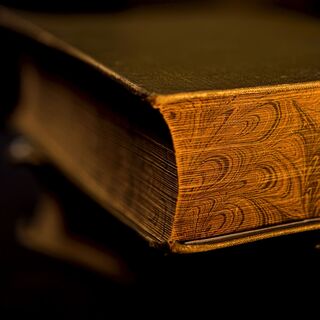
The ledger was a big green book with marbled edges.
And every sale since 1995 was written in it.
In the same small hand.
In the old days.
The page lasted a week.
Now a page lasted a season.
He ran his finger down October.
One pillar.
Two pillowcases.
One single duvet.
Or into half-toe.
To a student.
He added them up.
He added them up again.
In case they had got bigger.
And they had not.
Then he opened the drawer under the counter.
And took out the envelope.
He did not open it.
He knew what it said.
It said that Mr.
Horace Featherstone Tenant of 14 Pubbin Street.
Since the 1st of March 1995.
Wished to inform Mr Gabriel Hook.
That he would not be renewing.
It said that the stock would be sold off by the end of November.
It said,
Thank you for 31 years.
It said.
Yours sincerely.
There was a postbox directly across the road from the shop.
Set into the wall between the pharmacy and the shop that used to be a hat shop.
And was empty now.
The last collection was at five.
Mr Featherstone looked at the post box through the window.
And he looked at the clock.
Which said twenty past ten.
And he made a decision.
At five o'clock he would cross the road and post it.
He put the envelope back in the drawer.
He put one more piece of coal in the stove.
And then felt foolish and did not take it out.
The rain came down.
The clock went round.
At half past twelve,
He ate a cheese sandwich he had brought from home.
Standing up.
At two.
A woman came in and bought two pillowcases and left.
At 3.
He dusted the shoes that did not need dusting.
At four.
The light began to go out of the street.
And the lamps came on in the pharmacy window across the road.
And in Mrs Bunting's window up the hill.
And in the teapot.
The fire would be high by now.
And the cups would be steaming.
Mr Featherstone did not put his own lamp on.
He never put the lamp on until five.
Electricity was not free.
It was twenty to five.
When he saw them.
A woman and a small girl.
Standing at the bus shelter across the road.
Under one umbrella that was not quite big enough for two.
The girl was in a yellow raincoat with the hood up.
The woman was in a brown coat.
The collar turned up.
And she was holding a bag of shopping in the hand that was not holding the umbrella.
And the back.
Was the kind that goes soft in the rain.
They were not waiting for a bus.
Mr.
Featherstone knew the bus times.
As well as he knew the target charge.
And there was not a bus for forty minutes.
They were standing in the shelter.
Because.
.
.
It was a shelter.
The girl said something.
Woman bent to hear it.
Then the two of them came out from under the shelter.
Across to the couples.
And stood in front of his window.
The girl put both hands flat on the glass.
She was looking at the bed.
The woman was looking at the small white card.
Propped against the pillows.
That said what the duvet cussed.
I saw her read it.
He saw her read it again.
He saw her shake her head.
A very little.
And put her hand on the girl's shoulder.
And say something that made the girl take her hands off the glass.
They turned to go.
And Mr Featherstone.
Who had not done an unnecessary thing.
In 31 years.
Bound that he had come out from behind the counter and opened the door.
The shops warm,
He said.
They stop.
I have a stove going.
It doesn't cost anything to stand near it.
He heard himself say this.
And could not think where it had come from.
You can come in.
You don't have to buy anything.
The woman looked at him.
She had a tired face and clear eyes.
She was perhaps 30.
She was deciding whether he meant it.
The girl had already decided She was looking past him at the stove.
With the exact expression Mr.
Pettigrew had worn that morning.
And she was six years old.
And had not yet learned to hide it.
Just for a minute.
The woman said.
Thank you.
They came in.
The girl went straight to the stove.
And stood in front of it.
And spread her fingers out.
The woman put the soft bag down by the door and stayed near it out of politeness.
Until Mr Featherstone said,
The chair is there.
And pointed at the red armchair.
And she looked at it.
And looked at him.
And set.
Her name was Lena Pell.
The girl was called Tilly.
They had moved to Musberry the day before yesterday.
Into two rooms over the old print shop on Spindor Street.
Because Lena had taken a job at the laundry on Fuller Street.
Mornings only.
And the rent was what she could manage The rooms were fine.
The rooms had a gas fire that worked.
The trouble was the van.
Everything's under the van.
Linus said.
The beds,
The bedding,
Everything.
It was meant to be here Thursday.
The man rang this morning.
And said,
Thursday has turned into next Thursday.
She said it lightly.
She was being reasonable about it.
The landlady left us a mattress.
We've got our coats.
The bed is the coldest place in the whole house.
Said Tilly.
To the stove.
Mum says that's backwards.
It is backwards.
Said Mr Featherstone.
Stood there for a moment.
Then he went and got the ladder.
On the very top shelf.
At the back.
There was a duvet in brown paper.
Had been there longer than any other duvet in the shop.
It was a goose town.
13 and a half tugs.
From a maker that did not make them anymore.
It was the best duvet.
Mr Featherstone had ever had in stock.
It had been too expensive for Muspery.
When he bought it in 2015.
And it has got more expensive every year since.
He had kept it on the top shelf,
The way some people keep a bottle of something for an occasion.
And the occasion had never come.
He climbed up and brought it down.
And set it on the counter.
And cut the string.
He said.
This one's been up there a good while.
There's a stitch gone at one corner.
He turned it over and found the corner and showed her.
And there was a stitch gone,
Which was true.
And it would have taken a child four minutes to fix.
Which he did not say.
I can't sell it like that.
It's been sitting there costing me shelf space.
You'd be doing me a kindness to take it off my hands.
Lena Pearl looked at the duvet.
She looked at the card which said what it cost.
He reached over and turned the guard face down.
I couldn't.
She said.
It's a display model.
It's got brown paper on it.
Display models come in brown paper.
Till he had come away from the stove.
She put one hand on the duvet very carefully.
The way you might touch a sleeping animal.
And her hand sank in.
Her face did a thing that Mr.
Featherstone would think about for a long time afterwards.
Mom,
She said.
Lena looked at Mr Featherstone for a long moment.
Then she looked at her daughter's hand on the duvet.
Alone.
I'll take it as a loan.
She said at last.
Until the van comes.
If you like.
Said Mr Featherstone.
Who had no intention of ever taking it back.
He wrapped it up again.
Then he went to the shelf of single duvets,
And took down a ten-and-a-half tog in hollow fibre.
Which is the kind that washes.
And wrapped that,
Too.
And put it on top.
And said.
Not ones for the small ones.
I've got six of them,
And they don't sell.
Which was half true.
Then he put on his coat.
And took the big black umbrella from behind the door.
What are you doing?
Said Lena.
You can't carry that lot,
And the shopping,
And her.
He turned the sign on the door to close.
It was five to five.
He had never once closed early in thirty-one years.
And he did not even notice.
Spindle Street was four minutes away.
They walked it together.
Leaner with the shopping and the umbrella.
Holding on to the hem of Mr.
Featherstone's coat.
And Mr Featherstone.
With the two parcels against his chest.
And the rain coming down on all of them.
The rooms over the print shop.
Were up a narrow stair.
And they were.
As Lena had said.
Keep fine.
Front room with a gas fire glowing orange behind its bars.
Two chairs.
Table.
A window onto the street.
Back room with a mattress on the floor.
And two coats laid over it very neatly.
And a small pile of books beside it.
With a yellow hair ribbon on top.
Mr.
Featherstone did not say anything about the coats.
He knelt down on the floor in his good trousers.
And unwrapped the goose down and shook it out once.
And laid it over the mattress And it settled there.
And filled the room with its whiteness.
Then he unwrapped the small one.
And folded it in half.
And laid it along the far side.
Where a six year old would go.
Till he got in.
She got in with her shoes on and her yellow raincoat on.
And pulled the duvet up to her chin.
And lay there looking at the ceiling It's warm already.
She said.
How is it warm already?
It's you.
Said Mr Featherstone.
Gives you back your own warmth.
That's all a duvet does.
Is to tap.
Which took a moment at sixty-four Lena was standing in the doorway with her hand over her mouth.
I'll say goodnight.
He said.
Mr.
Featherstone.
Horace.
Oris,
I don't know how to.
.
.
The corner stitch.
Be set.
If you've got a needle.
It'll take four minutes.
Good night.
You went down the narrow stair.
And out into spindle street.
And up through the rain to Lantern Hill.
And he was most of the way home.
Before he put his hand in his inside pocket.
And found that the envelope was still there.
And that the last post had gone at five.
That he had not thought about it once.
He lit the kitchen stove when he got in.
Or pieces of coal.
And sat down at the table in his coat and took the envelope out and looked at it under the kitchen light.
Then he put it in the drawer of the kitchen table.
And shut the drawer.
Tomorrow.
He said.
He had been saying tomorrow for a year.
It was the first time it had sounded like a day he might look forward to.
The next morning.
Mr.
Featherstone,
Put seven pieces of coal in the shop stove.
He did not decide to.
His hand did it.
He stood and looked at the seventh piece for some time.
And then he shut the stove door and let it be.
Nobody came in before ten.
Nobody came in before twelve.
The rain came down.
Clock went round.
Mr Featherstone found that he was looking at the window a good deal more than usual.
And that he did not know why.
And zen.
As twenty to four.
The door open.
And a yellow raincoat came in.
Followed by a brown coat.
Into a new way.
We can't stop.
Sadlina.
She wanted to give you something.
Tilly came up to the counter.
She was holding a piece of paper slightly damp at one edge.
And she put it down.
And turned it round.
So that he could read it.
Which took some doing because it was a drawing.
It was the shop.
Mr.
Featherstone knew it was the shop.
Because it was green and had a door,
And it said,
FEATHERSTONES over the door,
In letters that got smaller towards the end,
As the artist ran out of paper.
There was a chimney.
And the chimney had smoke coming out of it,
In a great grey curl.
That took up most of the sky.
In the doorway,
There was a tall,
Thin man in a gray coat.
He was smiling.
It was a large smile.
And a generous one.
And it showed a great many teeth.
Mr.
Featherstone looked at it for a long time.
And a small smile.
Crept slowly onto his tired old face.
That's you.
Said Tilly.
I can see that.
You can put it up.
Mr.
Featherstone had never put anything up in this shop.
Except the tug chart.
And a notice about not squeezing the goods.
He looked around for a place.
Then he took the drawing to the wall beside the stove.
Where the red-armed chair was.
He found a pin in the drawer under the counter.
And he put it up.
Lena had brought a loaf from Mrs Bunting's.
Still warm in a paper bag.
And would not be talked out of leaving it.
She says you walk past her every morning and never look in.
Lean is set.
She says to tell you that you can.
Who does she?
She does.
While this was going on.
Lena had been looking at the window.
Not at the bed.
At the duvet on the bed.
The cream cover on it.
Which had been there so long.
It had gone the colour of weak tea.
And was worn through at one corner.
Where thirty-one years of afternoon light had come in.
That cover once replacing,
" she said.
It's fine.
It's not fine.
It's your window.
She came a step nearer and looked at it properly,
With her head on one side.
I used to make them.
Covers,
Curtains,
Cushions.
All that stuff.
The place I worked did soft furnishings.
I could make you a new one in an afternoon,
If I had the class and the machine.
" Mr Featherstone said nothing for a moment.
Then he said,
Come and look at the back room back room of Featherstones,
At a door that stuck.
And nobody had been through it,
Apart from Mr.
Featherstone,
Since Mrs.
Oddy sold him the shop in 1995.
Mrs.
Oddy had been a maker as well as a seller.
She had made covers in the old back room on an old black tread or sewing machine.
With gold lettering on it.
The machine was still there under a dust sheet.
Along one wall there were shelves of bolt and steel.
Rows of cotton and linen.
A blue stripe.
Small flowers.
Green check.
A plain soft yellow.
The tail-ends of rolls that Mrs.
Oddy had bought and never finished.
And that Mr.
Featherstone had kept.
Because they were paid for.
And throwing away a paid forcing.
Was against his religion.
There was a long cutting table.
There was a second stove.
Smaller than the one in the shop.
A squat iron thing.
That had not been lit in thirty-one years.
Lena stood in the doorway and did not say anything.
Then she said,
All.
She went to the shelves and put her hand on the blue stripes.
She lifted the dust sheet off the machine.
Just look,
That's it.
And put her foot on the treadle.
And it went.
She looked at the small stove.
Does that work?
I have no idea.
Can we find her?
They found out.
It took some newspaper.
And the last of the days go.
And a good deal of advice from Tilly.
And then it caught.
And the back room of Featherstones had a fire in it for the first time since 1995.
And the three of them stood.
And watched it take hold.
Here's what I'm thinking.
Said Lena.
I do mornings at the laundry.
In the afternoon,
I have nothing.
And she's out of school at three.
The rooms are quiet.
If I could come here afternoons and use the machine.
I'd make your covers out of these for nothing.
And anything over.
I'd sell on my own account.
And give you a share for the cloth.
And she'd do her homework by the stove.
And not be under your feet.
Be under your feet a bit,
" said Tilly.
Mr.
Featherstone looked at the fire.
He looked at the shelves of cloth that had been doing nothing for thirty-one years.
He thought about the ledger.
The envelope in the kitchen drawer at home.
And the seventh piece of coal.
Three till half-past five,
" he said.
And you keep the back door shut.
There's a drug.
So that is how it started.
The first cover was blue stripes.
With a plain white back.
And it went on the bed in the window on a Thursday.
And on Friday morning Mrs Bunting came in.
She stood just inside the door with rain on her shoulders.
And looked around at the shop.
As if she had never seen it.
Which he had not.
In thirty-one years of walking past.
I saw the window.
She said.
I saw it.
That's new.
I saw it well.
If he can do a new thing,
So can I.
She bought two pillowcases in the green check.
And she stood by the stove while Mr.
Featherstone wrapped them.
And she looked at Tilly's drawing on the wall.
And she looked at Mr.
Featherstone.
And she did not say anything about it which he was grateful for.
The second cover was small flowers.
And the third was the yellow.
And after the yellow went in the window,
People started to come in and ask whether the covers were for sale.
And Lene made more.
I do not want to tell you.
That the shop was for the next week.
Because it was not.
These things go slowly.
Like everything that lasts.
But something had changed on Bobbin Street.
And the thing that had changed was this.
The lamp in Featherstone's window.
Game on at four o'clock now.
Instead of five.
And ran it to his own.
People could see in.
And what they saw was a bed There's a cover on it.
That nobody else had.
And a round black stove with a good fire in it.
The small girl at a counter doing her sums.
And a tall grey man beside her,
Saying,
Now,
Carry the one.
People came in to look at the covers and stayed by the stove.
Mr Featherstone found that he did not mind.
He found to his surprise.
When Mr.
Pettigrew came in again two weeks later,
Looking for the post office this time,
He said.
Stunned their reminiscent dry off.
The post office isn't going anywhere.
And Mr.
Pettigrew did just that.
And talked about his garden for ten minutes.
And brought a pillow on the way out.
That he had not come in for.
One wet Tuesday.
A young man came in and asked if he could lie on the bed in the window for a moment.
To see what the duvet was like.
Mr.
Featherstone opened his mouth to say what he had said to such people for thirty-one years.
And shut it again.
And said.
Shoes off.
The young man lay down.
He pulled the duvet up.
He lay there for a full minute with his eyes shut.
The rain ran down the window beside him.
And then he sat up and said.
.
.
I'll take it.
And Mr Featherstone wrote it in the ledger.
And it was the first tupper he had sold since June.
That evening.
After the shop shut.
Mr Featherstone took a piece of card and a black pen and wrote on it in his small,
Neat hand.
Warm inside.
Are welcome to come in out of the rain.
You do not have to buy anything.
He looked at it for a while Then he propped it in the window beside the bed.
He turned off the lamp.
Into your own terms.
The van came on a Thursday as promised.
Which was a week later than the Thursday it had first promised.
And Lena came into the shop at four o'clock with a look on her face that Mr.
Featherstone did not like at all.
It's all come.
She said.
The bed's bedding the lot.
It's all up there.
So,
I've brought it back.
Had a parcel in her arms done up in the brown paper from the shop which she had kept.
And tied it with this string.
Which she had also kept.
Both of them.
I've washed the small one.
I did the corner stitch on the big one.
It's as good as new.
Better.
Mr.
Featherstone looked at the parcel.
Put it down.
Be set.
She put it on the counter.
Now listen.
I'll tell you something about that duvet.
It was on that top shelf for eleven years.
In eleven years I never once took it down.
Not to show anyone.
Not to dust it.
Not for anything.
It was too expensive to sell and too good to use.
And I just let it sit up there being the best thing in the shop.
And in eleven years it kept nobody warm.
He put his hand flat on the brown paper.
It's done more work in three weeks on Spindle Street.
Than it did in eleven years on Bobbin Street.
I'm not putting it back.
Aris.
It's hers,
He said.
It was hers from the minute it came down the ladder.
Take it home.
Lena Pell stood at the counter of Featherstones,
With the rain on her shoulders and the fire going behind her.
And her eyes fill.
And she did not pretend they had not.
Then I'm doing something.
She said.
They don't know what.
That I'm doing something.
Make covers,
" said Mr.
Featherstone.
Nobody's stopping you.
Tilly came out of the back room at this point to find out what was happening.
And was told that the duvet was staying.
And set.
Because I've named it.
And would not say what.
And went back to her sums.
Now here is the part of the story that I like best.
And I think you will see why.
It was the first week of December and it was raining.
And the shop had been so busy on the Saturday.
Mr.
Featherstone had run out of brown paper and had to send Tilly up to the pharmacy for more.
Lena's covers were in the window,
Three at a time now.
And the pile of bolt ends in the back room had got noticeably smaller.
There was a second armchair by the stove.
Brown one that Mr.
Marrow from the teapot had been throwing out.
And most afternoons there was somebody in it.
Mr Featherstone had stopped counting the coal in October.
But he still went home every night to Lantern Hill.
And slept under the old grey duvet.
That had gone flat in 2009.
With his socks on and his coat on top.
Tilly knew this.
He had asked him one afternoon,
Out of nowhere,
What his own duvet was like.
And he had said,
Serviceable.
And she had looked at him with her head on one side.
Exactly as her mother did and said.
What dark is it?
And he had not answered.
On the first Saturday in December.
When the shop had shut.
And the lamp was off.
And he was putting the fire guard in front of the stove.
Lina came out of the back room with something over her arm.
It was a duvet cover.
It was made from the last of the blue stripes.
And the last of the green checks.
And a good deal of the soft yellow.
And some of every other cloth that had been on those shelves,
Cut square.
Put together.
So that the whole thing was patchwork.
Every square difference.
Was the only cover like it in the world.
And in the bottom corner,
In red thread.
In stitches that went a little up and down and were plainly not lean as There was an eight.
She did the letter.
Settle in.
I did the rest.
It's for a double.
Mr Featherstone did not say anything.
You've got doubles.
Said Tilly from the doorway.
You've got a whole shelf.
You've got a goose one,
You said.
The one that's the same as mine.
Is just sitting there.
Yet.
It was.
The top shelf at the back,
Where the other one had been.
There was a second goose down.
Thirteen and a half tugs.
That he had bought in 2015 at the same time.
And never sold either.
You don't eat the shop.
Said Mr Featherstone.
But he said it quietly.
And he was looking at the H You're not eating it.
Said Tilly.
You're sleeping under it.
That's different.
He stood there for quite a long time.
Then he went and got the ladder.
They walked home together that night as far as the corner of Spindle Street.
Three of them under the big black umbrella and the parcel against Mr Featherstone's chest.
The rain coming down on all of them.
At the corner,
He stopped and watched them go up the street,
And in at the door beside the old print shop.
And he waited until the window over it went yellow with the gas fire.
And then he went up on the hill alone.
At number nine,
Lantern Hill.
Mr.
Horace Featherstone took off his coat.
He opened the coal scuttle.
He looked at it for a moment.
And then he put eight pieces of coal in the kitchen stove,
Without counting them.
And the kitchen.
For the first time in a long time.
Got properly warm.
He made a pot of tea.
Nausea cup.
And sat down at the table to drink it.
He opened the drawer.
The envelope was still there.
Where he had put it in October.
He took it out and turned it over in his hands.
Then he opened the stove door and put it in.
And watched it go and shut the door.
Then he went upstairs.
Took the old grey duvet off the bed.
And folded it.
Don't put it on the chair he thought he might give it to the dogs home on Fuller Street.
Which took such things.
He unwrapped the goose down and shook it out once.
And it settled over the bed.
And filled the room with its whiteness.
You put the patchwork cover on it.
Which took some doing.
Because a duvet cover is a thing that fights you.
And when it was on he turned it.
So that the H was at the bottom corner and the side he slept on.
It goes in.
He got in without his socks.
And without his cook.
And he lay there in the dark with the rain on the window.
And the duvet over him.
And he felt it do the thing he had explained to his six-year-old on a mattress on Spindle Street.
In October.
It gave him back.
Its own warmth.
That was all it did.
It had always been all it did.
It had only ever needed somebody under it.
He had known everything about duvets for 31 years.
Now he knew what they were for.
Downstairs.
The stove was low and orange behind its guards.
Up on Bobbin Street.
The shop was dark.
As the sign in the window said,
Warm inside.
To nobody.
And would say it again tomorrow.
Over on Spindle Street.
A small girl was asleep under a duvet with a name he had never been told.
And her mother was asleep in the next room.
Under a blanket of her own choosing from the van.
Because the goose down was Tilly's.
Had been from the minute it came down the ladder.
And on Lantern Hill.
In a house with its chimney going at last like all the others.
Mr.
Horace Featherstone.
Duvet salesman.
Lay under the warmest thing in Musbury.
End.