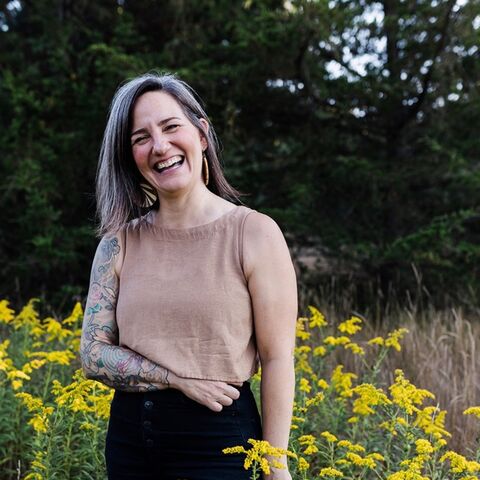
My name is Larissa.
We're going to practice for about 15 minutes.
Let's take a few moments here to settle in.
You're welcome to wiggle your body,
Just finding some balance,
A balance of effort and ease,
Really,
In your torso.
You're welcome to lean back and get cozy.
Sometimes leaning forward gives you a little more alertness.
Just checking in.
What do you need right now?
And you're welcome,
Of course,
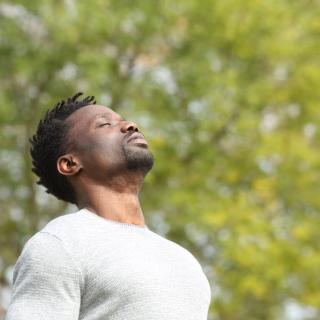
To close your eyes or simply set your gaze downward.
Turning your physical eyes.
Inward.
Letting them soften so we're not taking in new information.
Not scanning the room,
Just allowing.
The scan does start to go internal.
Physical posture that we choose.
That's its own form of a body scan.
So have the right amount of comfort.
What's that physical check-in is?
Needed and it's needed often in our meditation practice.
Your body is always present.
Sometimes the I in your mind is looking to the future or the past,
And we lose the presence.
And perhaps that's a misnomer,
There's no loss of presence,
We just forget.
So very often throughout the day I have this amnesia that comes over me.
I forget the goodness that lives within me.
I forget that I have the ability to focus.
And then there's chaos that happens in my mind.
And I'm sure that's happened to all of us in some way,
Shape,
Or form.
And here we just have this opportunity to have a gentle focus.
There's no deadline or any urgency to get somewhere in our meditation.
We just get to focus on breath.
Take a few moments here just to notice how your breath is moving through you.
It's all your body is.
Often in this easeful,
Receptive state to breath.
And the breath just naturally flows.
It's not something you have to try hard to get to.
It's the same way with presence.
It's the same way with your innate goodness.
You don't have to get to it.
It's just here.
We're arriving.
As you witness your breath.
And just witnessing this present moment.
The witnessing,
The care your body has for you.
Seeing the innate goodness within you.
Sometimes we forget that innate goodness in the busyness of the day.
But to remember to reflect back to yourself this innate goodness.
And we can try and quantify that goodness.
Forms of compassion.
Ways that we offer service to the world.
It's not about trying to quantify or qualify this innate goodness.
It's the fact that you're alive.
The fact that you're animated through whatever it is that animates these human bodies.
It's breath,
Spirits,
Or whatever it is that moves through you.
Certainly breath is a part of it.
If we can't breathe,
It doesn't take long for whatever animates us to leave this human body.
Sometimes in the West we avoid talking about whatever animates us and the loss of it.
Sometimes we avoid talking about something like death.
Death is an everyday occurrence and very often What is dying creates new life in so many forms.
Think about a compost heap,
How much new life that it creates in its richness as it decomposes.
And we can consider the same as happening internally with us.
Every inhale an opportunity for something brand new.
Every exhale,
A releasing of something.
It's the food we take into our body.
We release many pieces and parts of it.
We don't keep all of it.
There's a constant cycle that's happening that we're a part of.
And the breath that we get to breathe right here in this moment,
It truly is a precious gift.
We never know when our next breath might be the last breath that we take and this is not to be morose.
But it's very common in Buddhist practices to talk about death and dying,
To remember that we are an impermanent creature.
And sometimes just like we forget our innate goodness,
We forget that we are impermanent.
And so to pause right now and to appreciate this breath as a reminder.
Of how important this breath is.
What a gift this breath is.
Not to be worried or fearful about the next breath and when it comes and when is the last breath.
But to remember how precious this breath is.
How precious this body is that you get to exist within.
You're just witnessing again.
Groundedness beneath you,
How gravity holds you.
How that steadiness gives you access to notice the movement of your breath.
Almost invariably,
The I in your mind moves to many different places.
Just like you can direct your physical eyes to focus on something.
We can direct the eye and our mind to focus again.
So yeah,
That's right,
I was just noticing my breath.
I was taking a pause here to experience the innate goodness within me.
I know this is true because my breath is still moving through me.
Innate goodness doesn't mean we never make mistakes.
It simply means that there is a goodness that flows within all of us.
This remembrance that helps us with this Eightfold Noble Path.
Working with wise effort,
Wise concentration,
Which leads us into wise mindfulness,
Or sometimes what's called wise bliss.
There's this idea again in Buddhism of effortless effort.
Or whole wholeness.
And it's this idea that when we're fully present,
When we let go of all the stories in our mind and all of the meaning-making,
Well,
They said this,
But I think they mean this.
I wish I would have.
I never.
And the mind just starts churning.
When that's happening,
When we can slow down and remember.
Oh yeah,
That's right.
Let me just pause and take a breath.
Let that churning settle for a moment.
And then suddenly.
.
.
The effort that's required becomes easeful.
Because it's clear,
Because it's steady.
Rather than that forceful effort that we sometimes are going into when we're confused and unclear.
So this pausing very often is just,
As Thich Nhat Hanh often said,
Letting.
.
.
The mind settle.
And allowing the lotus to come out of the mud.
Sometimes the churning of our mind,
We just get a little forgetful and everything becomes clouded and unclear.
And here.
The wise effort of just returning your wise focus to your breath.
That's all that's needed.
And let go of shoulds or coulds or supposed tos and just witness yourself in your whole wholeness.
All of your flaws and quirks and delights.
You get to be whole exactly as you are.
And the breath moving through you is never judging any part of you.
Just filling you with life.
And letting all of the gift of oxygen go back out into the world along with the gas exchange that offers the gift of life to the trees around us.
Just reciprocal support every time you breathe.
That's innate within you.
Let's watch it again for a time.
Steady ground beneath you.
The movement of your breath.
There's a really exquisite quote from Paulo Coelho.
It's from his book The Alchemist.
And he says,
You can become blind by seeing each day as a similar one.
Each day is a different one.
Each day is a miracle of its own.
It's just a matter of paying attention to this miracle.
You can become blind by seeing each day as a similar one.
The same is true with breath.
We can become blind by seeing each breath as a similar one.
Each breath is a different one.
Each breath brings a miracle of its own.
It's just a matter of paying attention to this miracle.
I invite you to bring your hands into any of your closing habits or practices.
Ending as we always do.
With this intentional thought.
These intentions of well-wishing,
Just repeating them back as they make sense for you.
May I remember the miracle of breathing.
May I remember the innate goodness within me.
When action is needed.
May I choose to move with ease and peace.
And may the merits of our practice ripple out to benefit all beings.
May all beings be free.
Whenever you feel complete,
Go slow if you can.
If you find a little movement in your body,
Take a moment to thank yourself just for showing up today.
As always,
Thanks for being here.
Thanks for supporting each other in our sangha.