What is the difference?
In short,
Flexibility is with assistance,
Mobility is without assistance.
Let's take a ballerina,
For example.
She can do the splits,
Right?
So it means that she's having the floor as assistance.
The floor is actually pushing.
For her to open the legs even more.
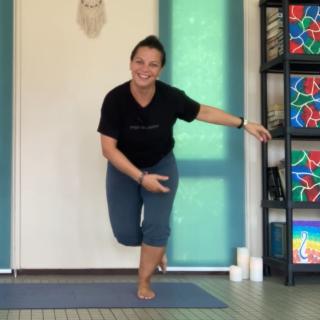
But if she managed to do the splits while standing,
And without holding on to the leg.
Then it's really her mobility who's allowing her to do that move.
Another example,
Because maybe I lost you already here.
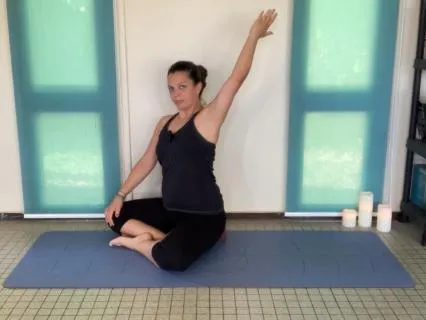
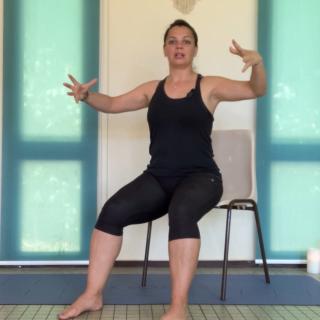
For the shoulders.
Between This And this.
What is my range of flexibility?
So I said flexibility is with assistance,
Mobility is without assistance.
So here I had assistance with the chair.
So that's my flexibility,
Right?
Like this.
It's more than.
.
.
My mobility because I can't go as high.
By myself.
I hope this is clear.
Flexibility is usually more than mobility.
Because with help,
We go further.
Together we go further,
Alone we go faster.
Up to you where you want to go.
Um,
The.
The other thing I would like also to add is that It's also a question of preparation for the shoulder.
If I try to open my arm and go like this,
This is how far I go.
If I pull my arm away,
I can go much further.
Okay,
So.
Um,
Yeah,
Mobility.
Can be increased just by biomechanics techniques.
So it's really working on your body,
So you prepare it to do the movements you are willing to do.
And yeah,
I'm afraid this is a bit too theoretical for now.
Let's get into reality and you can try that by yourself.
Try to go as far as you can with one arm,
Then pull away the humerus bone from the shoulder,
You can go much further.
Like this,
You see?
It stops here.
It's tough to go there.
If I pull it away.
.
.
Then no issues.
So yeah,
Let's do a practical exercise together.
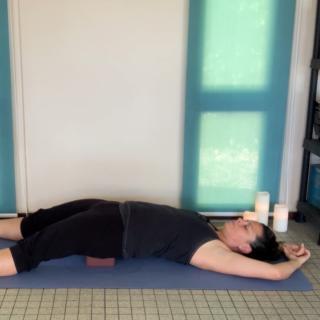
We are going to lie down on our backs.
First we're going to do that with the legs bent and then with the legs straight.
Maybe you can catch both your knees just to.
.
.
Start with a relaxed lower back because this is not what we're working on.
Keep the left leg into your hands and extend the right leg down onto the floor.
Once you're here,
Check how high your knee can come closer to your chest.
It's the assessment,
Right?
It's just to see how far you go.
Okay.
You can try to push,
No issues.
But then,
What we're gonna do is.
.
.
Press the knee away from the body.
But the leg is doing resistance and you try to bring the knee higher and closer to your chest.
So go ahead,
Try to do that.
Without putting too much frown in your forehead.
Without putting.
Crazy amount of tension in your shoulders or on your toes but if you don't really push the.
.
.
Toes of the leg straight.
They are completely soft.
It's not good.
Okay,
And then go back.
Can you feel that?
It's easier,
It goes higher,
Faster,
With less tension,
Basically,
In your hips.
Okay,
We're going to do the same.
In the sense that you keep your hands like this and you try to push the knee away,
But the hands keep the knee close to the chest.
So go ahead,
Try that.
Relaxing the shoulders no need to add Useless tension there.
Soften the face.
And press,
Press,
Press,
Hold on to it Breathe.
Very good.
Release and try to go even higher.
It works now.
I think it's very.
.
.
Surprising how effective it is.
Feel the difference between both legs.
Do you have one lighter than the other?
Warmer?
Bigger.
And you feel more space in one of the hips.
That's a good way to put it.
Okay,
Let's do the other side.
So,
Catch the knee.
Just to balance it out,
Right?
Observe.
Where it goes,
How far it goes.
We press away and We push.
With the leg.
Towards us.
Towards ourselves.
Faster,
Stronger,
Relax the face though.
And release.
Then he comes up much easily,
Right?
Keep the hands like this,
Press the knee away but the hands hold on to the leg breathe breathe breathe Relax what doesn't need any tension.
Work it,
Work it,
Work it.
The location where you have the most tension is in the fingers,
I find,
Personally.
Couple more breaths.
And release.
Yeah,
This is quite impressive,
Right?
Okay,
Relax for a bit.
Breathe.
Next,
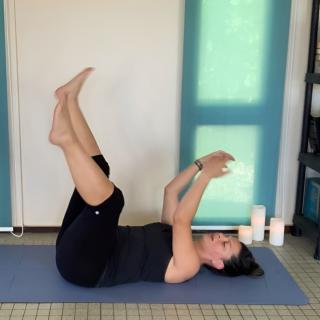
We're going to do the same with the leg straight.
So it's going to be easier with the bottom leg bent and the leg up.
So how high can you go?
With the legs straight.
This is the.
.
.
Common parameter we should keep,
Right?
So this is how far you can go.
Flexibility wise,
Right,
Because you have the assistance of your hands pulling the leg up.
And then,
So you.
.
.
Find a way to catch the leg and you resist.
You try to send it back to the floor but the hands are resisting.
Breathe.
Soften the face,
But keep working,
Pushing.
Work that resistance.
And the leg goes a bit higher.
Okay.
Now let's try to do the opposite,
So hands down.
On the knee or on the shin as you can and on the feet,
On the foot.
Well,
This shouldn't work better.
Keep pushing,
Face relaxed.
Air,
Please.
Yeah,
My leg is.
.
.
Going really,
Really high.
Surprise.
Okay,
Let's do the.
.
.
In between observations.
Feel the difference between left and right.
In terms of temperature.
Space volume.
General filling.
Okay!
Let's do the other leg.
So for me it's left leg bend,
Right leg up.
I'm a bit less flexible on this side.
So this exercise can only help me.
Okay,
Let's.
.
.
Frizz?
Away.
With the leg.
The third eye is relaxed.
Focus on pushing,
Pushing,
Pushing.
One more breath.
And relax.
Leg is already higher Then keep the hands where they are,
Try to push away.
Well,
We already did that,
So now it's about.
Pressing like this on the shin trying to bring their leg towards the head.
This gives me so much warmth.
Okay,
And this is how high it goes.
The tendency is that the back is even lifting.
Of course,
Try not to.
Okay.
Wow,
What a nice exercise,
No?
So that's it.
That video was first the theory.
Then put into practice.
Um.
.
.
But then it goes the same for any articulation,
Any muscle.
If you want to work on the flexibility of And your shoulders,
Well.
Work on pressing the arms.
With some weight,
Some resistance,
And try to work against that resistance to then feel how far you can actually improve the mobility.
Um.
.
.
Yeah,
I wanted to add.
.
.
This little guy here.
So that's my modelization of a leg.
So that's the foot.
The tibial bone and the thigh bone.
And the way muscle works is that it's Roughly later.
This elastic.
And when you want to stretch a muscle,
You need to further away the attachment points of that muscle.
So if you point the foot,
You see it's loose.
If you want to flex.
Then it's going to pull the bottom of the tube.
The calf here.
If you bend the knee,
It's going to loosen the calf.
So you want to keep the calf and the foot flexed.
The knee straight and the foot flexed.
About contraction it doesn't work so much like a and elastic because the resting state of the elastic.
Is soft.
Flexible,
Like optimal length.
Nor long,
Nor short.
When we have a contraction of the muscle.
The muscle is more likely to compress like a spring.