Hello,
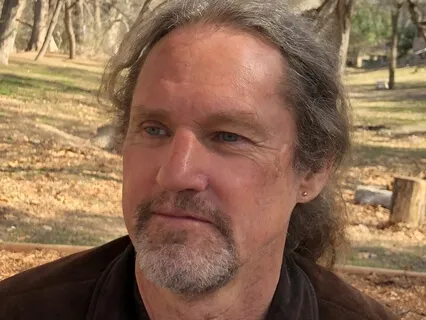
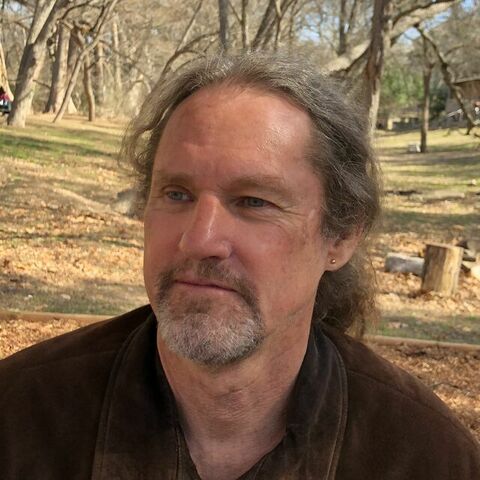
This is William Cooper.
Welcome to Awakening Together,
Relaxing Into Happiness.
I trust you're doing well today.
Today,
Let's talk about the existence of God.
This was a really big deal for me in my path of awakening.
It may not be for you,
But for so many people,
It is,
And I'll tell you why.
In awakening,
We notice or we become aware that we're one with everything.
The Infinite is us,
And it's a visceral experience,
Very clear.
And as we awaken,
That flow of energy flows down through our personality and we're able to open to ourselves.
Our personality reorients,
And we become awakened through our personality as well.
Our personality flows and expresses the Infinite through our incarnation.
So it's a process of seeing clearly and then opening and receiving ourselves.
The flow of the Infinite,
The Infinite that has become us because we've gotten out of the way.
We've dissolved out of the way.
And our prior podcasts,
We've talked about that a lot.
So awakening is about opening.
And as we go through life,
Part of our life's task is to open to ourselves.
And as we go through life,
Part of our life's task is to open on our path in those ways that we've been closed to ourselves.
For me,
One of the ways that I was closed was I was very anxious about this issue.
Does God exist?
When I was a child,
I had a very open heart,
And I felt very connected to my childish but strong connection to God.
Later,
I got very philosophical because I got up into my mind.
I shut down,
As we've talked about before.
Our mind's thinking often cuts ourselves off from ourselves,
And it did for me.
So I became separate from myself.
Separation anxiety ensued,
More feelings of abandonment and frustration.
Now,
I'm not alone.
There's millions and millions of other people that have these similar experiences.
So it's a very active issue.
Camus,
The philosopher,
For instance,
He started off as an existentialist and became an absurdist.
And what all that means is that he felt like there is no God.
We're floating around in the universe.
We're no different than a rock or a bunch of chemicals,
And life has no meaning.
So what's the point?
And Sartre,
Another existentialist,
He was like,
Yes,
There is no meaning to life.
You need to make your own meaning because we're out here alone in the universe.
There's no meaning,
So make the best of it.
Make your own meaning.
And basically,
He was looking for an argument why you shouldn't just kill yourself.
So he was looking for a way to make the best of yourself.
And he was looking for a way to make the best of yourself.
So he was looking for a way to make the best of yourself.
And basically,
He was looking for an argument why you shouldn't just kill yourself.
So it can be very depressing to feel that you're alone in the universe.
In my discussion,
I do want to say that the word God is a very loaded term,
And it means it's simply a label,
And it means different things to different people.
In the Buddhist perspective,
You could have beings that are gods,
But as you follow the beings into what's deeper than even they are,
You go beyond this universe,
And you go beyond creation,
And you go into nothingness.
It's a full nothingness.
It's the potential of all things.
So you can't really call it nothingness,
But it hasn't been created,
So it is nothing,
Right?
It's hard for us to understand in our incarnation because we only understand things through our five senses,
And this is beyond the senses.
The Hindus feel the same way,
And I use that word feel.
Maybe a better word is experience or intuit because that's my experience too.
And once you've been meditating,
You can follow.
I often refer to myself as a rainbow,
And there's part of me in this incarnation,
And as I follow myself all through the rainbow,
You could say move up through finer and finer levels,
Molecules,
Atoms,
Bliss,
Joy,
And happiness,
And that even becomes finer,
And it's sound and then light and then out of this universe,
And you can only know yourself on that level beyond this universe through your intuition,
But you're definitely there,
And as you meditate more and more,
You become very aware of that.
It's very real.
And so you can't really see yourself as a rainbow,
But that is very real,
And your center of gravity shifts from your personality to the awareness that you are and beyond.
That's what sitting still in meditation is so helpful for.
Anyway,
So this affects many of us,
And if you have existential anxiety,
You know what I'm talking about.
Often people don't even know why they're nervous,
Why they feel anxious all the time,
But what's underneath it all is they don't feel secure many times,
And they don't feel secure.
One of the reasons is because they feel ungrounded,
And they don't really feel connected and know if there is an infinite.
Now,
As I said before,
The word God is a loaded term.
It can mean a being,
Or it can go beyond the term God into beyond the infinite into nothingness,
And in that sense,
You could say it's non-theistic and therefore atheistic.
It doesn't really equate with the way that we typically use those terms,
But you could say Buddhists are atheists or Hindus are atheists on the deepest level because the deepest part of them goes beyond this creation.
So when we talk about God,
It's a tricky thing because it's this big continuum.
Are you talking about beyond creation or light as it hits creation or the light as it turns into sounds and then turns into beings?
There are beings on different levels of reality,
And some of them we could call gods in the old-fashioned sense.
So we'll talk about that in a little bit in this podcast,
But I just want to open it up.
When I say the existence of God,
It's a lot broader than what we typically might think about.
Anyway,
This was a very big issue for me,
Not all of this depth I just discussed with you,
But just the basic question,
Is there a God?
Because how do I live my life?
Is life absurd?
Is there meaning?
What direction do I take?
What kind of profession do I have?
What's meaningful to me?
I was torn apart and it took me years.
I had years of existential angst.
So for that reason,
I'm doing this podcast.
There I was in my existential angst,
And I looked at every thought and proof about God and everything I could get my hands on.
I read,
I went to theological school.
I did everything for years and years and years and years.
And I'll tell you what,
Finally,
As I sorted through so many things,
And you might have another solution,
But I'll tell you what worked,
What was helpful to me.
And then you go about your business and find out what's helpful for you.
You might dismiss everything I say and find better things,
Or maybe this issue isn't even relevant to you.
So I understand that,
But for some,
Maybe this will give you a boost.
What I found most helpful or completely helpful was the ontological argument for the existence of God.
And ontological is a word that means it's a philosophical way of looking at things that emanates from the nature of being,
The nature of being.
And basically,
To put it in simple English,
The argument is,
If you wonder if there is a God,
Or even if you believe there's not a God,
You're using intelligence.
And the very fact that there's intelligence in the universe presupposes an intelligent first cause where the intelligence came from.
If you have a closed system,
Say just rocks and dirt and chemicals,
And let's say it's the whole universe,
All of existence is just matter,
And it's in a closed-encased system,
A glass case,
Let's say,
And nothing can get in.
There's no intelligence in there,
And you could shake that glass case around for an infinite amount of time,
And you'll just get different configurations of rocks and dirt,
But no intelligence will arise.
Yet here we are discussing,
Does God exist?
So intelligence had to come from somewhere.
Where did it come from?
Well,
It had to always be there.
And in fact,
That is the Buddhist and Hindu way of looking at things,
Maybe even the Christian way,
If you think about it.
So that's the ontological argument.
Somebody might say,
Well,
Wait a second,
How do you know all those rocks if you shook them around enough and threw some water in there and put heat on there maybe that it might turn into intelligence?
How do you know that?
Well,
A couple different ways.
First of all,
That's never been replicated in a lab ever.
So it's sort of a fantasy or a hope.
But secondly,
Think of it this way.
If you have a system that only reacts,
It's one thing bumping up into the other,
It would be much like a stoplight.
It turns red,
It turns green.
And it's simply a set of reactions,
A number of switches and timers that turn it green,
Telling us to go red telling us to stop.
But that stoplights not really thinking through any deep issues like wow,
It's time to tell these people to go and stop.
There is no intelligence there.
It is simply a programmed set of switches and reactions.
There is no intelligence,
There is no consciousness.
Computers are just a complicated system of the same thing.
Artificial intelligence mimics intelligence and it's just a fancy computer.
Yes,
I know there are movies that fantasize like well,
One day the robot started thinking and having a heart and being intelligent.
You know,
We can dream up anything in our heads as we've talked about thoughts are simply hallucinations.
We make them up,
They're useful tools.
But just because we hallucinate something doesn't make it so.
And yes,
Movies are fun and things like that.
But there is no consciousness and artificial intelligence there.
It might be a danger.
Maybe it can because it doesn't think it's automatic.
It might do negative things to our world if it got out of control.
That's true,
But it doesn't make it thoughtful.
It's just not.
So the ontological argument says that the very fact that we can wonder if there is a God proves that there is a God.
And by the word God,
You can choose what you want.
You want to choose a being.
OK,
You could do that.
Or if you want to just choose what's beyond even existence,
You could do that or the whole continuum.
That's just another discussion.
But the bottom line is intelligence comes into the universe from a place beyond in a sense.
Now,
It turns out it's not really beyond because the intelligence is the universe.
It's one and the same.
And that's who we are.
It's all one.
But the point is,
If you want,
You could just call the whole universe God or the whole universe beyond God,
Because it strobes in and out of existence a billion times a second.
I actually see it.
People talk about it.
I see it.
And when you sit still long enough,
You will see it.
Perhaps you already see these things.
Perhaps everything I'm saying is old hat and your way beyond this.
But we've got to start somewhere in our discussion.
So I'm discussing where what what my point of view is.
So the ontological argument really,
Really helped me out a lot.
Another way to know that there's God is quite different.
See,
The ontological argument for me opened me up because before then I was a nervous wreck.
I didn't know what to do in life.
Really,
It was a big deal.
Enough that I did go to seminary for four years or through a four year program.
I did it a little quicker.
It was a really big deal for me.
Maybe it is for some of you,
Too.
But once I got it,
I started to be able to let go and go and open up.
And that was way back.
And we have to take life as it comes to us.
You may have different issues,
But that was my issue at the time.
And you often can't jump your issues,
You know,
Just jump over them.
Sometimes you can a little bit,
But the big ones you have to solve so they can open up and you can move on.
And so awakening together relaxing,
That is,
Opening up into happiness.
Why happiness?
Because happiness is one of the main qualities of our being.
That's awakening.
And happiness is one of the main qualities of this infinite we've just been talking about this God who is us.
We're not God.
God is us.
Sounds similar,
But it's quite different.
As our blocks open up,
Yogananda says God becomes us.
We can't say we are God.
He says God becomes us because we open,
God flows through where the infinite flows through.
And because we're one,
God is us and we are everything.
And yes,
We've discussed this in past podcasts,
But good to touch on it again.
If you haven't listened to the other podcasts,
They're available for free.
You can listen to them.
I would suggest you start with podcast one and work your way forward so you catch some of these things that we refer back to in the later podcasts.
But each podcast stands alone.
You can listen to that and you may be way beyond all of these podcasts,
But if you would like,
They're available.
So what is another way to know God?
Once I opened and this took some time and I'm fast forwarding,
But as I began to awaken and open and by awaken,
I mean the crust opened and I started to see who I was,
See who you are,
See who the world is.
To see is to be free.
And I opened and so I saw that the infinite is me,
Not only saw,
That was my experience.
That's probably a better word to use.
Experience who I am.
And in that clarity,
Which continues all the time once you've awoken for a while,
Your intuition sees clearly.
You see beyond this world,
This existence,
And you also see through this existence because you are it all.
You resonate with every level of it.
So on an intuitive level,
You know that God exists or the infinite exists or you know it's so beyond words.
Most awaken people don't even use words.
They say,
Oh,
It's something it's beyond words.
It's what I can't speak of.
But,
You know,
Let's just get real and put as many words on it as we can just because we're it's just you and me and we're talking.
So our intuition is it might sound wispy,
But as you open up deeper and deeper and deeper,
It becomes very clear and you know it for a fact.
So you can know God intuitively.
Often when I talk about awakening or awaken things,
I'll quote different authors or different people because they go along with what I already know to be true.
And it's kind of confirms and it gives a different way of saying what I want to say.
And and sometimes they say it better.
So I will comment or quote other people.
The reason why there's so much to comment on or quote is because this is a universal experience that millions of people have had from Jesus to Buddha to you and to me.
It's universal for all of us.
If we sit still long enough,
Everything that I'm saying,
All of us experience.
And when I talk about awakening,
I can see it.
I might quote what somebody else says,
But if somebody says to me,
Oh,
No,
It's this way,
It's like I'm looking at a tree.
And if they say the leaves are blue and I'm looking at it and they're green,
I can say,
No,
They're really green.
And I can do that because I see the tree as so many other millions of people do.
So this doesn't come from book learning.
It comes from experience,
Intuition,
A deep seeing to see is to be free.
And this is true for all of us.
That's why I bring it up now.
So intuition is actually a very powerful way to know the existence of God.
The thing about intuition,
Though,
For me,
I couldn't have sat still or opened up enough to flow unless I had answered the first question,
Which was more of an intellectual way of knowing God.
And that was the ontological method of knowing God,
A philosophical method.
It made sense so I could open up.
And when I opened up,
Then my intuition was available and then I could know more deeply.
Another way to know God,
To know that God exists is from the testimony of other people that you trust.
The 12 disciples said that Jesus was very clear.
They said in their world,
They called him God.
You might call him Awaken.
You might say whatever you want to say,
But they were convinced.
And he was very powerful.
Now,
People knew these disciples,
Many of many people knew them.
So they trusted them.
And then they believed that Jesus was somebody very special.
The same with Buddhist Buddhist disciples or other famous,
Very awake people.
And,
You know,
When you get a bunch of people like the 12 disciples and they're all under a lot of stress,
They're being persecuted and killed and none of them changes their story.
That tells you something.
It tells you something powerful went on.
Now,
The way it's been talked about since then is up for debate,
Like the church and which version of the church are you Lutheran or Catholic or are you Presbyterian and what's the right way to go and this way and that way.
You know,
That that's a whole nother story.
And that you remember,
Jesus wasn't a Christian that he did the Bible.
The gospels weren't even written until about 40 or 50 years after he died.
So you try to remember they might be a little hazy.
But I think.
In essence,
Very.
I think they're accurate in general,
But I wouldn't.
Live my life based on a word like don't be this or do be that because,
You know,
That's a cultural issue anyway.
That's a whole other podcast we're just talking about.
Does God exist?
But since I opened up this can of worms,
I will just say from my opinion,
My experience being a Buddhist is a fine thing and it's equally as fine as being a Hindu or being a Christian.
Some have better teachings than others.
Some guide you better.
Jesus said,
I am the way.
Well,
Buddha also was showing us the way he was also the way.
And same for Krishna and same for you know,
Just because Christ said,
I'm the way doesn't mean that other people don't also display the way many people do.
You do.
I'm sure you show people the way we give others what we have and to the depth of what we have,
We can pass that on.
So.
Back to the existence of God.
Testimony from others,
Therefore,
I think can start to open us up like somebody says,
Well,
There's a Hindu saint,
Amaji,
You sit around Amaji,
You can feel it today.
Very powerful.
And maybe you've never seen Amaji,
But I'm telling you about her.
And you might go,
Wow,
Maybe something is going on.
Or I might tell you what some of these saints in India and you might go,
Oh,
Wow,
Maybe something is open going on.
And you might read some books and you might start to relax and open and trust something is going on.
All these people are pointing in a similar direction.
I think maybe maybe there is something to this.
So the testimony from others can be opening.
I prefer all of it is good.
But if I only could have one,
I prefer the direct experience.
Of my experience,
And that would be the intuition and at first the ontological argument,
Because I couldn't argue with that.
It made sense.
So I trusted it.
I believed it.
Now,
Why wouldn't people believe that there is God?
What could be a stumbling block that could get in our way?
If you're one of those people that's sorting through this issue?
Well,
The big one that people bring up is the problem of evil and suffering.
Well,
If there was a good God,
How come there's so much suffering in the world?
Why is there evil in the world?
How could a good God permit that?
And therefore,
I don't believe there could be a God.
Or I had a tragedy in my life and I used to believe in God and I prayed to God,
But then that tragedy happened.
So I don't believe in God anymore.
Now,
That's an emotional reaction,
But it kind of gets back to the problem of suffering and evil.
Well,
Let me read you a story that you've probably heard before,
But it addresses this question in its own way.
It's entitled,
We'll See,
And it is about a Chinese farmer.
Once upon a time,
There was an old farmer who had worked his crops for many years.
One day,
His horse ran away.
Upon hearing the news,
His neighbors came to visit.
Such bad luck,
They said.
We'll see,
The farmer replied.
The next morning,
The horse returned,
Bringing with it two other wild horses.
How wonderful,
The neighbors explained.
Not only did your horse return,
But you received two more.
What great fortune you have.
We'll see,
Answered the farmer.
The following day,
His son tried to ride one of the untamed horses,
Was thrown and broke his leg.
The neighbors again came to offer their sympathy on his misfortune.
Now your son cannot help you with your farming,
They said.
What terrible luck you have.
We'll see,
Replied the old farmer.
The following week,
Military officials came to the village to constrict young men into the army.
Seeing that the son's leg was broken,
They passed him by.
The neighbors congratulated the farmer on how well things had turned out.
Such great news,
You must be so happy.
The man smiled and said once again,
We'll see.
So,
Something that looks like suffering and evil may have a deeper purpose.
There are many ways to look at it.
It's just very one-dimensional to assume there really is evil and suffering that only has that effect.
For instance,
The Buddhist,
Their Four Noble Truths are all about suffering.
And suffering leads you to look inside and find your true essence,
To end suffering and become awake.
To become one with all things.
From an awakened perspective,
Everything is made of love and peace and there is no suffering.
But you have to be awake before that makes any sense.
But it is another perspective.
So,
How many times have you had something happen where you thought,
Oh,
This is bad,
But it delayed you from doing something else,
Perhaps,
And therefore you averted a big tragedy or you won the lottery or some kind of crazy thing like that.
And you look back and go,
Wow,
I never would have met my wife if this thing didn't happen or I wouldn't have had this great job if this thing I thought was bad hadn't happened.
So,
From a limited perspective,
It does seem like there's suffering.
But just let's say existence is much broader than our tiny perspective.
So,
The problem of evil or suffering,
It doesn't say that there's not suffering,
That there's not evil.
There is.
I've experienced a lot of suffering.
You probably have too.
So,
I'm not dismissing it.
I'm just saying it's a small part in a big picture that's leading somewhere.
And in creation,
By the way,
To even have existence,
There has to be a separating out from the infinite.
Otherwise,
It would all be one infinite thing and there would be no distinctions like there's a tree,
There's a dog,
There's a house,
There's a car,
There's an emotion called anger,
There's one called fear.
There wouldn't be all these different things.
And once you have separation,
You have separation.
And once you have these distinctions and separation,
You have separation anxiety,
Which is suffering.
You have a feeling of abandonment,
Which is suffering.
And the personality is a reaction to these things.
You have frustration and anger.
And we have a podcast,
A very quick,
Light one on the Enneagram,
Which says that all the personalities are formed as a way to get a solution to either hurt,
Fear or anger.
We choose one of nine personalities in a sense.
So,
What might seem like a limitation or suffering may not be a suffering because without distinction,
We couldn't have creation and we can enjoy our creation.
So,
Yes,
We get suffering,
But we also get creation.
That's one way to look at it.
There are so many different ways that I guess we'll just have to say,
We'll see.
Perhaps you already know.
Now,
Another reason why people have a problem with is there a God or is there an infinite and they get shut down is they go,
Oh,
Well,
Evolution,
You know,
We evolved.
Here we are.
There is no God.
You know,
It's just evolution.
It is a bunch of rocks that kind of jumbled together and got shaken up in a jar and out we came.
Well,
There is definite evolution within a species,
No question about it.
But I was shocked and maybe you will be too,
Probably not.
But evolution is called the theory of evolution because it's simply a theory.
Like one time there was a theory that the world was flat.
Evolution has big problems.
The theory of evolution is not a fact.
Just Google problems with evolution.
You'll get an eyeful.
I don't want to go down that road in this podcast because it would be far too long.
Just take five minutes and look on your own if you have any questions about it.
But it pretty much destroys the idea that evolution has been proven.
In fact,
There are insurmountable issues.
I spent years looking at it only because I was so shocked and I couldn't believe it.
I was taught evolution was the way it was and I believed it.
But then when I really looked into it deeply,
Sadly I suppose or happily,
It's got problems.
Yet evolution within a species,
Absolutely.
So it's kind of half,
A glass half full you might say.
So that pretty much destroys any idea.
Well,
I can't believe in a god because of evolution.
But you know,
Because evolution really is not something I would want to hang my hat on.
And anyway,
There is a thing I think is called theological evolution that just says,
Okay,
Evolution is the way that God chose to create the world.
God created evolution and the world through evolution.
The problem is there's just really not so much evidence for evolution.
One author says that it's probably about time for a paradigm shift.
The facts just aren't panning out for poor evolution.
As far as a total system,
Evolution within a species,
Yes.
Anyway,
But that has been one of the reasons why people get tripped up.
You know,
Another odd reason,
I was really shocked.
Maybe you won't be,
But when I was a board president of a unity church,
I had people come up to me and said,
I don't believe in God because I can't believe in an old man with a beard and a cane running the world.
Like they really thought that was an image of God and they couldn't believe that.
And yeah,
I agree.
Who can believe that?
I didn't even know that was an option.
I know it came from probably like a child's Bible class.
And then maybe people just quit going to church and they somehow got that in their head like that was a real thing.
And again,
Just a couple of years ago,
I had a good friend,
Or three years ago,
I had a friend.
I'm an atheist.
Why?
Because I can't believe in a man with a beard.
You know,
So if that's a thing,
I would just say,
Whoa,
I don't even know what to say about that.
But that surprisingly,
There's a good amount of people that that's why they get blocked.
If that is one of you out there,
I just say,
That's not a good reason.
The other day,
I was talking to a friend of mine,
And he said he was an atheist.
And one of the reasons he mentioned because I,
Of course,
Was curious,
Why is that?
And he said,
Well,
There are so many different gods out there,
There can't be a god,
Because nobody really has any unity on their outlook on things.
Some cultures believe in one god,
Another god,
One believes in another god.
So how do you connect to a god,
The god,
When there's so many different observations and perspectives,
Even within the Hindu religion,
There's maybe 1000 different gods,
And then you have Brazilian gods or gods in different countries in Africa,
The American God,
You know,
There's so many different angles,
That he felt that it was pandemonium and really no truth to it,
Just a lot of untruth.
And really,
On further thought,
It's just one God.
But for instance,
The in the Hindu system,
As we talked about before,
It's even beyond the one God,
Beyond all God,
It goes into nothingness beyond existence,
And then from there down through different realities,
And there's the one that then breaks into different parts.
And because it's so difficult for an individual human to relate to the infinite,
You can pick whichever aspect of God that you would like to talk to,
If you want to talk to somebody who can remove problems,
You talk to Ganesh,
Or if you want wealth,
You talk to Lakshmi,
Or if you want some playfulness,
Maybe you talk to Krishna.
So they are different aspects of the one God,
1000 names of the one God,
In different cultures that's simply different labels,
Right?
On the one God,
In different angles,
And different avenues and connections to the one God.
So the multiplicity does not really mean anything except a lot of labels and entry points.
It's,
I don't think on further thought that it's really needs to be a stumbling block.
It's just different ways of saying things,
Different languages,
Different perspectives.
So anyway,
This is not an exhaustive discussion,
But it's a beginning.
And for some of you,
It may just be enough to unclog a tightness that's inside or an anxiety that's inside.
That's been holding you back.
Maybe it's the beginning of your own personal exploration.
And in the end,
It has to be your personal exploration,
Not just because William says so.
I'm just telling you what made sense and worked for me in my opening,
What my path was,
But it was my path,
Just like Buddha's path is his path,
Jesus' path was his path.
Okay,
Fine.
Good for Jesus and Buddha,
But it's your path and life will give you what you need to,
I'll use the word,
To evolve in your spiritual path for you to open.
So I would trust that.
Okay.
I hope that's been helpful and I hope you have the spirit of where I'm coming from,
Just as another step in our awakening together,
Another opening of many.
In the end,
Really,
Just like I've said in most other podcasts,
What's the biggest thing you can do is to sit still and let things settle out.
Let them settle so that there's clarity because it's like we're a big jar of water and silt all mixed in that water and we can't see clearly.
So we start to react and use willpower and try to soldier our way through life,
Willpower our way through life.
Just stop instead.
It's kind of intuitive.
Do nothing.
Sit still.
Let everything settle out and then you'll see clearly and your intuition will open up and you'll flow.
You'll know what to do,
Not mentally.
You will know in your heart what to do and how to move forward in your life.
So that's called meditation.
Yes,
There are many other spiritual practices and use whichever one or combination of ones that are helpful to you.
But for me,
The deepest and most powerful is to just every day sit still,
Do other things if I would like after or before,
But not avoid just stopping and sitting still.
The reason why if I try to avoid it,
I do is typically because I don't want to feel what is underneath the surface trying to come out.
I don't want to sit with the anxiety that emerges.
I don't want to sit with the anger or the hurt that emerges.
So I don't do it.
Anyway,
We've talked about that in the past and the power of the light of our awareness as we watch our thoughts,
As we watch our emotions,
Both of which are constructions that we've made in the past as we watch them,
These hallucinations melt.
Maybe they're useful hallucinations that we're using as tools or maybe they're not.
Maybe they're just scary things.
But either way,
They begin to melt and then we can use our mind in a productive way rather than being run by our mind.
Okay,
Take care and I look forward to talking to you next week.
Bye.