The world’s largest free audio library for everyday wellbeing
Movement-Integrated
Vinyasa Flow is a breath-synchronised, flowing style of yoga in which each movement is linked to an inhale or exhale, and a full session typically reaches moderate-intensity effort (Huberty et al., 2018), (Cheruka et al., 2023).
Last Updated
4 Jul 2026
We are still reviewing this page. Our research team checks every technique page for accuracy and evidence quality before final release. Details may change as that review completes. The evidence badge shows our current reading of the published research.
RECOMMENDED DOSE
Peer-reviewed research measured a 30-minute Vinyasa Flow session and confirmed it as moderate-intensity physical activity (Ref 005). Starting near the lower end gives newcomers an achievable entry point. The 2–3 times per week frequency is a conservative editorial starting suggestion and is not itself directly dose-tested.
Several studies characterised 60-minute Vinyasa sessions, including a randomised crossover study of autonomic and cardiovascular responses and a controlled comparison of energy expenditure (Refs 007, 008, 011). A frequency of several sessions per week is extrapolated from broader yoga research, such as a 12-week programme practising most days of the week (Ref 025).
A 90-minute group Vinyasa routine and Ashtanga (power) Vinyasa sessions have been studied for their metabolic and cardiovascular demand (Refs 007, 009, 020). Near-daily practice reflects the schedules of longer 12–24 week yoga interventions (Refs 023, 025, 050) and suits experienced practitioners.
Session length
Session length: 20–30 minutes
20
MIN
How long each individual practice session should last from start to finish.
Frequency
Frequency: 2–3 days
2
DAYS
The number of days per week to fit a session into your routine.
Session length
Session length: 45–60 minutes
45
MIN
How long each individual practice session should last from start to finish.
Frequency
Frequency: 3–5 days
3
DAYS
The number of days per week to fit a session into your routine.
Session length
Session length: 60–90 minutes
60
MIN
How long each individual practice session should last from start to finish.
Frequency
Frequency: 5–6 days
5
DAYS
The number of days per week to fit a session into your routine.
About this card. Session-length ranges are drawn from studies of Vinyasa and Ashtanga Vinyasa yoga, while weekly frequency is largely extrapolated from broader yoga interventions, so treat these figures as evidence-informed starting points rather than fixed prescriptions. These recommendations are not a substitute for personalised guidance from a qualified practitioner.
Quick answers to what people most often ask. Each card links to the deeper section below.
evidence
Small, mostly short-term studies point to one consistent finding: an immediate lift in mood after Vinyasa Flow, with negative feelings dropping measurably right after a session. Similar acute gains appear in college students, and gentle flow improved sleep and well-being during breast-cancer care. Large controlled trials and long-term follow-up are still missing.
good for
Adults wanting movement that energises and lifts mood right afterward are the clearest fit for Vinyasa Flow, which has been studied in people with prior yoga experience, college students, and women during breast-cancer care. It offers a short-term mood shift, not a treatment for any diagnosed condition.
Read moresafety
Most healthy adults can practise Vinyasa Flow safely as moderate-intensity movement. Because standing and vigorous sequences briefly raise blood pressure and heart rate, anyone with uncontrolled high blood pressure or a heart condition should choose slower-tempo flow and seek clinician clearance first. Rise slowly from forward folds if you feel lightheaded.
Read morehow it works
Linking each movement to an inhale or exhale gives attention a rhythmic anchor and shifts the nervous system with the pace. Vigorous phases like sun salutations raise heart rate and engage the body's activating branch, felt as warmth and alertness, while slower flow with longer exhalations tips toward the calmer rest-and-recovery side.
Read moreVinyasa Flow is a breath-linked, flowing style of yoga that moves continuously between postures and typically counts as moderate-intensity movement.
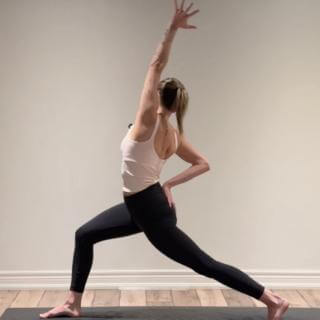
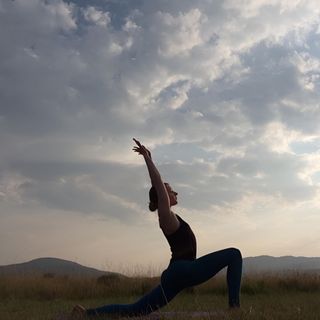
A session strings postures into continuous, breath-paced sequences, with each movement matched to an inhale or exhale. Classes usually open with sun salutations and move through standing poses, balances, and sometimes inversions, ranging from vigorous Power Vinyasa to gentler Slow Flow, and generally close with rest.
Unlike styles that hold separate poses for long stretches, such as Hatha or Yin yoga, Vinyasa is defined by continuous, breath-linked transitions between postures. It is not a still, seated meditation, and although the vigorous forms are physically demanding, it stays generally moderate-intensity movement rather than high-intensity training or a replacement for clinical care.
Not to be confused with
Ashtanga Yoga
Ashtanga follows a fixed, memorized series of postures in the same order every time. Vinyasa Flow descends from that lineage but sequences poses freely, so a class can be arranged and paced differently each time.
Hatha Yoga (classical, held-pose style)
Hatha classes typically move into one posture at a time and hold it, with pauses between. Vinyasa links postures into continuous breath-paced transitions, so the practice feels flowing rather than static.
Bikram and hot yoga
Bikram runs a fixed set of postures in a heated room. Vinyasa is defined by breath-linked flowing sequences and is usually practised at normal room temperature, though heated vinyasa classes do exist.
Vinyasa Flow works largely by coupling breath to movement, which gives attention a rhythmic anchor and shifts the nervous system with the pace of the sequence. In vigorous phases like sun salutations, the continuous effort raises heart rate and drives sympathetic activation, the body's activating branch that mobilises energy, felt as warmth, a quicker pulse, and sharpened alertness (Thrower et al., 2023), (Miles et al., 2013). Slower flow with longer exhalations tips the balance the other way, toward the calmer rest-and-recovery side of the nervous system. Research on yoga broadly, not Vinyasa specifically, also suggests postures may lift mood partly by raising brain GABA, a calming neurotransmitter, when compared with walking (Streeter et al., 2010).
In a vigorous flow you feel warmth spreading, a quicker heartbeat, and sharper alertness as the body mobilizes energy for movement. That surge comes from sympathetic activation, the nervous system's activating fight-or-flight branch, which raises heart rate and body temperature during faster, continuous sequences (Thrower et al., 2023), (Miles et al., 2013).
The faster stretches of Vinyasa Flow can shift a sluggish, foggy start toward feeling awake, warm, and alert as heart rate climbs and the body mobilises energy. This is arousal upregulation, the turning-up of the nervous system's activating branch; early evidence in yoga broadly, not Vinyasa specifically, links active practice to changes in mood-related brain chemistry, though the direct path to arousal has not been measured (Streeter et al., 2010).
During active, standing-heavy postures the body is clearly working, so blood pressure and heart rate rise much as they do in other moderate exertion (Miles et al., 2013). Overall intensity sits in the moderate range, around 3.2 to 3.6 METs across a full session, roughly a brisk-walk level of effort, with vigorous peaks in sun salutations and easier troughs in restorative segments; in the body this shows up as warmth building, breathing deepening, and a light sweat (Cheruka et al., 2023), (Sherman et al., 2017). In the hour after a vigorous session, one crossover trial in 18 healthy adults measured systolic blood pressure about 8 mmHg lower than after quiet sitting, though heart rate stayed elevated (Thrower et al., 2023). A single-session study of 30 experienced adults also found augmentation index, a marker of how strongly pressure waves bounce back through the arteries, dropped right after practice (Piña et al., 2020).
As a flowing class continues, warmth spreads, your breathing deepens, and a light sweat comes on. That is your metabolic rate, the speed at which your body burns energy, rising to a moderate-intensity level of roughly 3–4 METs, with vigorous phases like sun salutations climbing higher (Cheruka et al., 2023), (Sherman et al., 2017).
As you move through standing, flowing postures, warmth builds and your pulse quickens, because blood pressure and heart rate rise much as they do in other moderate exertion (Miles et al., 2013). In the hour after a session, systolic blood pressure has been measured slightly lower than after quiet sitting (Thrower et al., 2023), which can feel like a settled easing once the flow winds down.
Limited evidence, mostly from small and short-term studies, supports Vinyasa Flow for an immediate lift in mood. A single session lowered negative affect in adults with prior yoga experience (Piña et al., 2020), eight-week programs report similar acute mood gains in college students (Gaskins et al., 2014), (Gaskins et al., 2014), and gentle flow with relaxation was linked to better sleep and well-being in women during breast-cancer care (Żok et al., 2023). The clearest and most direct signal is the short-term mood shift right after practice. What is not yet supported: large controlled trials, long-term follow-up, lasting stress reduction, and any claim that Vinyasa treats a diagnosed condition.
Most research on Vinyasa Flow comes from small, short-term studies, and the most consistent finding is an immediate lift in mood, with negative feelings dropping measurably right after a session (Piña et al., 2020), similar acute gains reported in students (Gaskins et al., 2014), and improved sleep and well-being in women during cancer care (Żok et al., 2023). The main areas studied are mood, exercise intensity, and short-term cardiovascular responses. The limits are worth naming: samples are small, often uncontrolled, and several test yoga in general rather than Vinyasa specifically, and in one student group mood improved while perceived stress did not change significantly (Gaskins et al., 2014), (Gaskins et al., 2014). How intense a class is also varies widely and is measured inconsistently across studies (Forseth & Hunter, 2019).
0
Meta-analyses
1
RCTs
1
Systematic reviews
0
Observational
12
Pilot
Studied populations
Acute mood and cardiovascular responses to moderate intensity vinyasa yoga, static yin yoga and aerobic exercise in people with depression and/or anxiety disorders: A 5-arm randomised controlled trial
2022
Finding: We don't yet have the verified details for this study, including its citation, the outcomes it measured, or the size of any effects, so there's nothing specific we can report about what it found for Vinyasa Flow practitioners. Rather than guess at results, we're leaving this entry open until the source information is confirmed. Please check back once the study record is complete.
See full citation in referencesThe acute effects of vinyasa flow yoga on vascular function, lipid and glucose concentrations, and mood.
n = 30
Finding: In a study of 30 adults who already had at least a few months of yoga experience, a single one-hour Vinyasa Flow session measurably lowered negative feelings right afterward compared with how people felt beforehand. The same session also briefly improved a marker of how blood pressure waves reflect through the arteries and nudged down one blood-fat reading, suggesting that even one class can shift both mood and short-term vascular signals. Keep in mind this was a small, single-session snapshot in people who were already practised, so it tells us about the immediate lift after a class rather than lasting changes, and it does not mean the practice treats mood or heart conditions.
reported significant; p<0.01
Vinyasa Flow grows out of the broader yoga tradition and, in its flowing form, descends from Ashtanga-derived Power Yoga lineages shaped in the twentieth century. In this tradition, breath and posture are treated as a single path toward mind-body absorption, which is why continuous, breath-paced movement is framed as a moving meditation rather than exercise alone. These roots help explain the practice's form, its disciplined breath count and sequenced postures, not its clinical effects.
For most healthy adults, Vinyasa Flow is a low-risk practice that counts as moderate-intensity movement. A few situations call for gentler pacing. Standing and vigorous sequences briefly raise blood pressure and heart rate, which you feel as a surge of effort and a pounding pulse while you hold a pose, so anyone with uncontrolled high blood pressure or a heart condition should treat this as a practical caution and check with a clinician before a vigorous class rather than assume documented harm (Miles et al., 2013). Heart-rate variability, the beat-to-beat rhythm that reflects how well the nervous system is recovering, can also stay lowered for up to an hour afterward, so the body may feel worked rather than immediately settled once a strong flow ends (Thrower et al., 2023).
Most people can practise Vinyasa Flow safely, and only a few groups need to adjust the pace. If you have uncontrolled high blood pressure or a known heart condition, choose slower-tempo flow and get clinician clearance before vigorous or standing-heavy classes. This precaution comes from the short-term blood-pressure and heart-rate rises measured in healthy adults during standing yoga postures, not from evidence of harm in these specific groups (Miles et al., 2013). If you tend to feel lightheaded on standing, you may notice a brief wobble when you rise from a forward fold or inversion, so coming up slowly is a sensible adjustment. Beginners, people returning after injury, and those who are pregnant do well to start with gentle Slow Flow and build toward stronger standing and balancing sequences gradually.
Standing and vigorous vinyasa postures briefly raise blood pressure and heart rate much like other exertion, felt as a surge of effort and a pounding pulse while you hold a pose. If you live with uncontrolled high blood pressure or a heart condition, choose slower-tempo flow with longer exhalations and get clinician clearance before vigorous or standing-heavy classes. This is a practical precaution drawn from acute responses measured in healthy adults, not evidence of harm in these groups.
| Technique | Best for | Use with care | Evidence strength | Distinction |
|---|---|---|---|---|
| Yin Yoga | Slow, passive release of deep tension and cultivating stillness when the aim is to downshift rather than energize. | If you want an energizing, warming, or cardiovascular effect, passive Yin holds will not raise intensity. | emerging EVIDENCE | Yin Yoga holds passive, floor-based poses for several minutes to gently stress connective tissue and settle the body into stillness, so it feels quiet and downshifting. Vinyasa Flow instead links breath to continuous movement, which feels more active and warming and can lift energy as well as calm it. |
| Brisk walking and aerobic exercise | Straightforward cardiovascular conditioning and higher calorie burn with minimal instruction or equipment. | Walking builds less balance, flexibility, and breath-focused attention than a flowing sequence. | strong EVIDENCE |
Yes. Vinyasa Flow counts as moderate-intensity physical activity at around 3.2 to 3.6 METs, a unit where one MET equals your resting energy use, so a full session sits at roughly a brisk-walk level of effort with more vigorous peaks during sun salutations (Huberty et al., 2018), (Cheruka et al., 2023).
+
Yes. Measured across a full session, Vinyasa Flow lands in the moderate-intensity range, so it is meaningful movement rather than gentle stretching, with vigorous phases like sun salutations raising the effort further (Cheruka et al., 2023), (Α et al., 2020). It is not high-intensity conditioning, though: matched for heart rate, one study found Vinyasa burned about 79.5 kcal fewer than treadmill walking, so it is best seen as solid moderate activity rather than a cardio replacement (Sherman et al., 2017).
The main difference is pace and intensity. Power Vinyasa is the vigorous, faster-paced end, with continuous effort that builds warmth and a quicker pulse, while Slow Flow moves at a gentler tempo with longer exhalations. Both sit within a moderate-intensity practice overall, around 3.2 to 3.6 METs, comparable to brisk walking (Huberty et al., 2018), (Cheruka et al., 2023).
+
The main difference is where each style sits on the intensity spectrum, not the underlying method: both link breath to continuous movement, but Power Vinyasa keeps the effort high and fast while Slow Flow decelerates the tempo and lengthens the exhalations. A full session tends to land in the moderate-intensity range, about 3.2 to 3.6 METs, with vigorous peaks in sequences like sun salutations and easier troughs in slower segments (Cheruka et al., 2023), (Α et al., 2020), (Sherman et al., 2017). How intense any given class actually is varies widely and is measured inconsistently across studies, so labels are a rough guide rather than a fixed dose (Forseth & Hunter, 2019).
A style of yoga in which each movement is matched to an inhale or exhale, so the practitioner flows smoothly from one posture to the next rather than pausing between them.
A repeating sequence of linked postures that flows from standing to a forward fold, plank, and back, often used to warm up a class. It tends to be one of the more vigorous parts of a vinyasa session.
A measure of how hard the body is working, where one MET is your resting energy use. Around 3 to 4 METs counts as moderate activity, which is where full vinyasa sessions typically land.
Metabolic equivalents express energy expenditure as a multiple of resting metabolic rate; vinyasa sessions average roughly 3.2 to 3.6 METs, meeting moderate-intensity criteria.
A marker of how strongly reflected pressure waves push back through the arteries moment to moment; a lower reading suggests more relaxed, supple arteries. It has been measured to fall right after a vinyasa session.
The augmentation index is a measure of arterial wave reflection derived from the pressure waveform, used as a surrogate marker of arterial stiffness.
The natural beat-to-beat variation in your heartbeat, often read as a sign of nervous-system recovery. It tends to dip for a while after a vigorous flow as the body stays activated.
Heart rate variability quantifies beat-to-beat variation in cardiac intervals and indexes autonomic (largely vagal) regulation of heart rhythm.
The revving-up side of the nervous system that raises heart rate and mobilizes energy. It shows up during vigorous flow as warmth, a faster pulse, and a charged, alert feeling.
Sympathetic activation refers to increased activity in the sympathetic branch of the autonomic nervous system, driving heightened alertness and energy mobilization.
Jacinta Brinsley, Matthew Smout, Danielle Girard, Kade Davison (2022). Acute mood and cardiovascular responses to moderate intensity vinyasa yoga, static yin yoga and aerobic exercise in people with depression and/or anxiety disorders: A 5-arm randomised controlled trial. https://doi.org/10.1016/j.mhpa.2022.100450
Cited in: Comparison
Alexander A. Piña, J. Shadiow, A. Tobi Fadeyi, Anabel Chavez, Stacy D. Hunter (2020). The acute effects of vinyasa flow yoga on vascular function, lipid and glucose concentrations, and mood.. https://doi.org/10.1016/j.ctim.2020.102585
Outcomes measured
| Outcome | Effect size | 95% CI | N | Comparator | Source |
|---|---|---|---|---|---|
| negative affect (PANAS) | reported significant; p<0.01 | — | 30 | pre-session baseline | Piña et al., 2020 |
| augmentation index (AIx) | reported significant; p<0.001 | — | 30 | pre-session baseline | Piña et al., 2020 |
| systolic blood pressure | mmHg difference = -8.14 | — | 18 | seated control | Thrower et al., 2023 |
| METs and heart rate across sequences | reported significant; p<0.001 | — | 40 | — | Cheruka et al., 2023 |
| energy expenditure | kcal difference = -79.5 | — | 38 | heart-rate-matched treadmill walking | Sherman et al., 2017 |
The research is useful for setting expectations, but study methods and participant groups vary. Treat the findings as general guidance rather than a promise about any single session, and not a replacement for clinical care.
Acute and Cumulative Effects of Vinyasa Yoga on Affect and Stress among College Students Participating in an Eight-week Yoga Program: A Pilot Study.
2014
Finding: In a small 8-week pilot with 20 college students, mood lifted right after nearly every Vinyasa session: positive feelings rose by about 23% after most classes and negative feelings dropped by around 22%, with overall mood scores improving across the program. In practice, this suggests you may walk out of a session feeling noticeably brighter than when you arrived. That said, this same study found no significant change in the students' perceived stress levels, so an immediate mood boost is better supported here than lasting stress relief. With only 20 healthy young adults and no comparison group, these are early, promising signals rather than firm proof.
See full citation in referencesAcute and Cumulative Effects of Vinyasa Yoga on Affect and Stress among College Students Participating in an Eight-week Yoga Program: A Pilot Study
n = 20
Finding: In this small 8-week pilot with 20 healthy college students, mood lifted right after most Vinyasa sessions: positive feelings rose by roughly a fifth and negative feelings dropped by about the same amount across nearly every class. That points to a reliable short-term mood boost you might notice soon after rolling up your mat. Notably, though, the students' overall perceived stress didn't shift significantly over the program, so this study is a reason to expect a mood lift rather than proof that Vinyasa lowers day-to-day stress. With only 20 participants and no control group, treat these results as an early, encouraging signal rather than the final word.
reported narratively
Vinyasa Flow: Metabolic Cost and Validation of Hip- and Wrist-Worn Wearable Sensors
n = 22
Finding: When 22 adults did a 30-minute Vinyasa Flow session while their oxygen use was measured, the practice burned energy at about 3.2 METs, which lands squarely in the moderate-intensity range, on par with a brisk walk. That means a typical flow class can count toward your daily movement, not just your calm-and-stretch time. This was a small study of one 30-minute video, so intensity in the real world will vary with the pace and style of the class you choose.
METs = 3.2
Effects of Yoga Versus Walking on Mood, Anxiety, and Brain GABA Levels: A Randomized Controlled MRS Study
n = 34
Finding: In this 12-week trial, 34 healthy adults were randomly assigned to either yoga postures or a walking routine matched for physical exertion, and the yoga group came away with bigger gains in mood and larger drops in anxiety than the walkers. Brain scans linked those improvements to higher levels of GABA, a calming brain chemical, in a region called the thalamus, pointing to a plausible biological route by which flowing postures may lift mood beyond simple exercise. Keep the scope in mind: the study looked at yoga postures broadly rather than Vinyasa Flow specifically, and the group was small and made up of healthy volunteers, so the findings are best read as an encouraging early signal rather than proof.
reported narratively
Oxygen Consumption and Heart Rate Responses in Different Vinyasa Yoga Sequences.
n = 40
Finding: Measuring the oxygen use and heart rates of 40 experienced yoga practitioners through a full vinyasa session, this study confirmed that the practice counts as moderate-intensity movement, in the same range as a brisk walk. The intensity was far from uniform, though: sun salutations pushed effort the highest, while integration and restorative phases dropped it the lowest, so a single class naturally cycles between working harder and recovering. For someone choosing vinyasa as their movement, that means it can meaningfully count toward daily activity, with the vigorous portions doing most of the physical work. Keep in mind this was a small session-level study in healthy, already-experienced practitioners, so how hard any given class feels will still vary with your own fitness and the style of teaching.
reported significant; p<0.001
Blood pressure and heart rate variability responses following an acute bout of vinyasa yoga and a prolonged seated control: A randomized crossover trial
n = 18
Finding: In a small crossover trial with 18 healthy adults, a single 60-minute Vinyasa session produced mixed effects on the body's stress-and-recovery signals compared with simply sitting quietly. Five minutes after class, systolic blood pressure was about 8 points lower, but heart rate stayed elevated and heart-rate variability (a marker of relaxed, flexible nervous-system tone) was actually reduced both right after and about an hour later. In practical terms, that means the calm you feel after a vigorous flow is not the same as your nervous system fully settling into rest right away; the more intense physical effort keeps your heart working harder even as blood pressure eases. Because this was a brief study in a handful of healthy adults measuring only the immediate aftermath, it says nothing about longer-term benefits of a regular practice.
mmHg difference = -8.14
Energy expenditure during a Vinyasa yoga session.
2020
Finding: Tracking heart rate in 24 moderately active adults through a full 90-minute Vinyasa class, this study found the practice lands squarely in the moderate-intensity range, on par with a brisk walk or light workout, rather than being purely gentle stretching. Intensity rose and fell with the sequence: dynamic flows like sun salutations pushed heart rate highest, while restorative and integration segments brought it back down. For someone considering Vinyasa, that means you can expect a genuine cardiovascular workout woven together with calmer recovery phases, not a single steady effort throughout. This was a small session-based study in already-trained practitioners, so the numbers may look different for beginners or other class styles.
See full citation in referencesThe Effect of Vinyasa Yoga Practice on the Well-Being of Breast-Cancer Patients during COVID-19 Pandemic
n = 13
Finding: In this 12-week program, women being treated for breast cancer practised a mild-to-moderate Vinyasa routine paired with relaxation while isolating during the COVID pandemic, and those who finished reported fewer sleep problems, less stress, and better overall well-being afterward. For someone navigating cancer care, this suggests a gentle, adaptable flow may offer real relief on hard days, especially when it includes time to wind down. The findings come with a big caveat, though: only 13 of the 41 women who started completed the program, and there was no comparison group, so the results point to promise rather than proof.
reported narratively
Energy Expenditure in Vinyasa Yoga Versus Walking
n = 38
Finding: In this study, 38 adults with yoga experience completed 60-minute vinyasa sessions alongside treadmill walking, and the yoga registered about 3.6 METs, which clears the bar for moderate-intensity activity even though it burned roughly 80 fewer calories than walking at the same heart rate. In practical terms, a flowing vinyasa practice counts as real moderate exercise for your heart and body, so it can genuinely contribute to your activity goals. Just keep expectations realistic: for the same effort, brisk walking still burns more calories, so vinyasa complements rather than replaces aerobic workouts if calorie burn is your main aim.
kcal difference = -79.5
Arterial blood pressure and cardiovascular responses to yoga practice.
2013
Finding: In 36 healthy adults, both beginners and experienced practitioners, holding yoga postures pushed blood pressure, heart rate, and the volume of blood the heart pumps noticeably upward, with standing poses producing the biggest jump; the pattern looked much like the strain of holding a muscle tense rather than the flow of a brisk walk. Notably, years of practice did not blunt this rise, so even seasoned practitioners saw the same short-term spikes during active postures. For a practitioner, this is a reminder that a flowing standing sequence is genuine exertion in the moment, not a passive relaxation, so it is worth working at a sensible intensity and mentioning any blood-pressure concerns to a doctor. This was a small study of healthy adults measuring what happens during practice itself, so it does not speak to longer-term effects on resting blood pressure.
See full citation in referencesRange of Yoga Intensities From Savasana to Sweating: A Systematic Review
2019
Finding: This review compared how hard different styles of yoga actually work the body, and found that intensity labels vary widely both between styles and within the same style, partly because heart rate and calorie burn don't always rise together in a predictable way. That inconsistency makes it hard to pin a single "how intense is it" number on Vinyasa, especially since only one Vinyasa study met the review's criteria. The practical takeaway is that the effort level of a Vinyasa class can differ a lot from one session or teacher to the next, so treat any claim about a fixed intensity or calorie burn with caution and judge each class by how it feels for you.
See full citation in referencesAcute changes in urinary metabolites: vinyasa yoga compared to cycle ergometer exercise
n = 12
Finding: In a small study of 12 healthy young adults, researchers compared Vinyasa yoga against cycling matched for the same effort level and measured the waste products the body produces during exercise. Vinyasa produced smaller shifts in most of these markers than cycling did, which points to a more spread-out, whole-body demand rather than the concentrated workload of pedalling; notably, lactate, a sign of hard muscular effort, was similar between the two. For someone considering Vinyasa, this suggests it works your body differently from a steady cardio session rather than harder, so it is best seen as a distinct kind of movement, not a stronger metabolic workout. With only 12 participants, all young and healthy, these are early findings that may not carry over to other people or longer practice.
reported significant; p<0.05
After a strong session, heart-rate variability, the beat-to-beat rhythm that reflects how well the nervous system is recovering, can stay lowered for up to an hour, so the body may feel worked rather than immediately settled once the flow ends. Allow time to wind down, and if a pounding pulse feels extreme or is paired with dizziness or chest discomfort, ease off and check with a clinician.
If you tend to feel lightheaded on standing, you may notice a brief wobble when you rise from a forward fold or an inversion as blood pressure shifts with the change in level. Coming up slowly out of folds, lunges, and inversions steadies that momentary lightheadedness.
Beginners, people returning after injury, and those who are pregnant do well to start with gentle Slow Flow and build toward stronger standing and balancing sequences gradually, keeping the effort within a comfortable range rather than jumping into vigorous Power Vinyasa.
Vinyasa Flow works best when you let the intensity meet you where you are, treating a slower Slow Flow as a comfortable starting point before you build toward stronger standing and balancing sequences. Since a strong flow can leave the body feeling worked rather than instantly settled, it helps to stay tuned to your breath and your body's signals throughout, easing off whenever the effort climbs past what feels manageable. If you are managing a cardiovascular concern, a gentler tempo and a word with your clinician set a sensible foundation.
Choose a slower Slow Flow class if you are new to the practice, returning from injury, pregnant, or managing a health condition, and save vigorous Power Vinyasa for when you feel ready. A full session sits at moderate intensity, roughly the effort of a brisk walk, so starting gentle keeps your effort within a comfortable range.
Begin with a few gentle rounds before deeper standing poses or sun salutations so the body eases into the rising heart rate and warmth rather than meeting it cold.
Rise unhurriedly out of forward folds, low lunges, and inversions, because blood pressure shifts as you change levels and a slow transition steadies any brief lightheadedness.
Let each movement stay linked to a steady inhale or exhale, and never hold your breath through effort, since breath-holding can spike pressure during standing postures that already raise blood pressure and heart rate.
Ease off or rest in a neutral position if you feel a pounding pulse, dizziness, chest discomfort, or breathlessness beyond ordinary exertion; these are cues to slow down rather than push through.
If you live with uncontrolled high blood pressure or a heart condition, speak with your clinician before taking a vigorous or standing-heavy class, and favour slower-tempo flow with longer exhalations as a lower-intensity alternative.
This information is educational and is not medical advice. This practice is not a substitute for professional care and should not replace prescribed medication or treatment for any medical or mental-health condition. If you are managing a health condition or taking medication, talk with a qualified health professional before changing your practice. If you are in distress or crisis, seek professional support.
| Brisk walking is steady, rhythmic aerobic movement that is simple to do and well studied for fitness. Vinyasa Flow reaches a similar moderate intensity but blends postures, balance, and breath focus, so the effort is spread differently across the body and paired with a moving-meditation quality. |
| Yoga Nidra and restorative yoga | Deep rest, nervous-system downregulation, and sleep support with no physical exertion. | It offers little physical conditioning, so it will not build strength, balance, or movement vitality. | emerging EVIDENCE | Yoga Nidra is a still, lying-down guided relaxation that guides attention through the body with almost no physical effort, so it feels deeply restful. Vinyasa Flow is upright, active, and breath-linked, developing strength, balance, and vitality alongside its calming effects rather than aiming purely at rest. |

In the short term, yes. Limited evidence shows a single Vinyasa session can lower negative feelings right after practice in adults with some yoga experience, with similar immediate lifts reported in college students (Piña et al., 2020), (Gaskins et al., 2014). This is an acute mood bump, not a lasting change or a treatment.
+
In the short term, yes, but the signal is narrow. A single session lowered negative affect immediately afterward in adults with prior yoga experience (Piña et al., 2020), and an eight-week program reported comparable acute mood gains in college students (Gaskins et al., 2014), (Gaskins et al., 2014). The evidence is suggestive rather than settled: samples are small and short-term, and in one student group mood improved while perceived stress did not change significantly (Gaskins et al., 2014), (Gaskins et al., 2014). Treat this as an immediate lift in how you feel, not proof of lasting mood change or a substitute for care.
Limited. The research is mostly small, short-term studies, some testing yoga broadly rather than Vinyasa specifically. The most consistent finding is a short-term mood lift right after a session (Piña et al., 2020); broader claims remain preliminary.
+
Limited. Most studies are small and short-term, several are uncontrolled, and some test yoga in general rather than Vinyasa itself, so the findings set expectations rather than prove effects. The clearest signal is an acute drop in negative mood right after practice (Piña et al., 2020), though in one student group mood improved while perceived stress did not change (Gaskins et al., 2014), (Gaskins et al., 2014), and after vigorous sessions blood pressure may dip while heart rate stays elevated (Thrower et al., 2023). Class intensity also varies widely and is measured inconsistently across studies (Forseth & Hunter, 2019).
Because its intensity shifts with the pace. Vigorous phases like sun salutations raise heart rate and blood pressure and drive the body's activating, sympathetic branch, felt as warmth and alertness, while slower flow with longer exhalations may tip toward the calming, parasympathetic side (Miles et al., 2013).
+
The dual quality is best understood as autonomic shifts that track the pace of the sequence. In vigorous, standing-heavy segments the body clearly works, so blood pressure and heart rate rise much as in other moderate exertion, engaging the activating branch of the nervous system (Miles et al., 2013); across a full session the effort sits in the moderate range with vigorous peaks and easier troughs (Cheruka et al., 2023), (Sherman et al., 2017). The settling of slower flow with long exhalations is physiology-inferred rather than proven, and research on yoga broadly, not Vinyasa specifically, suggests postures may lift mood partly by raising brain GABA, a calming neurotransmitter (Streeter et al., 2010). This describes how the practice is understood to work, not treatment for any condition.
Because your body is still winding down. After a vigorous Vinyasa session, one small study found heart rate stayed elevated and heart rate variability, the beat-to-beat rhythm that signals recovery, stayed lowered for up to an hour, even as blood pressure dipped (Thrower et al., 2023).
+
Because the activating side of your nervous system takes time to settle. In a crossover trial of 18 healthy adults, an hour after a vigorous flow heart rate remained raised and heart rate variability stayed suppressed, while systolic blood pressure dropped, suggesting recovery lags behind the end of class (Thrower et al., 2023). This looks like a normal short-term response rather than a sign of harm, though it comes from a small sample. If a pounding pulse feels extreme or is paired with dizziness or chest discomfort, ease off and check with a clinician.
Use care. If you have uncontrolled high blood pressure or a heart condition, favour slower-tempo flow and check with a clinician before vigorous or standing-heavy classes, since active postures briefly raise blood pressure and heart rate (Miles et al., 2013).
+
Use care. Standing and vigorous Vinyasa postures produce brief rises in blood pressure and heart rate much like other exertion, and after a strong session heart-rate variability, a marker of nervous-system recovery, can stay lowered for up to an hour (Miles et al., 2013), (Thrower et al., 2023). This is a practice-informed precaution drawn from acute responses measured in healthy adults, not evidence of harm in people with hypertension, so choose gentler flow with longer exhalations and seek clinician clearance before vigorous classes. Vinyasa is not a treatment for high blood pressure.
Start with a slower Slow Flow class rather than vigorous Power Vinyasa, warm up before deeper poses, and rise slowly from forward folds so any brief lightheadedness settles. Keep your breath linked to each movement and never hold it, since breath-holding can spike blood pressure during standing poses (Miles et al., 2013). This is practice-informed beginner guidance, not clinical advice.
+
Begin gently. Choose a slower Slow Flow class first, because a full Vinyasa session sits at moderate intensity, about the effort of a brisk walk, with more vigorous peaks in sun salutations (Cheruka et al., 2023), (Sherman et al., 2017). Warm up before deeper standing poses, move unhurriedly out of folds and inversions, and keep the breath flowing with each movement rather than holding it, since active standing postures briefly raise blood pressure and heart rate much like other exertion (Miles et al., 2013). If you have uncontrolled high blood pressure or a heart condition, favour gentler pacing and check with a clinician before a vigorous class, and ease off if you feel dizzy or a pounding pulse. These are practical, practice-informed adjustments, not a treatment claim.
Brisk walking, slightly. At the same heart rate, one trial found Vinyasa Flow burned about 79.5 kcal fewer than treadmill walking, so walking edges ahead for pure calorie burn, though Vinyasa still counts as moderate-intensity movement (Sherman et al., 2017).
+
Brisk walking has a small edge for calorie burn at matched effort. In a heart-rate-matched study of 38 adults, a Vinyasa session burned roughly 79.5 kcal fewer than treadmill walking, so if calories are your only goal, walking comes out slightly ahead (Sherman et al., 2017). That said, Vinyasa still sits in the moderate-intensity range, around 3.2 to 3.6 METs across a full session, so it counts as real physical activity rather than light effort (Cheruka et al., 2023). This comparison covers energy expenditure only and does not speak to which practice is better for balance, breath focus, or mood.
The settling side of the nervous system that supports rest and recovery. It tends to come forward in slower-tempo flow with long exhalations, felt as easing, softening, and calm.
Parasympathetic activation refers to increased activity in the parasympathetic (largely vagal) branch of the autonomic nervous system, promoting restorative physiological states.
The ability to sense internal body signals such as breath, heartbeat, and tension. Building it feels like noticing early stress cues sooner and being more at home in your body.
Interoceptive awareness is the perception and interpretation of visceral afferent signals reflecting internal bodily states.
Your sense of where your body is in space, drawn from receptors in muscles and joints. It shows up as steadier balance and more precise, grounded movement during transitions.
Proprioceptive awareness is attention to body position and movement mediated by proprioceptors in muscles, joints, and tendons.
Cited in: Benefits, Faq, Research, What happens in the body
Ronnesia B. Gaskins, Ernestine Jennings, Herpreet Thind, Bruce M. Becker, Beth C. Bock (2014). Acute and Cumulative Effects of Vinyasa Yoga on Affect and Stress among College Students Participating in an Eight-week Yoga Program: A Pilot Study. https://doi.org/10.17761/ijyt.24.1.l8466h29060x13vq
J. Huberty, Jeni L. Matthews, M. Toledo, L. Smith, Catherine L. Jarrett, Benjamin J. Duncan (2018). Vinyasa Flow: Metabolic Cost and Validation of Hip- and Wrist-Worn Wearable Sensors. https://doi.org/10.1123/jmpb.2017-0010
Cited in: Faq, Research, What it is
Chris C. Streeter, Theodore H. Whitfield, Liz Owen, Tasha Rein, Surya K. Karri, Aleksandra Yakhkind (2010). Effects of Yoga Versus Walking on Mood, Anxiety, and Brain GABA Levels: A Randomized Controlled MRS Study. https://doi.org/10.1089/acm.2010.0007
Cited in: Comparison, Faq, How it works, Research
Cheruka Caitlin A, Sherman Sally A, Davis Kelliann K, Kline Christopher E (2023). Oxygen Consumption and Heart Rate Responses in Different Vinyasa Yoga Sequences.. https://doi.org/10.17761/2023-d-22-00058
Cited in: Faq, How it works, Research, What happens in the body, What it is
Alexis Thrower, Bethany Barone Gibbs, Abdullah Bandar Alansare, Sally A. Sherman, Kelliann K. Davis (2023). Blood pressure and heart rate variability responses following an acute bout of vinyasa yoga and a prolonged seated control: A randomized crossover trial. https://doi.org/10.1371/journal.pone.0294945
Cited in: Faq, How it works, Research, Use with care, What happens in the body
Tsopanidou Angela Α, Venetsanou Fotini D, Stavridis Ioannis S, Paradisis Giorgos P, Zacharogiannis Elias G (2020). Energy expenditure during a Vinyasa yoga session.. https://doi.org/10.23736/s0022-4707.20.10821-1
Cited in: Faq, Research, What happens in the body
Agnieszka Żok, Monika Matecka, Joanna Zapała, Dariusz Iżycki, Ewa Baum (2023). The Effect of Vinyasa Yoga Practice on the Well-Being of Breast-Cancer Patients during COVID-19 Pandemic. https://doi.org/10.3390/ijerph20043770
Sally A. Sherman, Renee J. Rogers, Kelliann K. Davis, Ryan L. Minster, Seth A. Creasy, Nicole C. Mullarkey (2017). Energy Expenditure in Vinyasa Yoga Versus Walking. https://doi.org/10.1123/jpah.2016-0548
Cited in: Comparison, Faq, Research, What happens in the body
Miles Steven C, Chun-Chung Chou, Hsin-Fu Lin, Hunter Stacy D, Dhindsa Mandeep, Nualnim Nantinee (2013). Arterial blood pressure and cardiovascular responses to yoga practice..
Cited in: Faq, How it works, Research, Use with care, What happens in the body, Who should use care
Bethany Forseth, Stacy D. Hunter (2019). Range of Yoga Intensities From Savasana to Sweating: A Systematic Review. https://doi.org/10.1123/jpah.2019-0372
Colin Campbell, Carl J. Murphy, Zeinab Barati, Robert H. Coker (2025). Acute changes in urinary metabolites: vinyasa yoga compared to cycle ergometer exercise. https://doi.org/10.3389/fspor.2025.1556989
Cited in: Comparison
Explore guided sessions to deepen your Vinyasa Flow technique.
Editorially curated. Tracks are not themselves clinically studied; evidence on the page applies to Vinyasa Flow as a technique.
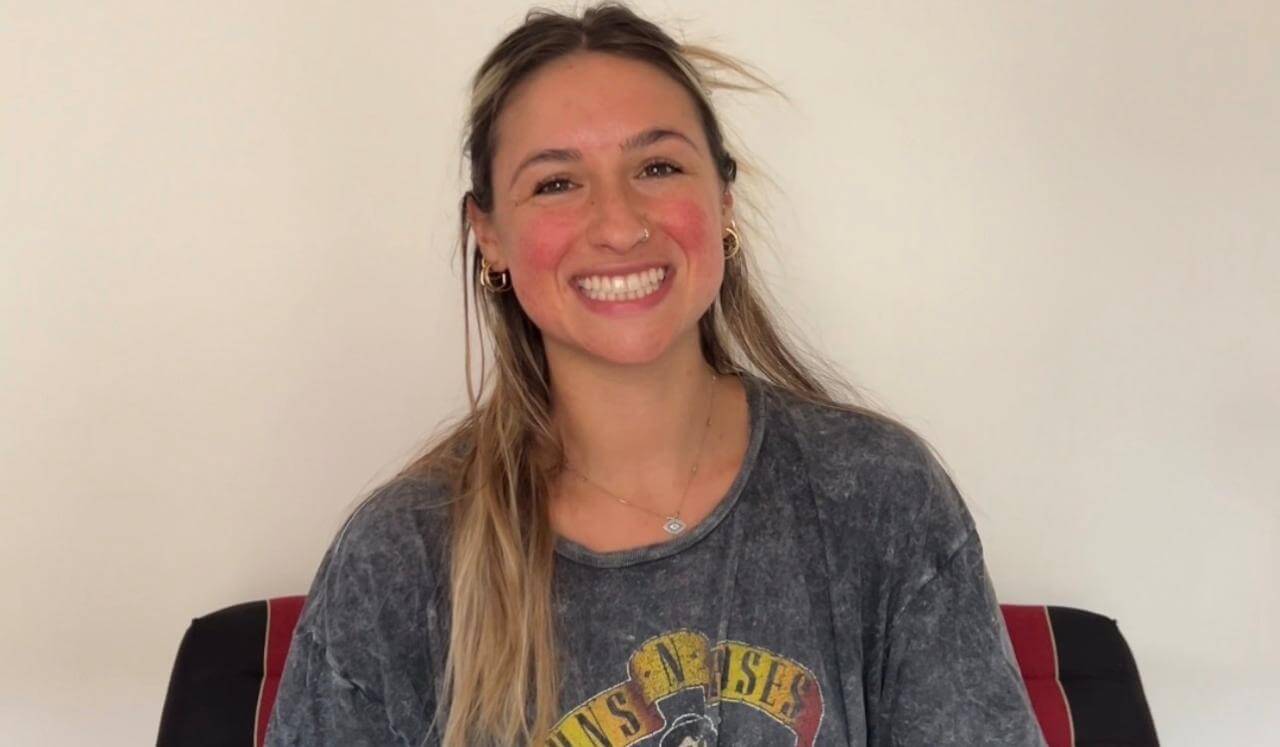
Beginner video for Vinyasa Flow

★ 5.0
·
Talks
·
1 min
Gabriella Barone
How hard is Vinyasa Flow?
Vinyasa Flow stays in effort category 3 because the ongoing flow load sets the floor, without needing extra overrides beyond the reviewed yoga defaults.
3
Mental Effort
2 / 4
▾Emotional Depth
1 / 4
▾Physical Intensity
3 / 4
▾Prior Knowledge
2 / 4
▾