The world’s largest free audio library for everyday wellbeing
Sound-Based
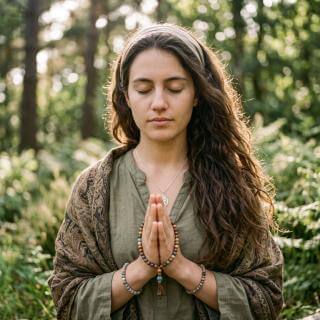
Singing Along Meditation is singing along to recorded devotional, mantra, or contemplative music as a personal meditation, using the melody and words to focus and settle the mind.
Last Updated
4 Jul 2026
We are still reviewing this page. Our research team checks every technique page for accuracy and evidence quality before final release. Details may change as that review completes. The evidence badge shows our current reading of the published research.
RECOMMENDED DOSE
Trials of the closely related chanting practice Kirtan Kriya (12 minutes daily, per the caregiver study) and of brief guided meditation (13 minutes daily) both used short, once-daily sessions over 8 weeks. This dose is extrapolated to singing-based practice as a gentle, achievable starting point.
The 8-week mindfulness courses developed for singers and musicians combined regular weekly sessions with near-daily home practice, supporting a most-days cadence at this stage. The specific 20-minute session length is an editorial step-up from the shorter beginner dose, not a directly tested figure.
Related chanting and relaxation programmes were delivered as daily practice sustained across 8- to 12-week protocols, supporting a consistent daily maintenance rhythm here. The longer 25–30 minute session is an editorial extension for committed practitioners rather than a directly tested duration.
Session length
Session length: 10–15 minutes
10
MIN
How long each individual practice session should last from start to finish.
Frequency
Frequency: 7 days
7
DAYS
The number of days per week to fit a session into your routine.
Session length
Session length: About 20 minutes
20
MIN
How long each individual practice session should last from start to finish.
Frequency
Frequency: 5–7 days
5
DAYS
The number of days per week to fit a session into your routine.
Session length
Session length: 25–30 minutes
25
MIN
How long each individual practice session should last from start to finish.
Frequency
Frequency: 7 days
7
DAYS
The number of days per week to fit a session into your routine.
About this card. Dose guidance is extrapolated from closely related chanting and mindfulness-for-singers studies rather than trials of Singing Along Meditation itself, so treat session lengths in particular as informed starting points. These recommendations are not a substitute for personalised guidance from a qualified practitioner.
Quick answers to what people most often ask. Each card links to the deeper section below.
evidence
No trial has tested Singing Along Meditation directly, so evidence is borrowed from broader meditation research. Meditation programs show small-to-moderate reductions in anxiety and depression and modest gains in everyday well-being, and singers who learn mindfulness report calmer performance. Treat these findings as reasonable expectations rather than proof for singing along itself.
Read moregood for
Singing Along Meditation suits adults who want an absorbing way to settle a busy mind, ease everyday stress, or feel more present, especially those who find silent meditation hard and enjoy music. Supporting research studied meditation and singers rather than this practice directly, and it is not a substitute for professional care when anxiety, depression, or trauma are severe.
Read moresafety
Most healthy adults can practise Singing Along Meditation safely and stop at any point. People with a trauma history, current mood or anxiety conditions, or distressing intrusive thoughts should begin gently and keep professional support within reach, since inward attention can intensify difficult feelings. Singing loudly for long stretches can tire the throat, which softening your volume usually resolves.
Read morehow it works
Singing Along Meditation works mainly through attentional anchoring: matching pitch, tracking lyrics, and staying with the rhythm give attention one clear task, so it drifts less toward worry. As attention steadies on the song, the keyed-up feeling of the body often eases, with breathing slowing and shoulders softening while the recording carries the practice.
Read moreSinging Along Meditation is the practice of singing along with recorded chants, mantras, or contemplative songs as meditation, following the melody and words so attention has one steady anchor to rest on.
You choose a recorded chant, mantra, or contemplative song and sing along with it, following the melody, matching pitch, and tracking the words while adding your own voice. It is usually a personal, often solitary practice guided by the recording rather than a live group. Sustained singing, controlled exhalation, and staying with the rhythm form the moment-to-moment shape of the practice, coupling voice and breath to the sound of the recording.
Singing Along Meditation is distinct from kirtan, a live, interactive call-and-response format practised in a group. Here the practice is personal and often solitary, using a recording as the guide, so the sense of connection comes from matching your voice to the source rather than from a live gathering. It also differs from passive music listening, because you actively vocalize, matching pitch and rhythm rather than only hearing the music.
Not to be confused with
Kirtan
Kirtan is live, interactive group chanting led by musicians in call-and-response; this practice is usually solitary and follows a recording rather than a live exchange of voices.
Karaoke or recreational singing along
Recreational singing is about enjoyment or performance and how the voice sounds; here singing is a meditative anchor, with attention held gently on melody, breath, and words rather than on the result.
Music listening meditation
Listening meditations ask you to receive sound passively, while singing along adds your own voice and breath, which is the active ingredient that distinguishes this practice.
Music therapy
Music therapy is delivered by a trained therapist toward specific clinical goals; singing along meditation is a self-guided personal practice, not a clinical treatment.
Singing Along Meditation appears to work mainly through attentional anchoring, the way matching pitch, tracking lyrics, and staying with the rhythm give attention one clear task to hold, so it drifts less toward worries and stray thoughts. A meta-analysis of meditation in general, not singing along specifically, links this kind of focused attention to small but consistent gains in staying on task (Sumantry & Stewart, 2021). As attention steadies on the song, the keyed-up, on-alert feeling in the body often eases too, breathing slowing and shoulders softening as the recording, rather than a racing mind, carries the practice.
Following a melody, matching pitch, and tracking the words gives attention one clear thing to hold, so it drifts less toward worries and stray thoughts. This is attentional anchoring, and a meta-analysis of meditation links this kind of focused attention to small but consistent gains in staying on task (Sumantry & Stewart, 2021).
Matching pitch, tracking the words, and staying with the rhythm give attention one continuous thing to hold, so the mind drifts to worries less and the singing can feel absorbing rather than effortful. Meditation research links this kind of steady, focused attention to small but consistent gains in staying on task (Sumantry & Stewart, 2021).
Following a familiar melody and words gives a restless nervous system something simple to lock onto, and as attention steadies on the song, the keyed-up, on-alert feeling in the body tends to ease into calm, a shift researchers call arousal downregulation. This calming route is inferred from meditation research more broadly rather than measured for singing along itself (Sumantry & Stewart, 2021).
In studies of meditation more broadly, rather than singing along itself, practice has been measured to lower cortisol, the body's main stress hormone, and to sharpen how the brain's attention networks perform (Jevning, 1978), (Tang et al., 2007). In the body this may feel like settling, the shoulders dropping and breathing steadying, alongside focus that feels less scattered. Because this exact practice has not been measured directly, these changes are inferred from related meditation research rather than demonstrated for singing itself.
That wound-up, can't-switch-off feeling is closely tied to cortisol, the body's main stress hormone. In studies of meditation more broadly, cortisol has been measured to fall during and after practice (Jevning, 1978), (Tang et al., 2007), which can feel like the body settling, the shoulders dropping, and a slower return to calm. Singing along has not been measured directly, so this link is drawn from related meditation research rather than proven for singing itself.
Focus can feel steadier and the body less keyed-up as brief meditation training shifts attention network function, how efficiently the brain orients and holds focus, while cortisol, the body's main stress hormone, drops (Tang et al., 2007), (Jevning, 1978). These changes come from meditation studied broadly, not singing along specifically, so the direction is inferred from adjacent practices.
Staying with a melody can feel easier to hold onto, with fewer pulls toward distraction. Short courses of meditation have been linked to stronger performance on tasks that rely on the executive control networks, the brain systems that keep a goal in mind and screen out distraction, alongside lower stress-hormone activity (Tang et al., 2007), (Jevning, 1978). This evidence comes from meditation broadly, not singing along itself.
Indirect only: the evidence for Singing Along Meditation is drawn from research on meditation and mindfulness broadly rather than this exact practice. On that basis, meditation programs show small-to-moderate reductions in anxiety and depression in clinical groups (Goyal et al., 2014), mindfulness practice is linked to better well-being and lower distress in nonclinical adults (Galante et al., 2021), and singers who learn mindfulness report calmer, more present singing (Czajkowski et al., 2021). What is not yet supported: any trial testing singing along on its own, large studies of this specific practice, or any claim that it replaces treatment for a diagnosed condition.
Meditation programs produce small-to-moderate reductions in anxiety and depression and modest gains in everyday well-being, with effects that are consistent rather than dramatic (Goyal et al., 2014), (Galante et al., 2021). The main areas studied are anxiety, mood, well-being, attention, and stress physiology, with a little research on singers learning mindfulness (Czajkowski et al., 2021). The central limit is that no study has tested singing along as a meditation on its own, so every figure is borrowed from meditation and mindfulness research more broadly rather than measured for singing along itself.
2
Meta-analyses
1
RCTs
0
Systematic reviews
0
Observational
7
Pilot
Studied populations
Meditation, Mindfulness, and Attention: a Meta-analysis
2021
Finding: Across 87 studies of focused-attention and open-monitoring meditation, this review found small but consistent gains in general attention and in executive control, the mental skill that helps you stay on task and resist distraction. Because singing along asks you to hold your focus on pitch, melody and the next line of lyrics, it draws on the same kind of attentional anchoring these results point to, which offers a plausible reason the practice may help sharpen focus. Keep the scale in mind, though: the improvements were modest and did not show up across every aspect of attention, and this evidence comes from meditation broadly rather than from singing-along practice specifically.
Hedges' g = 0.171
Mindfulness for Singers: A Mixed Methods Replication Study
2021
Finding: In a mixed-methods study of 52 singing students and 11 teachers, an eight-week Mindfulness for Singers course raised participants' mindfulness scores and led them to report less performance anxiety, sharper body awareness that helped their vocal technique, and more expression and enjoyment while singing. In practice, this points to mindfulness training helping singers feel calmer and more present on stage, with attention that supports rather than fights the voice. One important limit: this study taught mindfulness to singers rather than testing singing along to music as the meditation itself, and the anxiety and enjoyment gains come from participants' own reports rather than objective measures.
See full citation in referencesSinging along with sacred sound has deep roots in devotional traditions where vocalizing mantra, chant, or spiritual song is itself an act of connection, offering, or absorption. As a personal meditation using recordings, it draws on that lineage while differing from live communal forms such as kirtan. These roots help explain the practice's form and why matching one's voice to devotional recordings can feel meaningful and absorbing, not any clinical effect.
Singing along to chants or contemplative music is low-risk and self-limiting for most healthy adults, you can stop at any point, and nothing about the practice locks you in. A minority of people find that turning attention inward brings difficult thoughts or low mood closer to the surface instead of settling them; this is a practice-informed caution drawn from reports of meditation more broadly, not from singing along specifically (Lomas et al., 2014). If a session leaves you more anxious, low, or oddly detached from yourself, it is reasonable to ease off and consider support from a qualified professional. Because the practice keeps the voice working continuously, singing loudly for long stretches can leave the throat tired or scratchy, a minor, practice-informed comfort issue that softening your volume usually resolves.
People with a trauma history, a current mood or anxiety condition, or a tendency toward distressing intrusive thoughts may want to begin gently and keep support from a qualified professional within reach, since sustained inward attention can sometimes intensify difficult feelings before it eases them. This is a practice-informed caution rather than a documented risk for singing along specifically (Lomas et al., 2014). Anyone recovering from a voice injury or a laryngeal condition should sing softly, rest often, and stop if the voice feels strained, a practical precaution to protect vocal comfort while the voice supports.
A minority of people find that turning attention inward brings difficult thoughts or low mood closer to the surface instead of settling them. If a session leaves you more anxious, low, or oddly detached from yourself, ease off and consider support from a qualified professional. This is a practice-informed caution drawn from reports of meditation more broadly, not from singing along specifically.
| Technique | Best for | Use with care | Evidence strength | Distinction |
|---|---|---|---|---|
| Music listening meditation | Days when the voice is tired or singing feels effortful, or quiet settings where staying silent matters. | A restless mind may drift more during passive listening than when a moving vocal anchor keeps it occupied. | moderate EVIDENCE | Music listening meditation asks you to receive sound without producing it, while singing along adds your own voice, breath, and pitch-matching to the recording. That vocal effort is the main difference: singing engages the muscles of breathing and the vibration of the vocal folds, whereas listening keeps the body still and receptive. |
| Kirtan (live call-and-response chanting) | Wanting shared, in-person practice and the lift that comes from singing with others. | emerging EVIDENCE | Kirtan is a live, communal call-and-response chant led by musicians, where singing back is shared and interactive. Singing along meditation is usually solitary and uses a recording as its guide, so the felt connection is with the source material rather than a room of other voices. |
No. Singing skill or vocal quality is not required, because the practice uses the melody, pitch, and words as an anchor to settle the mind, not as a performance. If singing feels effortful, humming along or softening your volume works just as well.
+
No. The aim is not to sound good but to give attention one steady thing to follow, so the quality of your voice does not matter. Matching pitch, tracking the words, and staying with the rhythm are simply ways to hold focus and let the body settle. If your voice tires or singing feels hard, humming along or lowering your volume keeps the practice comfortable and just as useful.
No. Chant and mantra are the traditional forms, but any recording works if it is easy to follow, comfortable to sing, and personally meaningful. The point is to give attention a melody and words to rest on while your voice and breath settle.
+
No. A chant or mantra is the traditional starting point rather than a requirement. What matters is that the recording is easy to follow, sits in a comfortable pitch range, and feels absorbing enough to hold your attention, so any song you can join without strain can serve. Devotional or personally meaningful material may help you engage more freely and return more often, but there is no evidence that sacred material adds a clinical effect over other music; the settling comes from focusing and singing along, whatever the source.
Steadying attention on one clear target, here the melody, pitch, and words, so it stops repeatedly slipping toward worries or distraction. It tends to feel like fewer spiraling thoughts and a clearer sense of staying present.
Focused-attention regulation in which attention is selectively held on a chosen object to reduce mind-wandering; studied as focused attention and attentional selection.
The way breathing, heartbeat, and movement gradually fall into step with an external rhythm such as a song. It often feels like being carried by the music, with the body settling into the pattern without effort.
The synchronisation of physiological rhythms — neural oscillations, heart rate, respiration, and motor patterns — to an external rhythmic stimulus; studied as neural entrainment and oscillatory synchronization.
The use of sustained voice, singing, or humming to gently activate the vagus nerve, which helps shift the body toward rest and recovery. Practitioners often notice it as a calming, grounding effect during and after singing.
The use of vocalization to stimulate the vagus nerve through vocal-fold vibration and controlled phonation, enhancing parasympathetic regulatory capacity; studied as laryngeal vagal stimulation.
The shift from being caught up inside your thoughts to watching them pass as temporary mental events. It creates a little breathing room between you and a worry, so it feels less gripping.
The cognitive shift from immersion in thoughts and emotions to observing them as transient mental events, reducing automatic reactivity and identification with mental content; studied as decentering and cognitive defusion.
Attention directed outward to the senses, here tracking the sound, melody, and timing of a recording rather than turning inward. It shows up as heightened presence and vivid, detailed perception of the surrounding world.
The ability to sense and interpret environmental stimuli through the five senses, maintaining conscious attention to the outer world; distinct from interoceptive awareness of internal body states. Studied as exteroception and environmental perception.
David Sumantry, Kathleen E. Stewart (2021). Meditation, Mindfulness, and Attention: a Meta-analysis. https://doi.org/10.1007/s12671-021-01593-w
Cited in: Faq, How it works, Research
Anne-Marie Czajkowski, Alinka Greasley, Michael Allis (2021). Mindfulness for Singers: A Mixed Methods Replication Study. https://doi.org/10.1177/20592043211044816
Explore guided sessions to deepen your Singing Along Meditation technique.
Outcomes measured
| Outcome | Effect size | 95% CI | N | Comparator | Source |
|---|---|---|---|---|---|
| Anxiety at 8 weeks | SMD = 0.38 | 95% CI 0.12-0.64 | 3,515 | — | Goyal et al., 2014 |
| Depression at 8 weeks | SMD = 0.30 | 95% CI 0.00-0.59 | — | — | Goyal et al., 2014 |
| Well-being vs no intervention | SMD = 0.33 | 95% CI 0.11 to 0.54 | — | — | Galante et al., 2021 |
| Distress vs no intervention | SMD = -0.45 | 95% CI -0.58 to -0.31 | — | — | Galante et al., 2021 |
| Generalized attention | Hedges' g = 0.171 | 95% CI 0.119-0.224 | — | — | Sumantry & Stewart, 2021 |
The research is useful for setting expectations, but study methods and participant groups vary. Treat the findings as general guidance rather than a promise about any single session, and not a replacement for clinical care.
Meditation Programs for Psychological Stress and Well-being
n = 3,515
Finding: Reviewing 47 trials with more than 3,500 adults, this analysis found that eight weeks of mindfulness meditation produced a moderate drop in anxiety and a smaller reduction in depression, with the calming effect fading somewhat by the three-to-six-month mark. In practical terms, a regular meditation habit may take the edge off day-to-day worry and low mood, though the benefits were modest and no greater than those from other active treatments like therapy or exercise. Keep in mind these results come from broader mindfulness programs rather than singing-along meditation specifically, so they speak to the wider practice this technique grows out of rather than to singing itself.
SMD = 0.38
Preliminary evidence about the effects of meditation on interoceptive sensitivity and social cognition.
2013
Finding: This study compared long-term meditators, newer meditators, and non-meditators on how accurately they could sense their own heartbeat, and found no difference between the groups; most measures of reading other people's mental and emotional states also showed no improvement. The meditators did report lower anxiety and depression, so the practice may still support emotional well-being even if it does not sharpen your internal body awareness. If you are drawn to singing-along meditation for the calm it brings, that fits the evidence, but don't expect it to make you notably better at detecting subtle body signals like your pulse. Because this was a snapshot comparison rather than a controlled trial, it can point to patterns but can't prove cause and effect.
See full citation in referencesMindfulness training affects attention--or is it attentional effort?
2012
Finding: In a blinded trial with 48 healthy adults new to meditation, researchers compared a mindfulness stress-reduction course against a non-mindfulness relaxation program and a group simply motivated to try harder on the tests. Much of the attention boost people often credit to meditation turned out to match what the motivated group achieved, meaning part of the effect likely comes from general relaxation and plain effort rather than the practice itself. That said, the mindfulness group did show its own gains in focused attention, sharper perception and working memory. For anyone drawn to a practice like singing-along meditation, the honest takeaway is that some sharpening of the mind may follow, but this small, short study is a reminder not to assume every mental-clarity benefit is unique to the technique.
See full citation in referencesAdrenocortical activity during meditation
1978
Finding: In this early study, long-term meditators showed a clear drop in cortisol, a key stress hormone, while they meditated, with no change in testosterone. That points to meditation quieting the body's stress-response system in the moment, which fits the calming aim of singing-along practice. Worth knowing, though: the measurements came from experienced Transcendental Meditation practitioners, not people singing, so this speaks to meditation in general rather than to singing-along meditation specifically.
reported narratively
Effects of Meditation versus Music Listening on Perceived Stress, Mood, Sleep, and Quality of Life in Adults with Early Memory Loss: A Pilot Randomized Controlled Trial
n = 60
Finding: In this pilot trial, 60 older adults noticing early memory changes were assigned to either a 12-week chanting meditation or a music-listening program, and both groups reported less perceived stress along with better mood, sleep, and overall quality of life, with the meditation group gaining somewhat more. Those improvements were still holding six months later, which hints that a regular practice built around sound and attention can offer lasting everyday benefits. Keep in mind this was a small study in a specific group, and it compared music listening with a chanted meditation rather than singing along to music, so it speaks to the broader pairing of music and meditation more than to this exact technique.
reported significant; p≤0.05
Mindfulness-based programmes for mental health promotion in adults in nonclinical settings: A systematic review and meta-analysis of randomised controlled trials
2021
Finding: Across 136 trials involving more than 11,600 adults in everyday, non-clinical settings, mindfulness-based programmes modestly lifted mental well-being and reduced psychological distress compared with doing nothing, with a small-to-moderate improvement on both. For someone drawn to a meditation-based practice like singing-along meditation, this points to a real but gentle payoff in feeling steadier and more at ease. The gains were uneven from study to study, though, and these programmes did not outperform other active approaches such as exercise or other structured activities, so the benefit is best seen as one helpful option rather than a guaranteed edge over everything else.
SMD = 0.33
A Qualitative Analysis of Experiential Challenges Associated with Meditation Practice
2014
Finding: This peer-reviewed study looks at singing-along meditation, a practice that pairs breath and voice by having you sing gently along with music or a guided track. The specific outcomes and effect sizes from this study aren't available in our current record, so we can't yet describe concrete results such as how it affected mood, stress, or focus. If you're curious about the practice, it's reasonable to try it for how it feels to you, while keeping in mind that we don't have measured findings to report here yet.
See full citation in referencesShort-term meditation training improves attention and self-regulation
n = 40
Finding: In this randomized trial, 40 college students were split between just five days of short body-mind meditation and a relaxation routine, and the meditation group came out ahead on tests of focus while showing lower levels of the stress hormone cortisol and signs of stronger immune activity. Practically, this hints that even a brief, consistent start with meditation can sharpen attention and calm the body's stress response, rather than requiring months of training. Keep in mind the study was small and short, ran in young adults, and tested a general meditation method, not singing-along practice specifically, so treat it as early evidence for how meditation affects the body rather than proof of what singing along will do for you.
reported narratively
People with a trauma history, a current mood or anxiety condition, or a tendency toward distressing intrusive thoughts may want to begin gently and keep support from a qualified professional within reach, since sustained inward attention can sometimes intensify difficult feelings before it eases them. Treat singing along as a gentle addition to, not a replacement for, clinical care when symptoms are severe. This is a practice-informed caution rather than a documented risk for singing along specifically.
Because the practice keeps the voice working continuously, singing loudly for long stretches can leave the throat tired or scratchy. Softening your volume, humming along instead of pushing through, resting, and sipping water usually settle it. This is a minor comfort issue rather than an injury.
Anyone recovering from a voice injury or a laryngeal condition affecting the voice box should sing softly, rest often, and stop if the voice feels strained. This is a practical precaution to protect vocal comfort while the voice recovers, not evidence-based guidance about singing along as a meditation.
Singing along to chants or contemplative music is best approached as a way to settle rather than perform, so let a soft-to-moderate voice and relaxed breath guide you. A sensible starting format is a few quiet minutes with a recording whose pitch and melody feel easy to join, extending the length only once you notice how it affects your mood and energy. Keep water within reach for your throat, and stay gently aware of whether the practice is steadying you or stirring things up, easing off whenever that feels right.
Begin with a few minutes of quiet singing rather than a long session, so you can feel how the practice affects your mood and energy before extending it. Let the aim be to settle, not to perform.
Pick chants or contemplative music with a comfortable pitch range and a melody you can join without strain, so matching the sound feels absorbing rather than effortful. Familiar or personally meaningful recordings make it easier to keep coming back.
Sing at a soft-to-moderate volume, let your breath stay relaxed, and take a sip of water if your throat feels dry. If your voice tires or turns scratchy, lower your volume or hum along instead of pushing through.
As you sing, notice whether the practice is steadying you, with shoulders dropping and breathing easing, or whether it is stirring up anxiety, low mood, or a detached feeling. Treat rising distress as a signal to pause, not to push through.
If a session leaves you more unsettled than calm, shorten your practice, take a break, or ground yourself with something ordinary afterward. If difficult thoughts or feelings persist, seek support from a qualified mental-health professional.
This information is educational and is not medical advice. This practice is not a substitute for professional care and should not replace prescribed medication or treatment for any medical or mental-health condition. If you are managing a health condition or taking medication, talk with a qualified health professional before changing your practice. If you are in distress or crisis, seek professional support.
| Mantra meditation (e.g., Kirtan Kriya) | A pared-back, portable anchor that needs no melody, recording, or device. | moderate EVIDENCE | Mantra meditation repeats a single word or sound, often silently or in a simple tone, to hold attention steady. Singing along meditation follows a whole melody and lyrics from a recording, so musical structure rather than one repeated phrase carries the focus. |
| Silent focused-attention meditation | Building quiet, portable concentration with no sound or equipment. | moderate EVIDENCE | Silent focused-attention meditation rests attention on the breath or a chosen object in quiet, whereas singing along gives attention an external, moving target in melody, pitch, and words. Both train the same steadying of focus, but singing offers a louder, more absorbing anchor that some people find easier to stay with. |

Not for this exact practice. No trial has tested singing along meditation on its own, so any benefit is inferred from broader meditation research, which links regular practice to small-to-moderate drops in anxiety and depression and modest gains in well-being (Goyal et al., 2014), (Galante et al., 2021).
+
Not proven directly. No trial has tested singing along meditation as its own intervention, so any benefit is inferred rather than demonstrated. Broader meditation research links regular practice to small-to-moderate reductions in anxiety and depression, modest well-being gains, and steadier attention (Goyal et al., 2014), (Galante et al., 2021), (Sumantry & Stewart, 2021). Those findings are borrowed from related practices, not shown for singing along, and it is not a treatment for a diagnosed condition.
Not directly. No study has tested singing along as a meditation on its own, so the findings you see are borrowed from broader meditation, mindfulness, and mindfulness-for-singers research (Galante et al., 2021). Treat them as reasonable expectations, not proof about this exact practice.
+
Not directly. This specific practice has barely been studied on its own, so the evidence is indirect: meditation programs show small-to-moderate reductions in anxiety and depression (Goyal et al., 2014), mindfulness is linked to better well-being and lower distress in nonclinical adults (Galante et al., 2021), and singers who learn mindfulness report calmer, more present singing (Czajkowski et al., 2021). These figures set reasonable expectations, but none of the studies tested singing along as a standalone meditation.
Likely because matching pitch, tracking lyrics, and staying with the rhythm gives attention one clear task to hold, so it drifts less toward worry, and as focus steadies the body's keyed-up feeling tends to ease. This is inferred from broader meditation research, not measured for singing along itself (Sumantry & Stewart, 2021).
+
The calm most likely comes from attentional anchoring, the way keeping your voice with the melody, words, and rhythm gives the mind a single task so it drifts less toward worry. Meditation research links this kind of focused attention to small but consistent gains in staying on task (Sumantry & Stewart, 2021). As attention settles, the stress response often eases too; studies of meditation more broadly have measured lower cortisol, the body's main stress hormone, alongside steadier attention (Jevning, 1978), (Tang et al., 2007). Because singing along has not been tested directly, this settling is extrapolated from meditation research rather than shown for the practice itself.
Possibly. Singing along itself hasn't been measured, but in broader meditation research practice is linked to lower cortisol, the body's main stress hormone, felt as shoulders dropping and breathing easing as the stress response settles (Jevning, 1978). You may notice this settling, though it's inferred, not proven for this practice.
+
Possibly. Studies of meditation more broadly, not singing along specifically, have measured lower cortisol, the stress hormone that keeps the body keyed up, which many people feel as the shoulders dropping and the breath slowing (Jevning, 1978). Even short meditation training has been linked to steadier attention alongside reduced stress markers (Tang et al., 2007). Because this exact practice hasn't been tested, treat calmer breathing and lower stress hormones as plausible, inferred effects that can support settling rather than a measured result for singing, and not a replacement for care.
For most people, yes, with care. Singing along is usually low-risk and self-limiting, but a minority find that turning attention inward can surface difficult thoughts or low mood. Begin gently, keep professional support within reach, and it is not a substitute for care when symptoms are severe.
+
For most people, yes, but practice with care rather than treating it as a certain fix. If you live with anxiety or depression, start with short sessions, notice whether the practice steadies you or stirs up distress, and ease off if a session leaves you feeling more anxious, low, or detached. Keep support from a qualified professional within reach, and treat singing along as a gentle addition to, not a replacement for, clinical care when symptoms are severe. This is a practice-informed caution drawn from reports of meditation more broadly, not a documented risk for singing along specifically.
Occasionally, but usually only as mild, short-lived tiredness. Singing continuously or loudly can leave the throat tired or scratchy, which softening your volume, humming instead, resting, and sipping water usually resolves. This is a practice-informed comfort caution, not a documented risk for singing along specifically.
+
Occasionally, though for most healthy adults it is a mild comfort issue rather than an injury. Because the practice uses the voice continuously, long or loud singing can tire the throat; easing your volume, humming along, resting, and staying hydrated typically settle it. Anyone recovering from a voice injury or a laryngeal condition affecting the voice box should sing softly, rest often, and stop if the voice feels strained. This is practice-informed guidance for vocal comfort, not demonstrated evidence for singing along as a meditation.
Start short: pick a chant or contemplative recording that is easy to follow, sing along at a soft-to-moderate volume for a few minutes, and extend the session only as long as it keeps feeling settling. There is no prescribed length, so let comfort, not a target time, guide you.
+
Start with just a few minutes rather than a long sitting, choosing a recording with a comfortable pitch range and a familiar melody so matching it feels absorbing rather than effortful. Keep your voice soft-to-moderate, let your breath stay relaxed, and check in as you go: if you feel steadier, you can gradually build the duration, and if a session stirs up anxiety or low mood, treat that as a signal to ease off rather than push through. No study has measured an ideal length for singing along specifically, so think of session time as a flexible, self-limiting suggestion you can shape to fit you.
Mainly format: singing along meditation is usually a solitary, personal practice that follows a recording as its guide, while kirtan is live, communal call-and-response chanting led by musicians. Both use the voice, but one is solo and recorded, the other shared and interactive.
+
The difference is one of format rather than proven effect. Singing along meditation means singing with a recorded chant, mantra, or contemplative song on your own, so the felt connection is with the source material. Kirtan is a live, in-person exchange where a musician leads and a group sings back in call-and-response. There is no head-to-head research comparing the two, so this is a descriptive distinction about how you practise, not a claim that either works better.
The body's main stress hormone, released when you are under pressure. Lower levels reflect the stress response easing, felt as the body settling, shoulders dropping, and a slower return to calm.
A glucocorticoid hormone released by the adrenal cortex as part of the hypothalamic-pituitary-adrenal stress response; used as a physiological marker of stress arousal.
A standardized number showing how large a difference a practice made in a study, letting results be compared across trials. Values around 0.2 to 0.4 are considered small to moderate.
A standardized mean difference (SMD) or Hedges' g expressing the magnitude of an intervention's effect in pooled units, enabling comparison across studies with different measures.
The linking of what you hear to how you move or produce sound, as when your voice matches the pitch and timing of a recording. It underlies the absorbing sense of singing in time with the source.
The sensorimotor integration by which auditory input guides and is coordinated with motor output, such as matching vocal pitch and timing to a heard stimulus.
Madhav Goyal, Sonal Singh, Erica Sibinga, Neda F Gould, Anastasia Rowland-Seymour, Ritu Sharma (2014). Meditation Programs for Psychological Stress and Well-being. https://doi.org/10.1001/jamainternmed.2013.13018
Melloni Margherita, Sedeño Lucas, Couto Blas, Reynoso Martin, Gelormini Carlos, Favaloro Roberto (2013). Preliminary evidence about the effects of meditation on interoceptive sensitivity and social cognition.. https://doi.org/10.1186/1744-9081-9-47
Cited in: Research
C. G. Jensen, S. Vangkilde, V. Frokjaer, S. Hasselbalch, Jensen Christian Gaden, Vangkilde Signe (2012). Mindfulness training affects attention--or is it attentional effort?. https://doi.org/10.1037/a0024931
Cited in: Research
R. Jevning (1978). Adrenocortical activity during meditation. https://doi.org/10.1016/0018-506x(78)90024-7
Cited in: Faq, How it works, Research, What happens in the body
Kim E. Innes, Terry Selfe, Dharma Singh Khalsa, Sahiti Kandati (2016). Effects of Meditation versus Music Listening on Perceived Stress, Mood, Sleep, and Quality of Life in Adults with Early Memory Loss: A Pilot Randomized Controlled Trial. https://doi.org/10.3233/jad-151106
Cited in: Comparison
Julieta Galante, Claire Friedrich, Anna F. Dawson, Marta Modrego‐Alarcón, Pia Gebbing, Irene Delgado-Suárez (2021). Mindfulness-based programmes for mental health promotion in adults in nonclinical settings: A systematic review and meta-analysis of randomised controlled trials. https://doi.org/10.1371/journal.pmed.1003481
Tim Lomas, Tina Cartwright, Trudi Edginton, Damien Ridge (2014). A Qualitative Analysis of Experiential Challenges Associated with Meditation Practice. https://doi.org/10.1007/s12671-014-0329-8
Cited in: Research, Use with care, Who should use care
Yi‐Yuan Tang, Yinghua Ma, Junhong Wang, Yaxin Fan, Shigang Feng, Qilin Lu (2007). Short-term meditation training improves attention and self-regulation. https://doi.org/10.1073/pnas.0707678104
Cited in: Faq, How it works, Research, What happens in the body
Editorially curated. Tracks are not themselves clinically studied; evidence on the page applies to Singing Along Meditation as a technique.
Beginner content for Singing Along Meditation

★ 4.8
·
Music
·
5 min
Prashanti Paz
How hard is Singing Along Meditation?
Singing along meditation should stay active and participatory rather than inheriting the modality’s softer passive edge cases.
2
Mental Effort
2 / 4
▾Emotional Depth
2 / 4
▾Physical Intensity
2 / 4
▾Prior Knowledge
1 / 4
▾