The world’s largest free audio library for everyday wellbeing
Somatic & Body Based
Therapeutic Tremoring (TRE) is a somatic practice that uses a set sequence of exercises to fatigue the hips and legs until the body begins to tremor on its own, letting held tension release through the shaking.
Last Updated
4 Jul 2026
We are still reviewing this page. Our research team checks every technique page for accuracy and evidence quality before final release. Details may change as that review completes. The evidence badge shows our current reading of the published research.
RECOMMENDED DOSE
No direct dose-response literature exists for therapeutic tremoring. This short, low-frequency starting point follows general practice conventions for somatic tremoring/neurogenic release techniques, which advise brief early sessions to let the nervous system adjust. No direct dose evidence; editorial synthesis.
No cited source specifies a dose for this technique. Once a beginner is comfortable self-regulating the tremor response, a modest step up in duration and frequency reflects common somatic-practice guidance. No direct dose evidence; editorial synthesis.
No maintenance-dose study was available for therapeutic tremoring. This upper range represents a maintenance level for experienced practitioners, capped conservatively because tremoring can be activating; longer or more frequent sessions should only be undertaken with practitioner support. No direct dose evidence; editorial synthesis.
Session length
Session length: 5–10 minutes
5
MIN
How long each individual practice session should last from start to finish.
Frequency
Frequency: 2–3 days
2
DAYS
The number of days per week to fit a session into your routine.
Session length
Session length: 10–15 minutes
10
MIN
How long each individual practice session should last from start to finish.
Frequency
Frequency: 3–4 days
3
DAYS
The number of days per week to fit a session into your routine.
Session length
Session length: 15–20 minutes
15
MIN
How long each individual practice session should last from start to finish.
Frequency
Frequency: 4–5 days
4
DAYS
The number of days per week to fit a session into your routine.
About this card. No direct dose-response literature exists for therapeutic tremoring; these ranges are editorial starting points based on general conventions for somatic tremoring practices and should be treated as such. These recommendations are not a substitute for personalised guidance from a qualified practitioner.
Quick answers to what people most often ask. Each card links to the deeper section below.
evidence
Early, limited research supports Therapeutic Tremoring for lowering in-the-moment anxiety and a felt sense of settling, drawn from a small pilot of about 25 people, a case report with military veterans, and an unpublished trial protocol in adolescents. No adequately powered trial confirms effect size, durability, or any claim that it treats trauma or diagnosed conditions.
Read moregood for
Adults who feel wired, braced, or unable to switch off after stress may find Therapeutic Tremoring helpful, and it has been explored with people carrying everyday anxiety and with military veterans. It offers supportive settling and lower in-the-moment anxiety, not a treatment for trauma, dissociation, or severe mental health symptoms, which need professional care.
Read moresafety
Most healthy adults can practise Therapeutic Tremoring at low risk, but the self-generated shaking can surface intense sensation and unexpected emotion faster than some people integrate. Take extra care with a trauma history, dissociation, active psychosis, pregnancy, or heart, back, or hip conditions, and work with a certified provider rather than practising alone.
Read morehow it works
A set sequence of exercises fatigues the deep hip and core muscles until the body begins to tremble on its own, a process called neurogenic tremoring. This shaking is proposed to discharge stored fight-or-flight activation and shift the nervous system toward its rest-and-recovery branch, felt as warmth, slower breath, and softening muscles once the trembling eases.
Read moreTherapeutic Tremoring (TRE) uses a set sequence of exercises to fatigue the hips and legs until the body begins to tremor on its own, letting held muscular tension release through the shaking.
A session follows David Berceli's standardized protocol: a fixed sequence of exercises that fatigue the psoas and hip flexors, the deep muscles that tighten under stress, until an involuntary tremor arises on its own. Rather than shaking deliberately, the practitioner sets up the exercises, allows the tremor to move through the body, and tracks the warmth, slower breath, and softening that follow. Sessions are usually short and graded, and often guided by a certified TRE provider.
Therapeutic Tremoring differs from general shaking practices in its specific exercise protocol and standardized, certified training, and from spontaneous neurogenic tremoring in its structured way of triggering the tremor. It is a somatic self-regulation practice, not a medical treatment, and the term refers to David Berceli's TRE method rather than shaking used loosely in other movement or dance practices.
Not to be confused with
Neurogenic tremoring (the raw phenomenon)
Neurogenic tremoring is the body's involuntary shaking itself, which can arise spontaneously after stress or exertion. Therapeutic Tremoring is the standardized method that deliberately triggers that tremor through a set exercise sequence and structured, certified delivery.
Free-form shaking or shaking meditation
Free-form shaking practices use voluntary, rhythmic movement that you generate and control yourself. Therapeutic Tremoring differs by fatiguing specific muscles until the tremor becomes involuntary and self-propagating, delivered through a fixed protocol rather than improvised movement.
Standalone trauma treatment
Therapeutic Tremoring is a self-regulation practice, not a replacement for trauma-focused psychotherapy or clinical care. It is best used alongside professional support rather than as a treatment in its own right, especially with a trauma history.
Therapeutic Tremoring is thought to work by triggering neurogenic tremoring, the involuntary shaking that arises once the deep muscles of the hips and core are fatigued, which is proposed to let the nervous system release stored fight-or-flight activation and settle toward its rest-and-recovery branch (Bonaz et al., 2017), (Breit et al., 2018). In the body this tends to feel like a wave of trembling that gradually eases into warmth, slower breathing, and a spreading calm. Tracking that shaking and the softening that follows may also sharpen interoception, your ability to read internal signals like tension or rising stress before they build, though this pathway is drawn from broader body-awareness research rather than tested in tremoring itself (Bonaz et al., 2020).
Feeling stuck on high alert and unable to downshift into rest is the state autonomic balancing describes. Therapeutic Tremoring is thought to help the nervous system move out of chronic fight-or-flight and toward its rest-and-recovery branch, which practitioners often feel as the body settling and urgency easing, though this pathway has not been tested directly in the practice itself (Bonaz et al., 2017), (Breit et al., 2018).
In Therapeutic Tremoring, the involuntary trembling that rises through the legs and hips is thought to let the nervous system release stored fight-or-flight activation and settle back toward rest, an idea drawn from how the body's rest-and-recovery pathways calm arousal (Bonaz et al., 2017), (Breit et al., 2018). Many practitioners describe a wave of shaking followed by a deep sense of the body letting go, though this release has not been directly measured during a TRE session.
Noticing your body from the inside can sharpen as the tremoring gives your attention something clear and physical to track: the shaking itself, and the warmth, slower breath, and softening muscles that tend to follow. Early thinking suggests this repeated attention may help you read internal signals like tension or rising stress more clearly, though this pathway has not been tested directly in Therapeutic Tremoring (Bonaz et al., 2020).
What happens in the body during Therapeutic Tremoring has not been measured directly, so the changes described here are inferred from research on related nervous-system practices rather than recorded during tremoring itself (Bonaz et al., 2017), (Breit et al., 2018). The proposed shift is a drop in sympathetic arousal, the fight-or-flight activation that quickens the heart and tightens muscles, toward parasympathetic, rest-and-recovery activity, which practitioners tend to feel as warmth, heaviness, slower breath, and muscles that soften once the shaking stops. Because no study has tracked these signals during a TRE session, the felt sense of settling is best read as a plausible sign of this shift, not confirmation of it.
Practitioners often describe trembling that gradually slows into a settled, heavier calm, as if the body has finally set down tension it had been bracing to hold. This is thought to reflect completing the stress response cycle, the body finishing an interrupted fight-or-flight response and returning toward baseline, though it has not been measured directly during Therapeutic Tremoring (Bonaz et al., 2017).
When stress stays locked in the body, you can feel wired and braced even when you want to rest. Therapeutic Tremoring is expected to ease sympathetic arousal, the fight-or-flight activation that quickens the heart and tightens muscles, so trembling settles into warmth, slower breathing, and a sense of the body letting go, though this shift has not been measured directly in TRE and is inferred from related nervous-system practices (Breit et al., 2018).
The shift out of high alert and into settling is what many people notice once the tremoring slows and stops. Sympathovagal balance, the seesaw between the body's fight-or-flight branch and its rest-and-recovery branch, has not been measured directly during Therapeutic Tremoring; a move toward the calmer, parasympathetic side is expected based on related nervous-system research (Bonaz et al., 2017), (Breit et al., 2018), and in the body this often feels like breathing slowing, muscles softening, and a sense of urgency draining away.
After the shaking stops, breathing tends to slow, the body feels heavier, and a spreading calm settles in. These are signs of rising parasympathetic tone, the activity of the nervous system's rest-and-recovery branch that slows heart rate and lets muscles soften, though this shift has not been measured directly during Therapeutic Tremoring and is inferred from related practices (Bonaz et al., 2017), (Breit et al., 2018).
You feel more in tune with your body, catching early signs of tension or unease before they build. That is interoceptive network sensitivity, how clearly the brain reads internal signals like breath, heartbeat, warmth, and muscle tension. It has not been measured directly during Therapeutic Tremoring, but tracking the involuntary tremor and the settling that follows is expected to sharpen that signal-reading, based on how interoception behaves in related research (Bonaz et al., 2020).

Emerging evidence to date suggests Therapeutic Tremoring may ease in-the-moment anxiety and support a felt sense of settling, based on a small pilot study of state anxiety, a case report describing use with military veterans, and a registered trial protocol in adolescents whose results are not yet published (Bonaz et al., 2017). Its proposed benefits for tension release, nervous-system balance, and body awareness rest on indirect research rather than direct trials of tremoring (Breit et al., 2018), (Bonaz et al., 2020). Not yet supported are adequately powered randomized trials, long-term follow-up, measured effect sizes, or any claim that it treats trauma, addiction, or a diagnosed condition.
The direct research on Therapeutic Tremoring is still thin and early. A pilot study of about 25 people reported lower in-the-moment anxiety, a case report documented its use with military veterans, and a trial protocol in 140 adolescents has been published but not yet reported (Bonaz et al., 2017). No large or adequately powered trial has yet isolated the standardized tremoring sequence, so its proposed mechanisms, releasing stored stress activation and sharpening your sense of internal body signals, lean on indirect research about how rest-and-recovery pathways lower arousal and how body awareness can be trained (Breit et al., 2018), (Bonaz et al., 2020). For now the findings are best read as plausible and promising rather than established, and they cannot yet confirm how large any benefit is or how long it lasts.
0
Meta-analyses
0
RCTs
0
Systematic reviews
0
Observational
3
Pilot
Outcomes measured
The research on Therapeutic Tremoring is limited by small samples, a reliance on a single pilot study and case reports, and a trial protocol whose results are not yet available, so the findings may not apply to everyone. The proposed body changes, such as a shift toward the nervous system's rest-and-recovery state that practitioners feel as slower breath and softening muscles, have not been measured during the practice itself and are carried over from indirect research. Because of this, Therapeutic Tremoring may help some people settle and feel calmer, but it can only complement, not replace, professional care.
Diseases, Disorders, and Comorbidities of Interoception
2020
Finding: This paper is a general review of interoception, the sense of what is happening inside your body, and describes how reading signals like warmth, muscle softening, and slowed breath helps the body and mind stay balanced. It does not test therapeutic tremoring itself, so the connection is indirect: the idea is that paying attention to the involuntary shaking and the body sensations that come with it may sharpen how clearly you notice and make sense of those inner signals. Because the research covers interoception broadly rather than any shake-and-release practice, treat this as background for why tuning into body sensations matters, not as proof that tremoring measurably improves it.
See full citation in referencesThe Vagus Nerve in the Neuro-Immune Axis: Implications in the Pathology of the Gastrointestinal Tract
2017
Finding: This paper maps how the vagus nerve helps steer the body's shift between stress and recovery, describing the balance between the "fight-or-flight" and "rest-and-digest" branches of the nervous system that TRE is thought to influence. It offers a plausible route by which calming practices might tip the body toward recovery, but it examines the nervous system in general rather than tremoring specifically, so it cannot show that shaking itself produces these effects. Treat it as background for why the idea is worth exploring, not as proof that TRE rebalances your nervous system.
See full citation in referencesTherapeutic Tremoring was developed by David Berceli in 2008 as Tension & Trauma Release Exercises, growing out of his work in trauma-affected communities and the observation that the body shakes naturally once danger has passed. The practice is built around the idea that involuntary trembling, like the shaking animals show after threat, helps the body complete an interrupted stress response. These roots help explain the practice's form, its specific sequence of exercises that fatigue the hips and legs and its permission to let the body shake, rather than proving any clinical effect.
For most healthy adults, Therapeutic Tremoring is low-risk, and the involuntary shaking usually resolves into a settled, heavier calm. The main caution is practice-informed rather than drawn from safety trials: the self-generated shaking the exercises set off, known as neurogenic tremoring, can bring up intense physical sensation and unexpected waves of emotion faster than some people can integrate. That is a moderate concern for anyone with a trauma history or a tendency to dissociate, to mentally disconnect from what is happening in the moment. And because the sequence deliberately fatigues the psoas and hip flexors, the deep core and hip muscles that brace under stress, easing in slowly is a sensible precaution, inferred from physiology rather than tested, if you have a recent injury or tend toward low blood pressure.
Take extra care if you live with post-traumatic stress, a tendency to dissociate, or an acute mental-health crisis such as active psychosis, because the strong sensation and emotional release the tremoring can bring may feel like too much too fast. These are practice-informed cautions, drawn from how certified TRE is taught and delivered rather than from adverse-event data. If you are pregnant, recovering from a recent hip, back, or abdominal injury, or managing a cardiovascular condition, check with a clinician first, a precaution inferred from the sustained muscular fatigue the exercises involve. In any of these situations, working with a certified TRE provider rather than practising alone is the safer path, and TRE is best treated as a complement to trauma-informed care, not a replacement for it.
The self-generated shaking the exercises set off, known as neurogenic tremoring, can bring up intense physical sensation and unexpected waves of emotion faster than some people can integrate. If you carry a trauma history or tend to dissociate, mentally disconnecting from what is happening in the moment, keep sessions short, know you can stop by straightening your legs, and work with a certified TRE provider rather than practising alone. This caution is practice-informed, drawn from how certified TRE is taught rather than from safety trials.
| Technique | Best for | Use with care | Evidence strength | Distinction |
|---|---|---|---|---|
| Progressive Muscle Relaxation (Jacobson) | A calm, predictable wind-down when you want to guide the process yourself and would rather avoid strong emotional release. | If deep hip holding is the issue or you want spontaneous release, deliberate tensing and releasing may feel less complete. | moderate EVIDENCE | Progressive Muscle Relaxation is a deliberate, self-directed sequence of tensing and then releasing muscle groups one by one, so the letting-go stays under your conscious control. Therapeutic Tremoring instead fatigues the psoas and hip flexors until an involuntary tremor arises on its own, so the release happens through shaking you allow rather than movement you steer. |
| Somatic Experiencing | Moving through trauma with a trained clinician who titrates the pace and stays with you through hard material. | When emotional material feels overwhelming, self-led tremoring without a guide can surface more than you can integrate at once. |
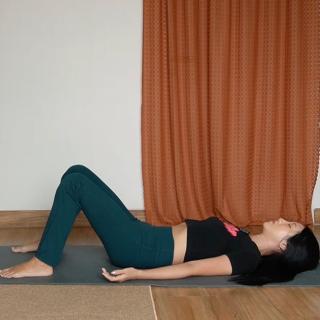
Therapeutic Tremoring (TRE) is a somatic practice that uses a set sequence of exercises to fatigue the hips and legs until the body begins to tremor on its own, letting held tension release through the shaking. You allow the involuntary trembling rather than trying to control it.
+
Therapeutic Tremoring, or TRE, is a body-based practice built around a fixed sequence of exercises that fatigue the psoas and hip flexors, the deep hip and core muscles, until neurogenic tremoring, an involuntary shaking generated by the nervous system, arises on its own. Instead of steering the movement, you let the trembling move through the body and notice the warmth, slower breath, and softening that often follow. This describes what the practice is and how it is done, not a treatment for any condition.
Because the set exercises deliberately fatigue your hip and leg muscles until an involuntary tremor, called neurogenic tremoring, emerges on its own and spreads through the body. This shaking is a normal, expected part of the practice, not a sign something is wrong (Bonaz et al., 2017).
+
The shaking happens by design. Therapeutic Tremoring uses a set sequence that fatigues the psoas and hip flexors, the deep core and hip muscles, until the body begins to tremor on its own, and the tremor then spreads through the fascia, the connective-tissue web that links your muscles. This is thought to let the nervous system release stored fight-or-flight activation and settle, though the mechanism is suggestive rather than confirmed, since it has not been measured directly in TRE and leans on indirect nervous-system research (Bonaz et al., 2017), (Breit et al., 2018).
Involuntary shaking generated by the nervous system rather than by conscious muscle control. In Therapeutic Tremoring it emerges once the hip and leg muscles are fatigued, and it can feel like a spontaneous vibration rising through the body.
Self-generated tremoring proposed to arise from neuromuscular fatigue of the psoas and hip flexors, framed as a route to autonomic release.
A deep core muscle running from the lower spine to the top of the thigh that helps flex the hip. Therapeutic Tremoring targets it because it tends to tighten and brace during stress and fight-or-flight responses.
The release of built-up stress activation through shaking or trembling, thought to let the body finish an interrupted fight-or-flight response and settle back toward rest. It often feels like trembling that gives way to a heavy, quiet calm.
The automatic control system that runs functions like heart rate and breathing without conscious effort, balancing a fight-or-flight branch with a rest-and-recovery branch.
The sympathetic and parasympathetic divisions regulating visceral function; TRE is proposed to shift this balance toward parasympathetic recovery.
The seesaw between the body's fight-or-flight branch and its rest-and-recovery branch. A shift toward the calmer side is felt as breathing slowing, muscles softening, and a sense of urgency draining away.
The activity of the rest-and-recovery branch of the nervous system, the part that slows heart rate and lets muscles soften. People often notice it as heaviness, slower breath, and a spreading calm.
The ability to sense and interpret internal body signals such as breath movement, warmth, tension, and heartbeat. Strengthening it tends to feel like being more in tune with yourself and noticing stress earlier, before it builds.
Bruno Bonaz, Richard D. Lane, Michael L. Oshinsky, Paul J. Kenny, Rajita Sinha, Emeran A. Mayer (2020). Diseases, Disorders, and Comorbidities of Interoception. https://doi.org/10.1016/j.tins.2020.09.009
Cited in: Benefits, How it works, Research
Bruno Bonaz, Valérie Sinniger, Sonia Pellissier (2017). The Vagus Nerve in the Neuro-Immune Axis: Implications in the Pathology of the Gastrointestinal Tract. https://doi.org/10.3389/fimmu.2017.01452
As the shaking settles, many people feel more tuned in to the body, the breath deepening, warmth spreading, tight areas starting to soften. That felt sense tracks with the insula, the brain region that maps internal signals like breath, heartbeat, warmth, and muscle tension, though this rise is expected from related body-awareness practices rather than measured in tremoring itself (Bonaz et al., 2020).
Vagus Nerve as Modulator of the Brain–Gut Axis in Psychiatric and Inflammatory Disorders
2018
Finding: This review maps out how the vagus nerve, the main channel of the body's "rest and recover" system, helps regulate mood, digestion, immune response, and heart rate, and how calming that pathway shifts the body out of stress and toward recovery. It offers a plausible explanation for why a practice like therapeutic tremoring might help the nervous system settle, since tremoring is thought to release built-up tension and support that shift toward calm. Keep in mind, though, that this article looks at vagal and autonomic pathways in general and does not study tremoring itself, so it explains a possible mechanism rather than proving that tremoring produces this effect.
See full citation in referencesDuring an acute mental-health crisis, such as active psychosis, the strong sensation and emotional release the tremoring can bring may feel like too much too fast. Treat Therapeutic Tremoring as a complement to trauma-informed care, not a replacement for it, and work with a certified TRE provider or clinician rather than practising alone. This is a practice-informed caution, not a conclusion from adverse-event data.
The sequence deliberately fatigues the psoas and hip flexors, the deep core and hip muscles, and no obstetric safety trials have tested it, so safety in pregnancy cannot be confirmed. This is a physiology-inferred precaution rather than a safety verdict: speak with your clinician first, and if you do practise, do so with a certified TRE provider rather than alone. Keep TRE as a possible complement to your maternity and mental-health care, not a replacement.
Because the exercises sustain muscular fatigue in the psoas and hip flexors, ease in slowly if you have a recent hip, back, or abdominal injury, manage a cardiovascular condition, or tend toward low blood pressure. Rise from the floor gradually at the end of a session. This precaution is inferred from the physical demands of the practice rather than tested in trials, so check with a clinician first when any of these apply.
Therapeutic Tremoring is best approached gently, on a comfortable surface where you can lie down and rest afterward without rushing off to anything demanding. If you are new to it, brief sessions of a few minutes are a sensible starting point, letting the involuntary shaking rise on its own while you stay within what feels manageable and know you can slow or stop it whenever you need to. When you carry a trauma history, tend to dissociate, are pregnant, or manage a heart, back, or hip condition, this is safer explored alongside a certified TRE provider or your clinician rather than on your own.
Keep your first sessions brief, a few minutes of tremoring rather than a long stretch, so you learn how your body settles before you extend the time. This practice-informed guideline lets your nervous system find a range it can recover from.
Practise on a comfortable surface with room to lie down, ideally when you are not rushed and can rest afterward. Feeling physically supported makes it easier to allow the shaking than to brace against it.
Allow the involuntary shaking to rise on its own rather than forcing it, and remember you can slow or stop it at any time by straightening your legs or resting flat. Staying with sensation is the aim; staying within what feels manageable comes first.
Warmth, slower breathing, and softening muscles are signs the practice is settling you; racing thoughts, numbness, or a sense of disconnection are signs to pause. If sensation or emotion starts to feel overwhelming, stop and let yourself return to ordinary awareness.
Let the tremoring taper rather than cutting it off, then rest for a few minutes and return to sitting or standing slowly, especially if you tend toward low blood pressure. Give yourself time before driving or demanding tasks.
If you carry a trauma history, dissociate under stress, are pregnant, or manage a heart, back, or hip condition, work with a certified TRE provider or your clinician rather than practising alone, and keep TRE alongside, not instead of, any professional care you are receiving.
This information is educational and is not medical advice. This practice is not a substitute for professional care and should not replace prescribed medication or treatment for any medical or mental-health condition. If you are managing a health condition or taking medication, talk with a qualified health professional before changing your practice. If you are in distress or crisis, seek professional support.
| Somatic Experiencing is a therapist-guided approach that carefully paces attention to bodily sensation, working with small amounts of activation at a time so difficult material can be discharged gradually. Therapeutic Tremoring is a standardized self-practice that triggers physical tremoring through a set exercise sequence, with far less moment-to-moment guidance from a practitioner. |
| Autonomic-discharge breathwork | People who would rather work through the breath than through physical shaking to reach a settled state. | Intense breathwork can heighten arousal or lightheadedness before it settles, so pace it and stop if it feels like too much. | emerging EVIDENCE | Both practices aim to release stored activation and rebound toward rest, but the vehicle differs: breathwork drives a sympathetic surge and then a parasympathetic settling through the breath, while Therapeutic Tremoring reaches a similar settling through movement-induced tremor in the legs and hips. One works through breathing pattern, the other through involuntary shaking. |
Promising, but not proven. Direct research is thin: one small pilot of about 25 people reported lower in-the-moment anxiety, plus a veterans case report and an unpublished adolescent trial protocol (Bonaz et al., 2017). No adequately powered trial has yet confirmed how large or lasting any benefit is.
+
Promising, but not proven. The direct evidence for Therapeutic Tremoring is early and limited. A small pilot study of roughly 25 people found reduced in-the-moment anxiety, a case report documented use with military veterans, and a registered adolescent trial protocol has been published but not yet reported (Bonaz et al., 2017). No large, adequately powered randomized trial has isolated the standardized tremoring sequence, so effect sizes and durability remain unknown. It may help some people feel calmer and more settled, but it is not an established treatment for trauma, addiction, or any diagnosed condition.
Weak so far. No adequately powered trial shows Therapeutic Tremoring "releases trauma"; the direct evidence is a small state-anxiety pilot, a veterans case report, and an unpublished trial protocol (Bonaz et al., 2017). Trauma release is a proposed idea, not a proven effect, and TRE complements trauma-informed care rather than replacing it.
+
Weak so far. The claim that tremoring "releases trauma" describes a proposed mechanism, the idea that self-generated shaking helps the nervous system discharge stored fight-or-flight activation, drawn from indirect research rather than tested directly in TRE (Bonaz et al., 2017), (Breit et al., 2018). There are no powered randomized trials, measured effect sizes, or long-term follow-up behind it yet, so the trauma-release idea is best read as suggestive, not confirmed. TRE is a self-regulation practice that complements trauma-informed care, not a standalone trauma treatment.
Possibly, but this is proposed rather than proven. The involuntary tremoring in Therapeutic Tremoring is thought to release stored fight-or-flight activation and let the body settle toward its rest-and-recovery state, often felt as warmth, slower breath, and softening muscles (Bonaz et al., 2017).
+
Possibly, though this is proposed rather than proven. The idea is that neurogenic tremoring, the self-generated shaking the exercises trigger, gives built-up stress activation a physical way to discharge, shifting the nervous system from fight-or-flight toward rest-and-recovery (Bonaz et al., 2017), (Breit et al., 2018). This shift has not been measured directly during a TRE session; it is drawn from indirect research on how nervous-system pathways lower arousal. So the felt sense of settling is best read as a plausible sign of that shift, not confirmation of it, and it does not prove the practice calms the nervous system or treats any condition.
Use care. TRE is low-risk for most adults, but a trauma history warrants extra caution because the involuntary tremoring can surface intense sensation and emotion faster than some people can integrate. Work with a certified TRE provider rather than practising alone, and treat it as a complement to trauma-informed care, not a replacement.
+
Use care. For most healthy adults Therapeutic Tremoring is low-risk, but if you carry a trauma history, are prone to dissociation, meaning you mentally disconnect from the present moment, or are in an acute mental-health crisis, the self-generated shaking the exercises set off can bring up strong physical sensation and emotional waves too quickly. This caution is practice-informed, drawn from how certified TRE is taught rather than from safety trials, so keep sessions short, know you can stop by straightening your legs, and work with a certified TRE provider rather than alone. TRE is best used alongside trauma-informed professional care, not as a treatment for trauma in its own right.
Not established. No pregnancy-specific safety studies of Therapeutic Tremoring (TRE) exist, so check with your clinician before starting and work with a certified TRE provider rather than practising alone.
+
Not established. Because the sequence deliberately fatigues the psoas and hip flexors, the deep core and hip muscles, and no obstetric safety trials have tested it, safety in pregnancy cannot be confirmed. This is a physiology-inferred precaution rather than a safety verdict, so if you are pregnant, speak with your clinician first, and if you do practise, do so with a certified TRE provider rather than alone. Treat TRE as a possible complement to, not a replacement for, your maternity and mental-health care.
Start short. Practise a few minutes of tremoring on a supported surface when you are not rushed, let the involuntary shaking rise on its own, and remember you can slow or stop it anytime by straightening your legs. Let each session taper gradually and stand up slowly. These are practice-informed guidelines, not safety-trial rules.
+
Start short and build slowly, keeping early sessions brief so you learn how your body settles before extending the time. Set up a supported space, allow the tremor to lead while staying within what feels manageable, and track your window: warmth, slower breath, and softening muscles signal settling, while racing thoughts, numbness, or a sense of disconnection are cues to pause. Close gradually and rest before demanding tasks. If you carry a trauma history, dissociate under stress, are pregnant, or manage a heart, back, or hip condition, work with a certified TRE provider or clinician rather than alone. TRE complements professional care; it does not replace it.
Start brief. Keep early sessions to just a few minutes of tremoring and build slowly, letting the shaking taper rather than stopping abruptly. Longer is not necessarily better, and no dosing study has established an ideal session length.
+
Start brief. In how certified TRE is taught, early sessions are kept short, a few minutes of tremoring, so your nervous system can find a range it recovers from before you extend the time. Let the tremor taper at the end rather than cutting it off, and treat length as something you build gradually. This is practice-informed guidance drawn from how the standardized practice is delivered, not a trial-validated dose; no dose-response study has confirmed an ideal duration, and more tremoring is not necessarily better.
The main difference is who leads and how. TRE is a standardized, mostly self-led practice that fatigues the hips and legs until an involuntary tremor arises, while Somatic Experiencing is a therapist-guided approach that carefully paces attention to body sensation. No head-to-head study has compared them.
+
The main difference is the vehicle and the guidance. TRE uses a fixed exercise sequence to fatigue the psoas and hip flexors until the body tremors on its own, so release happens through shaking you allow, and it is usually practised alone or in graded sessions with a certified provider. Somatic Experiencing is clinician-led, working with small amounts of activation at a time so difficult material can be discharged gradually. This is a practice-level distinction, not a comparative-efficacy one: no direct head-to-head trial has been identified, and if emotional material feels overwhelming, therapist-guided work may suit better.
Visceral afferent processing supporting detection and tolerance of internal bodily states, associated with insular and somatosensory activity.
The connective-tissue web that wraps and links muscles throughout the body. In Therapeutic Tremoring the tremor is described as self-propagating through this network so the shaking spreads beyond where it started.
The idea that the body can finish an interrupted fight, flight, or freeze reaction through shaking and then reset toward rest, rather than staying braced. It is a guiding concept of the practice, not a directly measured event.
Cited in: Benefits, How it works, Research, What happens in the body
Sigrid Breit, Aleksandra Kupferberg, Gerhard Rogler, Gregor Hasler (2018). Vagus Nerve as Modulator of the Brain–Gut Axis in Psychiatric and Inflammatory Disorders. https://doi.org/10.3389/fpsyt.2018.00044
Cited in: Benefits, How it works, Research, What happens in the body
Explore guided sessions to deepen your Therapeutic Tremoring technique.
Editorially curated. Tracks are not themselves clinically studied; evidence on the page applies to Therapeutic Tremoring as a technique.
Beginner content for Therapeutic Tremoring

★ 4.9
·
Guided
·
12 min
Jordyn Roe
How hard is Therapeutic Tremoring?
Therapeutic Tremoring keeps a meaningful base floor driven mainly by physical intensity, while the reviewed modality defaults stay appropriate.
3
Mental Effort
2 / 4
▾Emotional Depth
1 / 4
▾Physical Intensity
3 / 4
▾Prior Knowledge
1 / 4
▾