The world’s largest free audio library for everyday wellbeing
Lifestyle-Integrated
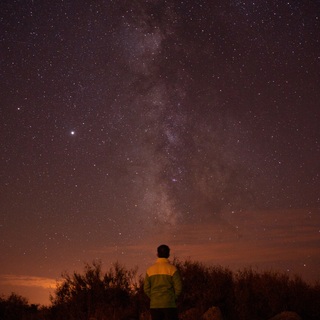
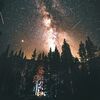
Stargazing Meditation is a contemplative practice of lying or sitting outdoors under a clear night sky and resting open, non-analytic awareness on the stars and the felt sense of cosmic vastness. Its intent is reflective rather than analytical, which sets it apart from astronomical observation.
Last Updated
3 Jul 2026
We are still reviewing this page. Our research team checks every technique page for accuracy and evidence quality before final release. Details may change as that review completes. The evidence badge shows our current reading of the published research.
RECOMMENDED DOSE
A short daily sit is a gentle entry point. This range is extrapolated from closely related seated meditation research: a randomized trial of a brief daily yogic meditation delivered benefits at roughly 12 minutes per day, and a controlled study of a daily meditation app used a once-daily rhythm. No study has tested stargazing meditation specifically, so these figures are borrowed from comparable practices.
Once a nightly habit feels comfortable, gently lengthen each session. The daily-for-30-days cadence mirrors a controlled meditation-app trial in a related modality; the specific 15–20 minute duration is an editorial estimate, as no source reports a minute-count for stargazing meditation itself.
For a deeper, maintenance-level practice. The 8-week sustained frequency reflects the intervention length used in related meditation and breath-based trials; the longer 30–45 minute session length is an editorial extension for experienced practitioners, not a directly tested dose for stargazing meditation.
Session length
Session length: 10–15 minutes
10
MIN
How long each individual practice session should last from start to finish.
Frequency
Frequency: 7 days
7
DAYS
The number of days per week to fit a session into your routine.
Session length
Session length: About 20 minutes
15
MIN
How long each individual practice session should last from start to finish.
Frequency
Frequency: 6–7 days
6
DAYS
The number of days per week to fit a session into your routine.
Session length
Session length: 30–45 minutes
30
MIN
How long each individual practice session should last from start to finish.
Frequency
Frequency: 5–7 days
5
DAYS
The number of days per week to fit a session into your routine.
About this card. These recommendations are extrapolated from research on related seated meditation and breath practices — no dose-response literature exists for stargazing meditation specifically — so treat them as starting points. These recommendations are not a substitute for personalised guidance from a qualified practitioner.
Quick answers to what people most often ask. Each card links to the deeper section below.
evidence
No trial has tested Stargazing Meditation directly, so support borrows from broader meditation and awe research. Pooled studies find meditation and mindfulness meaningfully reduce anxiety and depressive symptoms, with one student meta-analysis reporting a moderate-to-large anxiety drop. Smaller, emerging signals point to lower cortisol and calmer nervous-system activity.
Read moregood for
Adults who feel wired, anxious, or unable to switch off, and who already find the night sky meaningful, may benefit most from Stargazing Meditation. Supporting meditation research studied students, general adults, healthcare workers, and pregnant women with mild symptoms. It is not a substitute for care when anxiety, mood, or trauma symptoms are severe.
Read moresafety
Most healthy adults find Stargazing Meditation low-risk and settling. People prone to dissociation, unresolved trauma, or a destabilising mood condition should practise gently, since boundary-loosening states can occasionally trigger anxiety or derealization (a sense the world has gone briefly unreal). Practical cautions: dress warm against unnoticed cold, watch for uneven ground, and stand up slowly.
Read morehow it works
Stargazing Meditation works largely through decentering, the shift from being caught inside your thoughts to watching them pass at a distance, so worry loosens its grip. The open star field gives attention somewhere boundless to rest, and lying still in the dark lets stress activation wind down as muscles loosen and breathing slows.
Read moreStargazing Meditation is a practice of lying or sitting under the night sky and resting open, non-analytic awareness on the stars and the felt sense of cosmic vastness.
You find a dark-sky location, recline or sit comfortably, and let visual attention settle on the star field while awareness widens to take in depth, distance, and scale. There is nothing to name or measure; stillness, darkness, and an unbroken overhead view carry the experience, and a session simply continues as long as it feels restful.
Astronomical observation identifies and measures objects; Stargazing Meditation keeps a contemplative, non-analytic intent. It also differs from sun or moon practices, because the stars' boundless, point-scattered quality gives it an expansive feel rather than a single focal point. It is not a treatment for any medical or psychiatric condition.
Not to be confused with
Amateur astronomy and stargazing as observation
Amateur astronomy is analytical: identifying constellations, tracking planets, and observing through telescopes. Stargazing Meditation shares the setting but not the intent, resting open, non-judging awareness on the whole star field rather than naming or measuring what you see.
Sun gazing
Sun gazing focuses on a single bright point and carries real risk of eye damage. Stargazing Meditation is a night practice whose expansive, scattered star field is safe to rest attention on, and the two should not be treated as interchangeable celestial practices.
Moon gazing
Moon gazing draws attention to a single luminous focal point. Stargazing Meditation works through the opposite quality, the boundless, depth-filled scatter of stars, which is what carries its distinctive sense of vastness.
Stargazing Meditation appears to work largely through decentering, the shift from being caught inside your thoughts to watching them pass at a distance, so worry loosens its automatic grip (Lebois et al., 2015). The open star field gives attention somewhere boundless to rest, and lying still in the dark, with almost nothing demanding a response, lets the body's stress activation wind down as muscles loosen and the breath slows. These mechanisms come from research on meditation broadly, not stargazing specifically, so they describe a plausible path rather than one measured for this practice.
Looping, self-focused thoughts start to feel less like facts and more like passing weather when you watch them from a little distance. Under the open star field, that shift, called decentering, gives your attention somewhere vast to rest and can loosen the automatic grip of worry and rumination (Lebois et al., 2015).
Lying still under a dark sky, with almost nothing asking for a response, lets the body's stress activation wind down. Meditative practices in this family have been linked to lower cortisol, a stress hormone, and calmer, more balanced nervous-system activity, changes people often feel as looser muscles and slower, easier breathing (Puhlmann et al., 2021), (Kumar et al., 2024).
When you lie still beneath a dark sky with almost nothing demanding a response, the body's rest-and-recovery system, the parasympathetic branch driven largely by the vagus nerve, gets room to take the lead. In related meditative practices this shift shows up as a slower heart rate and steadier heart-rate variability (Kumar et al., 2024), which tends to feel like tension draining away and breathing settling on its own.
When you finally start to unwind, a slower, steadier heartbeat and a loosening across the chest and shoulders often follow, signs of rising activity in the vagus nerve, the main pathway of the body's rest-and-recovery system that slow, still meditative states appear to strengthen (Kumar et al., 2024).
Lying still under a dark sky lets the body settle into its rest-and-recovery mode, the branch of the nervous system that lowers heart rate and steadies breathing. In studies of related slow, still meditative practices, this kind of stillness shifts autonomic activity toward a calmer, more balanced state (Kumar et al., 2024), which can feel like tension draining and the mind slowing to match the body.
In studies of related meditation practices, the body shows lower cortisol, the stress hormone that stays elevated when the system runs on alert, along with a slower heart rate and lower blood pressure (Puhlmann et al., 2021), (Kumar et al., 2024). From the inside, this can feel like tension draining from the shoulders and jaw, breathing slowing on its own, and a heavier, more settled quality in the body. These changes were measured in general contemplative training and a breathing-plus-meditation trial rather than during stargazing itself, so they point to a likely direction, not a confirmed effect of lying under the stars.
After a stressful stretch the body can stay wired and braced, unable to switch off. Regular meditation practice has been measured to lower cortisol, the body's main stress hormone that stays elevated when the system runs on alert, and as it falls that keyed-up tension tends to loosen and the body settles (Puhlmann et al., 2021), (Francesco et al., 2014).
That wound-up, on-alert feeling that lingers in the body even when you are trying to rest can ease as regular meditation practice lowers cortisol, the body's main stress hormone, in studies of contemplative training (Puhlmann et al., 2021), (Francesco et al., 2014). This evidence comes from meditation broadly, not from Stargazing Meditation itself.
That braced, always-on feeling has a chemical side, and it shows up in cortisol, the body's main stress hormone. Studies of ongoing meditation training measure lower cortisol output in healthy adults (Puhlmann et al., 2021), (Francesco et al., 2014), a downward shift many people feel as background pressure easing and the body settling instead of staying on guard. This has been measured in meditation broadly, not in stargazing itself.
As the body settles into stillness, the pulse tends to slow. In trials of slow, meditative breathing practices, heart rate dropped measurably (Kumar et al., 2024), a shift practitioners often notice as a steadier pulse and a sense of the body downshifting into rest. Because that finding comes from related practices rather than stargazing itself, treat it as a plausible direction, not a measured effect of lying under the stars.
As the body steps down from high alert, you might feel your chest loosen and your shoulders drop, and blood pressure, the force of blood pushing against the vessel walls, eases along with it. In a randomized trial pairing slow breathing with meditation, blood pressure fell and stayed lower after practice, though stargazing itself hasn't been measured this way, so this reading is borrowed from closely related still, slow-breathing practices (Kumar et al., 2024).
That sense of the body finally downshifting into rest points to vagal tone, the activity of the vagus nerve that runs the body's rest-and-recovery branch. In a trial of a related slow, still meditative practice, vagal tone rose while heart rate and blood pressure fell (Kumar et al., 2024), a shift often felt as the breath deepening and the chest less braced. Stargazing Meditation itself has not been measured this way.
That wired, on-alert feeling that won't switch off eases as the body shifts its sympathovagal balance, the tug-of-war between its alert branch and its rest-and-recovery branch. In related slow, still meditative practices this balance has been measured tipping toward recovery, with heart rate and blood pressure dropping while heart-rate variability, a marker of calming vagal activity, rises (Kumar et al., 2024), often felt as the body settling and the breath slowing.
When you're trying to rest but still feel keyed-up and on guard, that's sympathetic arousal, the body's fight-or-flight activation that speeds the heart and tightens muscles. It tends to quiet during slow, still meditative practice: in one trial pairing paced breathing with meditation, heart rate and blood pressure fell while vagal, rest-and-recovery activity rose (Kumar et al., 2024), felt as muscles loosening and the breath slowing on its own.
The wired, can't-switch-off feeling that keeps shoulders tight and breath shallow tends to ease during slow, still meditative practices, which have been measured to lower sympathetic tone, the body's fight-or-flight activation (Kumar et al., 2024). Many people feel this as tension draining from the jaw and shoulders, breathing slowing, and the sense of being on alert quietly powering down.
Moderate but indirect evidence supports meditation and mindfulness for anxiety and low mood, and Stargazing Meditation is expected to share in these benefits rather than having been tested for them (Pranata et al., 2024), (Guowei et al., 2025), (Goyal et al., 2014). The clearest signal is reduced anxiety and depressive symptoms in students and general adult samples, with smaller, emerging support for lower cortisol and calmer nervous-system activity (Puhlmann et al., 2021), (Kumar et al., 2024). What is not yet supported: any trial of stargazing itself, long-term follow-up, or a claim that it replaces care for a diagnosed condition.
Racing, anxious thoughts can loosen their grip when attention has something vast and steady to rest on, like an open night sky. Across meditation and mindfulness research, regular practice is linked to meaningfully lower anxiety (Pranata et al., 2024), (Goyal et al., 2014), though this evidence comes from meditation broadly rather than from Stargazing Meditation itself.
Low mood can make everything feel heavier and slower to lift. Meditation and mindfulness practices in general have been linked to modest reductions in depressive symptoms, the low, weighed-down feelings that linger day to day, so a regular contemplative habit like resting under the night sky may offer some of the same easing, though this has been studied for meditation broadly, not for stargazing itself (Pranata et al., 2024), (Goyal et al., 2014).
You might feel less braced as the day goes on, more able to let stress settle instead of carrying it in your shoulders and jaw. Cortisol, the body's main stress hormone, has been measured to drop over months of regular contemplative meditation training (Puhlmann et al., 2021), (Francesco et al., 2014). Stargazing Meditation itself hasn't been tested this way, so lower cortisol is expected from related meditation practice rather than proven for lying under the night sky.
Pooled trials find that meditation and mindfulness meaningfully reduce anxiety and depressive symptoms, with one meta-analysis of students reporting a moderate-to-large drop in anxiety (SMD -0.71 versus control, meaning the average practitioner scored lower than roughly three-quarters of comparison participants) (Pranata et al., 2024), (Guowei et al., 2025). The main areas studied are stress, anxiety, mood, cortisol, and autonomic calming, with mechanistic support for decentering (Lebois et al., 2015), (Puhlmann et al., 2021), (Kumar et al., 2024). Two limits matter: no study has tested Stargazing Meditation directly, and not every meditation finding holds up, consumer neurofeedback showed no benefit, and everyday stress effects proved subtler than in the lab (Treves et al., 2025), (Linz et al., 2022).
3
Meta-analyses
1
RCTs
0
Systematic reviews
2
Observational
4
Pilot
Studied populations
Outcomes measured
| Outcome | Effect size | 95% CI | N | Comparator | Source |
|---|---|---|---|---|---|
| anxiety | SMD = -0.71 | 95% CI -1.02 to -0.39 | — | control | Pranata et al., 2024 |
| depression | SMD = -0.53 | 95% CI -0.81 to -0.25 | — | control | Pranata et al., 2024 |
| depressive symptoms | SMD = -0.86 | 95% CrI -1.2 to -0.52 | — | control | Guowei et al., 2025 |
| cardiovascular/autonomic parameters | reported significant; p<0.001 (HR, SBP, DBP); p<0.01 HRV indices | — | control | Kumar et al., 2024 | |
| state mindfulness | Hedges' g = 0.02 | — | control | Treves et al., 2025 |
The biggest limitation is directness: no randomized trials have tested Stargazing Meditation itself, so all support is extrapolated from broader meditation, mindfulness, and awe research. Effects vary by population and can be subtler in everyday settings than in the lab, and some reported statistics are significance-only rather than full effect-size estimates.
Meditation Programs for Psychological Stress and Well-being
2014
Finding: This review pooled results from trials of meditation and mindfulness programs and found moderate drops in anxiety and low mood among students and general adults who practised regularly, with the reductions in anxiety being the more pronounced of the two. In practical terms, a steady meditation habit appears to take a meaningful edge off day-to-day worry and dampened mood for many people. Keep in mind that these results come from the broad family of meditation practices rather than Stargazing Meditation itself, so they point to what this kind of practice can offer in general, not to a direct test of gazing at the night sky.
See full citation in referencesAdverse effects of meditation: A review of observational, experimental and case studies
n = 39
Finding: This review gathered 39 studies of meditation in everyday, non-clinical practitioners and found that while most people tolerate it well, a minority reported unsettling experiences: low mood or anxiety, a distorted sense of self, feelings of unreality, and, less often, more vivid perceptual disturbances. Because Stargazing Meditation deliberately invites expansive, boundary-loosening states, it's worth knowing these effects are possible for some people. If you're prone to feeling detached, ungrounded, or emotionally destabilized, practise gently, keep sessions short at first, and pause and seek support if you feel distressed. Note that this is a summary of varied observational and case reports rather than a controlled trial, so it maps out what can happen without telling us how often.
reported narratively
A shift in perspective: Decentering through mindful attention to imagined stressful events
2015
Finding: In this brain-imaging study, people who stepped back and observed imagined stressful moments as passing mental events, rather than reliving them from the inside, showed quieter activity in the brain's stress and self-focused processing and more activity in regions tied to shifting perspective. For a stargazing practice built around that same wide, observer's viewpoint, it hints at why looking outward at something vast can loosen a difficult thought's emotional grip. Keep in mind the participants were non-meditators doing a lab task, not people gazing at the night sky, so this points to a plausible mechanism rather than proof that stargazing itself changes the brain this way.
See full citation in referencesInvestigating the impact of distinct contemplative mental trainings on daily life stress, thoughts and affect—Evidence from a nine-month longitudinal ecological momentary assessment study
2022
Finding: Following 289 healthy adults over nine months, this study tracked stress, the stress hormone cortisol, and mood in real time during ordinary days, and found that contemplative mental training produced no measurable change in any of them. In other words, the calming effects often seen in short lab experiments did not clearly carry over into the messiness of everyday life. For anyone taking up a practice like this, it's a useful reality check: the benefits in daily routines may be subtler and slower than a single lab session suggests, and since this was an observational study without a controlled comparison, it can't rule out the many other factors that shape how we feel day to day.
See full citation in referencesEffects of non-pharmacological interventions on depressive and anxiety symptoms in pregnant women: a systematic review and network meta-analysis.
2025
Finding: This review compared many drug-free approaches for pregnant women with mild depression or anxiety and ranked mindfulness practice among the most effective, with one of the larger reductions in low mood seen across the interventions studied. For anyone drawn to a meditative practice like stargazing, it's a reassuring signal that mindfulness-based approaches can meaningfully ease mood and anxiety during a stressful life stage. Keep in mind, though, that the trials tested structured mindfulness programs in pregnant women, not stargazing meditation itself, so this speaks to the broader family of practices rather than to this specific technique.
SMD = -0.86
Consumer-Grade Neurofeedback With Mindfulness Meditation: Meta-Analysis
2025
Finding: Across 21 trials with about 930 people, this meta-analysis compared meditating with consumer neurofeedback devices, the kind that promise to read your brainwaves and "deepen" your practice, against meditating without them, and found no measurable difference. The devices didn't improve state mindfulness, sharpen thinking, or shift physical health markers, and they showed no sign of actually changing the brain activity they claim to train. For anyone drawn to stargazing meditation, the takeaway is reassuring in its simplicity: adding gadgets or brain-tracking tech to your practice hasn't been shown to make it work better, so the value lies in the practice itself rather than the hardware. These findings are about technology-assisted meditation specifically, not about whether stargazing meditation on its own helps you.
Hedges' g = 0.02
Contemplative Mental Training Reduces Hair Glucocorticoid Levels in a Randomized Clinical Trial
n = 227
Finding: In this trial, 227 healthy adults followed several months of structured meditation-based mental training, and their hair samples showed a steady drop in cortisol, a hormone that builds up in the body during long stretches of stress. Because hair captures stress hormone levels over weeks and months, this points to a calming shift that runs deeper than a single relaxed session. It's worth being clear about scope: this was studied for a broader contemplative training program, not stargazing meditation itself, so it speaks to what regular meditation practice can do for the body's stress load rather than to this specific technique.
reported narratively
Brief training of psychoneuroendocrinoimmunology-based meditation (PNEIMED) reduces stress symptom ratings and improves control on salivary cortisol secretion under basal and stimulated conditions.
2014
Finding: In this controlled study, a short four-day meditation course of about 30 hours lowered participants' salivary cortisol, a stress hormone measured both first thing in the morning and after a stress challenge. For someone considering a regular practice, it's an early sign that even a brief, concentrated introduction to meditation can start shifting the body's stress chemistry, not just how calm you feel. Keep in mind this was tested with a specific meditation-and-physiology training in healthy adults, not with stargazing itself, so it points to what the underlying practice may do rather than to a stargazing-specific effect.
See full citation in referencesEffects of an 8-week intervention of anulom vilom pranayama combined with heartfulness meditation on psychological stress, autonomic function, inflammatory biomarkers, and oxidative stress in healthcare workers during COVID-19 pandemic: a randomized controlled trial.
2024
Finding: In an 8-week randomised trial with nurses working through the pandemic, a routine that paired slow breathing with heartfulness meditation lowered resting heart rate and blood pressure and shifted heart-rate variability, a marker of how flexibly the nervous system switches into its calming, rest-and-recover mode. In practical terms, this points to a body settling into a steadier, less stressed baseline after regular practice. Keep in mind this study combined breathing and meditation together rather than testing stargazing on its own, so it speaks to the general calming effect of slow, still practices rather than to stargazing specifically.
reported significant; p<0.001 (HR, SBP, DBP); p<0.01 HRV indices
Effectiveness of Mindfulness on Student Anxiety and Depression During the <scp>COVID</scp>‐19 Pandemic: A Systematic Review and Meta‐Analysis
2024
Finding: This meta-analysis pooled experimental trials of mindfulness practice among students during the COVID-19 pandemic and found moderate reductions in anxiety, along with a somewhat smaller but still meaningful drop in symptoms of low mood, compared with people who did not practise. For someone drawn to Stargazing Meditation, this is encouraging background: it points to the wider family of meditation and mindfulness practices helping people feel calmer and steadier under stress. Keep in mind, though, that these results come from mindfulness practices in general, not from Stargazing Meditation itself, so they suggest the kind of benefit this approach may share rather than a direct test of it.
SMD = -0.71
Stargazing Meditation draws on Indigenous traditions worldwide that hold the night sky as a source of meaning and belonging, from Aboriginal Australian 'star dreaming' and Navajo ceremonial stargazing to Polynesian star navigation. These roots help explain the practice's form, its reclined stillness and open, non-analytic gaze on cosmic vastness, rather than proving any clinical effect. The contemporary awe framework carries a similar idea: encountering something vast can loosen the sense of self and shift perspective.
For most healthy adults, Stargazing Meditation is low-risk and usually feels settling rather than activating. A smaller number of people find the opposite: the sense of vastness, and of the body's edges softening, turns unsettling instead of calming. A broad review of meditation documented occasional anxiety, disorientation, or derealization, a fleeting sense that the world has gone unreal or dreamlike, and this matters most for people prone to dissociation. That is an evidence-based risk, though an indirect one, since it is drawn from meditation in general rather than from stargazing specifically (Lambert et al., 2021). Lying still outdoors in the dark also carries a few practical cautions: getting cold without noticing, uneven ground you cannot see, and a moment of lightheadedness when you stand after lying flat for a while.
Take extra care if you have a history of dissociation, derealization, unresolved trauma, or a mood condition that can destabilise. Resting under an open sky loosens the felt sense of a bounded self, and that expansive, boundary-softening quality may unsettle rather than calm; this caution is supported only indirectly, through the meditation adverse-effects literature rather than through studies of stargazing itself (Lambert et al., 2021). On the practical side, anyone with low blood pressure or a tendency to feel dizzy on standing, and anyone practising somewhere cold or on rough terrain, should adapt the setup. Those are practice-informed cautions rather than documented harms.
Resting under an open sky loosens the felt sense of a bounded self, and for some people that expansive, boundary-softening quality turns unsettling rather than calming. A broad review of meditation documented occasional anxiety, disorientation, or derealization, a fleeting sense that the world has gone unreal or dreamlike, most relevant for people prone to dissociation. If the softening of self-and-world edges becomes distressing, open your eyes fully, feel the ground supporting your back, and name a few things you can physically sense. This is an evidence-based but indirect risk, drawn from meditation in general rather than from stargazing itself.
When anxiety, mood, trauma, or dissociation symptoms are severe, Stargazing Meditation is not a substitute for care. Keep sessions brief, open your eyes and reorient if distress arises, and treat the practice as a gentle adjunct alongside professional support rather than a fix. The same review of meditation notes occasional distress or destabilisation, a signal most relevant when mood is already fragile.
Lying flat for a while and then standing quickly can bring a brief moment of lightheadedness, which matters more if you have low blood pressure or tend to feel dizzy on standing. At the end of a session, roll onto one side and rise gradually rather than getting up all at once. This is a practice-informed caution rather than a documented harm.
Lying still outdoors lets body heat quietly drop, so it is easy to get cold without noticing during a longer session. Dress warmer than feels necessary, add a hat and a ground mat or blanket, and scout your spot in daylight or with a torch so the ground is even and clear of hazards before you settle in the dark. These are practical, practice-informed cautions.
Stargazing Meditation tends to feel most settling when you approach it as an unhurried outdoor rest under an open, dark sky, with the setup sorted before you lie down. A short, eyes-open session of a few minutes is a sensible starting format, especially while you learn how the sense of vastness lands for you, and it helps to have a way to reorient and warm layers on hand from the outset. Give yourself permission to keep it gentle rather than pushing for a longer or deeper experience straight away.
Scout your location in daylight or with a torch so you know the ground is even and clear of hazards before you settle down to gaze in the dark. A dark-sky spot away from streetlights lets the star field come through and attention widen into depth and scale.
Lying still lets body heat quietly drop, so add an extra layer, a hat, and a ground mat or blanket beneath you. Staying warm keeps the cold from cutting a longer session short.
Begin with about 5 to 10 minutes of simple sky-gazing so you can notice how the sense of vastness feels for you before extending the time. Let attention soften and widen rather than trying to identify or track anything.
If the feeling of openness starts to unsettle rather than calm you, open your eyes fully, feel the ground supporting your back, and name a few things you can physically sense around you. A ready anchor makes it easy to reorient without alarm.
If anxiety, a dreamlike sense of unreality, or a feeling of being detached from yourself sets in, stop, sit up, and reorient. There is nothing to gain from pushing through distress.
After lying flat for a while, roll onto one side and rise gradually to avoid the brief lightheadedness that can follow standing too quickly.
If low mood, anxiety, or dissociative feelings are persistent or severe, treat this practice as a gentle adjunct rather than a fix, and speak with a health professional.
This information is educational and is not medical advice. This practice is not a substitute for professional care and should not replace prescribed medication or treatment for any medical or mental-health condition. If you are managing a health condition or taking medication, talk with a qualified health professional before changing your practice. If you are in distress or crisis, seek professional support.
| Technique | Best for | Use with care | Evidence strength | Distinction |
|---|---|---|---|---|
| Mindfulness meditation | Building a portable, everyday calm-and-focus habit you can practise anywhere, without needing a clear night or dark-sky location. | People prone to dissociation may find some expansive, boundary-loosening styles unsettling; go gently and pause if distress arises. | strong EVIDENCE | Mindfulness meditation trains attention on the breath, body, or present-moment experience and can be done anywhere, indoors or out. Stargazing Meditation borrows the same core mechanisms, calming the nervous system and stepping back from thoughts, but anchors attention outward on the vastness of the night sky, which tends to add a felt sense of awe and perspective that a cushion-based practice does not. |
| Guided imagery and progressive muscle relaxation | A structured, indoor wind-down before sleep, or when you want clear guidance rather than open-ended attention. | moderate EVIDENCE | Guided imagery and progressive muscle relaxation deliberately walk you through relaxing scenes or tense-and-release muscle sequences indoors, giving structure when you want a reliable wind-down. Stargazing Meditation is less scripted: the real night sky supplies the imagery, and calming unfolds from stillness and open awareness rather than step-by-step instruction. | |
| Awe walks and nature-based awe practices | Reaching for awe and a perspective shift during the day, or when a clear, dark night sky is not available. | emerging EVIDENCE | Awe walks cultivate wonder and perspective by seeking out vast or beautiful scenes in daylight, from landscapes to weather, and can be done on the move. Stargazing Meditation channels the same awe-and-perspective pathway but through stillness under the night sky, pairing the shift in perspective with the deep quieting of lying supine in darkness. |

Stargazing Meditation is resting open, non-analytic awareness on the night sky and its sense of vastness. The difference is intent: casual or astronomical star-watching names and measures what you see, while here you simply let attention widen into depth and cosmic scale.
+
Stargazing Meditation is a contemplative practice of lying or sitting outdoors under a clear night sky, letting open awareness rest on the stars and the felt sense of cosmic vastness. What sets it apart from casual or amateur-astronomy star-watching is the quality of attention: rather than identifying constellations, tracking planets, or looking through a telescope, you let attention soften and widen into depth and scale. The difference is one of intent and attention, not a claim that the practice treats any condition.
No. Stargazing Meditation needs no telescope or astronomy gear, because you rest open, non-analytic awareness on the whole night sky rather than identifying or measuring what you see. The only useful items are comfort-and-safety basics like a warm layer, a mat or blanket, and a torch to scout a safe, dark spot.
+
No. This practice is contemplative rather than analytical, so you simply lie or sit under a clear sky and let attention widen into the sense of vastness. What helps is practical setup rather than gear: an extra warm layer since lying still lets body heat drop, a ground mat or blanket, and a torch to check the ground is even before dark. Treat these as comfort-and-safety measures, not requirements for any effect.
Partly. No trial has tested stargazing meditation itself, so it isn't a proven treatment, but it's likely more than pleasant sky-watching. Research on meditation more broadly links similar practices with lower anxiety and calmer nervous-system activity, so it may help you settle (Pranata et al., 2024).
+
Partly. Stargazing meditation has never been trialed on its own, so any claim that it works is borrowed from wider meditation and awe research rather than proven for this specific practice (Pranata et al., 2024), (Goyal et al., 2014). That research suggests it can plausibly recruit real processes: decentering, the felt shift where worries start to feel like passing weather rather than urgent facts (Lebois et al., 2015), and calmer nervous-system activity that some people notice as a slower heartbeat and tension easing from the shoulders (Kumar et al., 2024). Effects can be subtler in everyday life than in the lab, so treat it as a gentle way to unwind, not a replacement for care (Linz et al., 2022).
No. No randomized or controlled trials have tested Stargazing Meditation itself, so all support is borrowed from broader meditation, mindfulness, and awe research (Pranata et al., 2024). Treat the findings as reasonable expectations for a calm contemplative habit, not as proof about this specific practice.
+
No. To date the practice has not been formally trialed on its own, so the evidence here is extrapolated rather than direct. What the wider research does show is that meditation and mindfulness are linked to lower anxiety and low mood in pooled trials of students and general adults (Pranata et al., 2024), (Guowei et al., 2025), (Goyal et al., 2014). That support is suggestive for stargazing rather than confirmed, and it does not mean stargazing has been directly validated for any outcome.
Likely through a few overlapping pathways: lying still in the dark lets the body's stress activation wind down, while resting attention on the vast star field supports decentering, watching worries pass at a distance. This is a plausible route drawn from broader meditation research, not something measured for stargazing itself (Lebois et al., 2015).
+
The calm likely comes from several mechanisms working together rather than one. Decentering, the shift from being caught inside your thoughts to watching them pass, appears to loosen worry's automatic grip (Lebois et al., 2015), and lying still in a dark, low-stimulation setting is linked in meditation studies to lower cortisol and calmer, more balanced nervous-system activity (Puhlmann et al., 2021), (Kumar et al., 2024). A felt sense of awe at the sky's scale can also make personal concerns seem less pressing. These pathways are suggestive, not yet confirmed, because they come from adjacent meditation research rather than trials of stargazing itself.
Use care. The boundary-loosening quality of resting under an open sky may unsettle rather than calm if you are prone to dissociation or derealization, so go gently, keep a grounding anchor ready, and pause or seek professional support if distress arises (Lambert et al., 2021).
+
Use care. A broad review of meditation documented occasional anxiety, disorientation, or derealization, the sense that the world feels briefly unreal or dreamlike, most relevant for people prone to dissociation (Lambert et al., 2021). This caution is drawn from meditation in general rather than from stargazing itself, which has not been formally trialed, so treat it as a real but indirect signal rather than proof either way. If the felt softening of self-and-world edges turns unsettling, open your eyes fully, feel the ground supporting you, name a few things you can sense, and reach for a health professional if these feelings are persistent or severe.
Use care. Stargazing meditation is low-risk for most healthy adults, but when anxiety or depression is severe it is not a substitute for care. Treat it as a gentle adjunct alongside professional support, and pause if you feel unsettled (Lambert et al., 2021).
+
Use care. Meditation broadly is linked to lower anxiety and low mood, though this comes from general meditation research, not trials of stargazing itself (Pranata et al., 2024), (Goyal et al., 2014). A review of meditation also documented occasional anxiety, disorientation, or derealization, the sense that the world feels unreal or dreamlike, a signal most relevant if you are prone to dissociation or mood instability (Lambert et al., 2021). When symptoms are severe, keep sessions brief, open your eyes and reorient if distress arises, and speak with a health professional rather than relying on the practice as a fix.
Start short. Beginners can try about 5 to 10 minutes of simple, eyes-open sky-gazing, then extend gradually as you notice how the sense of vastness feels. This is a practical starting point, not a tested dose, since no study has established an optimal duration for this practice.
+
Start short. A comfortable beginner range is roughly 5 to 10 minutes of open, non-analytic gazing at the night sky, lengthening the session over time as the settling deepens with return. Treat this as practice-informed guidance rather than a trial-tested dose, because Stargazing Meditation itself has not been formally studied and no optimal duration has been established. If the sense of openness starts to feel unsettling rather than calming, open your eyes fully, feel the ground supporting you, and reorient before continuing.
Mainly where attention rests. Mindfulness anchors on the breath or body and can be done anywhere, while Stargazing Meditation rests attention outward on the night sky, adding a sense of awe and the quieting of lying still in the dark. Both share core calming mechanisms, but only mindfulness has been directly tested.
+
The core difference is the anchor and setting, not the underlying process. Both work through similar mechanisms, calming the nervous system and decentering, the shift from being caught in thoughts to watching them pass at a distance (Lebois et al., 2015). Mindfulness trains attention on the breath or body and is portable, whereas Stargazing anchors awareness on cosmic vastness and pairs a perspective shift with the settling of lying supine outdoors. Mindfulness has moderate direct evidence for lower anxiety and mood (Pranata et al., 2024), (Guowei et al., 2025), (Goyal et al., 2014), while stargazing itself is untested and borrows that support by extrapolation, with no head-to-head study comparing them.
Stepping back to watch your thoughts and feelings as passing mental events rather than being caught up in them as facts. It is the shift that makes worry feel more like weather moving through than something urgent to fix.
A cognitive process, also termed cognitive defusion, involving reduced identification with mental content and lowered automatic reactivity, associated with decreased self-referential processing.
Turning down the body's overall activation, so racing, wired energy settles toward a steadier baseline. It usually feels like muscles loosening, breathing slowing, and the sense of being on alert quieting.
Reduction of physiological activation, including sympathetic drive, muscle tension, and stress-hormone output, toward a lower-arousal state.
Bringing forward the body's rest-and-recovery branch, which works largely through the vagus nerve, so heart rate slows and tension eases. It tends to feel like the body growing heavier and calmer without effort.
Increased parasympathetic (vagal) activity shifting autonomic balance away from fight-or-flight toward recovery, often indexed by lowered heart rate and higher heart-rate variability.
The felt softening of the line between yourself and the world, so the sense of where you end and the sky begins becomes more permeable. Under a boundless star field it can feel expansive, though for some people it can also feel disorienting.
A relaxation of body-schema and self-other boundary processing linked to reduced temporo-parietal junction activity and altered self-representation.
Sensing and taking in the outer world through the senses, here the faint points of light, movement, and depth of the night sky. It shows up as sharper clarity and a fuller, more detailed sense of your surroundings.
Conscious attention to environmental stimuli received through external sensory modalities, distinct from interoceptive sensing of internal body states.
The feeling of encountering something vast that stretches your usual frame of reference, such as the scale of the cosmos. It often comes with a quieter, smaller sense of self and a shift in perspective on personal concerns.
The body's main stress hormone, which stays elevated when the system is running on alert. As it settles, people often notice tension loosening and the body being allowed to stand down.
The natural variation in time between heartbeats, used as a marker of how readily the body shifts into rest-and-recovery mode. Higher variability generally reflects a calmer, more adaptable nervous system.
A sense that the world around you feels unreal, dreamlike, or detached. It is one of the unsettling responses a minority of people can have during expansive, boundary-loosening meditation, and it is a cue to open your eyes and reorient.
Madhav Goyal, Sonal Singh, Erica Sibinga, Neda F Gould, Anastasia Rowland-Seymour, Ritu Sharma (2014). Meditation Programs for Psychological Stress and Well-being. https://doi.org/10.1001/jamainternmed.2013.13018
Danika Lambert, Nicholas van den Berg, Adrianna Mendrek (2021). Adverse effects of meditation: A review of observational, experimental and case studies. https://doi.org/10.1007/s12144-021-01503-2
Cited in: Faq, Research, Use with care, Who should use care
Lauren A. M. Lebois, Esther K. Papies, Kaundinya Gopinath, Romeo Cabanban, Karen S. Quigley, Venkatagiri Krishnamurthy (2015). A shift in perspective: Decentering through mindful attention to imagined stressful events. https://doi.org/10.1016/j.neuropsychologia.2015.05.030
Cited in: Faq, How it works, Research
Roman Linz, Lara Puhlmann, Veronika Engert, Tania Singer (2022). Investigating the impact of distinct contemplative mental trainings on daily life stress, thoughts and affect—Evidence from a nine-month longitudinal ecological momentary assessment study. https://doi.org/10.1016/j.psyneuen.2022.105800
Cited in: Faq, Research, What happens in the body
Zeng Guowei, Niu Jianfeng, Zhu Ke, Li Fei, Li Liwen, Gao Kaiming (2025). Effects of non-pharmacological interventions on depressive and anxiety symptoms in pregnant women: a systematic review and network meta-analysis.. https://doi.org/10.1016/j.eclinm.2024.103011
Isaac N. Treves, Zia Bajwa, Keara D. Greene, Paul Alexander Bloom, Nayoung Kim, Emma Wool (2025). Consumer-Grade Neurofeedback With Mindfulness Meditation: Meta-Analysis. https://doi.org/10.2196/68204
Cited in: Research
Lara Puhlmann, Pascal Vrtička, Roman Linz, Tobias Stalder, Clemens Kirschbaum, Veronika Engert (2021). Contemplative Mental Training Reduces Hair Glucocorticoid Levels in a Randomized Clinical Trial. https://doi.org/10.1097/psy.0000000000000970
Cited in: Benefits, Faq, How it works, Research, What happens in the body
Bottaccioli Francesco, Carosella Antonia, Cardone Raffaella, Mambelli Monica, Cemin Marisa, D'Errico Marcello M (2014). Brief training of psychoneuroendocrinoimmunology-based meditation (PNEIMED) reduces stress symptom ratings and improves control on salivary cortisol secretion under basal and stimulated conditions.. https://doi.org/10.1016/j.explore.2014.02.002
Cited in: Benefits, How it works, Research, What happens in the body
Sharma Vivek Kumar, Barde Pradip B, Kathrotia Rajesh, Sharma Gaurav, Chitturi Vinay, Parmar Naresh (2024). Effects of an 8-week intervention of anulom vilom pranayama combined with heartfulness meditation on psychological stress, autonomic function, inflammatory biomarkers, and oxidative stress in healthcare workers during COVID-19 pandemic: a randomized controlled trial.. https://doi.org/10.1515/jbcpp-2024-0001
Cited in: Benefits, Faq, How it works, Research, What happens in the body
Gst. Kade Adi Widyas Pranata, Apryadno Jose Al Freadman Koa, Ying‐Ju Chang (2024). Effectiveness of Mindfulness on Student Anxiety and Depression During the <scp>COVID</scp>‐19 Pandemic: A Systematic Review and Meta‐Analysis. https://doi.org/10.1111/nhs.70003
Editorially curated. Tracks are not themselves clinically studied; evidence on the page applies to Stargazing Meditation as a technique.
Beginner content for Stargazing Meditation

★ 4.8
·
Guided
·
18 min
Andy Hobson
How hard is Stargazing Meditation?
Stargazing Meditation stays easy overall and mainly depends on a light attentional hold, so the low continuous-active default is sufficient.
2
Mental Effort
2 / 4
▾Emotional Depth
1 / 4
▾Physical Intensity
1 / 4
▾Prior Knowledge
1 / 4
▾Explore guided sessions to deepen your Stargazing Meditation technique.