Welcome to the mindfulness meditation podcast.
I'm your host,
Dawn Eshelman.
Every Wednesday at the Rubin Museum of Art in Chelsea,
We present a meditation session led by a prominent meditation teacher from the New York area.
This podcast is a recording of our weekly practice.
If you would like to join us in person,
Please visit our website at rubinmuseum.
Org slash meditation.
We are proud to be partnering with Sharon Salzberg,
The teachers from the New York Insight Meditation Center,
The Interdependence Project,
And the Shambhala Center.
The series is supported in part by the Hemera Foundation.
In the description for each episode,
You will find information about the theme for that week's session,
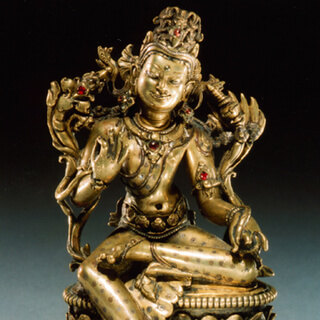
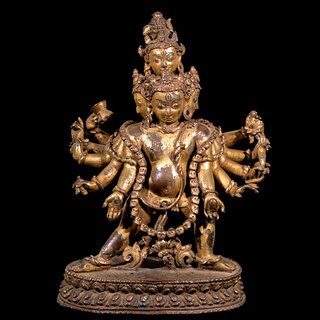
Including an image of a related artwork chosen from the Rubin Museum's permanent collection.
And now,
Please enjoy your practice.
We meditate for refuge,
Of course,
Because it is sweet and so helpful,
But also to engage more consciously with the world around us,
Because that is an act of compassion,
And it expresses the interdependence of our lives.
And it is in that spirit that we here at the Rubin Museum want to acknowledge the tragic events of yesterday in our sister neighborhood,
Just a few blocks away,
And to just simply say that our hearts here at the Rubin go out to all of those affected,
And we're thinking of you.
Perhaps you are close to this tragedy.
Perhaps you feel far from it.
Maybe it reminds you of friends,
Family,
Strangers in other parts of the world that deal with this kind of thing on a regular basis.
Maybe you are just really dealing with another challenge in your life,
Personally or otherwise,
Or maybe you're just getting through your day.
We have space for all of that here,
And I think what we have in common is really this appreciation for the practice of meditation and the tool that it is and can be for us during difficult times.
This is why we practice.
So it is not easy to turn our attention to the theme that we will be exploring this month,
And that theme is impermanence.
This is a concept that is central to Tibetan Buddhism,
And it is thought of as a core construct of reality.
Things don't stay the same.
And when we expect them to,
We suffer.
So we know from our exhibition,
The World is Sound,
That Tibetan Buddhist practice tells us that sound and music are really a metaphor for impermanence and change,
And that actually the act of listening,
When we listen,
We're listening for change.
We're listening for the moment.
And when we do that,
That helps us move beyond this kind of individual construct and towards an understanding that existence is interconnected and collective,
And that from that act,
Growth and healing and even enlightenment can emerge.
And I'm reading right now from the introductory panel for that exhibition.
It's really,
Really talking about just that.
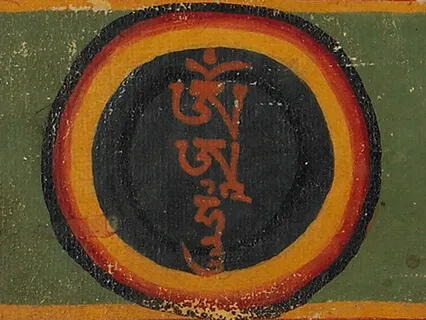
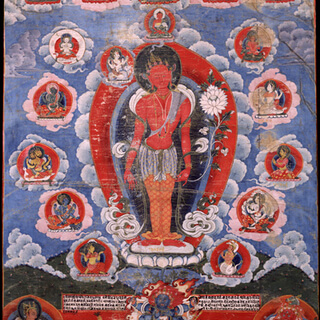
So this beautiful art object that we're looking today is from an illustrated manuscript that is an image that we actually selected for today several days ago.
The manuscript is that of the Bardo or the Tibetan Book of the Dead,
And it is used as a practice.
Teachers and students will go to this book to practice letting go.
And the book will also be read aloud to a person who is in that limbo state,
That in-between place,
Between life and death.
So it's something that is read aloud as they are passing.
This image is,
In particular,
Is an image of multicolored rings just depicting light,
Which symbolizes creation.
And each of the five lights pictured here represents one of the five elements.
And it emphasizes for us this transient nature of life,
The cycle of life.
And I think for us today,
We can see it certainly as a literal connection to death and life and rebirth if we choose to.
But we can also think about the many transitions that we experience throughout our lives,
Throughout a day,
Throughout a year,
That in-between place,
That limbo,
The Bardo place.
You all were just standing outside waiting to get in that place.
And that there's a particular quality there that is shared.
So our teacher today,
Sharon Salzberg,
Is going to talk to us a little bit more about this,
This idea of impermanence and how it can help us in our practice.
And before I bring her up here,
I just want to say thanks so much for joining us.
It's great to be here with you all today.
And for those of us joining via live stream,
We are live streaming today.
So welcome to the Rubin Museum.
We are a museum of Himalayan art here in the heart of Chelsea.
It's a big heart today.
And we welcome you.
And let's now welcome our teacher,
Sharon Salzberg,
Who will lead our practice.
She is the co-founder of the Berry Insight Meditation Society in Berry,
Massachusetts.
And she is a wonderful,
Renowned teacher who is the author of many books,
Including Real Love.
Please welcome her back,
Sharon Salzberg.
Thank you.
Hello.
So I got to choose this piece of art some days ago.
What happens here is that the museum sets a theme.
And then they send me some sample pieces of art,
Some of which I look at.
And I think,
Huh,
I don't quite get the theme,
But they must.
And then I look amongst them and choose.
In this particular period,
I'll be here three times in this month talking about impermanence.
So we get to look at different aspects of impermanence.
And even though,
As Dawn said,
Many of these topics are kind of tough for us.
Many of us don't have the kind of personal conditioning where we're taught to look deep into life,
Some of the things that are uncomfortable sometimes to talk about.
And impermanence,
Of course,
Has many facets.
And we'll cover several of them.
There are parts of impermanence that are about beginning and creation and renewal and starting over.
And they're wondrous.
And they feel incredible.
And then there are parts of impermanence,
Of course,
That are more about the fleeting nature of things and the way we can't hold onto anything.
And it's so weird.
I mean,
It's just weird.
I don't know any other word for it.
I'm now of a certain age that qualifies me for a certain kind of health insurance,
For example.
And supposedly other discounts,
Although I keep trying to get one on Amtrak.
It's not working.
But it's the most astonishing thing to me,
Really.
I went to Indy when I was 18.
I met many of my closest friends still then.
I started teaching when I was 21.
I helped co-found the Insight Meditation Society when I was 23.
I was like,
What happened?
It's the strangest thing.
So we'll cover all these different aspects of this one topic.
And because of that weirdness,
Because I think much of the society is geared toward us not having to deal with that,
There's so many totems against change and death and even distancing.
Oh,
That was a lot downtown,
Really.
There's so many ways we're taught not to just sit and be with things.
And yet the meditation,
Oddly enough,
Mindfulness meditation,
Rather than being geared toward a certain state of euphoria or even tranquility or relaxation,
Although all those may come,
It's actually geared toward insight or understanding.
That's what it's about.
That's what we call the Insight Meditation Society.
Mindfulness is like the engine.
It's the active part that we cultivate that leads to insight.
And even though in current days with kind of a big mindfulness movement,
There's a tremendous emphasis and I think a fine emphasis,
I'm not criticizing it at all.
There's a great emphasis on using mindfulness to inhabit our lives.
Don't multitask always.
Sometimes just drink the cup of tea.
Then you can feel the warmth of the teacup.
You can smell the tea.
You can taste the tea.
It will be so much more fulfilling than if you're drinking the tea while you're checking your email,
While you're on the conference call,
While you have the TV on mute and you're reading the crawl,
In which case it's like a nothing experience,
Right?
And then we get caught in craving.
I need better tea and better tea and better tea.
So to actually inhabit our lives,
To feel what's happening,
To not have every walk be just lost in thought,
Daydreaming about what we'll face once we get there,
But to experience it in and of itself,
It's an amazing opening and really like coming to life.
It's wonderful.
And yet,
Classically that would be appreciated,
I think,
And relished even,
But the main,
Main purpose of mindfulness is not consider that.
It's not to inhabit our lives,
It's to understand our lives,
Is to have such a deep knowing about impermanence,
For example,
That we have a different relationship to having,
To losing.
Not cold and not distant or uncaring,
But different and free in a way that,
You know,
When anything painful happens,
Any loss,
Any change might be uneasy for us.
There is the thing itself.
There's the experience itself.
And then there's the question of what we might be adding onto it because of our conditioning,
Our personal conditioning,
Our cultural conditioning.
I was just saying to somebody the other day,
Being the age that I am,
And I grew up in New York City with my grandparents,
So they were Eastern European immigrants,
So that was a certain conditioning as well.
I never heard the word cancer said out loud,
So that was like 40 or something.
You never said that out loud.
You whispered it,
Right?
Anybody my age remember that?
So what does that imply about isolation and shame and added difficulty?
So it's not that everything,
I think,
With a meditative practice or perspective smooths out so that there's no difficulty,
But what might we be adding just because of habit,
Because of conditioning?
Not even our own personal choice,
You know,
But really absorbed unconsciously about letting go,
About getting older,
About loss,
About movement,
About flow.
And this is really,
It's that juxtaposition,
That's the moment that the meditation is really powerful because things are as they are and we experience what we experience and then.
How are we with that?
Do we hold it in isolation or do we hold it with some sense of community?
Do we have the kind of protestation that's just bitter or vengeful or do we have more of a sense of compassion for ourselves and for others?
Do we seek the next thing to hold onto as though that's going to stay forever?
Do we stop paying attention to the cost or the compromise of certain acquisitions because we think,
If only I get that,
You know,
It'll be,
Then it'll be like forever.
We sign a lease to renew our sublet,
Thank God,
You know.
And what's the next thing we think of?
Well,
What about when this one runs out?
It's only for a year,
Right?
Do I actually want to spend the entire year thinking about what about if I can't renew it again?
Or do I just want to experience it?
At least some?
When I first lived in India,
Once I kind of got accustomed to it,
I decided I was going to live in India forever.
And in those days,
It was quite difficult to get an extended visa.
It was very hard.
So when I'd sit to meditate,
Instead of meditating,
I would fantasize,
Like,
How am I going to get a visa extension?
So I think,
Next year,
When I need a visa extension,
I'll go over there because it's really close.
And they'll be so familiar with Western people coming to meditate,
They'll be charmed and they'll give me a visa.
And then the year after that,
When I need a visa extension,
I'll go over there because that's really remote and no one goes there.
And they'll be so excited that somebody like me shows up that they'll give me a visa extension.
The year after that,
When I need a visa extension,
I'll go over there because I heard those people are really corrupt and I'll bribe them.
And then the year after that,
And then the bell would ring and that would be the end of the sitting and I'd get up and I'd come back and I'd have to do it all over again.
So next year,
When I need a visa extension,
I'll go over there.
And then I was just this amazing traveler of India,
You know?
And I did two things that were really helpful,
That helped me cut the chain of that kind of obsessive thinking.
One was,
I said to myself,
What are you feeling right now?
Because it was a certain,
Obviously,
Kind of yearning and anxiety and,
Well,
I get what I want and all that.
That was feeding the obsessive train of thoughts and looking at that directly was much more important than doing another tour,
Right?
So what are you feeling right now?
And then I said to myself,
You're not even really in India while you're in India.
All you're doing is planning on how to stay in India.
Why not be in India while you're in India?
That would be a better thing.
And somehow that managed to cut it for me,
Which was great because obviously as my life unfolded,
I did not spend the rest of my life in India.
I came back here for what I thought was a pretty temporary period of time,
Which has lasted 40 some years.
I mean,
I go back sometimes to practice or study,
But clearly my life is here.
I think that sometimes if I had to look back at that period of time when I was just there and with my teachers and first learning and all that,
If I had to look back at that period of time and think,
Well,
You got a lot of planning done.
None of it came to be.
It would be the saddest thing in the world.
Really,
It would be so sad.
But in contrast,
I actually do look back at that period of my life as the time most fully lived because I was just there doing it,
Right?
And so I think that's the lesson I continually try to draw from tragedies that happen and the kind of uncertainties of life.
And here we are,
Breathing.
This is a moment.
Let me really have it.
Let me be here.
Because being here for ourselves,
It turns out,
Is not a completely selfish act.
It means we're here.
And then we're here for others in a very different way.
So I have a teacher who once said,
And we're about to sit together,
This man named Menindra,
This was his meditation instruction,
Be with each breath as though it were your first breath and as though it were your last breath.
Instead of thinking,
Eh,
It's kind of boring now,
But maybe tomorrow will be better.
I'll get up.
It's so boring.
I'll try again tomorrow.
Or yeah,
Right,
Another breath.
Who cares?
Just like the last one.
Or whatever we might be adding on to that experience.
Let's try to have that much immediacy and presence.
And of course your mind will wander.
It'll wander a billion times to a billion places.
And we know that.
That's OK.
You know,
Then the question is really one of letting go and coming back.
And when you are with the breath having that kind of full,
Wholehearted presence,
Even if it's for half a breath,
That's OK.
Right?
That's actually the aim of the practice is to hone that kind of attention.
OK.
So let's sit together.
You can sit comfortably if you like.
Close your eyes or keep them slightly open.
Let your attention settle into your body.
Settle on the place where you feel the breath most clearly.
Maybe that's the nostrils or the chest or the abdomen.
And breathe.
In this system it could be just a normal,
Natural breath,
However you're feeling it.
Recognize that.
Relax.
See if you can be with one breath fully.
And you find your attention has wandered truly.
It's OK.
See if you can let go gently and return your attention to the feeling of the breath.
So thank you.
Thank you.
Thank you.