Hello sleepy listeners,
And welcome back.
I'm your host Joanne,
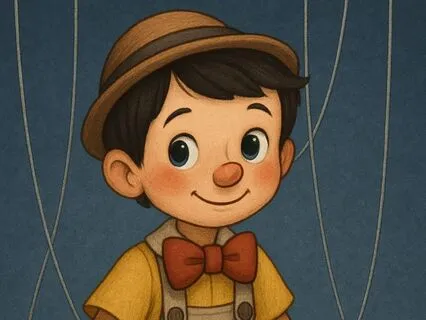
And tonight we continue our journey with the adventures of Pinocchio,
Picking up right where we left off.
In the last episode,
We began Pinocchio's tale,
His first steps as a mischievous little puppet full of curiosity and trouble.
Now the adventure deepens,
As we follow him through new twists and turns on his path to becoming a real boy.
But before we begin,
Let's take a few moments to settle in and fully relax.
Find a comfortable position,
Allowing your body to rest just as it wants to.
Take a slow deep breath in,
And as you exhale,
Feel your body beginning to soften.
Let's start by releasing any tension in your forehead,
Smoothing out the space between your eyebrows,
Allowing your eyes to gently relax.
Your jaw loosens,
Your shoulders ease back just a little more,
And with each breath,
Your body feels heavier and heavier,
And more and more at ease.
Feel your arms resting comfortably,
Your hands open and relaxed,
Your chest rises and falls in an easy way,
Peaceful rhythm,
Your belly softens,
Your back melts down,
Your legs grow heavier and heavier,
Sinking deeper and deeper into rest.
And as you continue to breathe slowly and deeply,
Each breath out,
Imagine any lingering thoughts or worries drifting away,
Like tiny leaves floating down a quiet stream.
There is nothing you need to do right now,
No place to be,
Just here,
Resting,
Listening,
Allowing sleep to gently find you.
And so my friend,
When you're ready,
Let's begin.
Chapter 7.
Gepetto Returns Home and Gives His Own Breakfast to the Marionette The poor Marionette,
Who was still half asleep,
Had not yet found out that his two feet were burned and gone.
As soon as he heard his father's voice,
He jumped up from his seat to open the door,
But as he did so,
He staggered and fell headlong to the floor.
In falling,
He made as much noise as a sack of wood falling from the fifth story of a house.
Open the door for me,
Gepetto shouted from the street.
Father,
Dear father,
I can't,
Answered the Marionette in despair,
Crying and rolling on the floor.
Why can't you?
Because someone has eaten my feet.
And who has eaten them?
The cat,
Answered Pinocchio,
Seeing that the little animal busily playing with some shavings in the corner of the room.
Open,
I say,
Repeated Gepetto,
Or I'll give you a sound whipping when I get in.
Father,
Believe me,
I can't stand up.
Oh dear,
Oh dear,
I shall have to walk on my knees all my life.
Gepetto,
Thinking that all these tears and cries were only other pranks of the Marionette,
Climbed up the side of the house and went in through the window.
At first he was very angry,
But on seeing Pinocchio stretched out on the floor and really without feet,
He felt very sad and soreful.
Picking him up from the floor,
He fondled and caressed him,
Talking to him while tears ran down his cheeks.
My little Pinocchio,
My dear little Pinocchio,
How did you burn your feet?
I don't know,
Father,
But believe me,
The night has been a terrible one,
And I shall remember it as long as I live.
The thunder was so noisy,
And the lightning so bright,
And I was hungry.
And then the talking Cricket said to me,
You deserve it,
You were bad.
And I said to him,
Careful Cricket,
And he said to me,
You are a Marionette,
And you have a wooden head,
And I threw the hammer at him and killed him.
It was his own fault,
For I didn't want to kill him.
And I put the pan on the coals,
But the Chick flew away and said,
I'll see you again,
Remember me to the family.
And my hunger grew,
And I went out,
And the old man with the nightcap looked out of the window and threw water on me,
And I came home and put my feet on the stove to dry them because I was still hungry,
And I fell asleep,
And now my feet are gone,
But my hunger isn't.
Oh,
Oh,
Oh.
And poor Pinocchio began to scream and cry so loudly that he could be heard for miles around.
Geppetto,
Who had understood nothing of all that jumbled talk,
Except that the Marionette was hungry,
Felt sorry for him,
And pulling three pears out of his pocket,
Offered them to him,
Saying,
These three pears were from my breakfast,
But I give them to you gladly.
Eat them and stop weeping.
If you want me to eat them,
Please peel them for me.
Peel them?
Asked Geppetto,
Very much surprised.
I should have never have thought,
Dear boy of mine,
That you were so dainty and fussy about your food.
Bad,
Very bad.
In this world,
Even as children,
We must accustom ourselves to eat of everything,
For we never know what life may hold in store for us.
You may be right,
Answered Pinocchio,
But I will not eat the pears if they are not peeled.
I don't like them.
And good old Geppetto took out a knife,
Peeled the three pears,
And put the skins in a row on the table.
Pinocchio ate one pear in a twinkling,
And started to throw the core away,
But Geppetto held his arm.
Oh no,
Don't throw it away.
Everything in this world may be of some use.
But the core I will not eat,
Cried Pinocchio in an angry tone.
Who knows,
Reported Geppetto calmly.
And later,
The three cores were placed on the table next to the skins.
Pinocchio had eaten the three pears,
Or rather devoured them.
Then he yawned deeply and wailed.
I'm still hungry,
But I have no more to give you.
Really?
Nothing?
Nothing?
I have only these three cores and these skins.
Very well then,
Said Pinocchio,
If there's nothing else,
I'll eat them.
At first he made a wry face,
But one after another,
The skins and the cores disappeared.
Ah,
Now I feel fine,
He said after eating the last one.
You see,
Observed Geppetto,
That I was right when I told you that one must not be too fussy and too dainty about food.
We never know what life may have in store for us.
CHAPTER 8 GEPPETTO MAKES PINOCCHIO A NEW PAIR OF FEET AND SELLS HIS COAT TO BUY HIM AN ABC BOOK The Marionette,
As soon as his hunger was appeased,
Started to grumble and cry that he wanted a new pair of feet.
But Mastro Geppetto,
In order to punish him for his mischief,
Let him alone the whole morning.
After dinner he said to him,
Why should I make you feet over again,
To see you run away from home once more?
I promise you,
Answered the Marionette,
Sobbing,
That from now on I'll be good.
Boys always promise that when they want something,
Said Geppetto.
I promise to go to school every day,
To study,
And to succeed.
Boys always sing that song when they want their own will.
But I'm not like other boys.
I am better than all of them,
And I always tell the truth.
I promise you,
Father,
That I'll learn a trade,
And I'll be the comfort and staff of your old age.
Geppetto,
Though trying to look very stern,
Felt his eyes fill with tears,
And his heart soften when he saw Pinocchio so unhappy.
He said no more,
But taking his tools and two pieces of wood,
He set to work diligently.
In less than an hour,
The feet were finished.
Two slender,
Nimble little feet,
Strong and quick,
Modeled as if by an artist's hands.
Close your eyes and sleep,
Geppetto then said to the Marionette.
Pinocchio closed his eyes and pretended to be asleep,
While Geppetto stuck on the two feet with a bit of glue melted in an eggshell,
Doing his work so well that the joint could hardly be seen.
As soon as the Marionette felt his two feet,
He gave one leap from the table and started to skip and jump around,
As if he had lost his head from very joy.
To show you how grateful I am to you,
Father,
I'll go to school now,
But to go to school,
I need a suit of clothes.
Geppetto did not have a penny in his pocket,
So he made his son a little suit of flowered paper,
A pair of shoes from the bark of a tree,
And a tiny cap from a bit of dough.
Pinocchio ran to look at himself in a bowl of water,
And he felt so happy that he said proudly,
Now I look like a gentleman.
Truly,
Answered Geppetto,
But remember that fine clothes do not make the man unless they be neat and clean.
Very true,
Answered Pinocchio,
But in order to go to school,
I still need something very important.
What is it?
An ABC book.
To be sure,
But how shall we get it?
That's easy,
We'll go to a bookstore and buy it.
And the money?
I have none.
Neither have I,
Said the old man sadly.
Pinocchio,
Although a happy boy always,
Became sad and downcast at these words.
When poverty shows itself,
Even mischievous boys understand what it means.
What does it matter after all,
Cried Geppetto all at once,
As he jumped up from his chair.
Putting on his old coat,
Full of darns and patches,
He ran out of the house without another word.
After a while,
He returned.
In his hands he had the ABC book for his son,
But the old coat was gone.
The poor fellow was in shirt sleeves and the day was cold.
Where's your coat,
Father?
I have sold it.
Why did you sell your coat?
It was too warm.
Pinocchio understood the answer in a twinkling,
And,
Unable to restrain his tears,
He jumped on his father's neck and kissed him over and over.
Chapter 9 Pinocchio sells his ABC book to pay his way into the marionette theatre.
See Pinocchio hurrying off to school with his new ABC book under his arm.
As he walked along,
His brain was busy planning hundreds of wonderful things,
Building hundreds of castles in the air.
Talking to himself,
He said,
In school today,
I'll learn to read,
Tomorrow to write,
And the day after I'll do arithmetic.
Then,
Clever as I am,
I can earn a lot of money.
With the very first pennies I make,
I'll buy father a new cloth coat.
Cloth,
Did I say?
No,
It shall be of gold and silver with diamond buttons.
That poor man certainly deserves it,
For,
After all,
Isn't he in his shirt sleeves because he was good enough to buy a book for me?
On this cold day too,
Fathers are indeed good to their children.
As he talked to himself,
He thought he heard sounds of pipes and drums coming from a distance.
He stopped to listen.
Those sounds came from a little street that led to a small village along the shore.
What can that noise be?
What a nuisance that I have to go to school.
Otherwise.
.
.
There he stopped,
Very much puzzled.
He felt he had to make up his mind for either one thing or another.
Should he go to school,
Or should he follow the pipes?
Today I'll follow the pipes,
And tomorrow I'll go to school.
There's always plenty of time to go to school,
Decided the little rascal at last,
Shrugging his shoulders.
No sooner said than done,
He started down the street,
Going like the wind.
On he ran,
And louder grew the sounds of pipe and drum.
Suddenly,
He found himself in a large square,
Full of people standing in front of a little wooden building painted in brilliant colors.
What is that house?
Pinocchio asked a little boy near him.
Read this sign and you'll know.
I'd like to read,
But somehow I can't today.
Oh,
Really?
Then I'll read it to you.
Know then,
That written in letters of fire I see the words,
Great Marionette Theatre.
When did the show start?
It is starting now.
And how much does one pay to get in?
Four pennies.
Pinocchio,
Who was wild with curiosity to know what was going on inside,
Lost all his pride,
And said to the boy shamelessly,
Will you give me four pennies until tomorrow?
I'd give them to you gladly,
Answered the other,
Poking fun at him.
But just now I can't give them to you.
For the price of four pennies,
I'll sell you my coat.
If it rains,
What shall I do with a coat of flowered paper?
I could not take it off.
Do you want to buy my shoes?
They're only good enough to light a fire with.
What about my hat?
Fine bargain indeed,
A cap of dough.
The mice might come and eat it from my head.
Pinocchio was almost in tears.
He was just about to make one last offer,
But he lacked the courage to do so.
He hesitated.
He wondered.
He could not make up his mind.
At last he said,
Will you give me four pennies for the book?
I am a boy,
And I buy nothing from boys,
Said the little fellow with far more common sense than the marionette.
I'll give you four pennies for your ABC book,
Said a ragpicker who stood by.
Then there,
The book changed hands,
And to think that poor old Geppetto sat at home in his shirt sleeves,
Shivering with cold,
Having sold his coat to buy that little book for his son.
Chapter 10 The Marionettes Recognize Their Brother Pinocchio and Greet Him with Loud Cheers Quick as a flash,
Pinocchio disappeared into the marionette theater,
And then something happened which almost caused a riot.
The curtain was up,
And the performance had started.
Harlequin and Polcinella were reciting on the stage,
And,
As usual,
They were threatening each other with sticks and blows.
The theater was full of people enjoying the spectacle and laughing till they cried at the antics of the two marionettes.
The play continued for a few minutes,
And then suddenly,
Without any warning,
Harlequin stopped talking.
Turning toward the audience,
He pointed to the rear of the orchestra,
Yelling wildly at the same time.
Look,
Look,
Am I asleep or awake,
Or do I really see Pinocchio there?
Yes,
Yes,
It is Pinocchio,
Screamed Polcinella.
It is,
It is,
Shrieked Signora Rosara,
Peeking in from the side of the stage.
It is Pinocchio,
It is Pinocchio,
Yelled all the marionettes,
Pouring out of the wings.
It is our brother Pinocchio,
Hurrah for Pinocchio!
Pinocchio,
Come up to me,
Shouted Harlequin.
Come to the arms of your wooden brothers.
At such a loving invitation,
Pinocchio,
With one leap from the back of the orchestra,
Found himself in the front rows.
With another leap,
He was on the orchestra's leader's head.
With a third,
He landed on the stage.
It is impossible to describe the shrieks of joy,
The warm embraces,
The knocks,
And the friendly greetings with which that strange company of dramatic actors and actresses received Pinocchio.
It was a heart-rending spectacle,
But the audience,
Seeing that the play had stopped,
Became angry and began to yell,
The play!
The play!
We want the play!
The yelling was of no use,
For the marionettes,
Instead of going on with their act,
Made twice as much racket as before,
And,
Lifting Pinocchio on their shoulders,
Carried him around the stage in triumph.
At that very moment,
The director came out of his room.
He had such a fearful appearance,
That one look at him would fill you with horror.
His beard was as black as pitch,
And so long that it reached from his chin down to his feet.
His mouth was as wide as an oven,
His teeth like yellow fangs,
And his eyes,
Two glowing red coals.
In his huge hairy hands,
A long whip,
Made of green snakes and black cats' tails twisted together,
Swished through the air in a dangerous way.
At the unexpected apparition,
No one dared even to breathe.
One could almost hear a fly go by.
Those poor marionettes,
One and all,
Trembled like leaves in a storm.
Why have you brought such excitement into my theater?
The huge fellow asked Pinocchio,
With the voice of an ogre suffering with a cold.
Believe me,
Your honor,
The fault was not mine.
Enough.
Be quiet.
I'll take care of you later.
As soon as the play was over,
The director went to the kitchen,
Where a fine big lamb was slowly turning on the spit.
More wood was needed to finish cooking it.
He called Harlequin and Pulcinella and said to them,
Bring that marionette to me.
He looks as if he were made of well-seasoned wood.
He'll make a fine fire for the spit.
Harlequin and Pulcinella hesitated a bit.
Then,
Frightened by a look from their master,
They left the kitchen to obey him.
A few minutes later they returned,
Caring poor Pinocchio,
Who was wriggling and squirming like an eel and crying pitifully.
Father,
Save me.
I don't want to die.
I don't want to die.
Fire-eater sneezes and forgives Pinocchio,
Who saves his friend Harlequin from death.
In the theater,
Great excitement reigned.
Fire-eater,
This was really his name,
Was very ugly,
But he was far from being as bad as he looked.
Proof of this is that,
When he saw the poor marionette being brought in to him,
Struggling with fear and crying,
I don't want to die,
I don't want to die,
He felt sorry for him.
And began first to waver and then to weaken.
Finally,
He could control himself no longer and gave a loud sneeze.
At that sneeze,
Harlequin,
Who until then had been as sad as a weeping willow,
Smiled happily and leaning toward the marionette,
Whispered to him,
Good news,
Brother of mine.
Fire-eater has sneezed and this is a sign that he feels sorry for you.
You are saved.
For be it known that,
While other people,
When sad and sorrowful,
Weep and wipe their eyes,
Fire-eater,
On the other hand,
Had the strange habit of sneezing each time he felt unhappy.
The way was just as good as any other to show the kindness of his heart.
After sneezing,
Fire-eater,
Ugly as ever,
Cried to Pinocchio,
Stop crying.
Your wails give me a funny feeling down here in my stomach and Achoo!
Achoo!
Two loud sneezes finished his speech.
God bless you,
Said Pinocchio.
Thanks.
Are your father and mother still living?
Demanded Fire-eater.
My father,
Yes.
My mother,
I have never known.
Your poor father would suffer terribly if I were to use you as firewood.
Poor old man.
I feel sorry for him.
Achoo!
Achoo!
Achoo!
Three more sneezes sounded,
Louder than ever.
God bless you,
Said Pinocchio.
Thanks.
However,
I ought to be sorry for myself too just now.
My good dinner is spoiled.
I have no more wood for the fire,
And the lamb is only half cooked.
Never mind.
In your place,
I'll burn some other marionette.
Hey there,
Officers.
At the call,
Two wooden officers appeared,
Long and thin as a yard of rope,
With strange hats on their heads and swords in their hands.
Fire-eater yelled at them in a hoarse voice,
Take Harlequin,
Tie him,
And throw him on the fire.
I want my lamb well done.
Think how poor Harlequin felt.
He was so scared that his legs doubled up under him and he fell to the floor.
Pinocchio,
At that heartbreaking sight,
Threw himself at the feet of the Fire-eater and,
Weeping bitterly,
Asked in a pitiful voice which could scarcely be heard,
Have pity,
I beg of you,
Signore.
There are no signori here.
Have pity,
Kind sir.
There are no sirs here.
Have pity,
Your excellency.
On hearing himself addressed as your excellency,
The director of the marionette theater sat up very straight in his chair,
Stroked his long beard,
And becoming suddenly kind and compassionate,
Smiled proudly as he said to Pinocchio,
Well,
What do you want from me now,
Marionette?
I beg for mercy for my poor friend Harlequin,
Who has never done the least harm in his life.
There is no mercy here,
Pinocchio.
I have spared you.
Harlequin must burn in your place.
I am hungry,
And my dinner must be cooked.
In that case,
Said Pinocchio proudly,
As he stood up and flung away his cap of dough,
In that case,
My duty is clear.
Come,
Officers,
Tie me up and throw me on those flames.
No,
It is not fair for poor Harlequin,
The best friend I have in the world,
To die in my place.
These brave words,
Said in a piercing voice,
Made all the marionettes cry.
Even the officers,
Who were made of wood,
Also cried like two babies.
Fire Eater at first remained hard and cold as a piece of ice,
But then,
Little by little,
He softened and began to sneeze,
And after four or five sneezes,
He opened wide his arms and said to Pinocchio,
You are a brave boy.
Come to my arms and kiss me.
Pinocchio ran to him,
And scurrying like a squirrel up the long black beard,
He gave Fire Eater a loving kiss on the tip of his nose.
Has pardon been granted to me,
Asked poor Harlequin,
With a voice that was hardly a breath.
Pardon is yours,
Answered Fire Eater,
And sighing and wagging his head,
He added,
Well,
Tonight I shall have to eat my lamb only half cooked,
But beware the next time,
Marionettes.
At the news that pardon had been given,
The marionettes ran to the stage and,
Turning on all the lights,
They danced and sang till dawn.
Chapter Twelve Fire Eater gives Pinocchio five gold pieces for his father Geppetto,
But the marionette meets a fox and a cat and follows them.
The next day,
Fire Eater called Pinocchio aside and asked him,
What is your father's name?
Geppetto.
And what is his trade?
He's a woodcarver.
Does he earn much?
He earns so much that he never has a penny in his pockets.
Just think that,
In order to buy me an ABC book for school,
He had to sell the only coat he owned,
A coat so full of darns and patches that it was a pity.
Poor fellow,
I feel sorry for him.
Here,
Take these five gold pieces.
Go,
Give them to him with my kindest regards.
Pinocchio,
As may easily be imagined,
Thanked him a thousand times.
He kissed each marionette in turn,
Even the officers,
And,
Beside himself with joy,
Set out on his homeward journey.
He had gone barely half a mile when he met a lame fox and a blind cat walking together like two good friends.
The lame fox leaned on the cat,
And the blind cat let the fox lead him along.
Good morning,
Pinocchio,
Said the fox,
Reading him courteously.
How do you know my name?
Asked the marionette.
I know your father well.
Where have you seen him?
I saw him yesterday,
Standing at the door of his house.
And what was he doing?
He was in his shirt sleeves,
Trembling with cold.
Poor father,
But,
After today,
God willing,
He will suffer no longer.
Why?
Because I have become a rich man.
You,
A rich man?
Said the fox,
And he began to laugh out loud.
The cat was laughing also,
But tried to hide it by stroking his long whiskers.
There is nothing to laugh at,
Cried Pinocchio angrily.
I am very sorry to make your mouth water,
But these,
As you know,
Are five new gold pieces.
And he pulled out the gold pieces which Fire Eater had given him.
At the cheerful tinkle of the gold,
The fox unconsciously held out his paw that was supposed to be lame,
And the cat opened wide his two eyes till they looked like live coals,
But he closed them again so quickly that Pinocchio did not notice.
And may I ask,
Inquired the fox,
What are you going to do with all that money?
First of all,
Answered the marionette,
I want to buy a fine new coat for my father,
A coat of gold and silver with diamond buttons.
After that,
I'll buy an ABC book for myself.
For yourself?
For myself,
I want to go to school and study hard.
Look at me,
Said the fox.
For the silly reason of wanting to study,
I have lost a paw.
Look at me,
Said the cat.
For the same foolish reason,
I have lost the sight of both eyes.
At that moment,
A blackbird,
Perched on the fence along the road,
Called out sharp and clear,
Pinocchio,
Do not listen to bad advice.
If you do,
You'll be sorry.
Poor little blackbird.
If he had only kept his words to himself.
In the twinkling of an eyelid,
The cat leaped on him and ate him,
Feathers and all.
After eating the bird,
He cleaned his whiskers,
Closed his eyes and became blind once more.
Poor blackbird,
Said Pinocchio to the cat.
Why did you kill him?
I killed him to teach him a lesson.
He talks too much.
Next time he will keep his words to himself.
By this time,
The three companions had walked a long distance.
Suddenly,
The fox stopped in his tracks.
Turning to the marionette,
Said to him,
Do you want to double your gold pieces?
What do you mean?
Do you want one hundred,
A thousand,
Two thousand gold pieces for your miserable five?
Yes,
But how?
The way is very easy.
Instead of returning home,
Come with us.
And where will you take me?
To the city of simple simmons.
Pinocchio thought a while and then said firmly,
No,
I don't want to go.
Home is near and I'm going where father is waiting for me.
How unhappy he must be that I have not yet returned.
I have been a bad son.
And the talking cricket was right when he said that a disobedient boy cannot be happy in this world.
I have learned this at my own expense.
Even last night in the theater,
When Fire Eater.
.
.
The shivers ran up and down my back at the mere thought of it.
Well then,
Said the fox.
If you really want to go home,
Go ahead.
But you'll be sorry.
You'll be sorry,
Repeated the cat.
Think well,
Pinocchio.
You are turning your back on dame fortune.
On dame fortune,
Repeated the cat.
Tomorrow,
Your five gold pieces will be two thousand.
Two thousand,
Repeated the cat.
But how can they possibly become so many?
Asked Pinocchio wonderingly.
All explained,
Said the fox.
You must know that,
Just outside the city of simple simmons,
There is a blessed field called the Field of Wonders.
In this field,
You dig a hole,
And in the hole,
You bury a gold piece.
After covering up the hole with earth,
You water it well,
Sprinkle a bit of salt on it,
And go to bed.
During the night,
The gold piece sprouts,
Grows,
Blossoms,
And next morning,
You find a beautiful tree that is loaded with gold pieces.
So that if I were to bury my five gold pieces,
Cried Pinocchio with growing wonder,
Next morning I should find how many?
It is very simple to figure out,
Answered Fox.
Why,
You can figure it out on your fingers.
Granted that each piece gives you five hundred.
Multiply five hundred by five.
Next morning,
You will find twenty-five hundred new sparkling gold pieces.
Fine,
Fine,
Cried Pinocchio dancing about with joy.
And as soon as I have them,
I shall keep two thousand for myself,
And the other five hundred I'll give to you two.
A gift for us?
Cried the fox,
Pretending to be insulted.
Why,
Of course not.
Of course not,
Repeated the cat.
We do not work for gain,
Answered the fox.
We work only to enrich others.
To enrich others,
Repeated the cat.
What good people,
Thought Pinocchio to himself.
And forgetting his father,
The new coat,
The ABC book,
And all his good resolutions,
He said to the fox and to the cat,
Let us go,
I am with you.
Sweet dreams,
My friend.
Sleep well.