Hi everybody,
It's great to have you here again.
My name is James and I'm a music composer and the founder of Point of Attraction Sound and today I want to explain why music for stress relief and music for deep sleep may sound similar,
But they don't always have the same purpose.
Imagine coming home after a stressful day.
Your mind is still busy,
Your body feels tense,
And you want something that helps you leave the day behind,
Right?
You play a relaxing piece of music with a warm piano,
Gentle movement,
And a melody that makes you feel supported.
And after a few minutes,
You begin to breathe more comfortably.
Your attention moves away from work,
Responsibilities,
And everything that happened during the day.
That music may be doing exactly what you need.
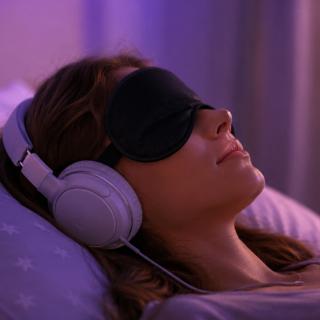
But if you play the same track while trying to sleep,
Something different might happen.
I mean,
The melody may keep your attention active,
The chord changes may feel emotionally engaging,
Or a piano note,
A new layer may keep reminding you that the music is still there.
The track is relaxing,
But part of you is still listening to it,
Right?
And this is the main difference.
Music for stress relief can help you change how you feel while you're still awake.
Deep sleep music needs to support the gradual movement away from active listening.
When you're releasing stress,
Music can have more personality.
It can contain a recognizable melody,
Gentle rhythmic movement,
Emotional harmony,
Or nature sounds that help shift the atmosphere around you.
So the music may take you on a small emotional journey.
Perhaps it begins with tension and gradually feels warmer,
Right?
Perhaps the melody helps you process something you've been carrying.
Or the rhythm gives your breathing something steady to follow.
You're still present and the music is helping you move from one state into another.
Deep sleep music usually has a quieter job.
I mean,
Instead of taking you on a journey that you consciously follow,
It needs to gradually become part of the environment.
The best sleep music often becomes less interesting as you become more tired.
That doesn't mean it should be boring or completely empty,
Okay?
Don't get me wrong.
But it simply means that the music shouldn't keep introducing reasons for your attention to return.
That's it.
The volume should remain controlled too.
The harmony should change gradually.
The textures should feel consistent and brighter elements should be used carefully.
A sudden bell,
For example,
Or a strong piano note,
Or a noticeable change in volume might be beautiful during an evening relaxation session,
But during sleep,
That same moment could feel like an interruption.
Stress relief music can have a destination.
Music often works better when it feels as if it could continue without needing to arrive anywhere.
So yeah,
That's pretty much the difference.
One helps you release the day,
The other gives you permission to stop following it.
This is also why frequency label doesn't tell you everything you need to know.
For example,
Two tracks may both use 528hz,
But one could contain an emotional piano melody and noticeable musical movement,
While the other uses long,
Stable textures that change very slowly.
The frequency may be the same,
But the listening experience is completely different.
The same is true for music described as calming,
Relaxing,
Or healing.
Those words tell you the intention,
But they don't tell you how active the composition is.
So before choosing a track,
Ask yourself what you actually need.
Like,
Are you trying to relax after work,
Reduce mental pressure or create emotional distance from a stressful day?
Music with a little more movement and expression may help.
Are you already in bed and trying to stop following your thoughts?
Something slower and more predictable may be better.
Do you fall asleep easily but wake during the night?
Then consistency,
Volume,
And the absence of sudden changes become especially important.
And you can also notice how the music affects your attention.
Does it help you settle or are you waiting for the next chord?
Does the melody feel comforting or does it keep you mentally involved?
Does the music gradually blend into the room or does it continue asking you to listen?
There's not one answer that works for everybody,
Okay?
Some people fall asleep easily while listening to gentle piano,
For example.
Others need a much more neutral soundscape.
Sometimes one track can support both stress relief and sleep.
The important thing is to choose it based on what it actually does for you,
Not only on the title.
And that's very important.
So please keep this in mind.
And another important thing to say is that relaxing and sleeping are connected,
But they're not identical.
Stress relief music can support you while you're awake and help you move through an emotion.
Deep sleep music should eventually make it easier to let go of the listening experience itself.
One can gently hold your attention,
While the other should know when to release it.
Thank you so much for spending these few minutes with me today.
Again,
I'm James from Point of Attraction Sound,
And I hope this helps you choose music more intentionally the next time you want to relax or prepare for sleep.