Lesson 1
Day 1 - Anchoring The Mind
For the first day, we want to practice anchoring the mind on either sound or our intention, but we can use other options depending on our natural disposition. We wish to draw our attention deeply within every time we notice any disturbance, internal or external. That way, we can mindfully develop a baseline to our default reactions to boredom, stress, or inactivity.
read more
Lesson 2
Day 1 Yoga Nidra - Anchoring The Mind With The Ocean Sound
In this yoga nidra, we will begin to set a resolute intention for ourselves. If you would like to borrow an affirmation for this particular practice, as you explore your own needs and inner desires, you can repeat the following statement three times: "I reside in calm and restful awareness as I am completely at peace within myself." You are welcome to adapt it to your own natural wording.
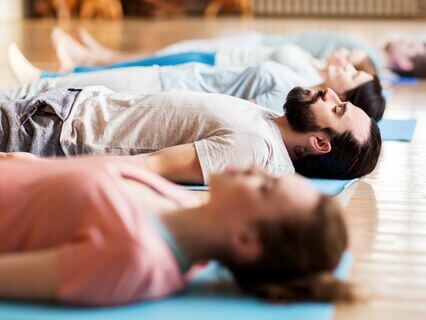
This process of relaxation is near effortless. Simply surrender the weight of your body to the surfaces beneath you and follow along to the best of your abilities.
In this first practice, we will meet the victorious ocean breath. Gently release the mind into the energetic field of sensation as you focus on the sound of the ocean breath. Here, the goal is to anchor the mind without struggle nor strain. Remain as relaxed as possible.
Before starting the practice, take a note of how you feel within the body. What are the predominant sensations? What are you thinking about? What emotions are present?
After you complete the practice, please journal on the following:
*As I meditate, what do I find most challenging?
*What habitual tension do I notice within my body and my patterns of breath?
*What am I thinking about when my mind wanders?
*Did I fall asleep?
*Was I practicing as comfortably as I could have been?
read more
Lesson 3
Day 2 - Returning To Harmony And Balance
For the second day, we want to become firmly established in our natural state of balance and equilibrium. We will use alternate nostril breathing to achieve this. From this state of inner imperturbability, we can better assess what distractions or disturbances tend to knock us out of balance and alignment. As such, we will consciously return to stillness, observe or regulate the breath, and use interoceptive awareness to be present with our inner landscape.
read more
Lesson 4
Day 2 Yoga Nidra - The Return To Harmony And Balance
If you would like to borrow an affirmation for this particular practice, as you explore your own needs and inner desires, you can repeat the following statement three times: "I return to the deep harmony and balance within myself." You are welcome to adapt it to your own natural wording.
In this second practice, we will balance both hemispheres of the brain and both aspects of the autonomic nervous system using the alternate nostril breath. Right and left, sympathetic and parasympathetic now operating in perfect harmony and equilibrium.
Before starting the practice, take a note of how you feel within the body. What are the predominant sensations? What are you thinking about? What emotions are present?
After you complete the practice, please journal on the following:
*When I feel balanced, what am I able to achieve?
*When I feel balanced, how do I feel about myself?
*When I feel balanced, how do I feel about everything I want to manage and control?
*When I feel balanced, how do I view others and their wants and needs versus my own?
*When I feel balanced, what do I want to do next?
read more
Lesson 5
Day 3 - Calm Through Gentle Focus
On day 3, we will use variants of box breathing and cyclical repetitive rhythms to gently calm the mind. Using equalized breaths, music, asanas, or even dance, we can give the mind subconscious signals that our physical environment is safe. The mind then becomes habituated to the low-intensity stimuli we are focusing on and subsequently calms down. Anxiety and other sticky emotions can be more readily released as this happens. From this more neutral and calm state, we can better assess what are habitual triggers are.
read more
Lesson 6
Day 3 Yoga Nidra - Calming The Restless Mind With Gentle Focus
If you would like to borrow an affirmation for this particular practice, as you explore your own needs and inner desires, you can repeat the following statement three times: "I am able to gently focus on the present moment." You are welcome to adapt it to your own natural wording.
In this third practice, we will use mindful equal breaths to gently guide the mind to focus on the patterns of respiration. Here, we are calmly training the mind to let go of anxious thought patterns and intense emotional and mental states. We want to be fully present in this moment to enter even deeper levels of relaxation.
Before starting the practice, take a note of how you feel within the body. What are the predominant sensations? What are you thinking about? What emotions are present?
After you complete the practice, please journal on the following:
*What things take my mind away from the present moment?
*When I have trouble focusing, what tends to contribute to the distraction of the mind?
*What can I do to remain more present when my mind is bored or stressed?
*How can I compassionately bring my mind back to what is in front of me if it wanders?
*What patterns do I observe when I am able to refocus on the now?
read more
Lesson 7
Day 4 - Activating A Deep Relaxation Response
On day 4, we will consciously and compassionately guide the wandering mind back to stillness. We will gently and slowly count down the breath backwards from 10 (or your preferred multiple of 9 for a more traditional approach) after finding a comfortable meditative posture. This can be done seated or while lying down. Simply tense and relax all of the muscles of the body before starting the count. Then, we can take inventory of our dynamics with all of the different components of our life and take simple actions to intentionally shift toward favorable change and set ourselves up for success.
read more
Lesson 8
Day 4 Yoga Nidra - Activating A Deep Relaxation Response
If you would like to borrow an affirmation for this particular practice, as you explore your own needs and inner desires, you can repeat the following statement three times: "I give myself permission to relax deeply." You are welcome to adapt it to your own natural wording.
In this fourth practice, we will use a counted breath to enter even deeper levels of relaxation. This will further help wandering minds return to the silent stillness within.
Before starting the practice, take a note of how you feel within the body. What are the predominant sensations? What are you thinking about? What emotions are present?
After you complete the practice, please journal on the following:
*What can I do to support my meditation practice?
*How are my relationships with my family, friends, and loved ones?
*When was the last time I allowed myself to walk in nature?
*What is my current relationship with my own personal spirituality?
*What can I do to alleviate any financial or career stress I may be experiencing at the moment?
read more
Lesson 9
Day 5 - Releasing Tension & Drawing Fresh Vital Lifeforce Energy With The Breath
On day 5, we will use deep diaphragmatic breaths to further release tension and holding from the physical body and worries and anticipations from the mind. Some light breathwork throughout the day can greatly increase the respiratory capacity of the lungs and quickly replenish our energy and focus. Additionally, by consciously breathing in this way, we can let go of external and self-imposed pressure and begin to gently and compassionately prioritize our own well-being. That way we can return our focus and energy to what is truly essential.
read more
Lesson 10
Day 5 Yoga Nidra - The Release Of Habitual Tension And The Invitation Of Fresh Lifeforce Energy
If you would like to borrow an affirmation for this particular practice, as you explore your own needs and inner desires, you can repeat the following statement three times: "I let go of habitual tension in body and mind." You are welcome to adapt it to your own natural wording.
In this fifth practice, we will use a complete yogic breath to activate a powerful relaxation responses. With the in the inhalation, we will fully revitalize the body, and with the exhalation, we will let go of physical tensions and mental anticipations. The stimulation of the vagus nerve in this process will allow us to fully surrender of what no longer serves us.
Before starting the practice, take a note of how you feel within the body. What are the predominant sensations? What are you thinking about? What emotions are present?
After you complete the practice, please journal on the following:
*What burdens can I begin to let go off?
*As I meet myself with compassion, what expectations was I holding on too tightly?
*How can I be gentler with myself in this moment and the next?
*What are the things that I can do to feel more energized and alive?
*How can I best support my overall well-being?
read more
Lesson 11
Day 6 - Developing Greater Energetic Awareness
On day 6, we want to follow the flows of our energy as we develop a stronger feeling of connection to ourselves and all that is. We seek now to separate facts from reactions and opinions, and we can begin to log how our inner patterns of thought influence our behavior, moment by moment. SoHum pranayama will help us take a step back and notice how all these things are related.
read more
Lesson 12
Day 6 Yoga Nidra - Greater Energetic Awareness
If you would like to borrow an affirmation for this particular practice, as you explore your own needs and inner desires, you can repeat the following statement three times: "I am presence. I see, feel and experience all things as they are." You are welcome to adapt it to your own natural wording.
In this next to last practice, we will use the spinal breath to develop greater energetic awareness. Through the silent and non-mental repetition of the mantra SoHum, we will allow energy to flow along the central channel along the spine. This will promote optimal healing and fully engage the mind in a relaxed way.
Before starting the practice, take a note of how you feel within the body. What are the predominant sensations? What are you thinking about? What emotions are present?
After you complete the practice, please journal on the following:
*What benefits have I started to notice from these practices?
*What is quality of my thoughts?
*How have my emotional states been after I complete each meditation?
*Can I pinpoint a specific technique that has been most beneficial?
*What do I find challenging still?
read more
Lesson 13
Day 7 - Quickly Take Back Control Of Your Mind
Congratulations!!! You have almost completed the course. On day 7, we will use the natural bond between breath and mind to draw our awareness to a single point. Breath and mind are interlinked, and the patterns of one arise, unfold, and pass away with the patterns of the other. We will use a straw breath with gentle breath retention to powerfully, yet gently focus the mind on a single point. By allowing thoughts and emotions to be just as they are while keeping the body still and consciously directing the breath, we can directly observe how our mood and energy levels shift, moment by moment, in real time.
read more
Lesson 14
Day 7 Yoga Nidra - Quickly Empty, Slow Down, And Calm The Mind
If you would like to borrow an affirmation for this particular practice, as you explore your own needs and inner desires, you can repeat the following statement three times: "I respond to each moment with calm, clarity and conviction.." You are welcome to adapt it to your own natural wording.
In this final practice, we introduce the straw breath, sheetali pranayama, with breath retention. This powerful practice will allow us to quickly slow down the mental activity of the brain and give the mind an opportunity to swiftly return to calm. Here, we will gently empty the mind of its contents and release trapped and stale energy as we let go of tension in the body as well as worries and anticipations that trouble the mind.
Before starting the practice, take a note of how you feel within the body. What are the predominant sensations? What are you thinking about? What emotions are present?
After you complete the practice, please journal on the following:
*How do I feel after this week's consistent practice?
*What were my greatest takeaways from this course?
*How have my mood and energy levels been overall?
*What can I do to return to silent stillness when I am not practicing yoga nidra?
*What is the greatest benefit I have noticed?
read more