
The world’s largest free audio library for everyday wellbeing
Real people. Real life. Real time.
Retreat categories
All RetreatsYoga RetreatsWellness RetreatsMeditation RetreatsYoga Teacher TrainingWomen's RetreatsYoga Retreats in BaliYoga Retreats in United KingdomYoga Retreats in AustraliaYoga Retreats in ItalyFind Your Perfect Retreat
Discover transformative Retreats led by Insight Timer's best teachers.Reconnect, recharge, and return renewed.
The world’s largest free audio library for everyday wellbeing
Blog categories
Mental Health and WellbeingTips and GuidesScience and ResearchTraditionSpiritualityAt WorkTop Articles
How to Meditate
Meditation is something everyone can do. Practicing can help improve your health and wellbeing.
Explore MeditationMeditation Timer
Free meditation timer with customizable intervals, bells, and ambient sounds.
Meditation Timer Online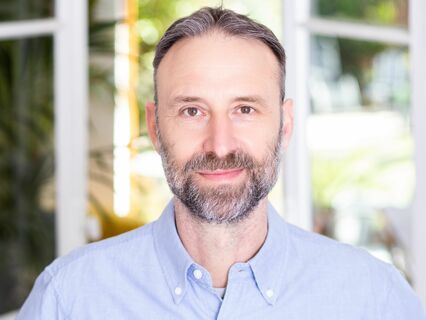
COURSE
Healing From Childhood Trauma With IFS & Self-Compassion
With Dan Roberts
Did you experience trauma as a child? If so, sadly that might have affected every level of your mind-body system. And research now tells us that this experience is far more widespread than previously thought. It's helpful to understand that trauma exists on a spectrum from mild to severe. And that common experiences like bullying at school, or growing up in a high-conflict home, can be extremely stressful and potentially traumatic for a child. These painful experiences in childhood can affect the way we think, the kinds of self-beliefs we have, the way we process emotions and how vulnerable we are to psychological problems like chronic stress, anxiety and depression. On this eight-day course, you will learn all about what you needed to flourish as a child – and what problems it causes when those core developmental needs are not met. You will also learn about the importance of your temperament, what you needed to develop secure attachment and, when that attachment was not as it should be, why you might have developed an insecure (anxious or avoidant) attachment style. This might have affected your relationships throughout your life, especially romantic ones. And this is one of the many ways that traumatic or neglectful early childhood experiences can cast a long shadow over your life. You will also learn all about Early Maladaptive Schemas, or schemas for short – neural networks in your brain which powerfully affect how you think, feel and behave. The course will guide you through what we mean by childhood trauma, as well as emotional neglect. And you will learn about the internal system of parts you would also have developed – both young parts to hold painful memories, beliefs and experiences, and protective parts who try to make sure these young parts never get hurt again. We will look at these parts through the lens of Internal Family Systems (IFS), a warm, compassionate model of psychotherapy that offers a revolutionary approach to healing your wounded parts. This will be enriched by the skill of self-compassion, a 2,500-year-old Buddhist approach to healing painful states such as stress, anxiety and depression. You will learn that this skill can be developed and used in conjunction with IFS, to treat yourself and your parts with greater kindness, care and compassion. This course offers a rich blend of teaching and experiential exercises, including Compassionate Breathing, Colour Breathing, Safe Place Imagery and a range of self-compassion and IFS practices. There will also be frequent opportunities for journaling, to develop and embed your learning, as well as the chance to ask Dan Roberts anything you like in the classroom. The key message of this course is that, whatever you went through as a child, it's never too much and never too late to heal. At the end of this journey you will feel greater hope, optimism and determination to find the healing you so deserve. Join a leading expert on healing from childhood trauma for eight days that could just change your life.
Meet your Teacher

read more
8 Days
4.5k students
4.9 stars
16 min / day
Anxiety
English
4.9 (384)
Recent Reviews
Elaine

September 16, 2026
A truly healing and transformative course in so many ways. Thank you Dan 🙏🏻 ❤️
Diane
August 29, 2026
So Hope inspiring!
Deborah
August 25, 2026
A really helpful course I have learned a lot from
Rose
June 25, 2026
Very supportive thank you and blessings
Kristin
April 21, 2026
This was such a helpful addition to the Pain Reprocessing Therapy I’ve embarked upon. It helped answer lurking questions about why there are so many layers of neuroplastic symptoms and emotional ups and downs. I highly recommend this course to anyone struggling with any level of trauma. I wish Dr Dan could be my IFS therapist!
Beverly
January 5, 2026
Thank you for this course. The work seems never ending for some of us. 🩵
Karen
December 8, 2025
Dan is a warm, caring instructor with much knowledge. Thank you
Sara
October 30, 2025
Filled with wisdom, knowledge, resources, kindness & compassion. This course can absolutely help you on your healing journey.
Pria
September 24, 2025
I am very interested in IFS and found Dan’s voice to be soothing. But the last meditation was disappointing and triggering. He has us imagine a day 5 years into the future and repeatedly brings up our “partner.” I’m single with a history of trauma connected to relational harm. I don’t know if I will ever have a partner and don’t think it’s healthy to suggest to someone in my situation that we can’t hope for a fulfilling life without a partner. I resisted having to picture a partner and tried to picture my fulfilling single life, and it was challenging. The meditation just felt harmful-a therapist and mindfulness teacher suggesting I have to have a partner to find fulfillment.
Nick
September 12, 2025
Great course, and introduction to healing trauma thank you, I will listen again. It has helped to give me a feeling of cautious optimism for my healing journey, thank you 😂
Scott
August 19, 2025
Outstanding! Answer so many questions. Connected dots to why I feel and experience the things I do as an adult — because of childhood traumas. But most importantly I see and feel how these can be resolved once and for all without beating my “self” up. My Self is just fine. It’s my parts that I need to engage to understand and resolve unmet needs, issues, etc that they believe help me (and they did when I was a child) but actually their help is not needed anymore. I have felt like a flawed, broken person my whole life. And that there was no fixing it. I just had to figure out a way to cope with my issues as is, fight them, keep them pushed down, and make the best of the cards dealt to me because it’s just bad luck and nothing I can do will change that — or me. Not true. Not even close.
ilinca
August 17, 2025
Very wise course, and very kind too! Thank you 🙏🤗
maureen
August 4, 2025
This has been the most helpful practice. I am so very grateful. It has come at very difficult time in my life but I feel I have something to pick myself up with thank you ❤️
Tracy
July 31, 2025
Very informative with helpful practices.
Trever
July 30, 2025
This was really helpful and insightful thank you much!
Torie
July 30, 2025
Bravo brilliantly done . This course was so helpful
Mona
July 23, 2025
Outstanding!
Chuck
July 20, 2025
The course has hit on everything I’ve been working on for the last 12 years. It also shows the most two important things 1. I must give myself the credit I deserve for the work I have done 2. There is always more work to do. I have more understanding of the negative critic, the stories I tell to myself about myself, my actions and behaviors and what’s mine and what others. Thank you for this informative and inspiring information and activity
Rachel
July 13, 2025
Excellent
Danna
July 11, 2025
Incredibly helpful and informative course. I highly recommend it 🙏
More from Dan Roberts

Trusted by 37 million people. It's free.

Get the app


