
The world’s largest free audio library for everyday wellbeing
Real people. Real life. Real time.
Retreat categories
All RetreatsYoga RetreatsWellness RetreatsMeditation RetreatsYoga Teacher TrainingWomen's RetreatsYoga Retreats in BaliYoga Retreats in United KingdomYoga Retreats in AustraliaYoga Retreats in ItalyFind Your Perfect Retreat
Discover transformative Retreats led by Insight Timer's best teachers.Reconnect, recharge, and return renewed.
The world’s largest free audio library for everyday wellbeing
Blog categories
Mental Health and WellbeingTips and GuidesScience and ResearchTraditionSpiritualityAt WorkTop Articles
How to Meditate
Meditation is something everyone can do. Practicing can help improve your health and wellbeing.
Explore MeditationMeditation Timer
Free meditation timer with customizable intervals, bells, and ambient sounds.
Meditation Timer Online
COURSE
Wake Up and Live
The structure of this course comes from the famous 18th century Zen master Hakuin, who divided Zen practices into what he called the “two wings of a bird”. One wing includes practices directed towards insight and understanding who we really are – including breath meditation, the meditation of the ‘unborn’, and koan practice. The other is aimed at enhancing your wellbeing and energetic vitality, with the understanding that to live an active, enlightened and truly helpful life, you need a robust, healthy system. This includes ‘soft ointment’ meditation, ‘ah-un’ breathing, ‘naikan’ practice. In the first half of this course, you'll learn to direct your attention to your present-moment experience with a sense of enquiry and curiosity. With sustained awareness and genuine, openness to what arises, the potential is set up for you to realise 'kensho' - seeing your true nature. In the second half of the course, you'll learn to ground your insights through developing the energetic system of your body. You will learn how to cultivate the energetic roots of your body, including your 'hara' (guts), and learn how to allow the energy of your body to circulate freely. When we begin perceiving the body as a flow of energy rather than an unchanging 'thing', we're on the path to true liberation as laid out by the Buddha.
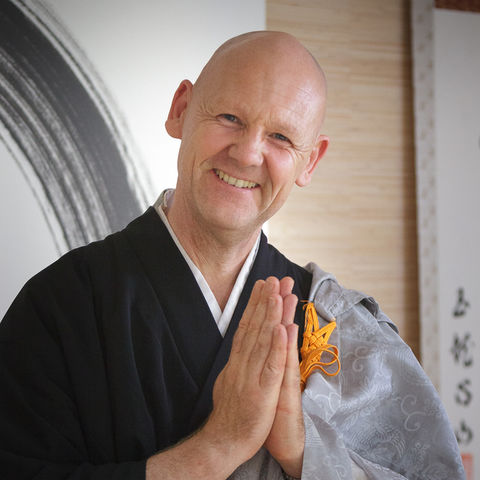
Meet your Teacher
read more
8 Days
3.7k students
4.7 stars
22 min / day
Grounded
English
4.7 (79)
Recent Reviews
Dieta

June 25, 2026
Blissful moments!
Rich
March 30, 2025
Excellent course, traditional, authentic Zen training that has been tried and tested for hundreds and even thousands of years. This isn't a course that you complete in 10 days and move on to the next one, traditionally each day would be practiced for months, so its worth going back and repeating sessions. If you find it hard to count your breaths to 10, this tells you something important. There are practices, I was unaware were Zen practices, so this has broadened my understanding and provided the opportunity to review and improve. These practices do require some effort. If your looking for a course to de-stress or just enjoy the experience, then there are more appropriate courses for that. These practice's can be much more transformational, they can be integrated into everyday life. There is no need to de-stress because stress isnt a problem. Instead there's a more natural joy for life regardless of circumstances.
Michele
March 20, 2025
A very generous course with interesting practices and original insights. Very recommended. 🙏🙏🙏
Kim
March 7, 2025
His voice is amazing Very soothing My worries and doubts just melted away
Chad
December 16, 2024
Really enjoyed this course Thank You
Eric
October 31, 2024
Great course! It made me ask the vital question: WHO AM I, REALLY. That question will flow with me continuously in my practice. Thank you.
Elain
September 8, 2024
Beautiful
Rita🌈
June 11, 2024
Quite fascinating; many new ideas here.
Susan
June 1, 2024
Filled with opportunities to discover more of who I am And how to play with me.
Eva
November 4, 2023
Thank You. This was special, concrete practise, well designed combination, yes...really for wakeing up. 🙂
Carroll
October 13, 2023
I was put off by the theatrically of the speaker’s voice. It was too over the top for me. I did finish all the sessions
Ashok
September 15, 2023
Just beautiful with good learnings. Loved the very good practices and beautiful insights. The instructions could be better - it would be useful to call out when each meditation ends Vs when there are silent periods where the instructions will resume. Without that clarity, one has to check the phone to know where we are. Apart from that, this is a lovely little introduction to some deep practices. Thank you and Namaste 🙏🏽
Matt
September 6, 2023
Wry beautiful
Vicki
August 9, 2023
Thank you for these meditations I found them tone deep spaces
Padmavati
August 1, 2023
Superbe ! mais quel dommage d’entendre les bruits de la salle pendant les cours. Merci Om Shanti
Lexi
May 8, 2023
Julie
March 13, 2023
This course was very helpful in providing new tools to improve my focus and open my mind to new insights
Kiddo
January 13, 2023
Anne
December 8, 2022
Excellent introduction to various zen meditation techniques. The breath work complemented exercises I do as part of my yoga and meditation practice. I really enjoyed the koan and moving meditation classes and will look in to learning more about these. Will use these classes as part of my practice.
More from Julian Daizan Skinner
Trusted by 37 million people. It's free.

Get the app


