
The world’s largest free audio library for everyday wellbeing
Real people. Real life. Real time.
Retreat categories
All RetreatsYoga RetreatsWellness RetreatsMeditation RetreatsYoga Teacher TrainingWomen's RetreatsYoga Retreats in BaliYoga Retreats in United KingdomYoga Retreats in AustraliaYoga Retreats in ItalyFind Your Perfect Retreat
Discover transformative Retreats led by Insight Timer's best teachers.Reconnect, recharge, and return renewed.
The world’s largest free audio library for everyday wellbeing
Blog categories
Mental Health and WellbeingTips and GuidesScience and ResearchTraditionSpiritualityAt WorkTop Articles
How to Meditate
Meditation is something everyone can do. Practicing can help improve your health and wellbeing.
Explore MeditationMeditation Timer
Free meditation timer with customizable intervals, bells, and ambient sounds.
Meditation Timer Online
COURSE
Ayurveda: Healing Through The Senses
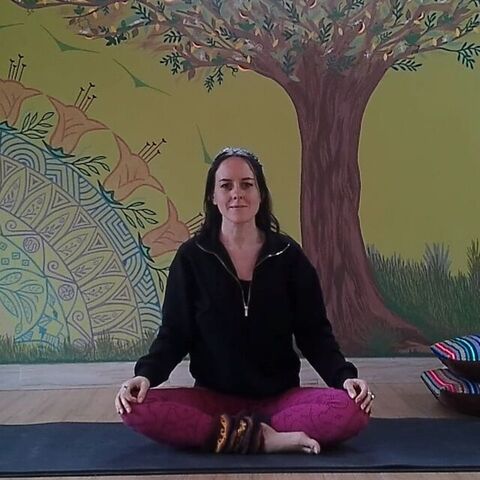
With Jessica Inman
This course is an introduction to the ancient healing science of Ayurveda. We begin by looking at some of the fundamental principles that are at the root of the Ayurvedic understanding of the body and mind: the opposite qualities and the elements. We then look in some detail at the three Ayurvedic doshas: the biological forces that govern the mind and body, and you'll do some exercises to discover your personal constitution, and to explore if any of your doshas are currently out of balance. During the second part of the course, we explore a range of Ayurvedic treatments through each of the different senses. We'll look at the six tastes, and the effects that each of the different tastes has on the doshas, and we also take a look at the importance of a healthy digestive system and some healthy routines and approaches to eating. We explore the benefits of touch and massage, the effects of different colours, environments and smells, and the use of sound and mantra for balance. Throughout the course, many practical suggestions are given to allow you to choose the appropriate treatments for you and your wellbeing. By the end of the course, you'll have a thorough understanding of the basics of Ayurveda, you'll be able to identify imbalances in the doshas, and you'll be equipped with a range of treatments and simple changes that you can make in your life to enhance your health and restore balance.
Meet your Teacher
read more
16 Days
608 students
4.7 stars
16 min / day
Stress
English
4.7 (11)
Recent Reviews
Beth

May 20, 2025
This was well thought out and well presented. Thanks so much 🥰🙏🤗
Biggi
March 8, 2025
Great introduction to Ayurveda. The course is both comprehensive and understandable for Beginners. Thank You 🙏🏼
Ama
March 7, 2025
This course was extremely helpful, with lots of practical, actionable advice, presented in a very easy to remember way! I love it!
ilinca
December 15, 2024
Exceptional course! I learned so many useful things 🥰
Margarita
April 27, 2024
Great information, explained better than any book I’ve read. I hope she has more to share.
J
October 9, 2023
Fantastic overview of Ayurveda. Very well organized, easy to listen to, and filled with good information.
Hugh
October 7, 2023
Please fix your persistent audio problem.
More from Jessica Inman

Trusted by 37 million people. It's free.

Get the app


