Lesson 1
Start With A Good Posture
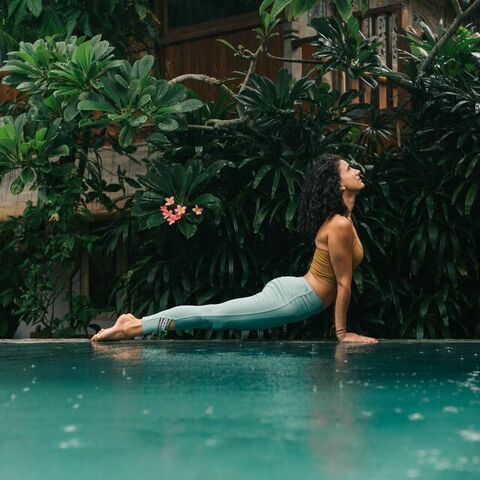
The first lesson focuses on exploring various posture options for the practice of breathwork. Participants will learn about sitting cross-legged with the aid of cushions, finding comfort on a chair, or even lying down.
The emphasis is on understanding the body's positioning to enhance the breathwork experience.
read more
Lesson 2
Observation : Conscious Breathing
This practice is suitable for everyone. Conscious breathing can be done anywhere and in any situation.
Practical guide:
- Find a comfortable sitting position that you can sustain during the practice. If you need to use a chair, feet flat on the ground, and keep the back off the back of the chair.
- Make sure to feel at ease in your clothing. Avoid tight clothes.
- Journal after your practice. Write down what you have felt, and what you could observe (sensations, emotions, feelings, challenges).
- Reiterate the practice independently during the day, setting your timer for 10 to 20 minutes.
Benefits of Conscious Breathing:
- Reduces stress levels in your body.
- Can help to lower your heart rate
- Can help to lower your blood pressure
- Can help to reduce depression.
- Helps to better manage chronic pain.
- Helps to better regulate your body's reaction to stress and fatigue.
- Reduces the possibility of burnout
- Cultivates presence and mindfulness
- Reduces reactivity
- Helps to cultivate focus
read more
Lesson 3
Breath Awareness Through The 3 Parts Breathing Practice
This practice can be done seated or lying down.
How to practice the 3 parts of Breathing:
1. Sit or lie flat in a comfortable position
2. Put one hand on your navel and the other hand on the chest
3. Take a deep breath in through your nose and let your belly rise and push your hand out
4. Continue to inhale and send the air to your rib cage
5. Complete the inhalation through your upper chest, just below the collarbones
6. Exhale out through the nose and release the air from your upper chest first, then your rib cage and your belly
Benefits of the 3 parts Breathing:
- Calm the nervous system
- Increase the lung's capacity
- Strengthen the diaphragm
- Increase the concentration
- Increases supply of oxygen and nutrients to cells throughout the body
- Relaxes muscle spasms and relieves tension
read more
Lesson 4
Concentration & Focus Through The Square Breathing Practice
This Practice is for everyone. To practice with young children or the elderly, you may need to make the breath
counts shorter.
For example: 3 -3-3-3 or 2-2-2-2
How to Practice:
1. Once all of the air has been expelled from your lungs, start by inhaling to a count of four through your nose
2. Hold your breath in your lungs for a count of four
3. Breathe out slowly to a count of four through your nose. By the time you are at four, all of the air should be out
of your lungs
4. Finally, hold your lungs in an empty state for a count of four
5. Repeat steps one through four for a total of at least five minutes. If you feel ready, you can increase the count
Benefits of Box Breath:
- Calming
- Lowers Blood Pressure
- Reduces Anxiety
- Improve Concentration and Focus
read more
Lesson 5
Release Tensions With The Lion Breath
This practice is for everyone.
Not recommended in a situation where you experience anxiety.
How to practice Lions Breath:
1. Take a deep inhalation through the nose.
2. Then simultaneously open your mouth wide and stretch your tongue out, curling its tip down toward
the chin, open your eyes wide, contract the muscles on the front of your throat, and exhale the breath
slowly out through your mouth with a distinct "ha" sound.
3. Repeat
Primary Benefits of Lions Breath:
- Removes tension & tightness
- Energising & awakening
- Opens the throat chakra
read more
Lesson 6
Calming Down With The 4-7-8 Breathing Practice
This breath is suitable for everyone, however, children, pregnant women and elderly may not be able to hold in for 7 counts and exhale for 8 counts. If this is the case, just count faster (rather than changing the ratio of the breaths)
How to practice 4-7-8 Breath:
1. Empty the lungs of air.
2. Breathe in through the nose for 4 seconds.
3. Hold the breath for a count of 7 seconds.
4. Exhale forcefully through the nose for 8 seconds.
5. Repeat the cycle
Benefits of 4 - 7 - 8 Breath:
- Better Sleep
- Calming
- Manages Reactivity
- Reduce Cravings
read more
Lesson 7
Therapeutic Breath With The Coherent Breathing
Coherent Breathing is suitable for everyone.
How to Coherent Breathe:
1. Sitting upright or lying down come into a comfortable position
2. Place your hands on your belly and begin to belly breathe expanding your belly as you inhale and allowing the belly to fall on the exhale
3. Now begin to observe the pace of your breath counting how many seconds it takes you to inhale and exhale
4. Slowly breathe in, expanding your belly, to the count of six. If it becomes uncomfortable then stick to a shorter count and slowly increase. You want to work yourself up gradually and comfortably.
5. Slowly breathe out to the count of six.
6. Continue and repeat for a few minutes.
7. You are eventually aiming for up to 5 breaths per minute.
Benefits of Coherent Breathing:
- Calming
- Increases HRV
- Support PTSD (post-traumatic stress disorder), and attention deficit disorder
read more
Lesson 8
Experiment Your Breath
Quick Guide to Breath Counting Experiment
Discover Stress Awareness Through Breath:
Step 1: Set the Scene Find a quiet spot to sit or lie comfortably.
Step 2: Center Yourself Close your eyes, focus on your natural breath.
Step 3: Time It Right Set a timer for 2 minutes or trust your inner sense of time.
Step 4: Begin the Experiment Inhale and exhale naturally, silently counting each cycle.
Step 5: Calculate the Average Divide the total breath cycles by 2 to get breaths per minute.
Step 6: Analyze the Results Check where your breath rate falls (4–10 for calmness, 10–20 typical).
Step 8: Adjust Your Breath Experiment with intentional slow breathing if needed.
Approach with curiosity, and let this experiment guide you toward stress awareness and intentional breath regulation.
read more