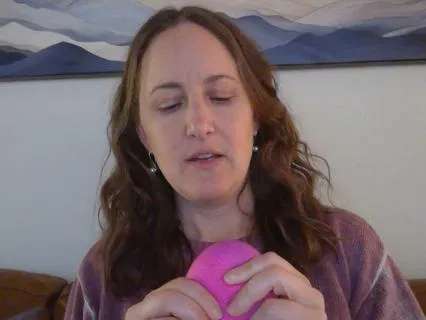
Hi everybody in this meditation we are going to work with the neurodivergent nervous system and ways that you might be able to practice meditation even if you struggle with it in traditional instruction So this will be a brief practice and we'll experiment with three different facets of our bodies and our nervous systems in meditation practice.
So to begin,
First you're welcome to find a comfortable position or a seat for this practice.
And then the very first aspect of our bodies that we want to work with is movement.
And so whether you are a person who is moving around a lot and has trouble sitting still,
Or a person who maybe really enjoys being still and dropping into stillness,
I want you to explore this first.
And we can do that by just checking in first with your body.
Are you feeling a desire to move at this moment?
Is your body actively moving?
Does it want to stay still and relax into stillness?
And what I recommend is going back and forth between these two states a little bit.
One is if you're not quite feeling settled so I have a fidget toy in my hand here,
A little squishy ball,
And what I'm going to do is squeeze this ball and play around with it for a moment,
Just noticing how my body might want to move.
To feel into this sensory experience.
And just taking a breath while I'm doing that.
Letting my body move when it wants to.
Then I'm going to take a pause and slowly come into stillness.
And I'm just gonna let my hands rest in my lap.
And I'm going to see what it feels like to be still.
And you can stay here as long as you want to.
You can go back to exploring with this movement.
It could also be a rocking of your body.
It could be a tapping of your leg,
Whatever types of movement that your body is naturally orienting towards right now.
So just explore with pausing on the movement seeing what it feels like.
To really be steady and still in your body If that's uncomfortable,
That's a good thing to notice too.
And then to move back into movement.
And notice what the movement is feeling like for your body.
So in this way we're bringing more mindfulness and awareness to fidgeting and to movement itself to stimming and to um to maybe the tendency to not sit still in meditation.
The second part of our body experience I want to help you explore is using our eyes in our visual field.
So for some people it's really easy to close the eyes and to turn inward.
And for other people,
The eyes being open is much more calm and relaxing.
So just like we did with body movement i want you to alternate between these two at a slow pace so starting out with your eyes open you can just notice how it feels to have visual input coming in and what you do with your eyes that feels Maybe calming or engaging to your nervous system.
Notice what kinds of things you tend to be attracted to with your eyes,
Or if there's a certain pattern,
You look at certain things repeatedly,
Or you're tracing certain surfaces with your eyes.
You can also notice if it tends to be overstimulating to have your eyes open.
And then when you're ready slowly shift to having your eyes closed With your eyes closed,
You can also notice what that shift is like for you and what it feels like when you turn off that sensory input.
And just spending a little bit of time here take a breath or two with your eyes closed exploring how your nervous system reacts.
To having the eyes closed.
And again,
You can open your eyes when you're ready.
And again,
You can notice,
Do you experience any pain or delight or your brain turns on in a certain way when your eyes are open?
Does your breathing change when your eyes are open?
And then go back to experimenting with your eyes closed once more.
What is it like to have your eyes closed?
Does your breathing change?
Does your body shift?
Does your mind change or your emotions change in response to you closing your eyes You can either keep your eyes open or closed as we move forward here.
The third part of our body system experience we're going to explore is somatic.
Interoceptive touch.
For this,
I usually put my hand on my heart or my chest.
To start out with so explore what it's like for you and if you want to keep moving you could keep moving as you're doing this You could be moving with a fidget in another hand or swaying or tapping.
But use one hand.
To place it on your body somewhere that feels like it could be a grounding anchoring point for you and if it if those words don't work That's okay.
Just choose a place to put your hand,
Whether that's your chest or your belly.
Or it could be both hands.
On your thighs and see what it's like to have this.
A somatic cue Is your mind able to pay attention to that area of your body?
You could move your hand a little bit to create some sensation in this area.
And you could try noticing what it feels like with your fingers.
So my sweater is soft and I can feel that through my fingers.
You can also notice what it's like to feel it from the inside of your body.
So from my chest,
I feel weight.
I feel warmth from my hand through my chest.
And then I want you to release that somatic cue and just put your hand back down.
And again,
Notice what it's like not to have that sensory input there.
Does it change anything in your experience,
Positive or negative?
To take away that somatic experience.
And once again you can put your hand back on your body maybe the same place maybe a different place another place i like to use is on my face sometimes across my forehead sometimes more on my cheek And you can just for a moment notice if you can feel this in your body.
Can you feel sensation in your head?
What does it feel like?
How does your body respond to having your hand here?
Take a breath or two.
For me with this one,
I really notice my body calm down.
In fact my other hand that was fidgeting with the fidget toy stopped fidgeting.
When I did this one with my hand on my head.
And I can hear my breath more than I was before.
And then release your hand once again and just go back to noticing without that pressure and somatic touch.
And notice if there's any changes or differences how does your nervous system respond without that cue.
I hope this exploration was helpful for you in learning some ways that your body and nervous system relate to meditation.
And if you're interested in more nervous system friendly meditation instruction,
I'm on Insight Timer and really enjoy guiding meditation for neurodivergent people.
So feel free to follow along with me.
And thank you so much.