The vagus nerve has become something of a buzzword lately.
You may have heard people talking about activating or resetting the vagus nerve.
But the vagus nerve isn't really something we switch on and off.
It's already working all the time.
What we can do is use simple practices that encourage our parasympathetic nervous system.
The part of our nervous system associated with rest,
Recovery,
And digestion.
And the nice thing is that many of these practices are quite simple.
One of the easiest places to begin with is your breath.
Try breathing slowly into your belly.
You might inhale gently for 4 seconds and then exhale for 6.
That slightly longer exhale can be especially calming.
You don't need to force the breath.
Just slow it down.
Even five minutes of slow breathing can become a small ritual.
You return to whenever life feels overwhelming.
Another simpler practice is humming.
Take a comfortable breath in.
And as you breathe out,
Gently hum.
You could also sing.
Chant or make a long sustained sound.
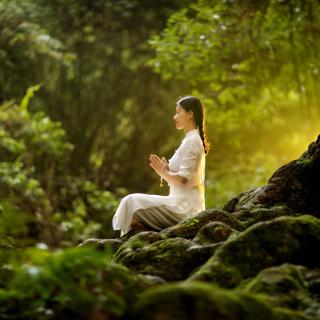
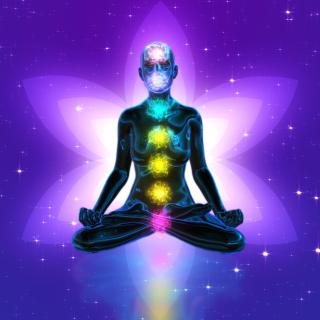
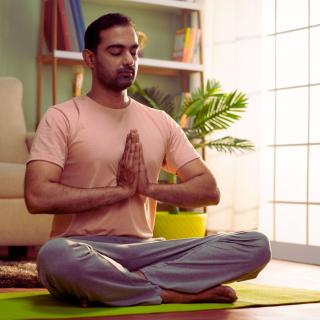
If you enjoy medication.
That can also be part of your routine.
Meditation Mindfully A body scan.
Loving Kindness Meditation Yoga Nidra or progressive muscle relaxation can all help create conditions in which your body can settle.
And remember that meditation doesn't always mean sitting perfectly still.
You can take a slow,
Mindful walk.
You can practice gentle yoga,
Tai chi,
Or kikong.
You can stretch your body slowly while paying attention to your breathing.
Regular exercise,
And something as simple as an easy walk.
Can also support the body's overall ability to regulate stress.
Nature can be wonderfully grounding too.
Go outside and notice the trees,
The clouds,
The breeze,
Or the sounds around you.
Instead of thinking about what happened yesterday.
Or what might happen tomorrow.
Spend a few moments noticing where you actually are.
Music can also help us slow down as well.
Listen to something calming.
Play an instrument.
Make something creative.
Draw.
Paint.
Write.
Or simply allow yourself to get absorbed in an activity you enjoy.
Connection with other people matters too.
Have a relaxed conversation with someone you trust.
Laugh with someone.
Hug someone you care about.
Spend some quiet time with the pets.
Sometimes regulation doesn't come from doing something complicated.
It comes from experiencing a little safety,
Connection and comfort.
You can also pay attention to the tension you're carrying in your body.
Is your jaw clenched?
Are your shoulders raised?
Is your forehead tense?
Let your jaw soften.
Allow your shoulders to drop.
Relax the muscles around your eyes and face,
And take one slow breath.
Sleep is another important part of a nervous system regulation.
Try to maintain reasonably consistent sleep.
And waking times and reduce unnecessary stimulation before going to bed.
You might also experiment with simple sensory practices.
Splash a little cool water on your face.
Or place a cool washcloth against your face for a moment if that feels comfortable.
Finally,
Remember,
You don't have to do all of these things.
You certainly don't need a complicated routine.
Choose one or two practices that genuinely fit your life.
Maybe it's five minutes of slow breathing.
Maybe it's humming.
Or maybe it's a drawing.
Maybe it's meditation,
Walking in nature,
Listening to ambient music,
Stretching,
Laughing with a friend.
Or simply.
.
.
Playing with your pet.
The goal isn't to force yourself into relaxation.
It's to give your nervous system small opportunities to settle.
And perhaps that's the most useful practice of all.
Pause.
Soften your body.
Take a slow breath in.
And let your exhale be just a little longer.
Sometimes a few quiet moments are enough to remind the body that it's okay to slow down.