Hi,
Everyone,
And welcome back to the podcast whose sole reason for existence is to remind you that this world is full of mystery,
Magic,
And inexplicable encounter.
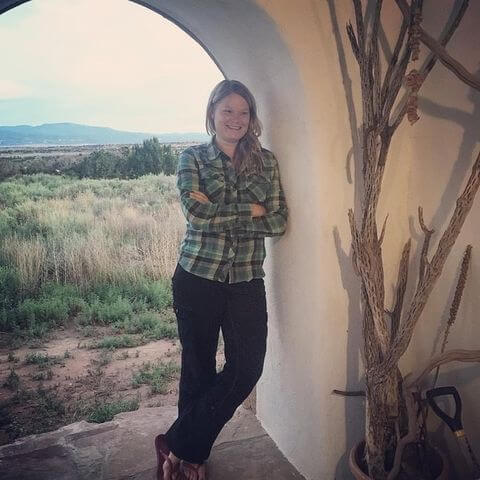
In this episode's guest,
Teresa Evans,
Has quite a few stories to share because in her career as an ICU nurse,
She was witness to many who were departing this planet and going to the next adventure.
And powerful is her story of her mother's passing and what happened around that time.
There's a lovely,
Incredibly lovely dovetailing with the garden that Teresa's mother kept and how Teresa worked on it,
Nourished it,
Nurtured it as her mother lay dying.
I just interviewed Teresa the other day and the interaction and the interview was so profound and so life-giving to me that I couldn't I couldn't wait to release it to you all.
So now,
Here's my conversation with the beautiful Teresa Evans.
My own mother-in-law,
Who.
.
.
Was in a coma.
She had had a cerebral aneurysm.
She had never woken up from it.
We were not going to,
We didn't want her on life support,
But you know,
It's again,
The system is so fixated on Keeping people alive.
We had to fight to have life support turned off,
But I'll tell you what,
Two of her daughters and I were standing beside her and I just happened to look down at her and she had opened her eyes and I said,
Oh my God,
You guys look at Ruthie's eyes.
And she had opened her eyes and they were like,
Whatever she was seeing was the most magical,
Amazing,
Mystical,
Incredible thing she had ever seen.
Her eyes were so full of light and so full of love.
I heard long ago the expression that we are spirits walking around in these human bodies trying to figure it out.
And I resonated immediately with that.
I'm like,
That is so true.
I think for me on a very personal level,
I feel like I.
.
.
I feel like I've been a teacher in a past life and I feel like I came back with that same role.
Even when I'm not looking to be the teacher,
I end up being the teacher.
And so I'm insatiably curious about my husband's.
I don't know if you know who Marion Woodman is,
But she was a psychoanalyst in Toronto that did a lot of work around feminism and stuff and she talked about how There's people that we call happy carrots and they're just happy.
Like I'm married to a happy carrot.
He's just so sweet.
We've been together for 40 years and he's just happy.
Now,
Me on the other hand,
If I'm working with something and I reach a resolution,
I can let myself sit with,
Um,
A sense of maybe resolution for about 10 minutes and then I'm going,
But there's a lesson,
There's something more,
There's something more for me to learn.
So I think that's,
You know,
The biggest thing.
That my biggest driving purpose has always been there's more,
There's more.
What is my purpose?
Why am I here?
Why did I meet this person?
Why did I decide to become a nurse?
Why did I write this book?
You know,
What is it that life,
The universe,
God,
Whatever name we want to give to the higher I do believe there's.
Nothing greater out there that's directing the ship.
What is my role in that?
How do I fulfill that best of my ability?
Teresa,
I'm not gonna lie,
You had me at happy carrot.
I've never heard that before.
Marion Woodman in my entire life.
But now,
Now,
I mean,
I was just thinking about,
Do you think some people,
This is just a quick side note,
Do you think some people can have extremely challenging and painful childhoods and then become a happy carrot?
Or is it kind of intrinsic to your nature from the moment you're born?
Thoughts.
Oh man,
I think it's.
.
.
I think.
I know it's a big one.
It is a big one.
I mean,
I would say I'm thinking about my husband and I know his story and I mean.
.
.
He had some challenges.
Growing up.
Nothing.
I don't know.
I mean,
I'm trying to think of anyone I know that's had a challenging I think,
Of course,
We always have moments.
I mean,
I'm not saying I'm never happy.
I mean,
I'm bartending right now.
And the other night,
A lady said to me,
Asked me,
She said,
Are you the owner?
And I said,
No,
I'm the owner's work wife.
I just helped.
I helped him open the place.
And she said,
Well,
You have so much joy.
I love your joy and I was like,
Well,
Thank you.
So I,
You know,
I'm a happy person,
But I.
.
.
But I'm always looking for the next level of what there is to learn in life.
So I don't know.
I mean,
And somebody have had,
What do you think?
Well,
I was going to say that I think that that there it's so people like your husband exist so that the rest of us can understand that that level of satisfaction and joy is possible.
I think that people are born and they have extreme challenges when they're young,
No matter what that looks like.
But,
You know,
Being around someone that happy can be annoying,
But it also can be a lighthouse to look forward to of a possible way of being.
Um,
I did want to say now that you've dropped that you're a bartender,
That you already are a psychoanalyst,
Frankly,
Because when I used to wait tables and bartend,
I mean,
Honestly,
My regulars,
I became kind of a therapist for them.
They share their lives.
I don't know if you experienced that.
Yes,
Of course.
You know,
And I mean,
I was a critical care nurse for years too.
And I mean,
Honestly,
The two are kind of.
Have a lot in common,
Right?
And I don't think nurses would be upset by that.
I mean,
A lot of nurses,
When I talk to them,
Say,
Oh,
Yeah,
I wait at tables.
And that's just the same.
I mean,
It's a different skill set.
I'm not belittling.
I worked my literally to get my degree so but anything where you're of service to people.
And they have five minutes.
I mean,
People are hungry for meaningful conversations.
That's what I find.
Yeah.
Here's a question.
So when you were a kid,
What did you dream of becoming?
And then would your child self be kind of surprised by what you've done in your life?
Yeah.
Oh my God.
I honestly,
And this is a true story,
I've shared this with many people.
I can remember laying in bed and I must have been.
Probably,
I had to have been in the seventh grade so however old that is 11 maybe.
And.
My family was,
My mom named me after St.
Teresa,
And I always had this picture of St.
Teresa hanging out in my room.
I remember thinking,
I wish I could be like St.
Teresa,
But I'm not.
I'm not St.
Teresa.
Thinking to myself.
I wish I could just know that I was going to marry the guy next door and be a bank teller,
But it's not going to happen.
I just had this sense that I was meant to live.
Not to.
.
.
Normal life.
Just doing what the expectation was.
And I didn't know what that was going to be.
And it's been a very full life.
I mean,
I spent 10 years living in a commune.
Yeah,
I,
You know,
Lived with my husband for 40 years.
I moved multiple times.
I've had my nursing career.
I've owned a yoga studio for 12 years.
I traveled around the world teaching somatic movement.
But the common denominator of all of those and even as a bartender,
Is that I was showing up my The whole purpose was,
How can I help people find more freedom in their lives?
Through movement,
Through meditation.
Through helping you figure out how to get rid of this pain that's been plaguing you.
Through listening to your story at the bar.
I mean,
All of those are really potently of service.
I think a lot of people don't understand that when you are a server or a waitress,
Which I was forever or a barista forever,
Um,
Because it gave me freedom to move around,
Which is one of the things that is most important to me is that you do become someone,
A touch point in people's lives and they expect to see you and they like the familiarity.
They like the fact that they can just confide in you.
Um,
Their secrets or hold their secrets.
Really quickly,
Before we move forward,
Can you explain what a critical care nurse does?
Well.
.
.
Critical care is very specific for people that are in the very acute phase of either a crisis of some type or they need some life-sustaining machinery or drugs to keep them going again over this acute phase we're always assuming that hopefully some you know the person is going to pull out of it,
But you know it's a different kind of nursing and that you're.
You have one patient you maybe have two patients,
Because it's a very as well as as well as needing to know the physiology and the pharmacology there's a lot of equipment involved there's dialysis there's you know.
Respiratory the ventilator there's all these machines so you're like a mechanic and uh but you're also you know working with people at their most vulnerable time which is usually the family because the person you're working with is often not conscious So.
It's meant to be a shorter.
Time with the people,
But.
.
.
You know again this is part of what I talk about in my book right we've we've created a very A system,
A health care system that is solely focused on extending life and I don't think that the moral and ethical implications of the technology that we created.
I don't believe we have We have caught up with that technology morally and ethically.
Yeah,
Those are really big questions.
One of my questions was going to be,
Do you think in Western hospitals.
This side of the world,
In this country,
That the process towards death honors it in any way,
Because it just seems so I don't know,
Violent to me.
There,
There is.
Yeah,
It is.
It's very,
Okay.
So you do it's keep the person alive at all costs,
No matter what.
Yes,
Now let me preface this for all of your listeners and your listeners who might be nursing right now or physicians or working in the field.
I have not worked in the health care in a hospital setting since 2003.
So that's 23 years ago.
I'm praying that things have changed in 23 years.
When I was involved,
Advanced directives were just starting to be talked about,
You know,
And I the thing is,
I mean,
It's so complicated person.
I don't know,
Because even if you have your advanced directives in place.
And I think this,
I know this still happens.
If your family.
Is not able to let the goal and to honor those.
Nine times out of 10,
The physician is going to go with the family because they're still alive.
They're the ones who have the ability to bring a lawsuit against you.
I mean,
It's it's really and so this is.
One of the biggest.
And that's why I had to walk away from Western Medicine and acute care nursing because it was just butting up against my value system.
I was struggling with what I was doing.
And I thought to myself,
I said,
Teresa,
It's not your decision to decide.
And how long somebody should live,
Et cetera,
Et cetera.
This was at the end when I was a case manager.
And for heart and lung transplant.
So it wasn't up to me to think,
Oh,
This person should get a transplant or they shouldn't.
My job was to make sure they understood what that meant.
Because you're not gonna walk away from a transplant without ever having to see the doctor again.
You are trading in one set of.
Of issues for another.
Now,
For many people,
That's worth it.
And I always preface what I say with the fact that I've never been faced with having to make that choice.
I don't know what I do.
I think I know what I do,
But I don't know.
And I don't think people know.
But I do think that.
Something has to give with the healthcare system.
And I think a big piece of that is education and having conversations with your family,
With your loved one,
With your friends sooner than later.
I'm talking about talking to your kids when they're kids.
Using the example of having a pet or something so that we begin to process the fact that death is as normal a part of life as life is.
Yeah,
I read something once that I thought was so powerful and it said the second that you're born into this world,
You begin to die.
Exactly myself,
My gosh,
What an interesting way to view this.
What a powerful and interesting and strange way to view this.
You know,
It's my father just passed away.
So I'm,
I'm this morning,
I woke up particularly with a lot of grief.
I mean,
I can feel it in my body.
It's,
It's kind of a,
On my heart,
I can feel it.
It's like a little lake shimmering.
And sometimes I can feel it in my,
My stomach area.
So I can feel the grief and where it resides in my body.
Luckily,
A lot of times I just watch a really sad movie and then I get it out and I'm balanced again.
But I know that grief can be all consuming.
It can also be,
Something you want to ignore and just,
You know,
You want to be distracted.
You don't want to,
Um,
Kind of even engage with it,
Because who does?
And I think one of the things,
You know,
My father passed away of dementia.
And so what I think is,
Or what I consider Really,
I don't know.
It's for me,
For my heart.
Your book talks about anticipatory grief,
And I don't think people talk about that enough.
What I found interesting is you also need to know that I love plants.
I take flower essences.
I just really respect the plant world and I'm hoping to develop that relationship.
So for me,
What captivated me,
You know,
You talk about navigating anticipatory grief as your mother is.
Is considering,
You know,
Um,
Taking advantage of medical assistance and dying.
And then she asks you to put her flower garden to rest for the winter.
Um,
I just want to hear about that process.
What was that like for you?
Um,
How did you,
I,
This,
These are all big questions.
So if you don't get to all of them,
It is okay.
All right.
It is okay.
You know,
When you're watching someone who is beloved,
Take those final steps.
It can be incredibly painful.
But also,
You know,
With my father,
All I could think was.
I can't wait for him to pass so he doesn't have to suffer like this because it was so exquisitely painful to watch him suffer like that.
So death for me was.
.
.
Was a bit of a gift for my father.
That doesn't mean that I don't miss him.
Right.
But,
You know,
The journey wasn't going to end any other way.
I just didn't want him to suffer.
So the image of you and this garden and putting the garden to bed for winter,
What a metaphor,
What an incredibly gorgeous marriage of these two powerful moments,
You know,
The turn of the seasons and your mother going to her next adventure.
I'd love to just hear whatever you'd like to talk about around that.
Well,
First of all,
You know,
I appreciate what you're feeling right now and what you're moving through with your grief.
I decided to embrace grief.
I just,
I just,
I write about that in the book.
I just decided.
That.
To let it wash over me and just,
I was lucky that.
Mom died November 15th on her 80th birthday.
2020 was COVID.
The world was on lockdown.
I had lost all of my teaching contracts so I couldn't travel.
I had been teaching internationally and I was able to just drop what I was doing and go stay with mom.
And then.
When I asked three and three and a half months,
Almost four months later,
When I when I returned home.
I was able to take a few months of downtime and just really.
Embrace the experience of grieving.
And,
You know,
I think that is a gift that Reef is hard.
But what I taught was so,
Which question?
Okay,
Let me start with the garden question.
Okay,
Let's start with that.
So yes,
Mom was a master gardener.
She had an amazing garden.
And.
He asked me if I would put her garden to rest for the season for this last time.
And honestly,
I felt I was actually nervous,
You know,
And I felt this great sense of And it was an honor that she had asked me to do that.
As I was working in the garden.
You know,
I write,
I have this just this little closing my eyes.
So this was the first day I walked into the garden.
Closing my eyes,
I place my hand over my breastbone.
I learned to call this area my heart center when I taught yoga.
I want to feel this ache whose weight keeps me present.
I am standing in Tadasana or mountain pose.
Years and hours spent practicing on my yoga mat show up to support my intention to stay grounded.
In this foundational pose,
My hand becomes a lightning rod.
My nervous system becomes the grounding wire.
As I direct my fear,
Sadness,
And confusion through my feet and into the earth.
My heart is fragile.
I need to titrate these emotions.
It is too much to feel all at once.
I don't want to miss the mystery of mom's leaving.
The solid ground beneath my feet will support this journey.
And that's what the garden became as I.
Working with the plants and through August,
Through September,
Through October,
When a lot is shifting.
And I thought,
Gosh,
Everything I'm witnessing in the garden is what's happening in the house with mom.
He's transforming.
And I mean,
I started really thinking about it,
Even to the fact of,
Well,
This plant has been modified,
So it'll give a bigger blossom and a brighter color or this or that.
Like mom has been modified through open heart surgery,
Through this,
Through medications.
And like,
There wasn't anything that I was witnessing in the garden that I couldn't bring back to what we were experiencing with mom.
So the garden became a giant metaphor for me.
And,
But mostly It reminded me that mom's leaving.
I mean,
Mom chose Maid,
But it doesn't matter how we die.
We're all going to die.
It's a natural part of living.
And so.
It was a.
It was such a.
A beautiful reminder and who I mean I love plants and I you know I I you know what I say person I learned that season I learned how to become a gardener before that I garden.
I always wanted a garden.
My mom had a beautiful garden.
We grew up thinking that's part of having a house.
And I would have a beautiful garden,
But it was like a thing on my to-do list.
My garden is beautiful now,
But not in the same way.
And there's parts of it that aren't beautiful,
And that's okay.
See,
That's the gift,
Right?
We learn that it's all okay,
That it's all a process,
And that sometimes the process feels really easy and beautiful,
And wonderful.
And sometimes it feels just so damn hard.
You think you're going to break.
I mean,
There were moments where I thought It's a very strange thing to know the exact day and time that your mother is going to die.
So,
You know,
For I think I start the sort of countdown in the book from 86 days on when I actually moved in with my mom because I had to go in quarantine for two weeks.
There were moments where I thought my heart was actually going to crack in half.
I'm like,
I don't know if I can do this.
And I know and I have two sisters.
Let me just say that I had two sisters that walked this path with me.
We were all three.
They live close to mom.
So they,
You know,
Were there in their own houses.
And I,
Of course,
They're part of the story.
So they're in the book,
But didn't want to assume that I could tell their story either.
So,
But I did have two sisters that were also moving through this.
And I mean,
The great thing was we all had our moments.
I mean,
I talk about the lily pads in mom's garden and how lily pads have that long shoot that attaches them all the way to the bottom of the pond to a rhizome.
And what we see on the surface,
Of course,
Is this amazing,
Beautiful flower,
Water lily.
And if you watch a pond full of lily pads and water lilies and you see the current news and the plants kind of are vying for where they're going to land and there's always sort of this movement taking place and I describe it as like when one of us would accidentally be pulled under by grief or by sadness or anger or whatever the emotion was,
The others were there to support to support that person and help them find their place on the surface again.
And the interesting thing about rhizomes is that you can cut a rhizome in half.
And it will still it will grow both halves will grow right and I and I remember I wrote if this if this experience metaphorically cuts us in half.
Like a rhizome,
I trust that we will.
Be able to grow new shoots in the spring once we've moved through our grieving process.
Beautiful.
Beautiful.
Yes,
Nature is beautiful.
Astonishing.
Yeah,
It's nature is truly astonishing.
Um,
I want to ask you,
I obviously you and I have talked about your work as a critical care nurse.
And as you have said in your bio that I read,
You have been present at many deaths,
At people passing over to the next realm or adventure,
Did this in any way prepare you for what was going to be going on with your mother?
I think it,
I think.
I mean,
I think I did because I'd been with a lot of like,
Like you say,
You know,
I wasn't afraid of the biological process of dying,
Let's say.
I mean,
My whole I like,
You know,
I've worked with I'm a hospice volunteer right now where I live and four of my five.
That I see are rows of dementia and it's so hard because I mean the gifts that we got with mom.
That you didn't maybe get.
Was.
We got it.
We got to have conversations.
I mean,
She was present.
She died on her birthday,
And we had a birthday celebration an hour before she died.
I mean,
My sister made a birthday cake,
Got up that morning and made a birthday cake.
I'm not going to say anything more about that birthday because if you guys are interested,
You need to get the book.
It's a funny story.
Because in the midst of all of this sadness,
There is funny moments,
You know?
So.
You're I almost think it,
I almost,
For me,
Maybe because I've lived,
You know,
I lived and I got to,
To me,
Mom just modeled this amazing way of showing up for the experience of dying.
And so.
We got that.
Rather than,
And believe me,
I mean,
I talk about in my book,
I've lived on my own since I was 14.
So that tells you that I did not live in a fairy tale household,
Right?
Nobody really wants to leave home when they're 14.
Life is complicated,
You know?
And over the years,
My mom and I had really worked together.
We loved each other.
And we wanted our relationship.
I wanted a relationship with my sisters.
We all wanted to.
To be a family.
I mean,
We feel like we chose to come in as a family.
So let's be that.
So we had done a lot of work and healing over the years and intentional stuff.
Redirect directly back again.
My head is going in a million different directions.
That is a lovely point for me to kind of transition to the second question,
Which is,
And just really quick,
Because there's a lot of other stuff we can talk about.
Okay.
Did you grow up in a religious household?
If so,
What did that look like?
And has that connection to source or the divine changed over the years?
My mother was raised in the Children's Aid,
And so she did not have any stable home whatsoever.
When she met my dad,
They were young,
They were 15 when they got together,
And mom was awarded the Children's Aid.
My father's parents had immigrated from Italy.
They were Catholic Italians.
So I don't know if you get more than a Catholic Italian.
And of course,
My mom,
Who had never really had a lot of stability in her life,
Latched onto that.
So she was,
I call her like a raving lunatic cat.
I mean,
We,
We grew up saying the rosary every day.
I talk about this in the book.
I mean,
We kneeled on the floor.
I say,
We like,
We made an indentation in the hardwood floors where our knees,
You know,
If you,
If you came home,
I remember coming home from school one time and telling mom,
You know,
I had done,
Get upstairs to say the rosary right now.
Right now,
That's a bummer,
You know,
So it was.
.
.
So yes,
We were raised very Catholic and then I think at about the age of.
I would say 12 or 13.
I just told my mom I just wasn't interested and she allowed us to step away from that when we wanted to,
But she He was very and and but there was a point where the dogma of the Catholic Church became even He started to question that.
She never questioned her relationship with God,
With Mary,
And with the Rosary.
So,
And she.
When I first got there and she told me that she had scheduled a phone call with a nun to talk about MAID,
Medical assistance in dying,
I'm like,
Mom,
Come on,
Why?
You know she's going to say,
She's going to try and talk you out of it.
The Catholic Church is like the biggest opposer of MAID.
And she said,
If she can talk me out of it,
I shouldn't be going through with it.
And I was like,
Wow.
I said,
I say in the book,
In that moment,
I stood in my mom's power.
She said,
My relationship with God is solid.
Man's interventions have been keeping me alive and man's intervention will end this cycle of suffering.
I am clear with God.
And she never wavered in that.
So I don't identify with being Catholic.
I know what it's like to be Catholic.
I know all the rituals and all that.
Definitely.
As I said right at the beginning,
I definitely.
Feel that there's a powerful,
Universal.
Energy that is that we are,
That has created,
That I don't know if I even understand it,
But I know it.
I felt it.
I.
I know it through meditation.
I know it through prayer.
I know it through walking in the woods.
I know it through being with somebody when they die.
I know through being with somebody when they're born.
How can you not?
And when you're with somebody when they die,
As soon as that skull leaves the body?
There is,
It is so clear.
That our bodies are only mere shells for the essence of who we truly are.
Yeah.
And I use the word liberation when I talk about mom leaving.
To me,
She was being liberated.
Wow.
Wow.
Thank you.
You're,
You're like,
You're like,
You're psychic because you're Trent,
You're just talking.
And I'm like,
I already have the next question kind of ready,
But you're,
You're just hurting us both to the next question,
Which is amazing.
Um,
When I was in seminary and getting my masters of divinity,
I had a class on death and dying.
And one of the things I thought was most provocative and interesting,
And,
I don't know,
It just captivated me was.
.
.
You know,
They had at that time,
They were starting to do research and observation on people who were approaching death,
Whether it was months or weeks.
And many of them were having these liminal experiences where people who had already died were in the room.
And I have certainly have interviewed many people on this podcast who have watched loved ones dying and their loved ones have had conversations with angels,
With mother Mary,
With a beloved servant,
And you know,
The person who,
Who is not approaching death is looking around the room and thinking,
Oh,
I'm not approaching death.
I'm not approaching death.
I'm not approaching death.
I'm not approaching death.
I'm not approaching death.
I'm not approaching death.
Okay,
What's,
You know,
And as a matter of fact,
I was just talking to someone about my interview with Eva Salaitis,
And she had worked with orcas in Prince William Sound for 30 years.
And when she was approaching death from breast cancer,
You know,
Her sister said,
The orcas came.
And she was.
Talking with them and they were trying to steward her through her process.
So it doesn't necessarily have to be animal,
I'm sorry,
Humans who show up.
It is beings that you have done deep work with,
That you've shown up for,
That steward you through this process.
So have you witnessed any of that?
Well,
I knew,
I mean,
Mom told me,
She's like,
Oh,
You know,
She had one,
Only really one.
Her mother who she felt really cared for her for a few years that she was with her and she's like,
Grandma Selens is here and um she would she would tell me you know and you see this with people when they're they're it looks like they're you know they're reaching for things and my own my own mother-in-law who um was in a coma.
She had had a cerebral aneurysm.
She had never woken up from it.
We were not gonna,
We didn't want her on life support,
But you know,
It's again,
The system is so fixated on Keeping people alive,
We had to fight to have life support turned off.
But I'll tell you what,
This was early in my nursing career.
I'd maybe,
You know,
I'd done my four years of school.
I'd worked in a cardiac unit during those years.
It was maybe two years into my nursing career.
We finally just talked to the neurologist and said,
We want treatment,
Stop.
And it never moved,
Never opened her eyes.
She was getting every life support that you could to be kept alive.
That morning that we were supposed to go up there and withdraw life support.
Two of her daughters and I were standing beside her and I just happened to look down at her and she had opened her eyes.
And I said,
Oh my God,
You guys look at Ruthie's eyes.
And she had opened her eyes and they were like,
Whatever she was seeing was the most magical,
Amazing,
Mystical,
Incredible thing she had ever seen.
Her eyes were so full of light and so full of love.
And like immediately she went into cardiac arrest on the monitor.
So it was clear that she was leaving and the doctor hadn't come in yet to give the order that we were with.
So of course the nurses are doing what they're trained to do,
Show up with a crash cart as if they're going to paddle her and try and bring her back.
And I'm like,
No,
He's on his way.
Call him,
Let her,
Let her,
She's dying.
Let her go.
I mean,
What a,
You know,
It was a blessing for us because even when you believe you're doing the right thing,
We are hardwired to live.
And so even when we believe that we are doing the right thing,
I don't know,
There was,
You know,
We didn't have to have that question like,
Is this really,
Is there any chance that she could have come out of that?
X-rays,
CAT scans,
Everything told us no and I had to believe that.
I believe in science and I believe in what we can see physiologically.
So yes,
That is absolutely true.
And sometimes I think it's even people who you don't expect.
Maybe people who had complicated.
Yes.
Maybe people show up who you had complicated relationships with,
But maybe their whole job was to help you at this part.
I don't know.
Who knows?
Yes.
I mean,
It's quite fascinating because I mean,
I've interviewed other people who have,
You know,
They've lost their beloved pets.
They were a pet chaplain.
And so,
You know,
Not only do they help human beings when their pets are passing but they are also this woman is a She rescues dogs and.
You know,
She had experiences of laying in bed one night and the dog who had passed away that had this specific,
You know,
Movement when it got on the bed,
She felt that,
You know,
She thought,
What is that at the,
Near my feet and felt the,
The dog come up after,
After that passed and kind of do its little shake and its little shimmy.
And then,
And so all this to say that we have no idea what death is.
We don't.
We don't.
And so.
.
.
I don't think we're doing ourselves a favor when we try to put it in a neat little box.
And I think we're missing,
Again,
That's the mystery,
You know,
The quote that I share in the book,
We are equipped to talk about the miracle of life when an infant enters this world.
I believe the miracle of death carries the same weight and mystery.
And I see.
I think,
Kirsten,
What gets in our way is that We were,
I mean,
Anytime you lose somebody who's important to you.
Even if it's a good thing,
Like with your dad,
Like with my mom.
You're gonna grieve.
But our experience of grieving is not the experience that the person who's leaving is having.
You're ready.
They're transitioning.
And I think,
You know,
What I witnessed over and over and over again is that people lay their grief on top of the person who's dying and I've watched.
It's like the person who's dying becomes the caretaker,
Rather than the other way around.
And I'm so grateful I was 60 years old when mom died because had I been 25 years old,
I wouldn't have had The wisdom and living that I had 60 years of living is seeing people come and go and had relationships that I,
You know,
Of all different types.
So Hey,
I knew that.
I knew that on some level my heart felt like it was beating.
Raching.
And yet I couldn't sit with that until after mom was gone.
And then let myself feel that to the full extent.
So,
I mean,
Mom knew that we loved her and that we were going to miss her.
We didn't spend 86 days being sad.
We spent 86 days celebrating and there were moments I remember One maybe like a week.
The last week was because.
.
.
I don't know,
There was something about,
You know,
It's like seven days when that week's,
That countdown of that week started.
And I remember,
I remember my mom was laying in bed and taking a nap or something and had finished whatever I was doing.
And I just,
I walked into her bedroom and I just,
You know,
I snuggled up.
I had been sleeping with her and we had been chatting and,
You know,
I just,
I wrapped my arms around her and I wrapped my leg over her legs.
And I just,
It's like,
I want it to,
Sink into her,
You know,
Because I knew that.
I had seven days left to feel her physical presence in this way.
So I think,
But I do think the more conversations that we have.
About death,
About the process,
About what we want our death to look like,
You know,
Talking to our kids,
Talking to our friends,
Talking to our loved ones.
I think that only prepares us.
And the better prepared we are,
We're not just reacting to Probably some of the most intense emotions we're ever going to feel in our entire life.
Absolutely.
Yes,
Absolutely.
Thank you for all of that.
And,
And it almost feels a little ridiculous to ask the main question of the podcast because you've already shared.
A couple stories that are really gorgeous.
For me,
Magical.
In miraculous,
But I'd like to ask,
Do you have any additional stories that you'd like to share about something magical or miraculous that's happened in your life?
It doesn't necessarily have to do with your mother.
Yeah.
Anything you'd like to share.
Hmm.
I'm just going to bring it back to mom because I know that I've had those moments too,
But I just When mom.
Blew out of her body when she when her body physical body died and she left it was.
It was the most sacred moment I've ever experienced in my life and not in a sacred way,
You know,
Or a heavy sacred way.
Just to be present for that experience in a way like I had never been present for it before.
You know,
We had had mom's birthday party.
We were in the living room and then we walked into her bedroom.
We had prepared it with beautiful lights.
We had made an altar.
My brother had died four years before that,
My youngest brother.
So,
You know,
We had his ashes on the altar that mom had kept and her special things and,
We laid down with her.
And I was laying,
She was laying on her back and I was laying on my right side with my head,
You know,
As close to her shoulder as I could get it.
My other sister was on her other side.
It was so.
.
.
I don't remember the doctor being there or the doctor leaving.
I mean,
I didn't hear him leave.
We laid there with mom after he left.
But when I got up,
When we got up,
And it's funny,
And I'm sure we all must have had water coming out of our eyes,
But there was no noise.
We were quiet.
It was quiet,
As a matter of fact.
Of course,
I laugh about this because I started to say to mom,
When we laid down and she had gotten the first medication,
Which is the midazolam,
Which relaxes you,
Right?
And.
She didn't know she was afraid.
She didn't say she was afraid.
She had never talked about being afraid.
But I said,
It's OK,
Mom,
Just I wanted to say just fly to the light.
And she's like,
Shh.
I would say my mom shushed me.
It's the last thing she said to me.
She shushed me.
But she's so mom.
And so me and mom.
But it was,
She was already in the magic of it.
Like I could feel it.
And so we just,
On whatever level we could,
Joined her in that moment.
And when we got up,
We all got up at the same time.
And we walked into the kitchen.
And we had a piece of mom's birthday cake.
And my sisters and I,
We just looked at each other and we're like,
We did it.
We did it.
We did the best that we could do and it was pretty damn okay.
And mom is free.
And that was.
Probably one of the most magical,
Mystical.
Glorious gift.
I've ever received.
I would say.
I was able to show up for my mom.
In a way that I've never shown up for anyone else in my life because I knew.
How limited time was.
And I didn't want to waste one second of it.
And all of these things that we let ourselves be distracted by.
In life.
I was able to just see,
Oh,
That doesn't,
It's not important.
It's not important.
And so that I've carried into now the five years since Mama's has died.
I'm more present for life.
I'm more present for people.
I'm more present for myself.
And I know.
That I can live through something.
That I wasn't sure I could live through.
And not only live through it.
Thrive through it.
And come out with something to share with other people.
That's my miraculous moment.
I need to thank Teresa for coming onto the show and for sharing her stories.
Quite honestly,
This conversation,
Especially with my father passing away just in the recent past,
I needed it.
And I think that there are many out there that need it as well.
So I need to thank Teresa for coming on the show and sharing her stories.
Everyone,
Thanks for listening to the podcast.
If you do listen and you like what you hear,
Please leave a rating or a review wherever you find the podcast.
Those ratings and reviews mean ever so much,
And they kind of just light up my day.
So thanks a lot.
So here we are at the end of the outro,
And I want to say to each and every one of you,
Thank you for listening.
And here's my one request.
Be like Teresa.
Be brave at those thresholds and those liminal places of death.
As I said in this episode,
And I think you'll agree,
Each and every one of us is born,
And of course,
Each and every one of us will eventually go to the next world.
So be like Teresa and realize how sacred it is.
What an initiation it is to those next worlds and what an invitation it is to that next adventure that's going to be your life.