Welcome.
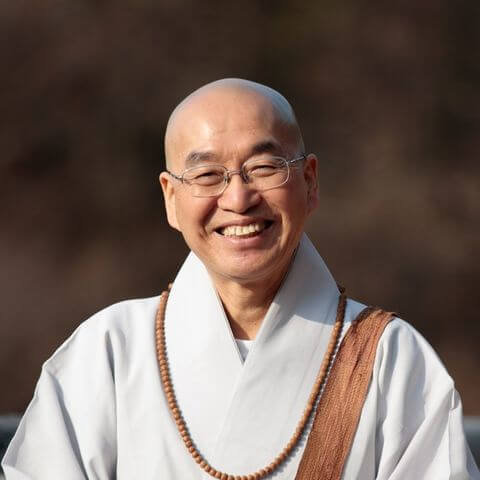
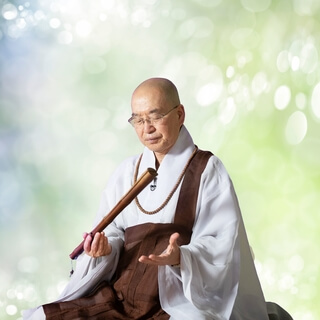
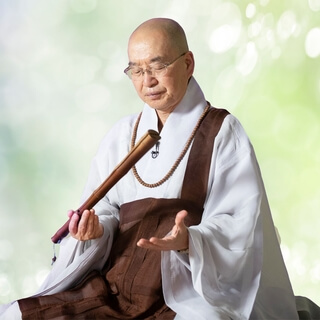
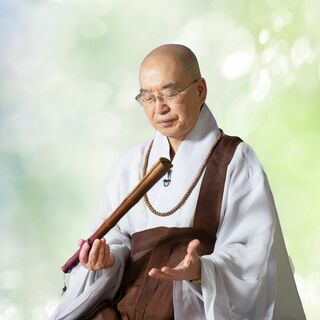
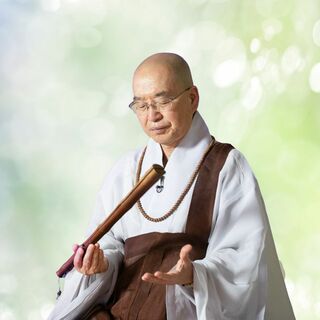
We will begin the online meditation with Venerable Pham Nunsinim shortly.
Before we proceed,
We will meditate for a brief moment to calm our minds.
We will begin the meditation with Venerable Pham Nunsinim.
We will begin the meditation with Venerable Pham Nunsinim.
Hello.
Hello.
Every single day the fall gets a little deeper.
There are endless skies and it's really bright and clear outside.
We actually did rice harvest today.
When I was younger,
It used to be a manual labor using scythe to actually cut the rice plants.
But these days today we use machinery to do it all at once.
It was really quick.
It looks like the chestnuts.
I can't find the chestnuts as easily.
I've been picking those up every single day.
So we moved on to harvesting persimmons.
I'd like to start this meditation session as usual by introducing you and relaying what happens to me every day.
Let's take questions.
Q.
When people start putting things together or shopping,
Theasty singer and passageist unbreak part of our diet started the meditation session.
Could a child help 82 different05.
What would they say about this development?
Yes,
I think that the most important thing is to learn how to drive.
I think that's the most important thing.
You had a teacher that taught you the right way to ride or drive.
I think that the most important thing is to learn how to drive.
I think that the most important thing is to learn how to drive.
I think that the most important thing is to learn how to drive.
I think that the most important thing is to learn how to drive.
I think that the most important thing is to learn how to drive.
I think that the most important thing is to learn how to drive.
However,
If you know the right methodology and you're trying according to the methodology,
That's not a wrong approach.
You're just in the midst of the right approach.
I think that the most important thing is to learn how to drive.
I think that the most important thing is to learn how to drive.
I think that the most important thing is to learn how to drive.
I think that the most important thing is to learn how to drive.
I think that the most important thing is to learn how to drive.
I think that the most important thing is to learn how to drive.
I think that the most important thing is to learn how to drive.
I think that the most important thing is to learn how to drive.
I think that the most important thing is to learn how to drive.
I think that the most important thing is to learn how to drive.
I think that the most important thing is to learn how to drive.
I think that the most important thing is to learn how to drive.
However,
People who practice more,
They become adjusted and they can walk the road.
I'd like to say to you that the meditation is similar.
If you don't practice well,
You will be in trouble.
If you don't practice well,
You will be in trouble.
If you don't practice well,
You will be in trouble.
I would like to say that there is pain in your legs.
If you don't practice well,
You will be in trouble.
If you don't practice well,
You will be in trouble.
If you stretch your legs,
Then you are following your desire.
You are doing the bidding of your desire.
If you suppress the pain,
Then you create stress.
If you suppress the pain,
Then you are in trouble.
If you suppress the pain,
Then you are in trouble.
That's why you need practice.
If you don't practice well,
You will be in trouble.
If you don't practice well,
You will be in trouble.
If you don't practice well,
You will be in trouble.
If you don't practice well,
You will be in trouble.
You have to relax your body and mind.
Keep your body relaxed.
Now your mind has to be relaxed in term of action when your body feels snackable.
Without any sense of goal,
Achievement,
Or intent.
You know,
Do not let it tense.
But in midst of this peace and calm,
A lot of thoughts will come unbidden.
You might feel sleepy and might make you dull.
That's why focus on the tip of your nose.
And become aware of the breath coming in and breath leaving.
So first and foremost,
Be aware of the breath coming in So first and foremost,
Be at peace,
Be calm.
And then in midst of that peace,
Focus and concentrate and recognize that moment.
And third,
Because this is not easy to do,
Practice and practice again.
But you can't tense up and make a concerted effort as you practice.
Do not exhibit an intent to do something well.
And do not give up and say,
This is too difficult for me.
You're just doing it.
If you lose focus,
Just regain it.
And without any judgment,
Just doing it.
And if you're consistent in this,
It will happen to you naturally.
You don't have to keep any metrics of how long,
How many minutes you maintain your focus,
How many minutes you lost your focus.
If some thoughts grabbed you,
Recognize it grabs you and come back to the breath.
So spiritual practice is not about accumulating new skills or new experiences.
It's about shedding your negativity.
As you're approaching meditation,
You tend to approach meditation from a point of view of accumulation.
What's next?
What's the next step?
What's the next thing?
What's the next level?
Instead of trying to shed it,
Instead of just doing it rather than thinking what the next step might be.
That's why you tend to tense up and you try to make an effort.
If you don't feel any progress,
You get tired and fatigue and you give up.
So to conclude,
If you're doing it and following the instructions,
Then you're doing well regardless.
Next question.
When I drop or let go of compulsion,
Negative emotions or memories,
I feel free and lighter.
Many times,
However,
I become triggered and find myself holding on to the thing I thought I had set down.
Is it that I'm still grasping and I'm not really letting go properly and completely?
Other than observing and watching,
Is there anything else I can do to really see that the result of the trigger or maybe even the trigger itself is empty?
Is there anything else I can do to really see that the result of the trigger or maybe even the trigger itself is empty?
I don't know.
Say there's a piece of gold here.
No.
I'm not sure.
I'm not sure.
I'm not sure.
I'm not sure.
I'm not sure.
I'm going to say we look at this piece of gold and say,
This is just a piece of rock.
I don't need it.
I'm not attached to gold.
So I take this piece of gold and go to the hill and bury it into the ground.
And tell myself that I'm not going to even remember the place where I buried this gold.
So I keep telling myself to forget the location,
But I can't.
I still remember it.
Why is that?
Because although we might have determined ourselves that consciously that this is worthless,
I'm not attached to gold,
Subconsciously it tells us that this is valuable,
That we should keep track of it.
And if we keep track of it,
We can't go back to the place where we buried it.
That's why I'm saying to myself,
I'm not going to give up on this piece of gold.
I'm not going to give up on this piece of gold.
I'm not going to give up on this piece of gold.
So say we took that same piece of gold and somehow we scratched it,
The surface of the gold with a piece of knife,
And realized that it's not real gold through and through.
It's actually just the surface,
Just the sheen itself was gold,
But everything else was just piece of worthless rock.
And if you realize that,
Then you don't have to make an effort to throw away.
You don't have to make an effort to forget about its existence.
You know it's worthless,
So you forget about it naturally.
If you don't forget about it,
Then you don't have to make an effort to forget about it.
Because once you realize that it's just gold plated,
Not real gold,
Then even subconsciously you make a judgment that it's worthless,
It's not worth the effort.
If you really get into the inside of the truth of the rock itself,
Then you don't have to make an effort to forget about it or to let go.
The letting go happens naturally for you.
If you don't make an effort to forget about it,
Then you don't have to make an effort to forget about it.
So from a philosophical perspective,
Realizing that this is worthless,
Seeing it's the truth of the situation or the matter,
Is called emptiness.
If you don't make an effort to forget about it,
Then you don't have to make an effort to forget about it.
So in fundamental Buddhism we call this selflessness,
Right?
No self.
Because you don't have to make an effort to forget about it.
You don't have to make an effort to forget about it.
You can't make an effort to forget about it.
So realizing that there is no real substance to what you held was previously concrete or real to you,
Then the letting go happens naturally as a consequence of that insight into the truth.
Of course,
That tells us that everyone's got Center of contradictory knowledge and it's a free power.
If you believe that when you act out the infusion in your Wheeler vision,
Dr Th hammer forSUma azimolicity,
You are arbitrary in this way,
Then the illusion happens.
So when you are obsessed over something or attached to something that you need practice in the the beginning of letting go.
However,
If you gain an insight into the essential truth that there's nothing to let go of,
Then letting go happens naturally as a consequence.
I think it's important to let go of the truth.
If you let go of the truth,
Then you can't let go of it.
If you let go of the truth,
Then you can't let go of it.
You can't let go of it.
So if there's a piece of food there that you really like,
And people tell you,
Doctors tell you,
That it's not good for you.
So you say,
You intellectually understand it's not good for you,
You shouldn't eat it,
But you're suppressing your desire and curiosity to eat that piece of food,
So that little piece of attachment still remains.
When you eat a piece of food,
You eat it,
You eat it,
You eat it,
You eat it,
You eat it,
You eat it,
You eat it.
So if somebody tells you there's a piece of poison there that you'll die if you eat it,
Then somebody else might actually make it as appetizing as possible,
But you have no desire to eat it anymore.
But if you eat it,
You can't let go of the truth,
You can't let go of it.
Especially if you see somebody else eat that same piece of food and die right there because of poisoning,
Then obviously you won't feel any desire to eat that food anymore.
So there's a difference between knowing something intellectually,
Consciously,
And then really internalizing and experiencing something at a deeper level.
The Venus parents are the pre-windows students.
So,
You know,
If you borrow from recent psychology lexicon,
Thoughts happen at the intellectual level,
At the consciousness,
But a deeper kind of what we call the mind happens as a subconsciousness.
It's the subconsciousness that really needs to change for real change to happen.
So meditation is a way for you to delve deeply into the subconscious and be able to reach down and adjust and edit what's down there.
Let's conclude with that.
Strain your posture.
And the most important thing is for you to relax your mind and body.
So if the straining out of your posture brings some kind of tenseness to your body,
Try to loosen,
Relax,
And adjust.
So try to tell yourself that,
You know,
I gotta meditate or I gotta enlighten myself.
You know,
No sense of goal or achievement,
But try to be as idle and without intent as possible.
So even if somebody tells you that you gotta sit like this for the whole day,
You know,
Try to accept it,
That this is easy to do,
This is your natural state without making an effort or trying to tense up and trying to do something.
And in this state of calm,
Peace,
And relaxation,
Focus on your breath and realize and sense the breath coming in and going out.
And if you lose that focus,
Realize that you lost the focus and regain the focus.
So if you are aware of the breath,
Then keep being aware of the breath.
If you lose the awareness of the breath and try to regain the awareness of the breath.
So if you lose the awareness,
It's not a bad thing.
And if you can maintain the awareness,
It's not a good thing.
There's no judgment in terms of performance involved.
It's just a matter of just doing it.
Do not get excited just because you're able to maintain your focus for a while.
Do not get disappointed because you keep losing your focus.
You're just trying and you're just doing.
Let's do it for 35 minutes today.
Let's do it for 35 minutes.
Thank you.
.
.
.
.
.
.
.
.
.
.
.
.
.
.
.
.
.
.
.
.
.
.
.
.
.
.
.
.
.
.
.
.
.
.
.
.
.
.
.
.
.
.
.
.
.
.
.
.
.
.
.
.
.
.
.
.
.
.
.
.
.
.
.
.
.
.
.
.
.
.
.
.
.
.
.
.
.
.
.
.
.
.
.
.
.
.
.
.
.
.
.
.
.
.
.
.
.
.
.
.
.
.
.
.
.
.
.
.
.
.
.
.
.
.
.
.
.
.
.
.
.
.
.
.
.
.
.
.
.
.
.
.
.
.
.
.
.
.
.
.
.
.
.
.
.
.
.
.
.
.
.
.
.
.
.
.
.
.
.
.
.
.
.
.
.
.
.
.
.
.
.
.
.
.
.
.
.
.
.
.
.
.
.
.
.
.
.