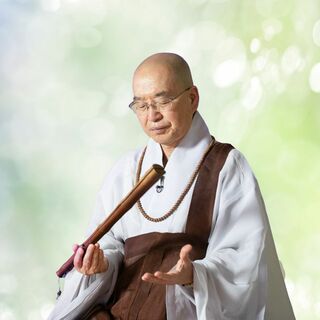
Hello there.
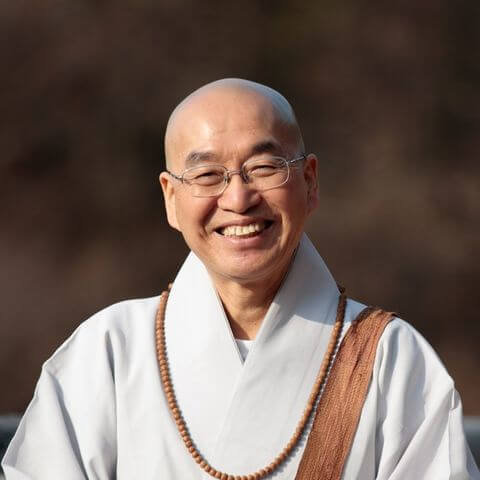
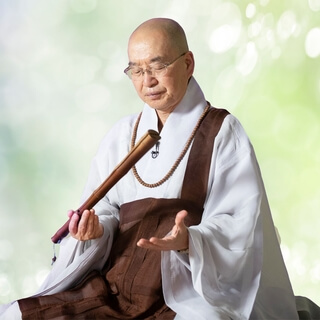
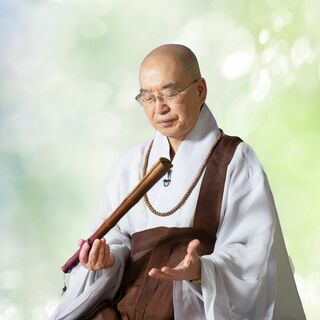
I am coming to you today from the middle region of South Korea.
This is a place that we have dedicated from a Jungto society perspective to the practice of meditation.
I think the audio or the video of this broadcast should be slightly better than the last time we tried this.
It's currently worldwide,
The pandemic seems to be getting worse,
Not better.
It's already been six months since the start of the pandemic.
However,
The current mainstream thought is that this is going to go on till next year,
At least.
Perhaps it's not an outlier,
Maybe this is the new norm.
So it's inconvenient to us today,
But maybe this is the new norm that we have to adjust to.
And although it is inconvenient to us,
We should not allow ourselves to suffer because of it.
So we have two questions at the end today.
What does it actually mean to be awake to your actions?
Being awake to walking doesn't mean that I focus on one of many bodily sensations I feel as I walk.
To be awake to your actions,
Whether it's the breath or to your walking,
Is a way to be awake to your own mind,
The emotions,
The feelings and sensations.
So when we say we are awake to our breath,
A breath is not something you can see or smell or taste.
This is something that you sense through the sense of touch that happens when the air moves in and out around your nostrils.
Then how can we be awake to emerging anger,
For example?
Because you can't see anger,
You can't hear anger,
And you can't taste it or smell it.
And it's that thought,
You can't think it.
But when you get angry,
First you generate heat in your body and your body tenses up.
And we can sense this through our sensations.
So when your mind turns to negative,
You can sense it at its emergence through the reactions of the body.
So what's really important is that as your mind turns negative,
There's going to be subtle signals throughout your body that you can grab onto if you're sensitive enough to sense it.
So when we say we are awake to the breath,
And if the breath is rough already,
Then it's easy to sense it,
To be awake to it,
But to practice so that you can be awake to the subtle nuances of the breath.
And by practicing so that you develop this capacity to detect subtle nuances of the breath,
You can apply that to detect subtle nuances throughout your body.
So in that sense,
If you train your attention on the tip of your nose,
Then you're awake to the subtle sensations of the breath.
But if you move your attention to your feet,
Likewise,
You can sense the subtle sensations of your feet.
So when you are getting angry,
You can immediately tell by the subtle signals throughout your body that you're indeed getting angry.
And the fact of being aware,
Consciously aware and sensing those three signals of anger allows that anger to dissipate itself.
However if you don't notice the anger until it has crossed a certain threshold,
Then at that point,
Even if you become aware of the anger,
It doesn't dissipate itself,
It actually amplifies itself.
And the only way left to go at that point is for you to suppress your anger.
So others might not notice that you're suppressing anger,
But you know you're creating a lot of tension and stress within you through that suppression.
We are able to avoid creating stress by suppressing anger by noticing and being mindful to the subtle emerging signals of anger throughout our body.
That's why we need to develop this capacity and skill to be able to be mindful to emerging nuances.
So breath happens automatically if we don't pay attention to it.
And also other things around our body,
A lot of the bodily motions,
Activity functions happens automatically.
So first thing we have to do is pay attention to our functions,
To our movements so that we are consciously aware when we are sitting that we are sitting,
When we are bending that we are bending.
But these are not that difficult because if you pay even the slightest amount of attention,
You are aware that you are moving in this fashion.
What's more important is not just recognizing the macro emotions as you do them,
But the subtle nuances,
Subtle sensations that accompany or that precede these macro emotions.
To sense what happens at the bottom of your feet.
When you touch,
See the nuanced sensation at the tip of your fingertips.
And to sense the sensations that accompany each motion.
So when you're moving,
Not just notice the motion itself,
But the sensation that precedes or accompanies that larger motion.
Next question.
How can meditation help with the big problems of the mind today?
Anger,
Anxiety,
Hopelessness,
Loneliness.
So meditation does help,
But even a bigger help is realizing the underlying causes of why anger is generated.
So all people have different ideas,
Different thoughts.
But since we judge and view everything else around us with us as a reference standard,
We sometimes think that I'm right and everybody else is wrong.
So this framework of viewing the world and others from a right or wrong perspective will generate tension and anger.
However,
If you acknowledge and recognize that people are different,
That that person thinks that way,
Believes that way,
Feels that way,
Then there's no underlying cause to anger.
So it's a way for you to escape from your own suffering,
From your own anger by understanding the underlying assumption and framework that drives you.
However,
We tend to react automatically to a stimulus by bringing interpretation through our assumptions and framework of right or wrong.
You know,
That leads to anger.
So to recognize that emerging anger really quickly and try to dissipate it,
That's meditation.
So three paths need to run concurrently in order for us to escape from suffering.
So if we are always mindful or awake to the way reality really is,
Then there's no cause for anger or negative mind to emerge.
We call this wisdom.
But we are not always so mindful all the time.
That's because there's an old ingrained cognitive and emotional habit of judging everything by right or wrong framework.
So meditation is a practice that we develop our skill to recognize those signals really early on so we allow it to dissipate.
But there are times when we don't catch those ones and subtle emotions and allow anger to amplify.
And so if I know that if I allow my anger to express itself,
Then I receive loss in return.
I suffer.
Then in that case,
I need to be able to control my anger,
Suppress it and not express it.
So in case there's an anger or there are desires that I need to control and suppress,
The method that we use to do so are the precepts,
The ethical precepts.
So that's really the last backdrop for us to adhere to.
And in case we actually fail in keeping to our precepts,
Then we have to realize quickly that we have failed,
Repent and go back to it.
But you have to realize that anger is not intrinsic to who you are.
It's a reaction that happens when there's a collision between an external stimulus and your old ingrained cognitive habit of emotions or thinking.
So if you can maintain a kind of a clean and clear mindfulness in the midst of the stimulus,
Then you're able to sense when subtle nuances,
Subtle disturbances come.
And meditation is a way to do that.
So instead of suppressing it,
You are dissipating it.
And if you go on further,
More advanced,
If you are mindful of the underlying kind of fundamental laws of how these things happen,
Then you don't even need to dissipate it because it won't emerge in the first place.
So Ke-Chung-He are the three steps by which you engage in spiritual practice.
Adhere to your ethical precepts as a first step.
Then remember that you clean your mind to make sure you are able to,
In a clean mindfulness,
To take the subtle signals of disturbances.
Then at the ultimate stage of wisdom,
Realize the underlying framework by which your mind moves so that you get rid of any cause for this suffering.
Then Pali is Shilya,
Samadhi,
And Vanya,
Which is wisdom.
So in conclusion,
Meditation really helps greatly to dissipate the negative emotions you encounter.
So meditation is not to help you suppress anger or negative emotions,
But to dissipate it,
To nip it in the bud.
And meditation also helps you evaporate a lot of the negative emotions that have built up from the past.
Let us stop there.
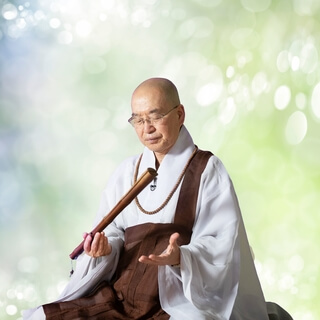
Let us begin our meditation session.
So please straighten your posture.
Lotus position.
Straighten out your back.
And your head.
Close your eyes slightly.
Both hands to the front.
So relax,
Melt away the tension in your body and mind.
So relax your body and mind.
Close your mind at the tip of your nose.
Then you realize that you are indeed breathing.
Breath goes in,
Breath goes out.
Sometimes breath goes in long,
Sometimes breath goes in short.
The beginning breath may be a little rough,
But as time goes,
It becomes smooth and calm.
You are not intentionally shaping how you breathe.
You are just merely observing the state of your current breath.
The biggest distraction are the thoughts from the past or your plans for the future.
These thoughts streams are the biggest obstacle to your focus.
So you can't stop your thoughts being generated,
Stream your thoughts,
But do not allow your attention to follow those thoughts.
Because if you allow your attention to follow those thoughts,
You are imbuing those thoughts with more significance,
More meaning.
So do not imbue anything else with meaning except for the sensation of the breath goes in and out.
And do not think about the breath,
Just sense the breath.
And if you are distracted by a thought,
You lose the focus,
Regain the focus.
Do not try to do well.
Do not give up if you are not doing well.
In the midst of calm and relaxation,
Just focus on the breath.
And did IACCUATE?
?
Thank you.
.
.
.
.
.
.
.
.
.
.
.
.
.
.
.
.
.
.
.
.
.
.
.
.
.
.
.
.
.
.
.
.
.
.
.
.
.
.
.
.
.
.
.
.
.
.
.
.
.
.
.
.
.
.
.
.
.
.
.
.
.
.
.
.
.
.
.
.
.
.
.
.
.
.
.
.
.
.
.
.
.
.
.
.
.
.
.
.
.
.
.
.
.
.
.
.
.
.
.
.
.
.
.
.
.
.
.
.
.
.
.
.
.
.
.
.
.
.
.
.
.
.
.
.
.
.
.
.
.
.
.
.
.
.
.
.
.
.
.
.
.
.
.
.
.
.
.
.
.
.
.
.
.
.
.
.
.
.
.
.
.
.
.
.
.
.
.
.
.
.
.
.
.
.
.
.
.
.
.
.
.
.
.
.
.
.
.
.
.
.
.
.
.
.
.
.
.
.
.
.
.
.
.
.
.
.
.
.
.
.
.
.
.
.
.
.
.
.
.
.
.
.
.
.
.
.
.
.
.
.
.
.
.
.
.
.
.
.
.
.
.
.
.